JEE Main · Physics → Steady

Current Electricity appeared 50 times across 3 years — 5.8% of Physics. This question is from Combination of Resistors.

Year 2026 2025 2024 Total
Questions 18 13 19 50

A wire of resistance R is bent into an equilateral triangle and an identical wire is bent into a square. The ratio of resistance between the two end points of an edge of the triangle to that of the square is

Solution & Explanation

Related Formula
R = ρ A R ∝
Core Logic

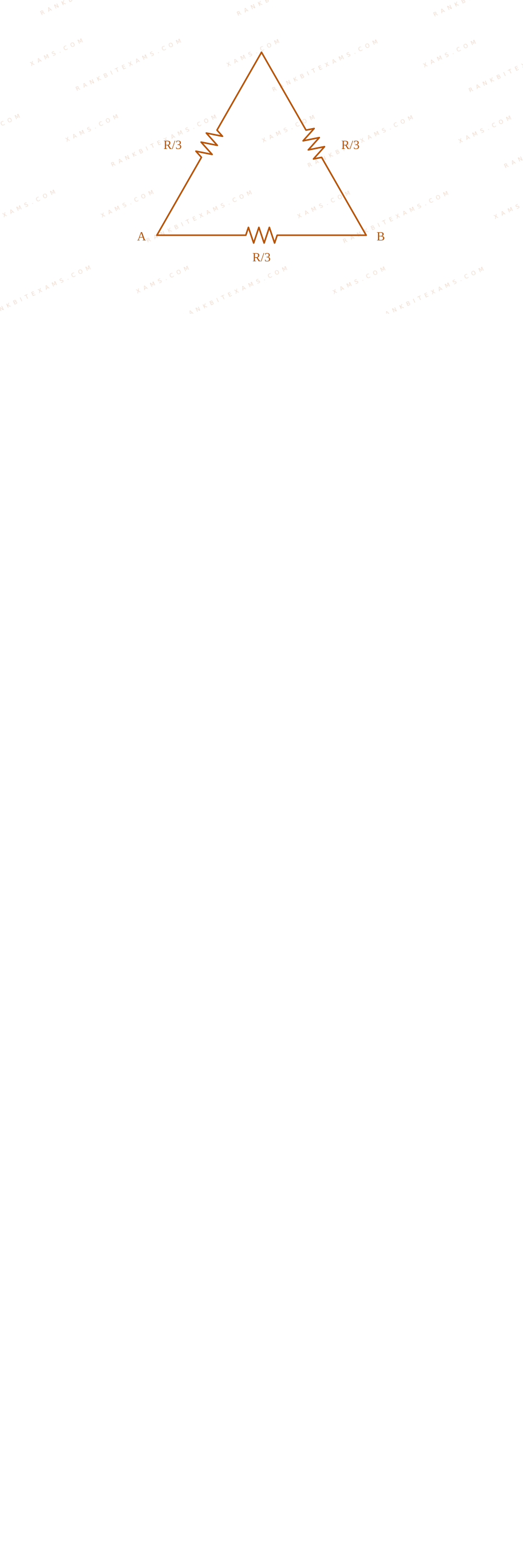
For the equilateral triangle, the total resistance R is divided into three equal line parts of value R3 each:

Visual representation of triangle and square edge divisions for Q15

Visual representation of triangle and square edge divisions for Q15

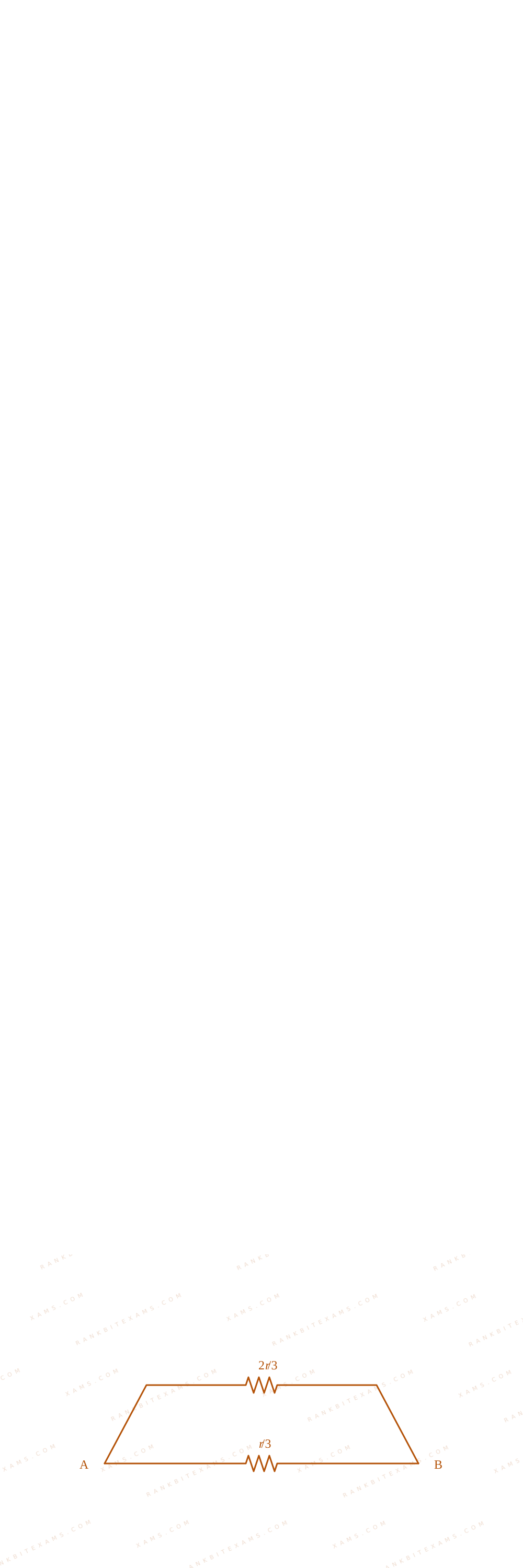
An edge configuration places one part in parallel with the other two series steps:

(Req)₁ = ( 2R3) · ( R3) 2R3 + R3 = (2)/(9)R

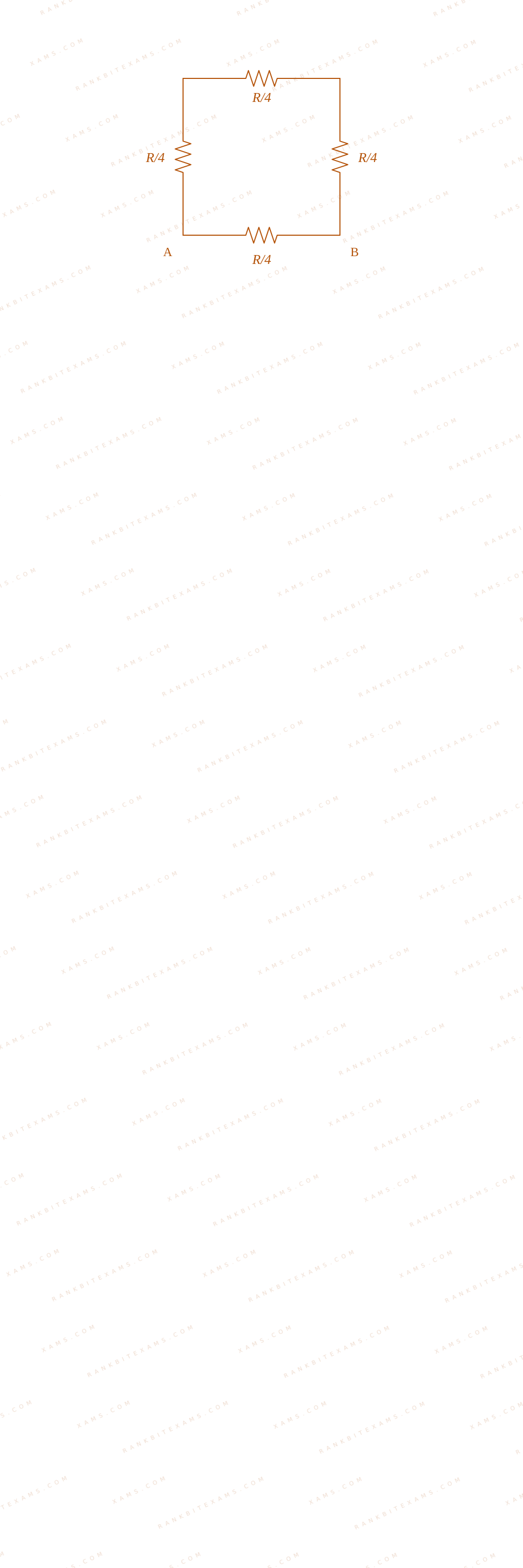
For the square, the wire resistance R divides into four parts of R4 each:

Visual representation of triangle and square edge divisions for Q15

Visual representation of triangle and square edge divisions for Q15

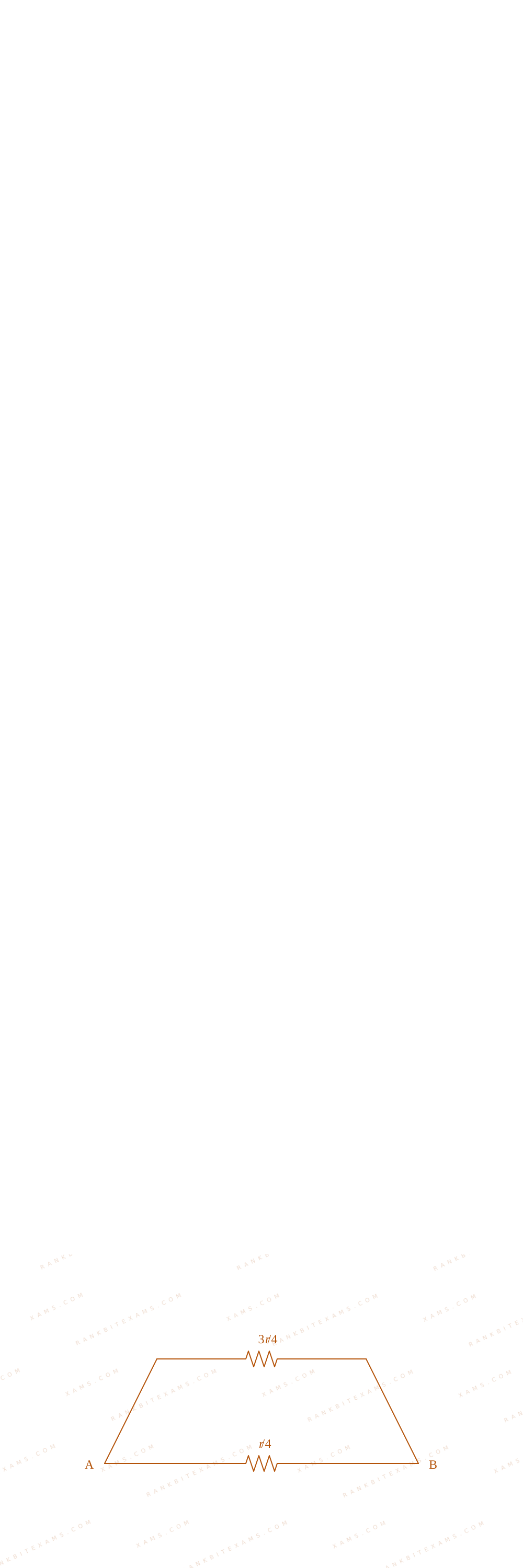
An edge calculation pairs one section in parallel with the remaining three loops in series:

(Req)₂ = ( 3R4) · ( R4) 3R4 + R4 = (3)/(16)R

Taking the ratio between these geometric layouts:

Step 1: Final Ratio Calculation
(Req)₁(Req)₂ = (2)/(9)R(3)/(16)R = (32)/(27)

This selects option (4).

Pattern Recognition

For a regular polygon with N identical sides formed from a wire of resistance R, the resistance across one edge is always given by (N-1)N²R.

Chapter Mix

Class 12 Physics: Current Electricity

Reference Study Guides

More Current Electricity Previous-Year Questions — Page 7

Q24 jee_main_2025_28_jan_evening Wheatstone Bridge
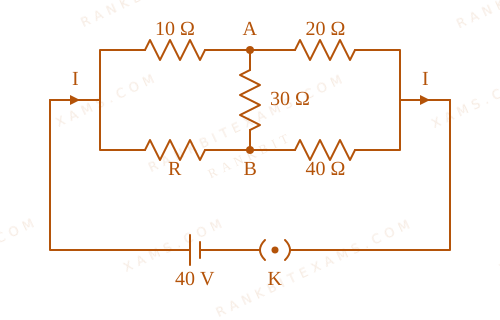
The value of current I in the electrical circuit as given below, when potential at A is equal to the potential at B, will be ________ A.
Wheatstone Bridge diagram for Q24 - JEE Main 2025 Evening
A bridge resistor network supplied by a 40V DC voltage source terminal layout.
Numerical Answer. Answer: 2

Solution

Related Formula

For a balanced Wheatstone bridge network, if the potentials at opposite nodes are equal (VA = VB), no current flows through the central branch. The resistance arms satisfy the balance ratio:

(R₁)/(R₂) = (R₃)/(R₄)

Total current from the source is calculated using Ohm's law:

I = VsourceRequivalent
Core Logic

Given conditions :

VA = VB Balanced condition

From the circuit network diagram [cite: 817, 818, 826, 828]:

  • Left-top arm = 10 Ω
  • Left-bottom arm = R
  • Right-top arm = 20 Ω
  • Right-bottom arm = 40 Ω
  • Apply the balance condition to solve for unknown resistor R :

(10)/(R) = (20)/(40) (10)/(R) = (1)/(2) R = 20 Ω [cite: 837, 838]

Now restructure the equivalent network : Since the central 30 Ω resistor branch carries zero current, it can be removed from the calculation [cite: 820, 834].

  • Top \parallel branch: 10 Ω + 20 Ω = 30 Ω
  • Bottom \parallel branch: 20 Ω + 40 Ω = 60 Ω
  • Calculate total equivalent resistance Req:

Req = (30 × 60)/(30 + 60) = (1800)/(90) = 20 Ω

Calculate total current I drawn from the 40V source:

I = 40 V20 Ω = 2 A
Step 1: Circuit Solution

The balanced bridge network layout with branch currents is shown below:
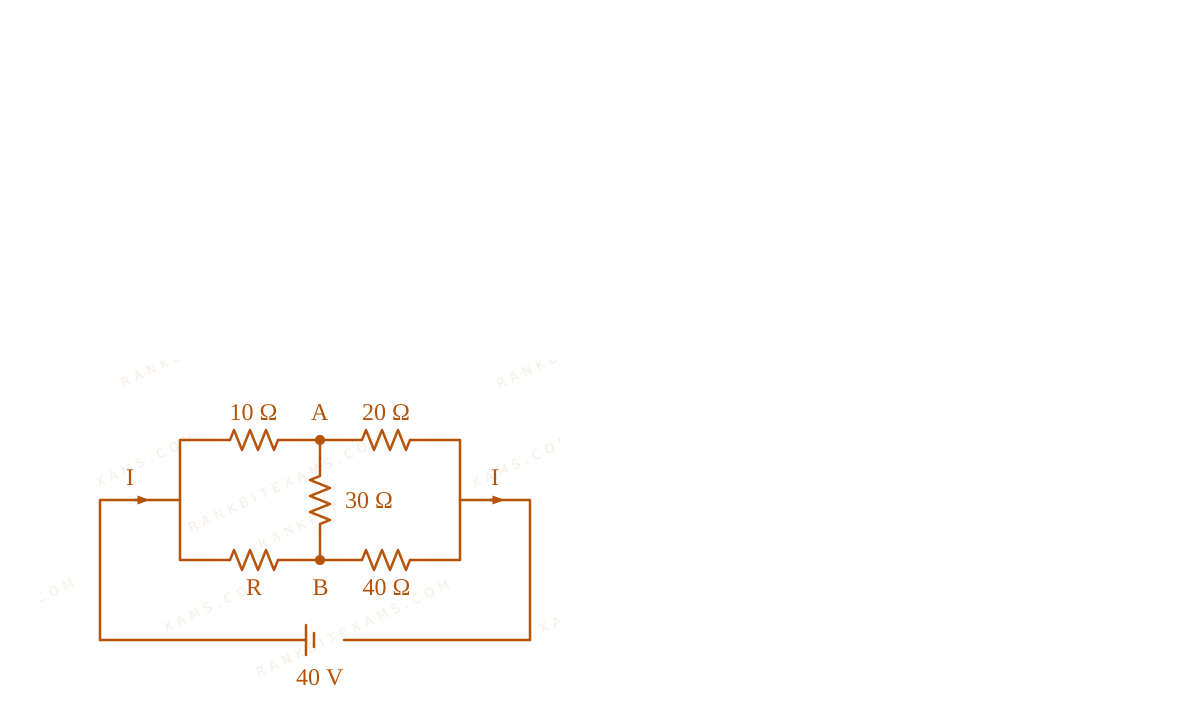
Wheatstone Bridge network reduction diagram for Q24
A bridge resistor network supplied by a 40V DC voltage source terminal layout.

Pattern Recognition

When a question states that two nodes are at equal potential (VA = VB), immediately identify it as a balanced Wheatstone bridge. This allows you to remove the central branch and simplify the circuit into basic series-\parallel resistor combinations.

Chapter Mix

Class 12 Physics: Current Electricity
Q jee_main_2024_01_february_morning Cells and EMF
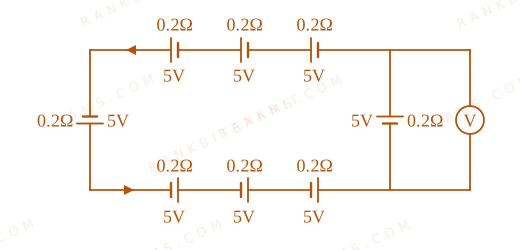
The reading in the ideal voltmeter (V) shown in the given circuit diagram is:
Voltmeter circuit network with parallel batteries for Q34 - JEE Main 2024 Morning
A schematic showing a symmetric loop containing multiple identical 5V sources with 0.2 Ohm internal resistances coupled across an ideal voltmeter terminal.
  • A. 5~V
  • B. 10~V
  • C. 0~V
  • D. 3~V

Solution

Related Formula

Total effective loop EMF and internal resistance:

I = Eₙₑₜrₙₑₜ

Terminal potential difference across a discharging cell:

V = E - Ir

Core Logic

The loop has a set of 8 cells all aiding the same current flow sequence direction.

Eeq = 8 × 5 = 40~V req = 8 × 0.2 = 1.6~Ω

The circulating loop current is:

I = 40~V1.6~Ω = 25~A
Step 1: Terminal Voltage Calculation

The ideal voltmeter measures the potential drop across the localized parallel branch configuration:

V = E - Ir = 5 - (25 × 0.2) = 5 - 5 = 0~V
Pattern Recognition

A closed loop composed entirely of identical series active cells short circuits itself perfectly relative to the localized node drop points, reducing the net external voltage drop to zero.

Chapter Mix

Class 12 Physics: Current Electricity
Q59 jee_main_2024_01_february_morning Electric Charge and Current
The current in a conductor is expressed as I = 3t² + 4t³, where I is in Ampere and t is in second. The amount of electric charge that flows through a section of the conductor during t = 1~s to t = 2~s is _______ C.
Numerical Answer. Answer: 22 to 22

Solution

Related Formula

Relationship between charge and time-varying current:

I = (dq)/(dt) q = ∫t₁t₂ I dt
Core Logic

Set up the definite integral using the given bounds t=1~s to t=2~s:

q = ∫₁² (3t² + 4t³) dt

Perform integration term-by-term:

q = [ (3t³)/(3) + (4t⁴)/(4) ]₁² = [ t³ + t⁴ ]₁²
Step 1: Evaluate Definite Bounds

Substitute upper and lower limits:

q = (2³ + 2⁴) - (1³ + 1⁴) q = (8 + 16) - (1 + 1) = 24 - 2 = 22~C
Pattern Recognition

Simple polynomial integration. Always evaluate both boundary points explicitly to avoid dropped terms from the lower bound.

Chapter Mix

Class 12 Physics: Current Electricity
Q46 jee_main_2024_29_january_evening Series and Parallel Combination of Resistors
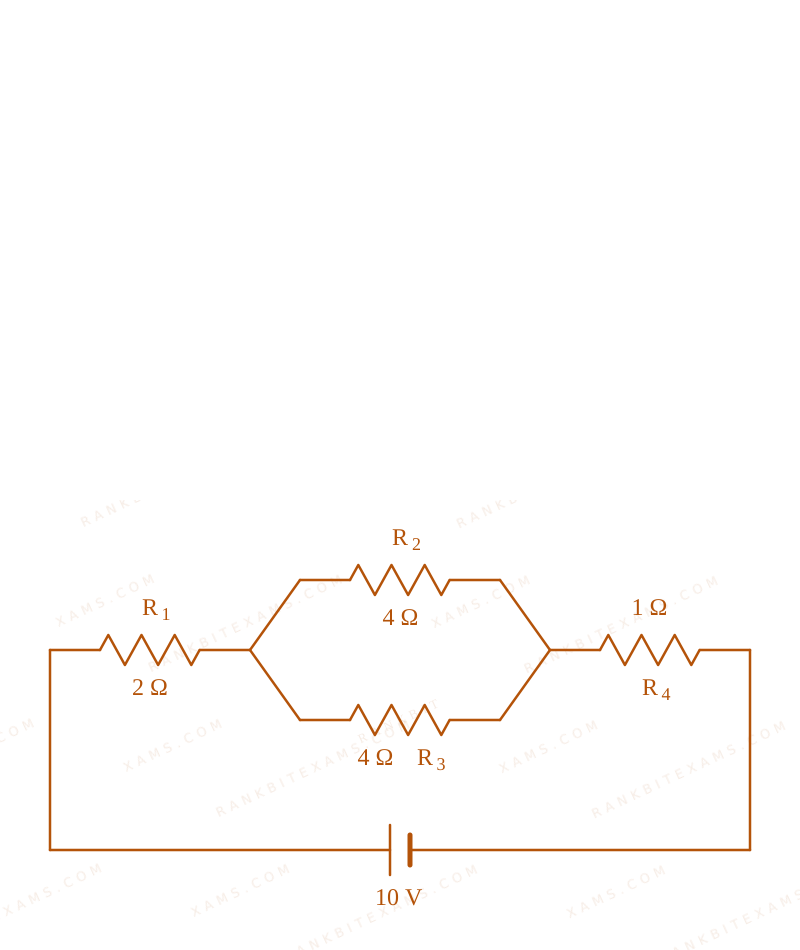
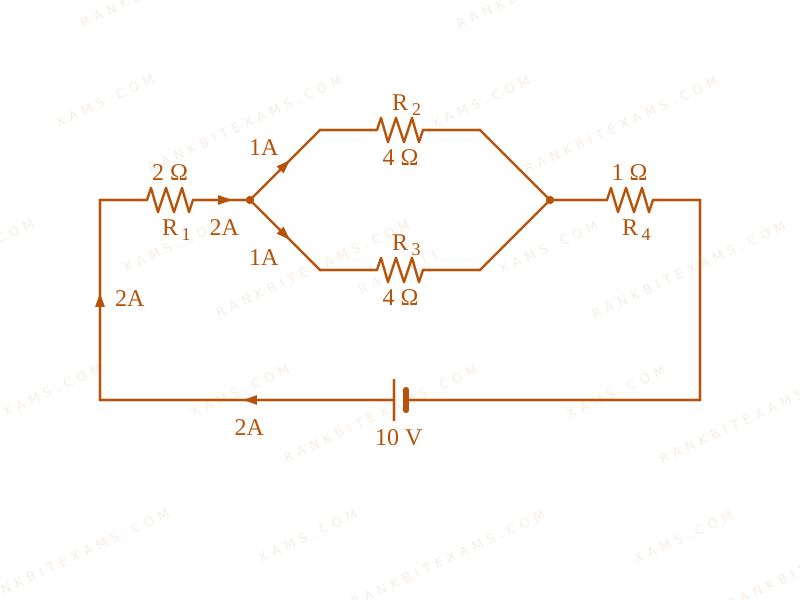
In the given circuit, the current in resistance R₃ is:
Series and parallel resistor network with 10V battery for Q46 - JEE Main 2024 29 January Shift 2
The diagram displays a circuit consisting of series-parallel combinations of R1, R2, R3, and R4 with a 10V voltage source.
  • A. 1 A
  • B. 1.5 A
  • C. 2 A
  • D. 2.5 A

Solution

Related Formula

For parallel resistors:

Rparallel = (Rₐ Rb)/(Rₐ + Rb)

Total equivalent resistance in series:

Req = R₁ + Rparallel + R₄

Total current from source:

I = VReq
Core Logic

Analyzing the circuit network:

  • R₁ = 2 Ω
  • R₂ = 4 Ω and R₃ = 4 Ω are in parallel.
  • R₄ = 1 Ω
  • Calculate the equivalent resistance of the parallel combination:

Rparallel = (R₂ × R₃)/(R₂ + R₃) = (4 × 4)/(4 + 4) = 2 Ω
Step 1: Calculate Total Equivalent Resistance and Current

Total equivalent resistance is:

Req = R₁ + Rparallel + R₄ = 2 + 2 + 1 = 5 Ω

Total circuit current is:

I = VReq = 10 V5 Ω = 2 A
Step 2: Determine Current in R3

The total current of 2 A enters the parallel branch of R₂ and R₃. Since R₂ = R₃ = 4 Ω, the current divides equally between them:

IR₃ = I × (R₂)/(R₂ + R₃) = 2 × (4)/(8) = 1 A

Equivalent resistance and current paths in circuit for Q46
The diagram displays a circuit consisting of series-parallel combinations of R1, R2, R3, and R4 with a 10V voltage source.

Pattern Recognition

Equal parallel resistors split current exactly down the middle. Once total current is found to be 2 A, the parallel branches share it as 1 A each without further math.

Chapter Mix

Class 12 Physics: Current Electricity
Q58 jee_main_2024_29_january_evening Kirchhoff's Laws and Mesh Analysis
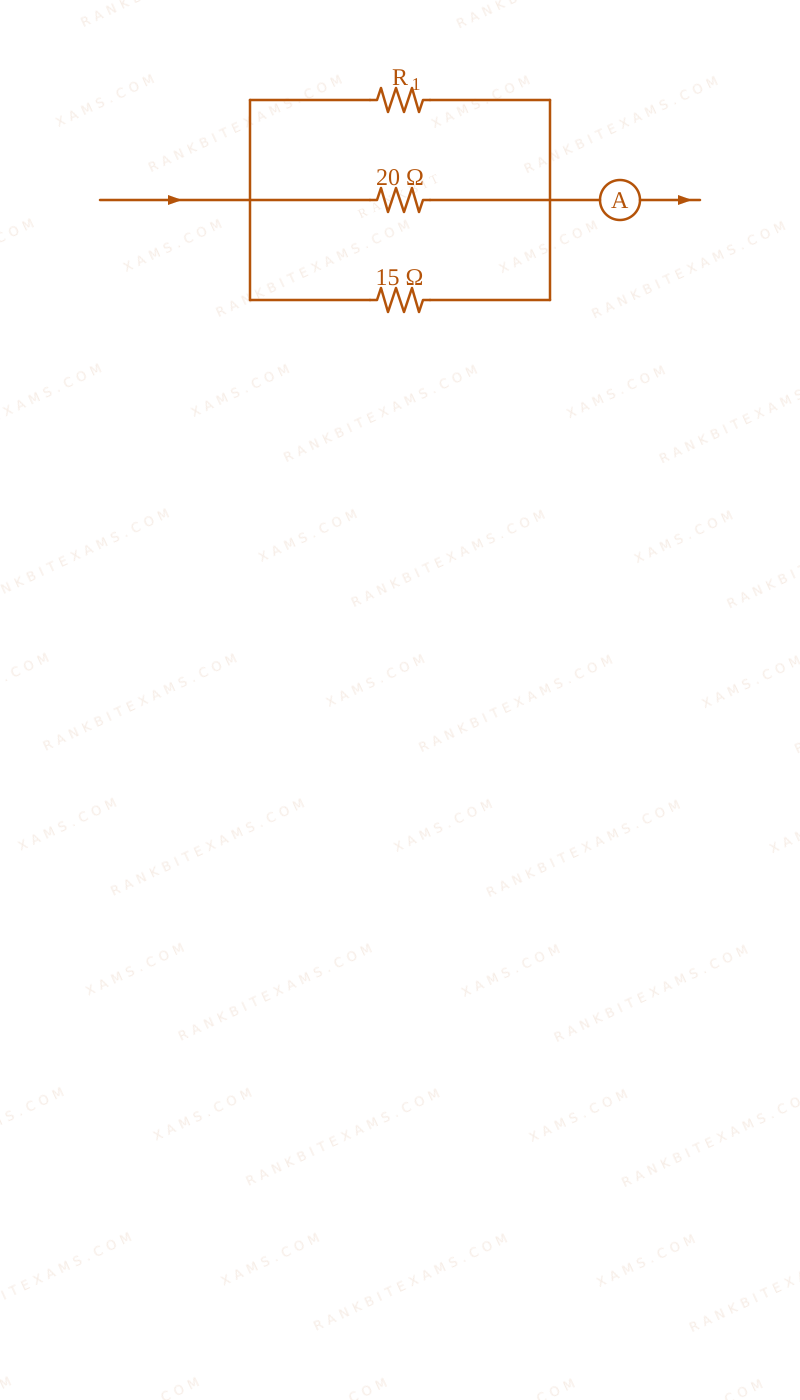
In the given circuit, the current flowing through the resistance 20 Ω is 0.3 A, while the ammeter reads 0.9 A. The value of R₁ is ________ Ω.
Parallel branch resistor circuit with ammeter for Q58 - JEE Main 2024 29 January Shift 2
The diagram displays a circuit consisting of three parallel branches containing R1, a 20 Ohm resistor, and a 15 Ohm resistor, with an ammeter in series.
Numerical Answer. Answer: 30 to 30

Solution

Related Formula

For parallel branches, the potential difference V across each branch is identical:

V = Iᵢ Rᵢ

According to Kirchhoff's Current Law, the total current Itotal is the sum of currents in all parallel branches:

Itotal = i₁ + i₂ + i₃
Core Logic

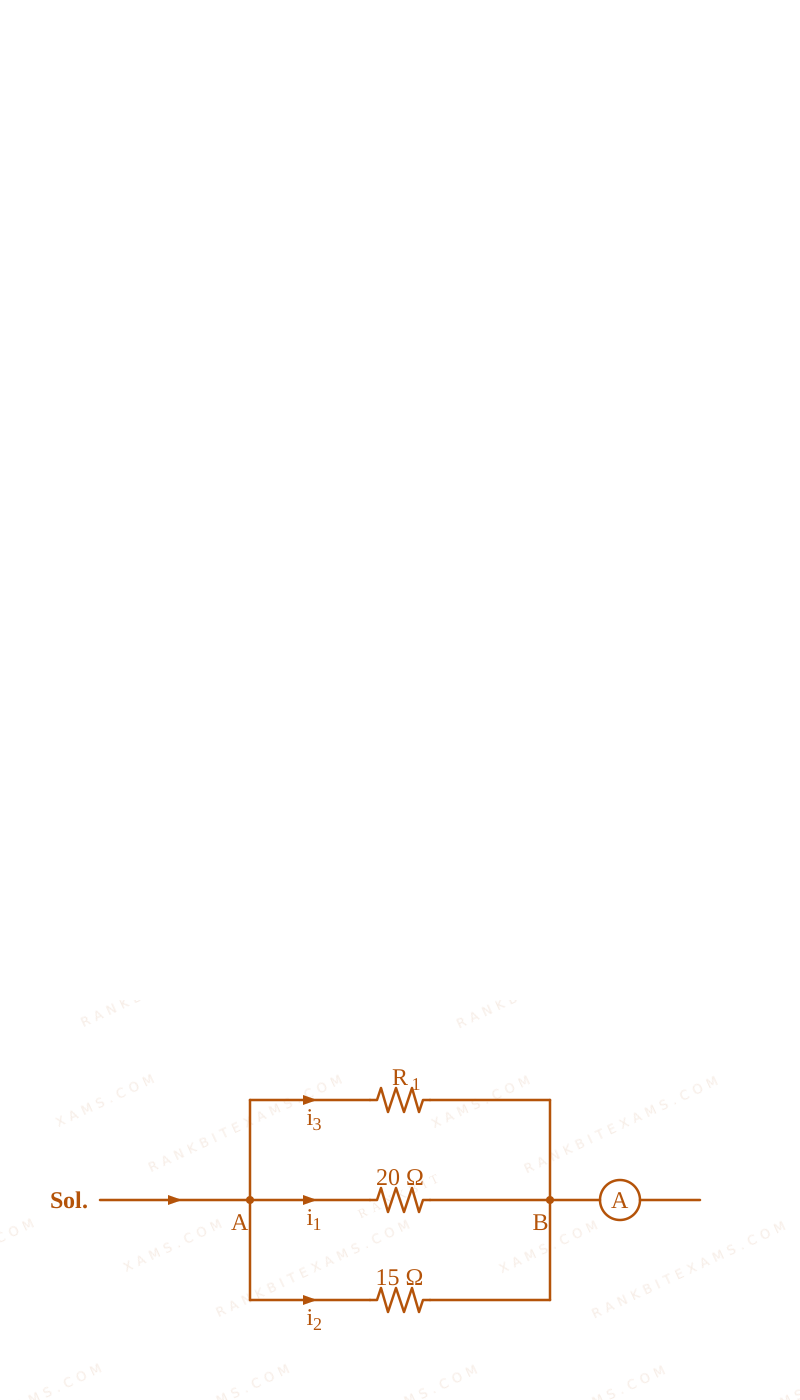
Analyzing the circuit diagram:

  • Branch 1: Current i₁ through 20 Ω is 0.3 A.
  • Branch 2: Contains 15 Ω resistor with current i₂.
  • Branch 3: Contains resistor R₁ with current i₃.
  • Since the branches are in parallel, they have the same potential difference VAB:

VAB = i₁ × 20 Ω = 0.3 A × 20 Ω = 6 V
Step 1: Calculate Currents

Current through the second branch (15 Ω resistor) is:

i₂ = VAB15 Ω = 6 V15 Ω = 0.4 A

Total current read by the ammeter is 0.9 A. Thus:

i₁ + i₂ + i₃ = 0.9 A 0.3 A + 0.4 A + i₃ = 0.9 A 0.7 A + i₃ = 0.9 A i₃ = 0.2 A
Step 2: Calculate R1

Now use the voltage relation for the branch containing R₁:

i₃ × R₁ = VAB (0.2 A) × R₁ = 6 V R₁ = (6)/(0.2) = 30 Ω

Current directions and node equations in parallel circuit for Q58
The diagram displays a circuit consisting of three parallel branches containing R1, a 20 Ohm resistor, and a 15 Ohm resistor, with an ammeter in series.

Pattern Recognition

In parallel networks, finding the branch voltage is always the primary step. Once V = 6 V is established, the remaining branch currents are easily found using Ohm's Law and current conservation.

Chapter Mix

Class 12 Physics: Current Electricity
More Current Electricity Questions — jee_main_2025_28_jan_morning

Practice all Current Electricity previous-year questions →

Rankbit System
JEE Physics: Waves (+15.5%) | Electrostatics: Concentric Shells (-29.7%) | Modern Physics: Photoelectric Clones (+34.2%) | Mathematics: Definite Integrals (+18.1%) | Chemistry: Coordination Splitting (-11.4%) | JEE Physics: Waves (+15.5%) | Electrostatics: Concentric Shells (-29.7%) | Modern Physics: Photoelectric Clones (+34.2%) | Mathematics: Definite Integrals (+18.1%) | Chemistry: Coordination Splitting (-11.4%)
