JEE Main · Chemistry ↓ Falling

Organic Chemistry - Some Basic Principles and Techniques appeared 93 times across 3 years — 10.8% of Chemistry. This question is from Acidity of Organic Compounds.

Year 2026 2025 2024 Total
Questions 19 49 25 93

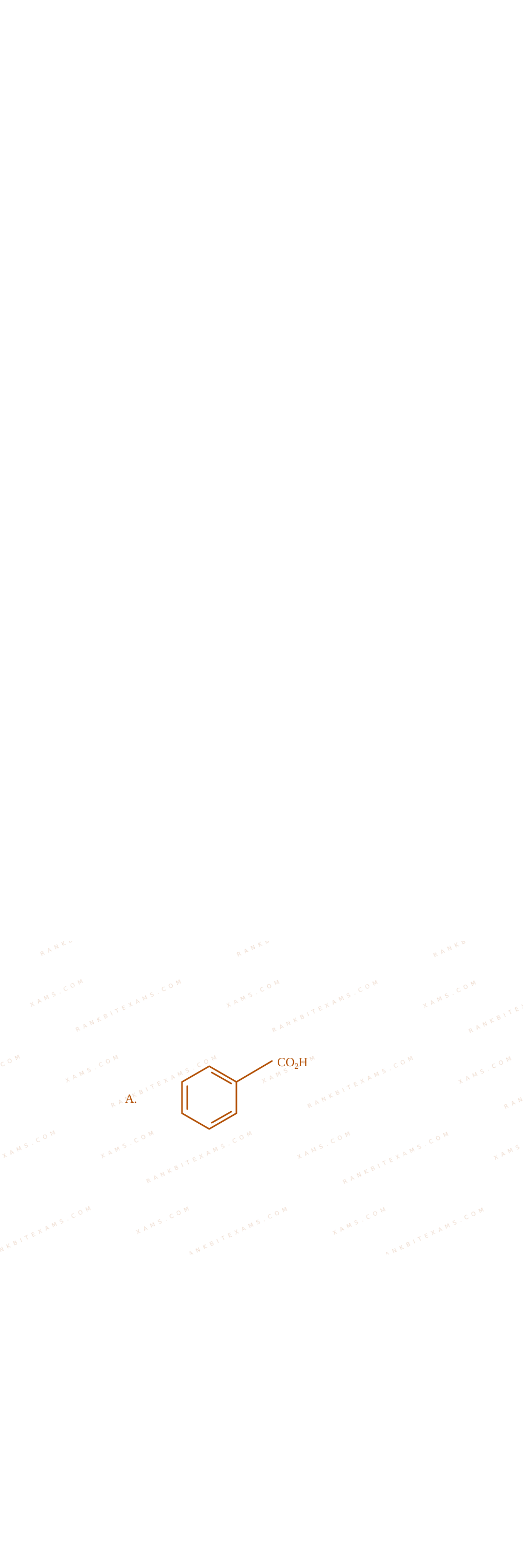
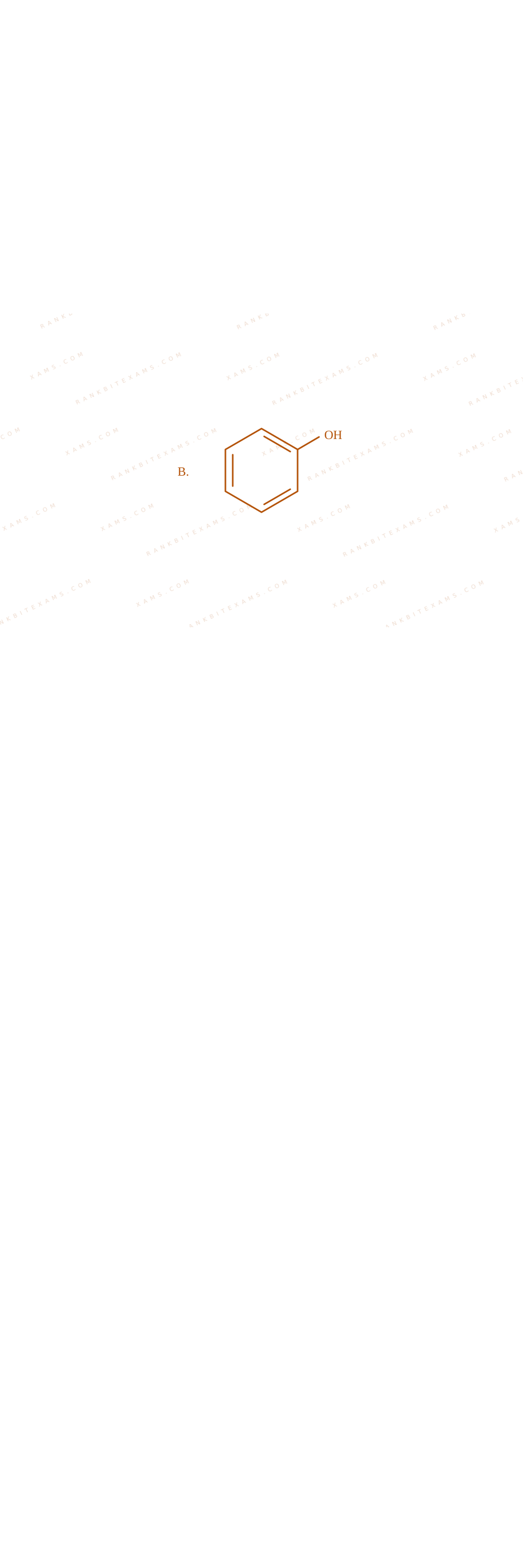
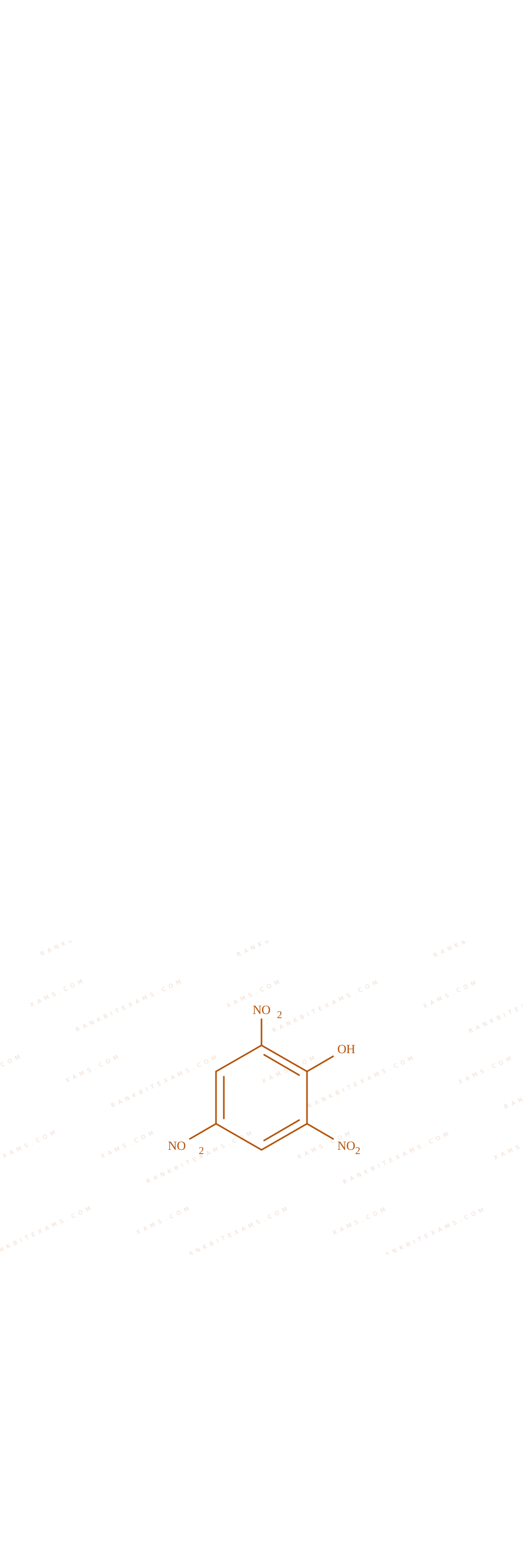
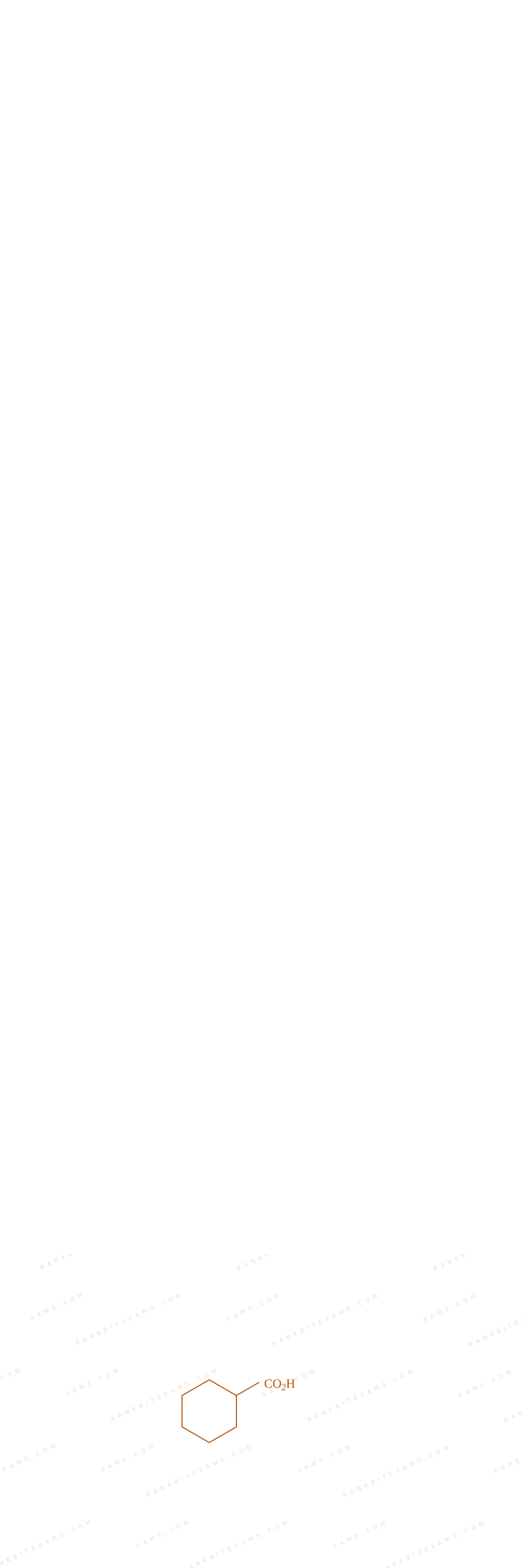
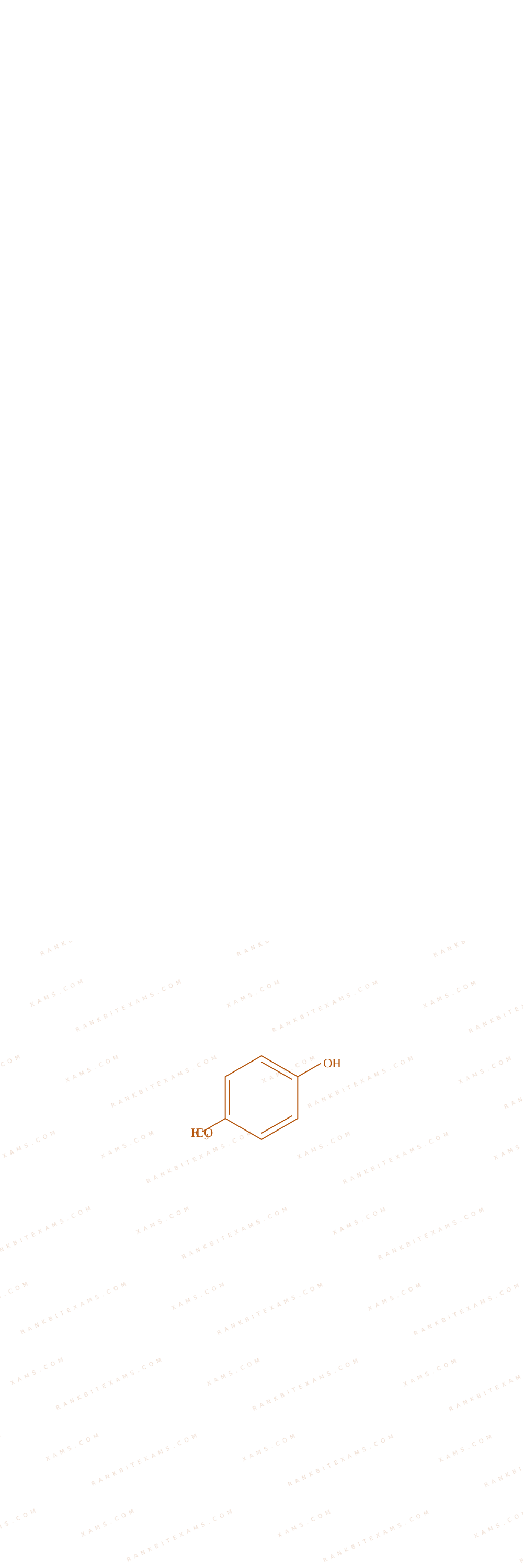
The compounds that produce CO₂ with aqueous NaHCO₃ solution are: A.
Acid structures profile for Q43 - JEE Main 2025 Morning
The prompt lists five structures labeled A through E evaluating structural acidities.
B.
Acid structures profile for Q43 - JEE Main 2025 Morning
The prompt lists five structures labeled A through E evaluating structural acidities.
C.
Acid structures profile for Q43 - JEE Main 2025 Morning
The prompt lists five structures labeled A through E evaluating structural acidities.
D.
Acid structures profile for Q43 - JEE Main 2025 Morning
The prompt lists five structures labeled A through E evaluating structural acidities.
E.
Acid structures profile for Q43 - JEE Main 2025 Morning
The prompt lists five structures labeled A through E evaluating structural acidities.
Choose the correct answer from the options given below:

Solution & Explanation

Core Logic

Organic compounds react with sodium bicarbonate (NaHCO₃) to liberate CO₂ gas if they are stronger acids than carbonic acid (H₂CO₃). Evaluating the structures:

  • A: Benzoic acid, which is significantly more acidic than carbonic acid.
  • C: Picric acid (2,4,6-trinitrophenol). Due to three strong electron-withdrawing nitro groups, its acidity exceeds typical carboxylic acids and H₂CO₃.
  • D: Benzenesulfonic acid, a highly strong mineral-like organic acid.
  • B & E: Standard phenols or weakly substituted phenols, which are less acidic than carbonic acid and do not liberate CO₂.
  • Therefore, structures A, C, and D give a positive test result.

Pattern Recognition

Sees: Sodium bicarbonate test for organic systems. Shortcut: Only carboxylic acids, sulfonic acids, and highly nitrated phenols like picric acid possess sufficient proton acidity to displace CO₂ from bicarbonate ions.

Chapter Mix

Class 11 Chemistry: Organic Chemistry - Some Basic Principles and Techniques

Reference Study Guides

More Organic Chemistry - Some Basic Principles and Techniques Previous-Year Questions — Page 4

Q55 jee_main_2026_28_january_morning Separation Techniques
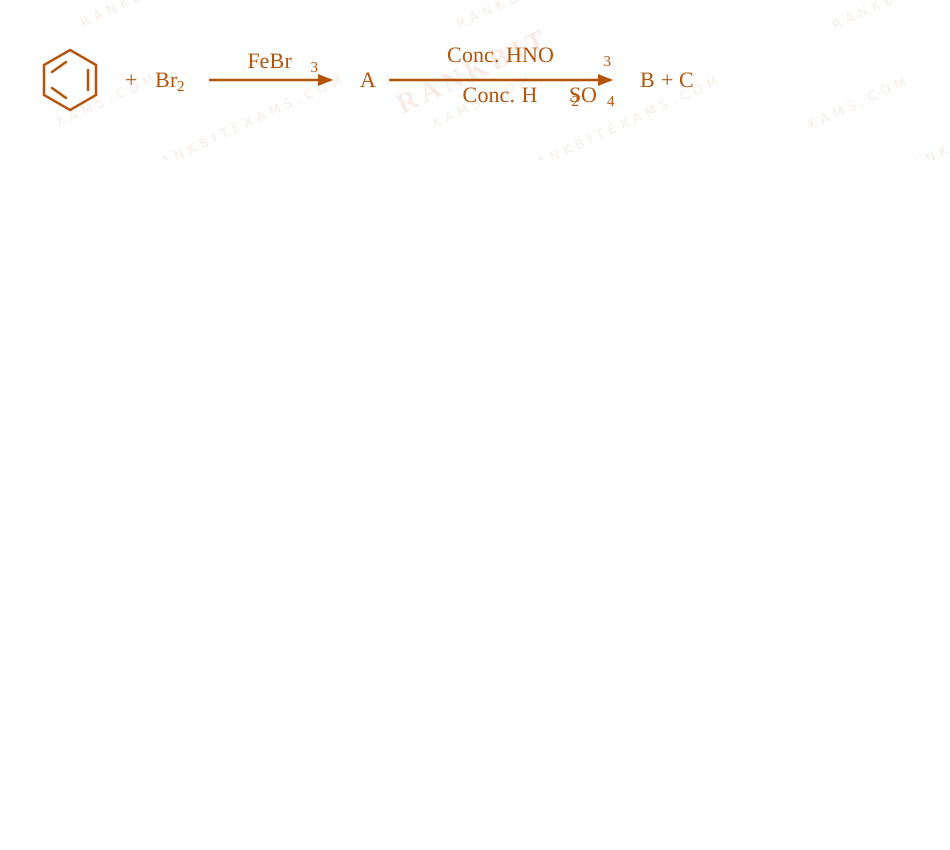
Method used for separation of mixture of products (B and C) obtained in the following reaction is:
Reaction yielding mixture B and C
Sequence of reactions on benzene yielding ortho and para substituted isomers.

Solution

Core Logic

The reaction of Benzene with Br₂ / FeBr₃ yields Bromobenzene (A). Nitration of Bromobenzene (conc. HNO₃ / conc. H₂SO₄) yields a mixture of ortho-bromonitrobenzene (B) and para-bromonitrobenzene (C).
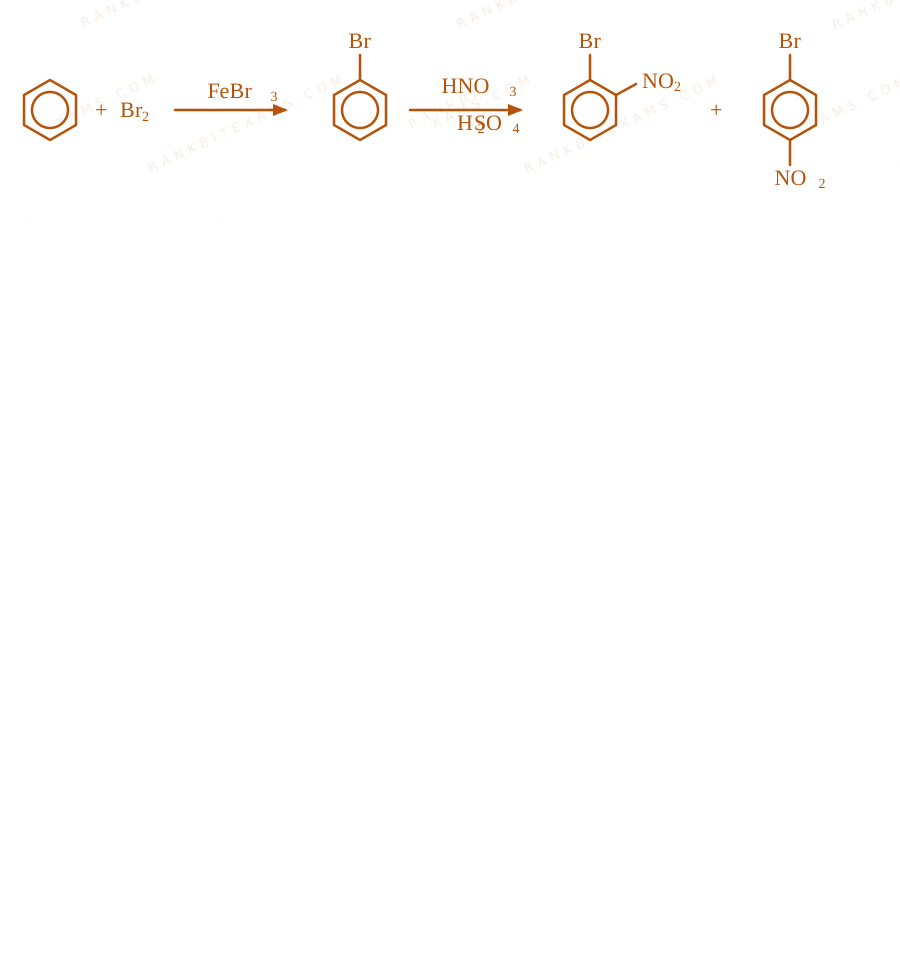
Separation of Ortho and Para isomers
Sequence of reactions on benzene yielding ortho and para substituted isomers.

Step 1: Justification of Separation Technique

The ortho and para isomers of bromonitrobenzene have differing boiling points but not sufficiently far apart for simple distillation. Thus, Fractional Distillation is the appropriate method to separate these positional isomers accurately based on slight differences in boiling points.

Pattern Recognition

Mixtures of isomeric organic liquids (like ortho/para derivatives) that differ mildly in boiling points are classically separated by fractional distillation.

Chapter Mix

Class 11 Chemistry: Organic Chemistry Some Basic Principles and Techniques Class 12 Chemistry: Haloalkanes and Haloarenes
Q74 jee_main_2026_28_january_morning Quantitative Analysis of Organic Compounds
0.53~g of an organic compound (x) when heated with excess of nitric acid (concentrated) and then with silver nitrate gave 0.75~g of silver bromide precipitate. 1.0~g of (x) gave 1.32~g of CO₂ gas on combustion. The percentage of hydrogen in the compound (x) is _____ %. [Nearest Integer] [Given : Molar mass in g~mol⁻¹ H : 1, C : 12, Br : 80, Ag : 108, O : 16; Compound (x) : CₓHyBrz]
Numerical Answer. Answer: 4 to 4

Solution

Step 1: Calculate Percentage of Carbon

1.0~g of compound gives 1.32~g of CO₂.\nMoles of CO₂ = (1.32)/(44) = 0.03~mol.\nMass of Carbon = 0.03 × 12 = 0.36~g.\nPercentage of C = ((0.36)/(1.0)) × 100 = 36%.

Step 2: Calculate Percentage of Bromine

0.53~g of compound gives 0.75~g of AgBr (Molar mass = 108 + 80 = 188~g/mol).\nMass of Br = ((80)/(188)) × 0.75 ≈ 0.319~g.\nPercentage of Br = ((0.319)/(0.53)) × 100 = 60.2%.

Step 3: Calculate Percentage of Hydrogen

The compound strictly consists of C, H, and Br (as formula is given as CₓHyBrz).\nPercentage of H = 100 - (%C + %Br)\nPercentage of H = 100 - (36 + 60.2) = 100 - 96.2 = 3.8%.\nRounding off to the nearest integer, we get 4%.

Pattern Recognition

For basic gravimetric elemental analysis: always map precipitate mass back to elemental mass using strict molar mass ratios, then find mass fractions, ensuring everything sums to 100%.

Chapter Mix

Class 11 Chemistry: Organic Chemistry Some Basic Principles and Techniques

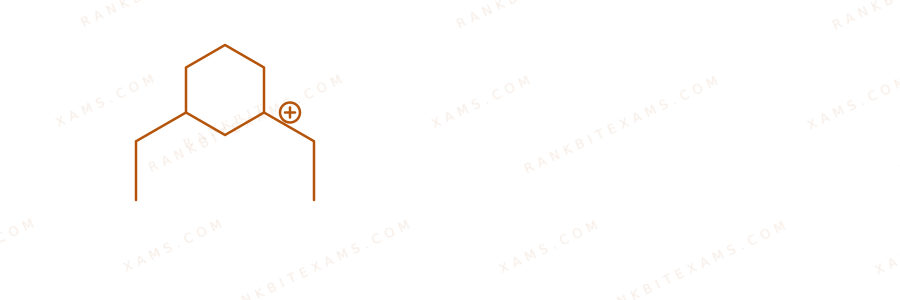
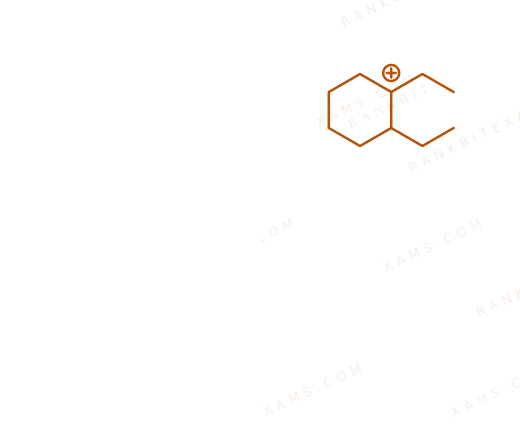
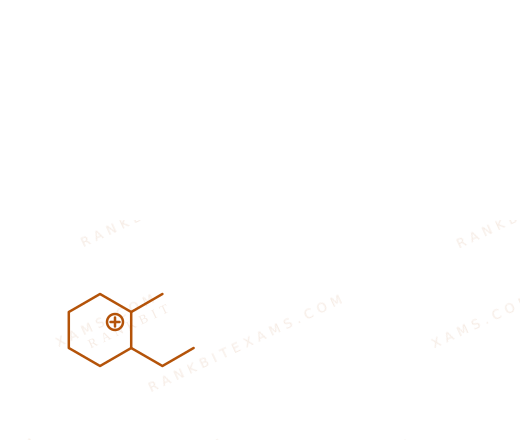
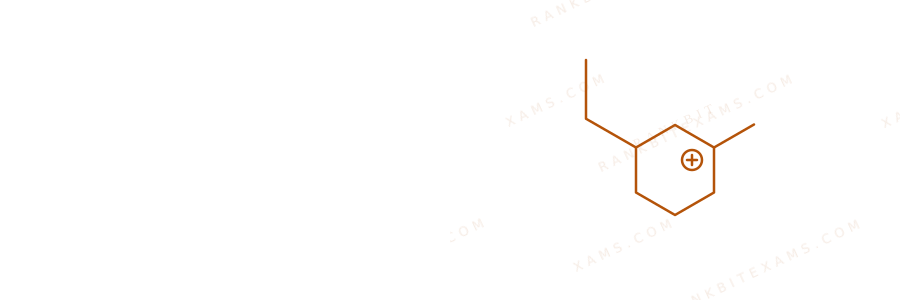
Q60 jee_main_2026_28_january_evening Hyperconjugation
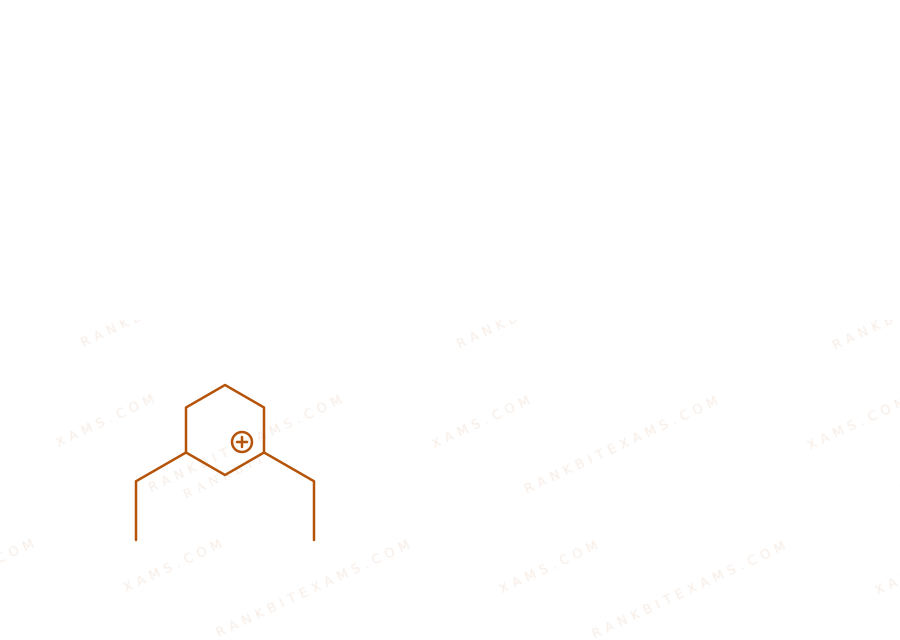
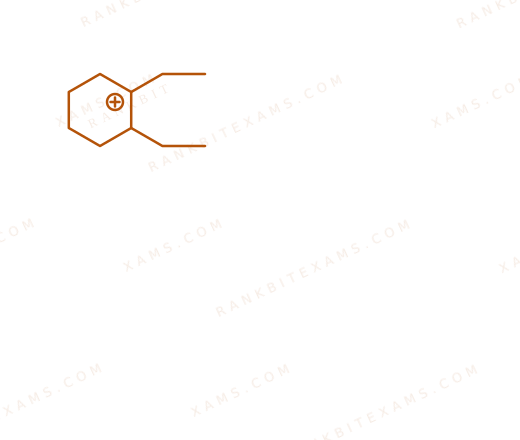
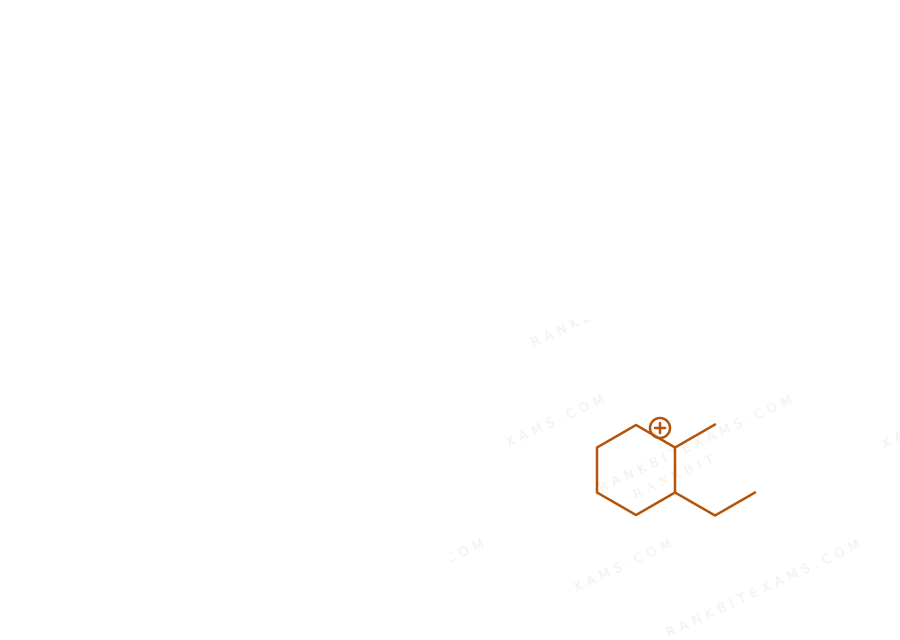
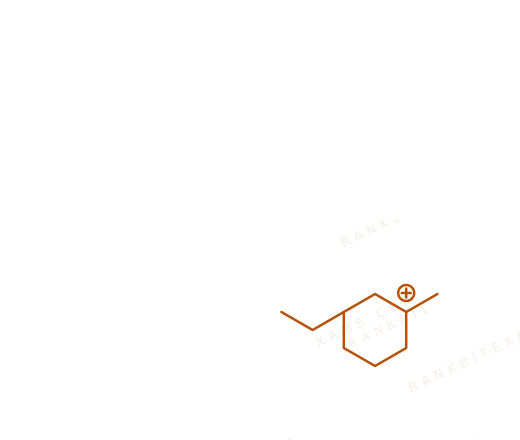
The cyclic cations having the same number of hyperconjugation are : A.
Hyperconjugation
Hyperconjugation
B.
Hyperconjugation
Hyperconjugation
C.
Hyperconjugation
Hyperconjugation
D.
Hyperconjugation
Hyperconjugation
Choose the correct answer from the options given below :
  • A. (1) A and C Only
  • B. (2) B and C Only
  • C. (3) A and B Only
  • D. (4) A, C and D only

Solution

Core Logic

Count the number of alpha hydrogens (α-H) adjacent to the carbocation in each structure. (A)

Hyperconjugation
Hyperconjugation
α-H = 6 (B)
Hyperconjugation
Hyperconjugation
α-H = 7 (C)
Hyperconjugation
Hyperconjugation
α-H = 6 (D)
Hyperconjugation
Hyperconjugation
α-H = 5

Step 1: Final Conclusion

Both cations (A) and (C) have 6 α-hydrogens, meaning they share the same number of hyperconjugative structures.

Pattern Recognition

Hyperconjugation count corresponds strictly to the number of C-H bonds on the carbon atoms immediately adjacent (sp³) to the positive center.

Chapter Mix

Class 11 Chemistry: Organic Chemistry - Some Basic Principles and Techniques

Q70 jee_main_2026_28_january_evening Quantitative Analysis Of Elements
A student has been given 0.314 g of an organic compound and asked to estimate Sulphur. During the experiment, the student has obtained 0.4813 g of barium sulphate. The percentage of sulphur present in the compound is (Given Molar mass in g mol⁻¹ S:32, BaSO₄:233)
  • A. (1) 42.10%
  • B. (2) 63.15%
  • C. (3) 21.05%
  • D. (4) 48.24%

Solution

Related Formula
% of S = (32)/(233) × Mass of BaSO₄Mass of organic compound × 100
Core Logic

Mass of organic compound = 0.314 g Mass of BaSO₄ formed = 0.4813 g Substituting the values:

% S = (32)/(233) × (0.4813)/(0.314) × 100 % S = 0.1373 × 1.5328 × 100 ≈ 21.052%
Step 1: Final Conclusion

The percentage of sulphur is approximately 21.05%.

Pattern Recognition

Straight application of Carius method for Sulphur estimation formula.

Chapter Mix

Class 11 Chemistry: Organic Chemistry - Some Basic Principles and Techniques

Q jee_main_2025_02_april_evening Hybridization in Organic Compounds
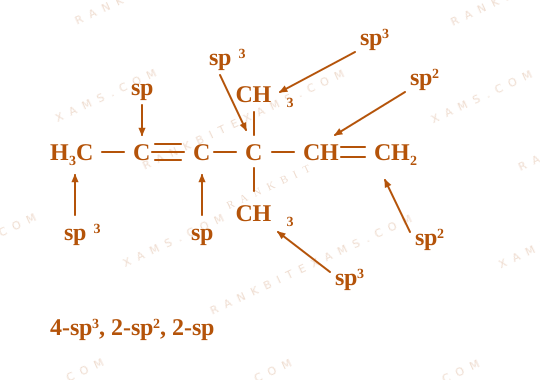
In 3, 3-dimethylhex-1-ene-4-yne, there are sp³, sp² and sp hybridised carbon atoms respectively:
  • A. 4, 2, 2
  • B. 3, 3, 2
  • C. 2, 4, 2
  • D. 2, 2, 4

Solution

Related Formula
Hybridization of Carbon = cases sp³ & 4~σ-bonds sp² & 3~σ-bonds, 1~π-bond sp & 2~σ-bonds, 2~π-bonds cases
Core Logic

Let's first draw the structural formula of 3,3-dimethylhex-1-ene-4-yne:

Hybridization in Organic Compounds

6CH₃ - 5C ≡ 4C - 3C(CH₃)₂ - 2CH = 1CH₂
Step 1: Identify Hybridization of Each Carbon

We count the sigma (σ) bonds or pi (π) bonds on each carbon:

  • C₁: Involved in a double bond (CH₂ =) sp²
  • C₂: Involved in a double bond (=CH-) sp²
  • C₃: Single bonds only (bonded to C₂, C₄, and two methyl carbons) sp³
  • Two methyl carbons attached to C₃: Single bonds only 2 × sp³
  • C₄: Involved in a triple bond (-C ≡) sp
  • C₅: Involved in a triple bond (≡ C-) sp
  • C₆: Single bonds only (-CH₃) sp³
Step 2: Calculate the Count

Summing the hybridization counts:

  • sp³ carbons: C₃, C₆, and 2 × CH₃ on C₃ = 4 carbon atoms
  • sp² carbons: C₁ and C₂ = 2 carbon atoms
  • sp carbons: C₄ and C₅ = 2 carbon atoms
  • Thus, the number of sp³, sp² and sp hybridized carbons is 4, 2, 2 respectively.

Pattern Recognition

Quick Tip: Always draw side substituents (like methyl groups) explicitly. A common mistake is to skip counting the methyl substituent carbons as sp³.

Chapter Mix

Class 11 Chemistry: Organic Chemistry - Some Basic Principles and Techniques

More Organic Chemistry - Some Basic Principles and Techniques Questions — jee_main_2025_28_jan_morning

Practice all Organic Chemistry - Some Basic Principles and Techniques previous-year questions →

Rankbit System
JEE Physics: Waves (+15.5%) | Electrostatics: Concentric Shells (-29.7%) | Modern Physics: Photoelectric Clones (+34.2%) | Mathematics: Definite Integrals (+18.1%) | Chemistry: Coordination Splitting (-11.4%) | JEE Physics: Waves (+15.5%) | Electrostatics: Concentric Shells (-29.7%) | Modern Physics: Photoelectric Clones (+34.2%) | Mathematics: Definite Integrals (+18.1%) | Chemistry: Coordination Splitting (-11.4%)