JEE Main · Chemistry ↓ Falling

Haloalkanes and Haloarenes appeared 40 times across 3 years — 4.7% of Chemistry. This question is from Ambident Nucleophiles Reactions.

Year 2026 2025 2024 Total
Questions 11 16 13 40

The products A and B in the following reactions, respectively are A A g - N O _ 2 C H _ 3 - C H _ 2 - C H _ 2 - B r A g C N B

Solution & Explanation

Core Logic

Both silver reagents exhibit significantly covalent bond characters:

  • Reaction with AgNO₂: The bond between silver and oxygen is covalent, making the lone pair on the nitrogen atom the primary nucleophilic site. Attack via nitrogen yields a nitroalkane product:
A = CH₃-CH₂-CH₂-NO₂
  • Reaction with AgCN: The covalent Ag-C bond directs the nucleophilic attack to proceed through the lone pair on nitrogen, yielding an isocyanide compound:
B = CH₃-CH₂-CH₂-NC

Hence, option (4) represents the correct combination.

Pattern Recognition

Sees: Alkyl halide reacting with covalent silver salts of ambident anions. Shortcut: Silver reagents (AgCN or AgNO₂) drive bond formatting via the nitrogen center, producing isocyanides and nitroalkanes respectively.

Chapter Mix

Class 12 Chemistry: Haloalkanes and Haloarenes

Reference Study Guides

More Haloalkanes and Haloarenes Previous-Year Questions — Page 3

Q58 jee_main_2026_28_january_evening Halogenation Reactions
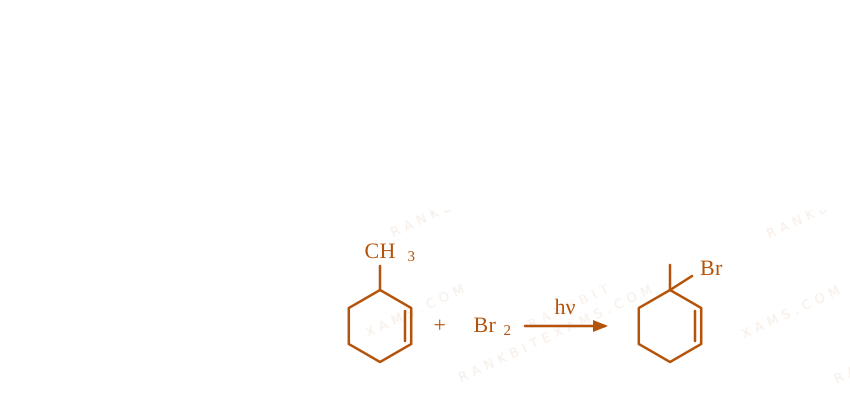
Which of the following reaction is NOT correctly represented ?
  • A. (1)
  • B. (2)
  • C. (3)
  • D. (4) C₆H₅CH₃ [Br₂, Fe]Dark Ortho and para Bromotoluenes

Solution

Core Logic

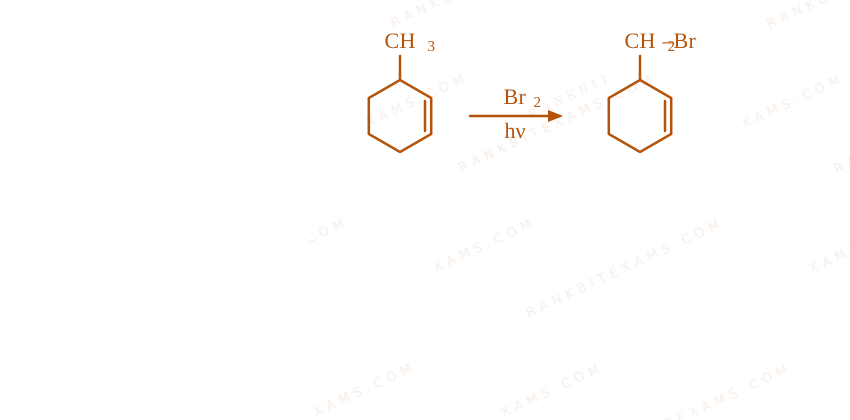
Analyzing each option: (1) Alkyl substitution reaction with Br₂, hν (free radical substitution) targets the most stable free radical. The allylic or benzylic position is preferred. In the given structure
Halogenation Reactions
, the most stable radical is 3° allylic radical, leading to the major product
Halogenation Reactions
. The option portrays substitution at the terminal carbon, which is incorrect.

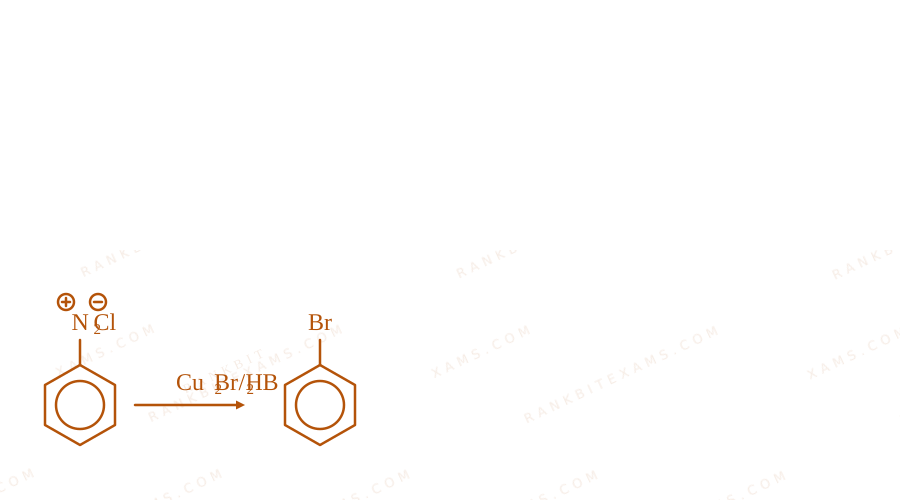
(2) Reaction involves diazotization followed by Sandmeyer reaction with Cu₂Br₂/HBr
Halogenation Reactions
, converting aromatic amine to aryl bromide correctly.

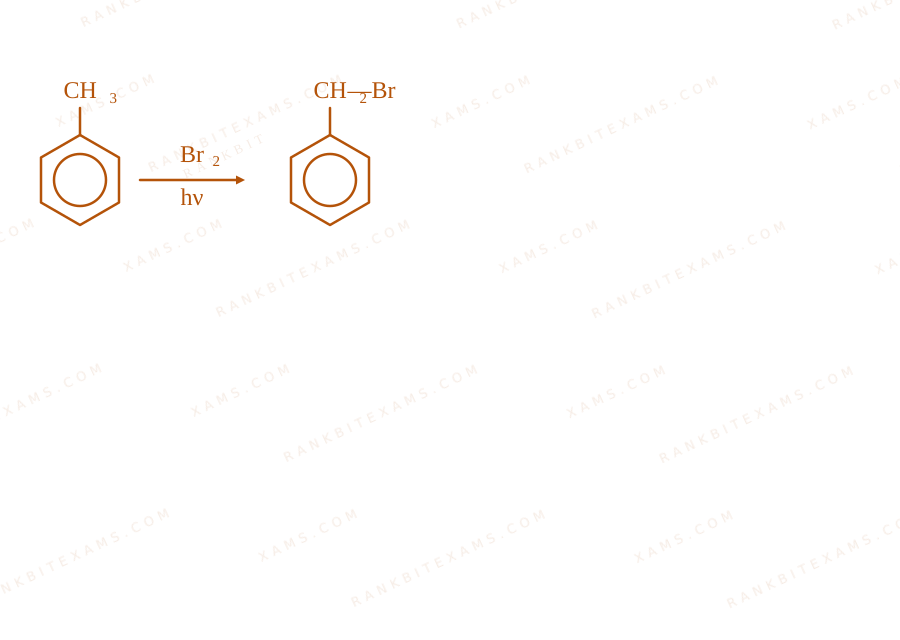
(3) Free radical halogenation on toluene side-chain
Halogenation Reactions
selectively forms benzyl bromide. Correct.

(4) Electrophilic aromatic substitution of toluene with Br₂/Fe in the dark correctly
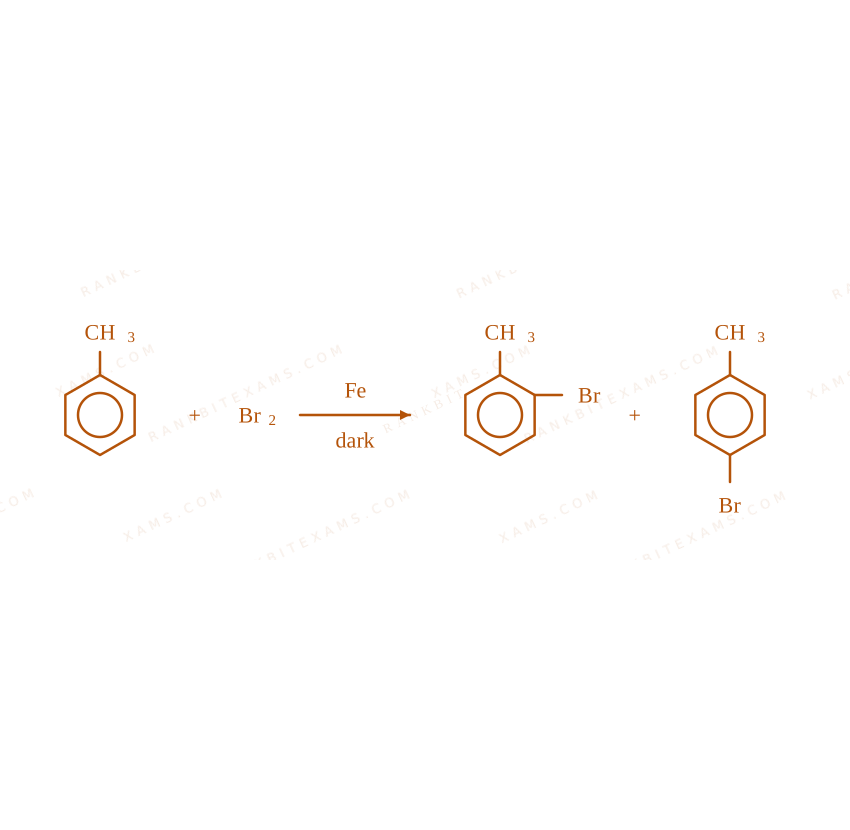
Halogenation Reactions
produces ortho and para isomers. Correct.

Step 1: Final Conclusion

Reaction (1) is incorrectly represented as it gives a 1° radical product rather than the more stable 3° substituted major product.

Pattern Recognition

Free radical halogenation favors 3° > 2° > 1° substitution due to intermediate stability. Allylic and benzylic are even more favored. Always check if the halogen landed on the most substituted available carbon.

Chapter Mix

Class 12 Chemistry: Haloalkanes and Haloarenes
Q jee_main_2025_02_april_evening Chemical Reactions and Named Rules
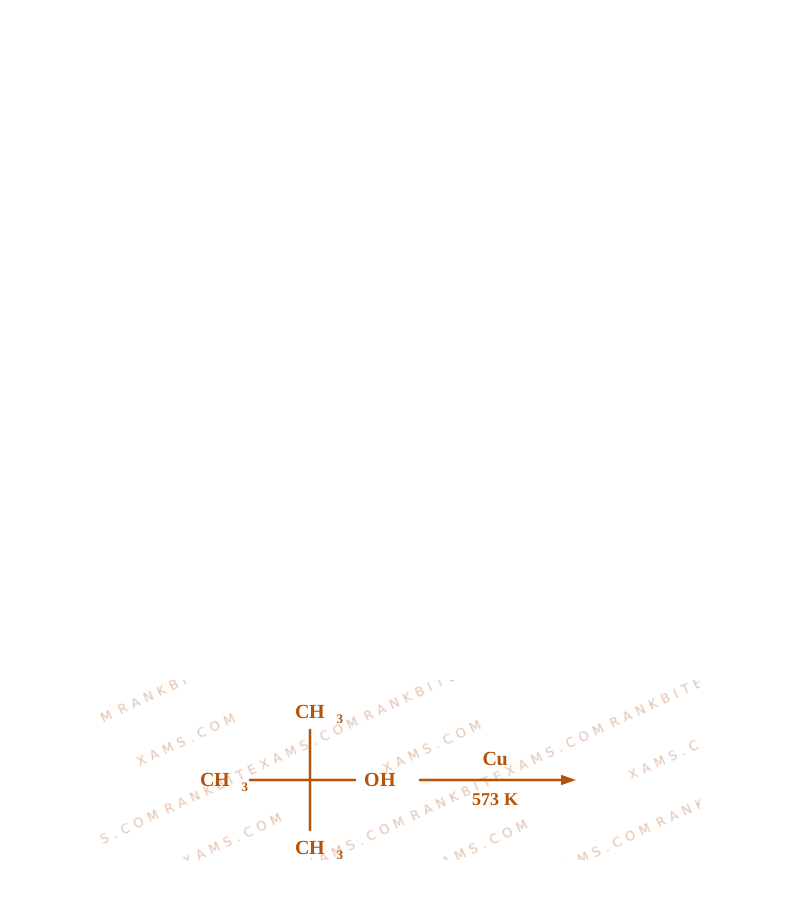
Match List-I with List-II: array|l|l| arrayc List-I (Reaction) array & arrayc List-II (Name of reaction) array (A) 2Ar-X + 2Na Dry Ether Ar-Ar + 2NaX & (I) Lucas reaction (B) ArN₂^+X^- Cu / HCl ArCl + N₂ + CuX & (II) Finkelstein reaction (C) C₂H₅Br + NaI Dry Acetone C₂H₅I + NaBr & (III) Fittig reaction (D) CH₃C(OH)(CH₃)CH₃ HCl / ZnCl₂ CH₃C(Cl)(CH₃)CH₃ & (IV) Gatterman reaction array Choose the correct answer from the options given below:
  • A. (A)-(III), (B)-(II), (C)-(IV), (D)-(I)
  • B. (A)-(III), (B)-(IV), (C)-(II), (D)-(I)
  • C. (A)-(IV), (B)-(III), (C)-(I), (D)-(II)
  • D. (A)-(IV), (B)-(I), (C)-(II), (D)-(III)

Solution

Related Formula
Named Organic Transformations
Core Logic

Let us systematically match each reaction in List-I to its standardized organic reaction name in List-II:

  • Reaction (A): Coupling of two aryl halides with sodium metal in dry ether to form biaryl is the classic Fittig reaction arrow (III).
  • Reaction (B): Conversion of benzene diazonium chloride to aryl halide using copper powder (Cu) in halogen acids like HCl is the Gatterman reaction arrow (IV).
  • Reaction (C): Substitution of halogen in an alkyl halide with sodium iodide (NaI) in dry acetone solvent is the classic halogen exchange method called the Finkelstein reaction arrow (II).
  • Reaction (D): Replacement of the hydroxyl group in tertiary butyl alcohol with chlorine using conc. HCl in the presence of anhydrous ZnCl₂ catalyst is the Lucas reaction arrow (I).
Step 1: Selection

Combining the selections, the correct sequence is: (A)-(III), (B)-(IV), (C)-(II), (D)-(I)

This maps directly to option (2).

Pattern Recognition

Named reaction matching questions are very straightforward. Keep a clear distinction between the Sandmeyer reaction (which uses cuprous halide, e.g. Cu₂Cl₂) and the Gatterman reaction (which uses copper powder, Cu).

Chapter Mix

Class 12 Chemistry: Haloalkanes and Haloarenes
Q48 jee_main_2025_02_april_evening Elimination and Addition Reaction Sequences
Consider the following sequence of reactions: CH₃-CH₂-CH₂-CH(Br)-CH₃ alcoholic KOH P (Major Product) Br₂ Q Consider the above sequence of reactions. 151~g of 2-bromopentane is made to react. Yield of major product P is 80% whereas Q is 100%. Mass of product Q obtained is _______ g. Given molar mass in g~mol⁻¹ H: 1, C: 12, O: 16, Br: 80
Numerical Answer. Answer: 184 to 184

Solution

Related Formula
Actual Yield = Theoretical Yield × % Yield
Core Logic

Let us break down each chemical reaction step:

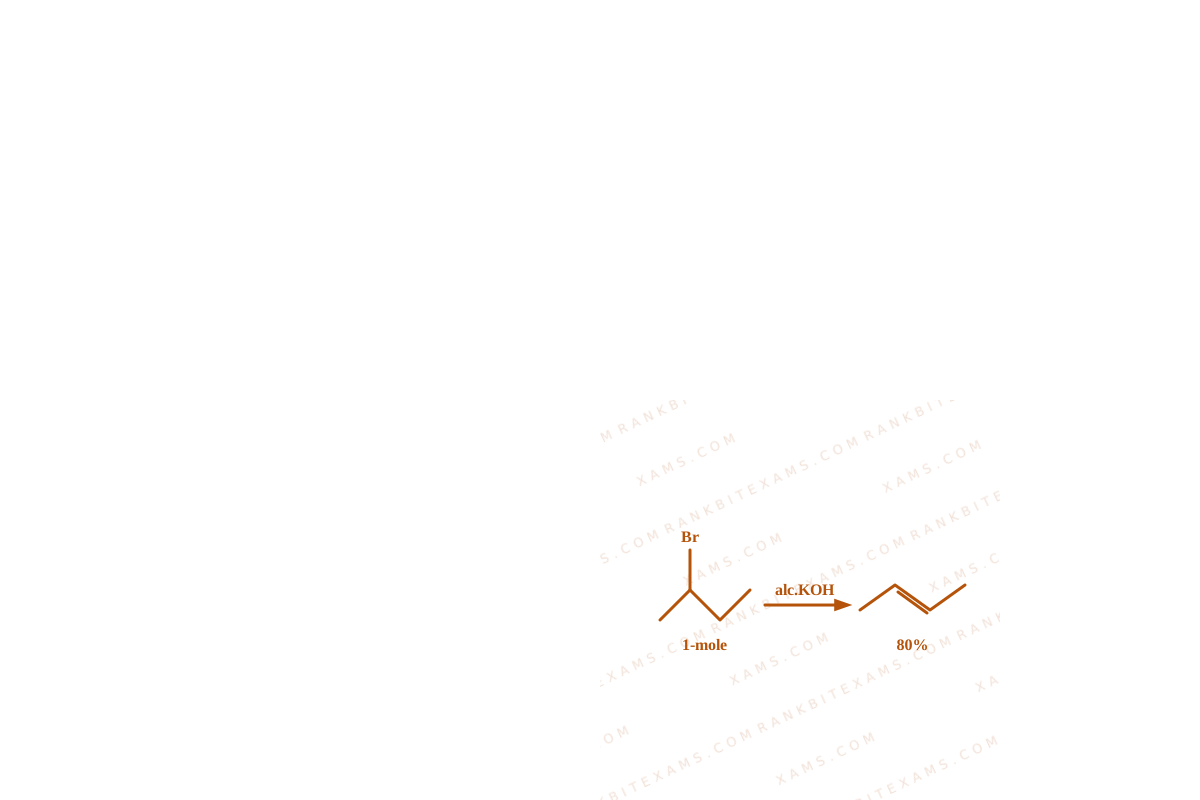
  • Step 1: 2-bromopentane undergoes dehydrohalogenation via an E2 mechanism using alcoholic KOH. According to Saytzeff's rule, the more substituted alkene is the major product. Thus, pent-2-ene is the major product P.
  • Chemical reaction showing elimination of 2-bromopentane to form pent-2-ene
    Chemical reaction showing elimination of 2-bromopentane to form pent-2-ene

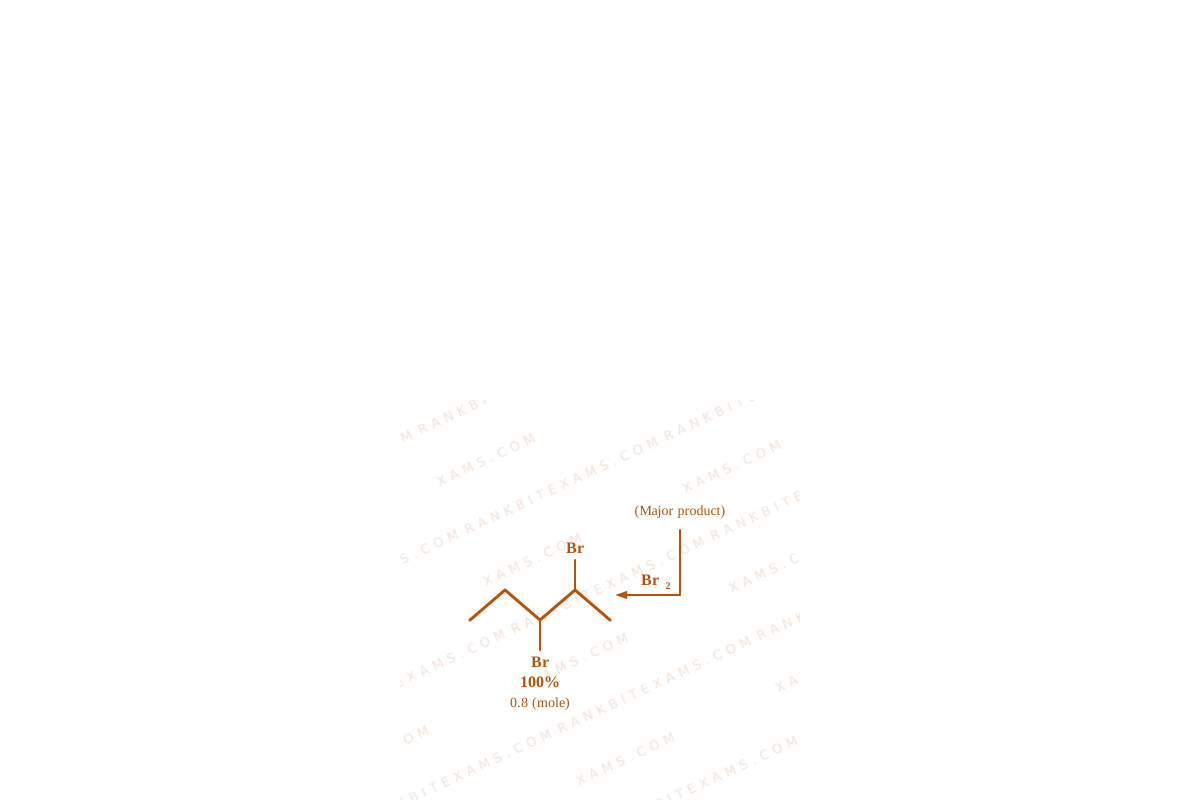
  • Step 2: Pent-2-ene undergoes electrophilic bromination with liquid bromine (Br₂) to give 2,3-dibromopentane (product Q):
  • Chemical reaction showing elimination of 2-bromopentane to form pent-2-ene
    Chemical reaction showing elimination of 2-bromopentane to form pent-2-ene

Step 1: Calculate Initial Moles of Reactant

Calculate the molar mass of 2-bromopentane (C₅H₁₁Br):

Molar mass = 5(12) + 11(1) + 80 = 60 + 11 + 80 = 151~ g~mol⁻¹ Initial moles = 151~g151~ g~mol⁻¹ = 1~mol
Step 2: Calculate Moles of Intermediate P and Q

Since the yield of P is 80%:

Moles of P formed = 1 × 0.80 = 0.8~mol

Since the conversion of P arrow Q has a yield of 100%, the mole count remains stoichiometric:

Moles of Q formed = 0.8 × 1.00 = 0.8~mol
Step 3: Calculate Mass of Q

Product Q is 2,3-dibromopentane (C₅H₁₀Br₂). Calculate its molar mass:

Molar mass of Q = 5(12) + 10(1) + 2(80) = 60 + 10 + 160 = 230~ g~mol⁻¹ Mass of Q = 0.8 × 230 = 184~g
Pattern Recognition

Saytzeff vs Hofmann: Alcoholic KOH is a small, non-bulky base, which selectively targets the internal secondary proton to yield the thermodynamic trans-alkene (pent-2-ene) as the major product rather than the terminal 1-alkene.

Chapter Mix

Class 12 Chemistry: Haloalkanes and Haloarenes
Q jee_main_2025_02_april_morning Reactions of Alkyl Halides and Alkyne Hydration
An optically active alkyl halide C₄H₉Br [A] reacts with hot KOH dissolved in ethanol and forms alkene [B] as major product which reacts with bromine to give dibromide [C]. The compound [C] is converted into a gas [D] upon reacting with alcoholic NaNH₂. During hydration 18 gram of water is added to 1 mole of gas [D] on warming with mercuric sulphate and dilute acid at 333K to form compound [E]. The IUPAC name of compound [E] is :
  • A. (1) But-2-yne
  • B. (2) Butan-2-ol
  • C. (3) Butan-2-one
  • D. (4) Butan-1-al

Solution

Related Formula

Dehydrohalogenation via alcoholic KOH follows E2 elimination mechanism:

R-CH₂-CH(Br)-R' alc. KOH R-CH=CH-R'

Hydration of alkynes using HgSO₄/H₂SO₄ yields ketones via keto-enol tautomerism.

Core Logic

Let's trace the full sequence line-by-row:

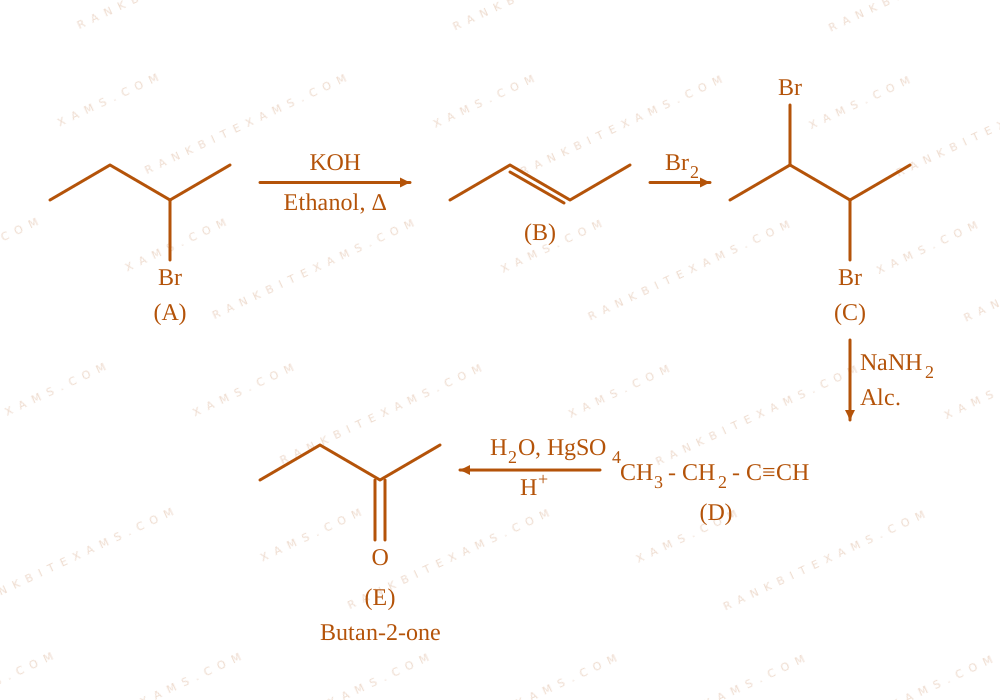
  • [A] is an optically active halide with formula C₄H₉Br arrow CH₃-CH(Br)-CH₂-CH₃ (2-Bromobutane).
  • Reaction of [A] with hot ethanolic KOH produces [B] as the major product: CH₃-CH=CH-CH₃ (But-2-ene).
  • Treatment of [B] with Br₂ yields a vicinal dibromide [C]: CH₃-CH(Br)-CH(Br)-CH₃ (2,3-Dibromobutane).
  • Reaction of [C] with alcoholic NaNH₂ converts it via double dehydrohalogenation into gas [D]: CH₃-C≡ C-CH₃ (But-2-yne).
  • Hydration of 1 mole of [D] with H₂O in the presence of Hg²⁺/H^+ forms an enol intermediate that rapidly tautomerizes to compound [E]: CH₃-CO-CH₂-CH₃ (Butan-2-one).
Step 1: Visualization

Reaction roadmap step verification for Q27

Pattern Recognition

Whenever you see a 4-carbon chain undergoing terminal/internal dehydrohalogenation followed by hydration of the resulting alkyne, look closely at the configuration: symmetric or unsymmetric alkyne hydration both systematically lead to Butan-2-one because a stable ketone cannot form on position 1 via standard Kucherov hydration of an internal chain.

Chapter Mix

Class 12 Physics: Haloalkanes and Haloarenes Class 11 Chemistry: Hydrocarbons Class 12 Chemistry: Aldehydes, Ketones and Carboxylic Acids

Q jee_main_2025_07_april_morning Elimination Reactions
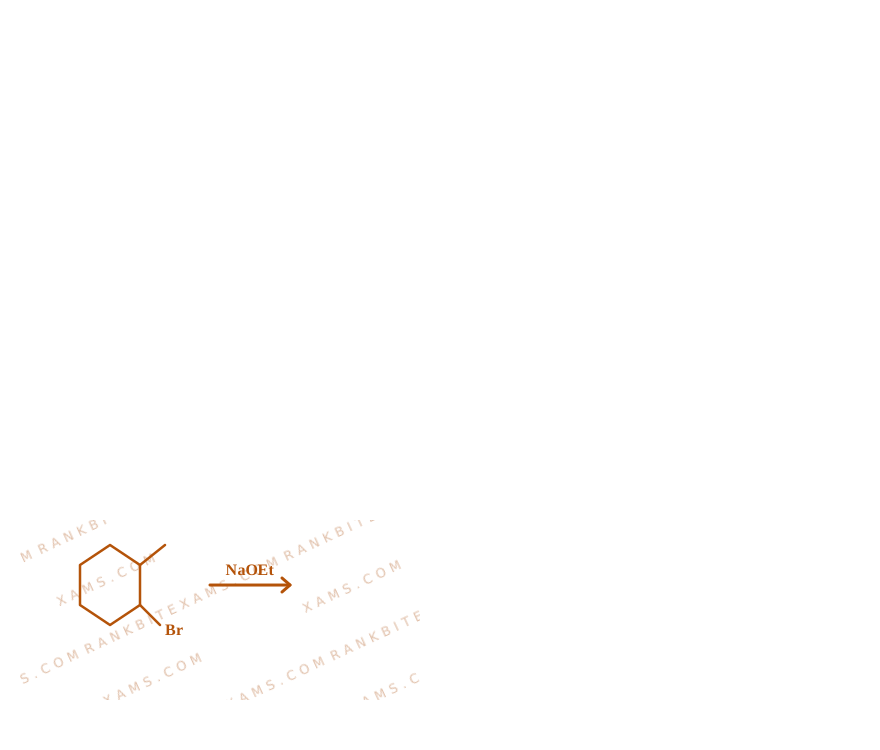
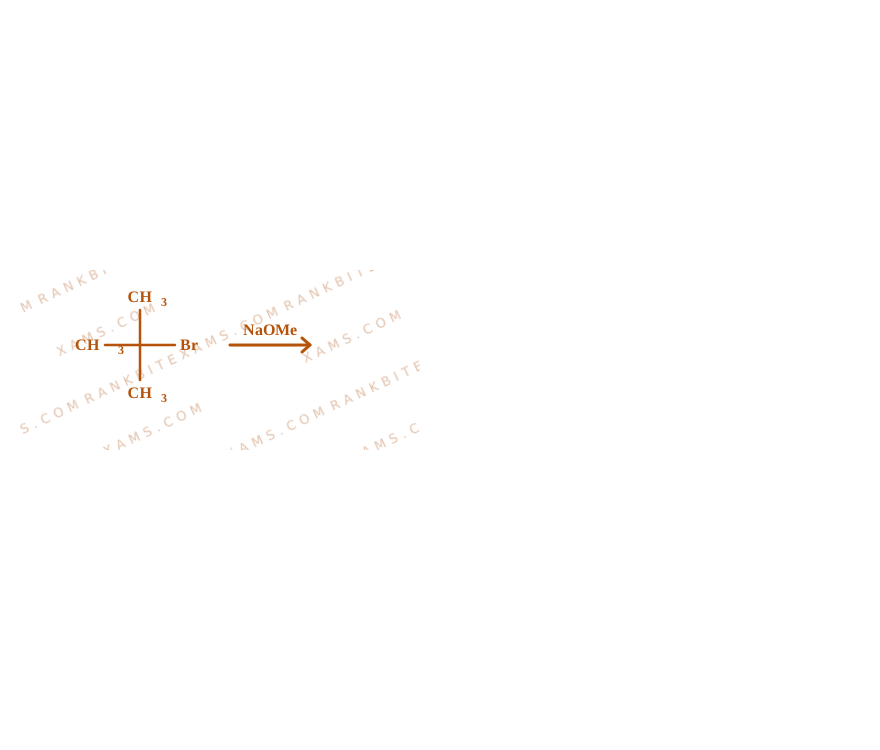
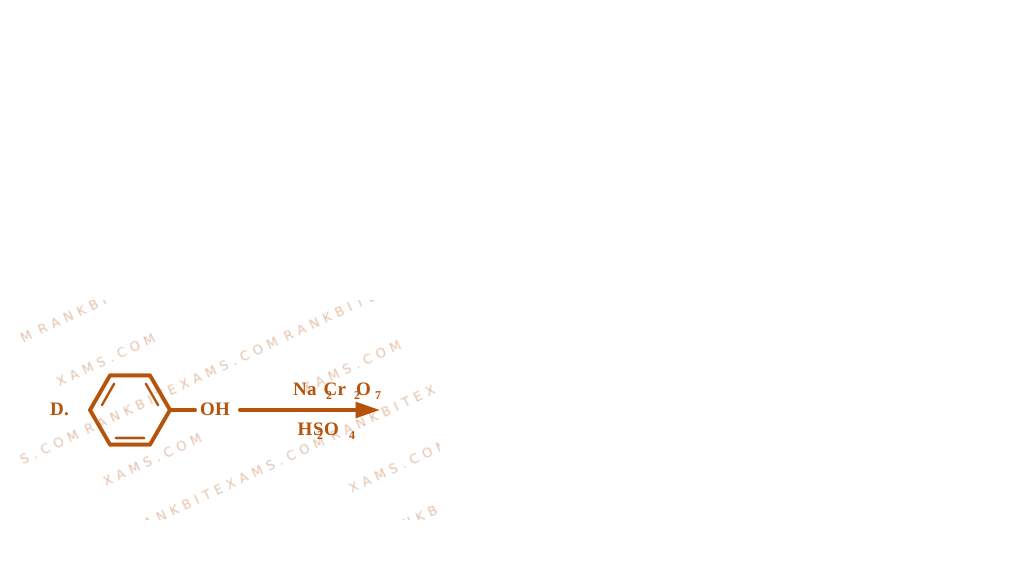
The reactions which cannot be applied to prepare an alkene by elimination, are: A.
Secondary alkyl halide reaction with aqueous KOH diagram for Q45
Four different reaction schemes illustrating elimination, substitution, oxidation, and dehydrogenation conditions.
B. CH₃ - CH₂ - |BrCH - CH₃ KOH (aq.) C.
Secondary alkyl halide reaction with aqueous KOH diagram for Q45
Four different reaction schemes illustrating elimination, substitution, oxidation, and dehydrogenation conditions.
D.
Secondary alkyl halide reaction with aqueous KOH diagram for Q45
Four different reaction schemes illustrating elimination, substitution, oxidation, and dehydrogenation conditions.
E.
Secondary alkyl halide reaction with aqueous KOH diagram for Q45
Four different reaction schemes illustrating elimination, substitution, oxidation, and dehydrogenation conditions.
Choose the correct answer from the options given below:
  • A. B & E Only
  • B. B, C & D Only
  • C. A, C & D Only
  • D. B & D Only

Solution

Core Logic

{{SOLUTION_IMG}} Option (B) and (D) reaction are not able to form alkene as a product.

Pattern Recognition

Aqueous KOH on alkyl halides favors substitution (forming alcohols) over elimination. Strong oxidizing mixtures like sodium dichromate oxidize secondary alcohols to ketones instead of dehydrating them.

Chapter Mix

Class 12 Chemistry: Organic Compounds Containing Halogens Class 12 Chemistry: Alcohols, Phenols and Ethers

More Haloalkanes and Haloarenes Questions — jee_main_2025_28_jan_morning

Practice all Haloalkanes and Haloarenes previous-year questions →

Rankbit System
JEE Physics: Waves (+15.5%) | Electrostatics: Concentric Shells (-29.7%) | Modern Physics: Photoelectric Clones (+34.2%) | Mathematics: Definite Integrals (+18.1%) | Chemistry: Coordination Splitting (-11.4%) | JEE Physics: Waves (+15.5%) | Electrostatics: Concentric Shells (-29.7%) | Modern Physics: Photoelectric Clones (+34.2%) | Mathematics: Definite Integrals (+18.1%) | Chemistry: Coordination Splitting (-11.4%)