Solution
Related Formula
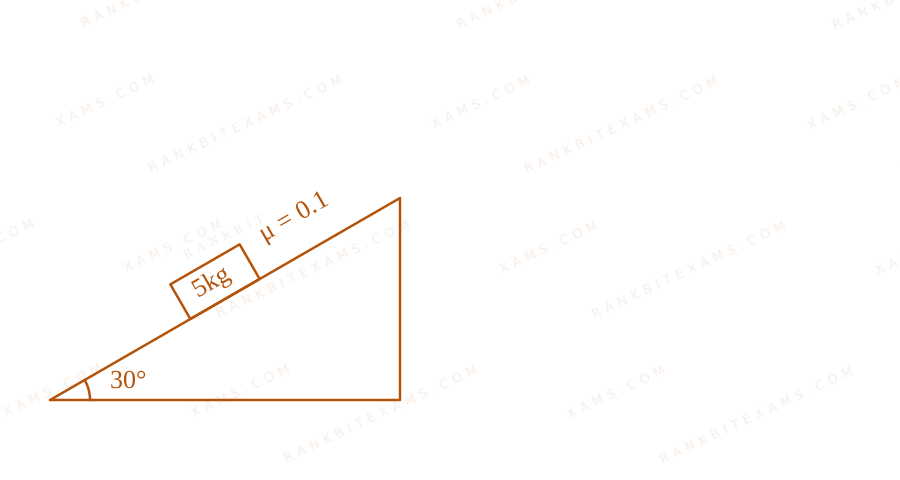
fk = μ mg θ F₁ = mg θ + fk F₂ = mg θ - fkCore Logic
To move the block up, the applied force F₁ must overcome both the downward gravitational component and the downward frictional force. To prevent it from sliding down, the applied force F₂ acts upwards and is aided by friction which acts upwards to oppose impending downward slip.
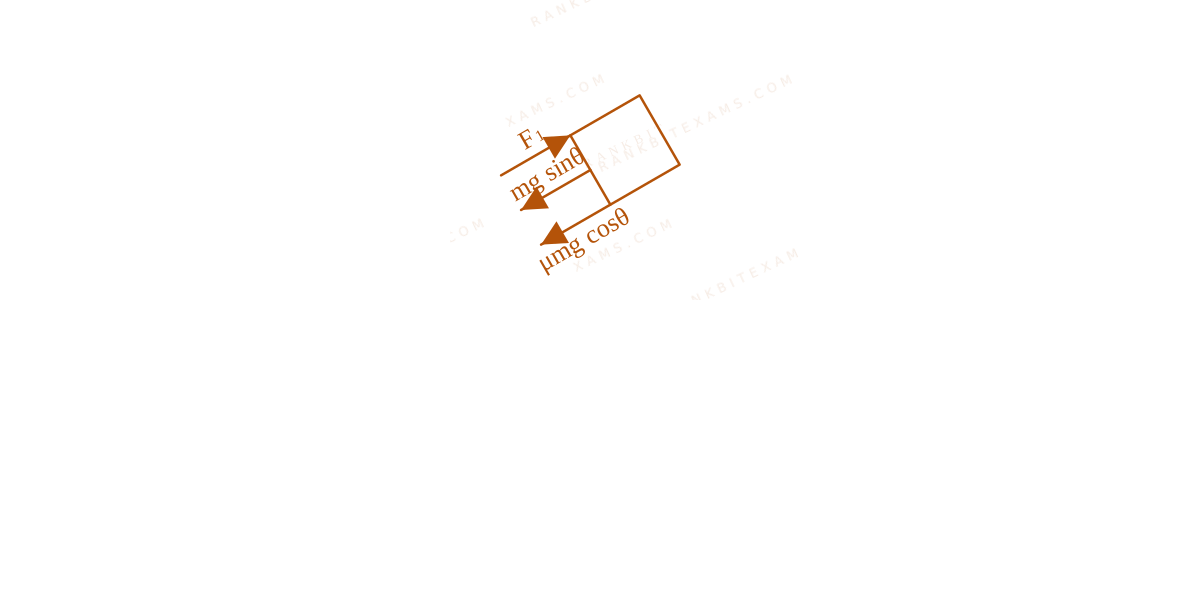

Step 1: Calculate Friction
fk = μ mg θ fk = 0.1 × 5 × 10 × (30°) fk = 5 × √(3)2 = 2.5√(3) NStep 2: Force Equations
Moving up:
F₁ = mg θ + fk = 50 (30°) + 2.5√(3) = 25 + 2.5√(3)Preventing slip down:
F₂ = mg θ - fk = 50 (30°) - 2.5√(3) = 25 - 2.5√(3)Step 3: Difference calculation
|F₁| - |F₂| = (25 + 2.5√(3)) - (25 - 2.5√(3)) |F₁| - |F₂| = 2 × 2.5√(3) = 5√(3) NNote: The official options had an anomaly where 5√(3) N was missing or evaluated as a bonus. Option 2 was listed as 50√(3) in the primary text. We track the closest logic path indicating Bonus.
Pattern Recognition
The difference between 'push up' and 'hold from sliding' forces on an incline is always precisely 2 fk (2 μ mg θ). Bypass calculating the mg θ terms entirely.
Chapter Mix
Class 11 Physics: Laws of Motion