Q79
jee_main_2024_27_jan_morning
Nucleophilic Substitution Mechanisms
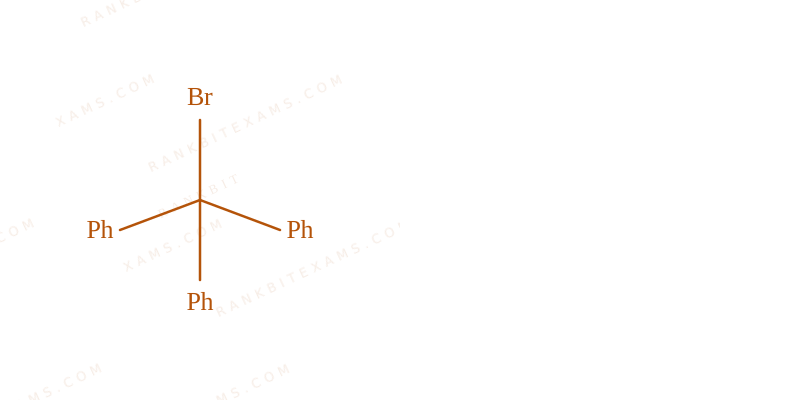
The correct statement regarding nucleophilic substitution reaction in a chiral alkyl halide is;
Solution
Core Logic
In an SN1 pathway, a planar carbocation intermediate is produced. Attack by the nucleophile can take place with equal probability from either side, resulting in complete/partial racemisation. In an SN2 pathway, the nucleophile attacks exclusively from the backside opposite the leaving group, causing an absolute structural inversion (Walden inversion).
Pattern Recognition
SN1 arrow planar intermediate carbocation arrow Racemisation. SN2 arrow direct backside launch arrow Inversion.
Chapter Mix
Class 12 Chemistry: Haloalkanes and Haloarenes