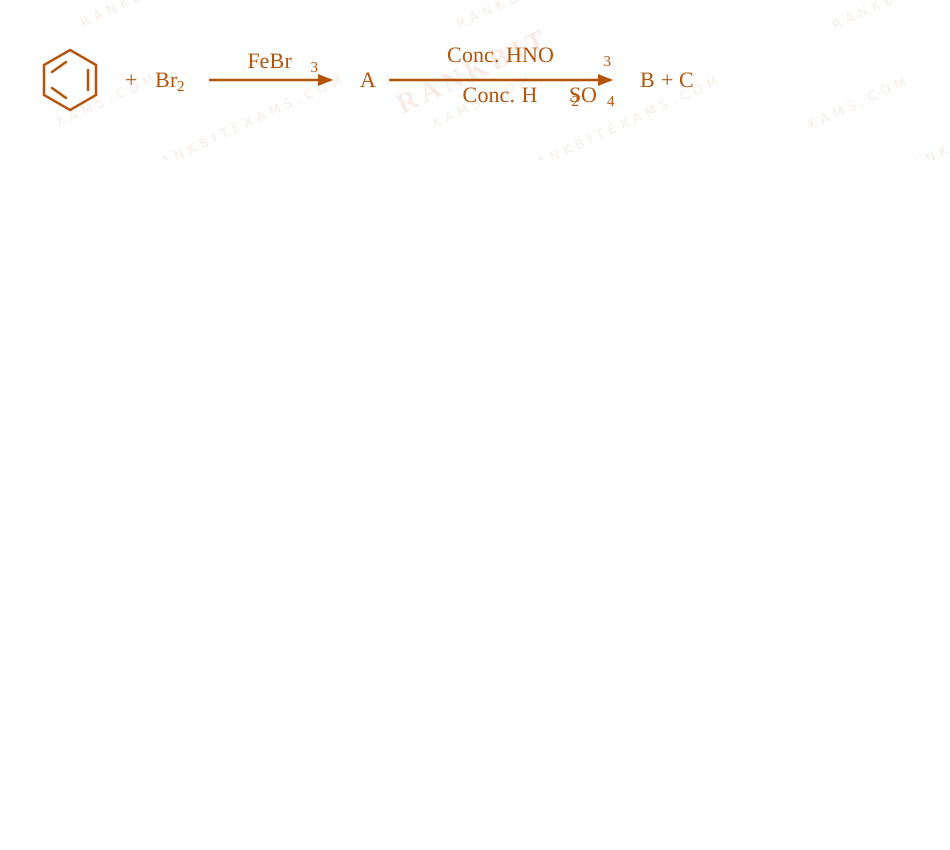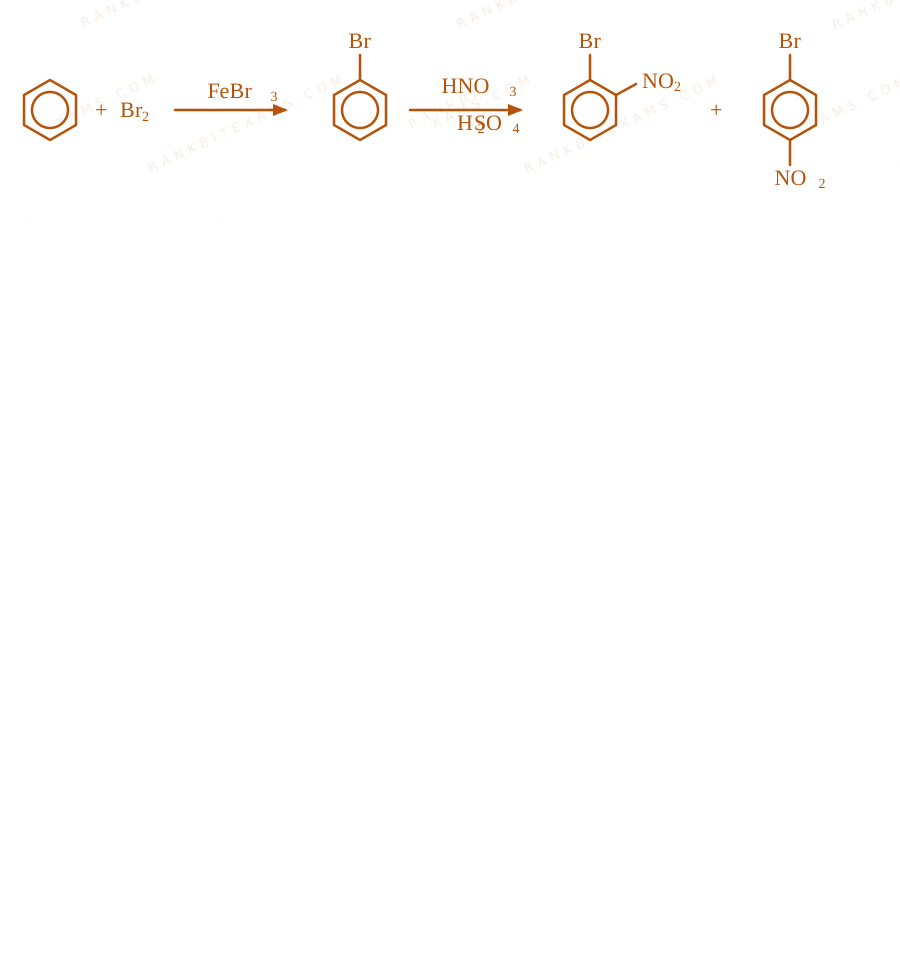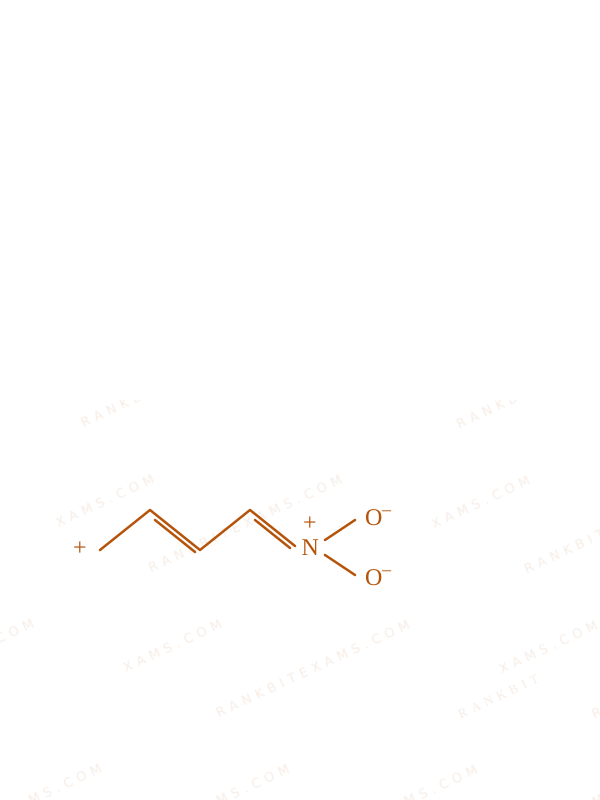
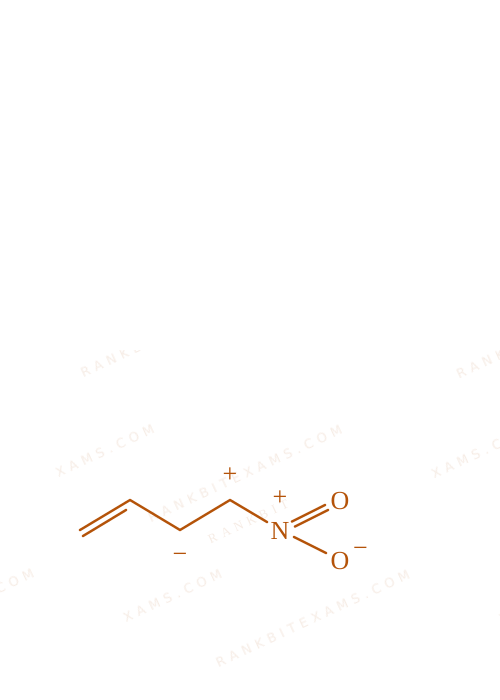
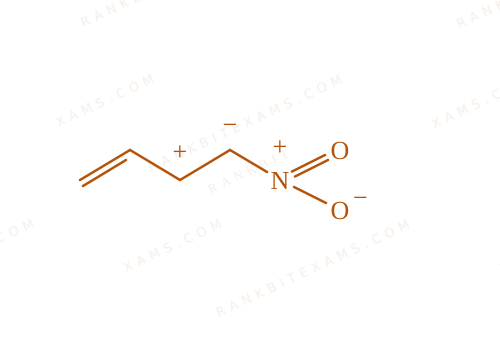
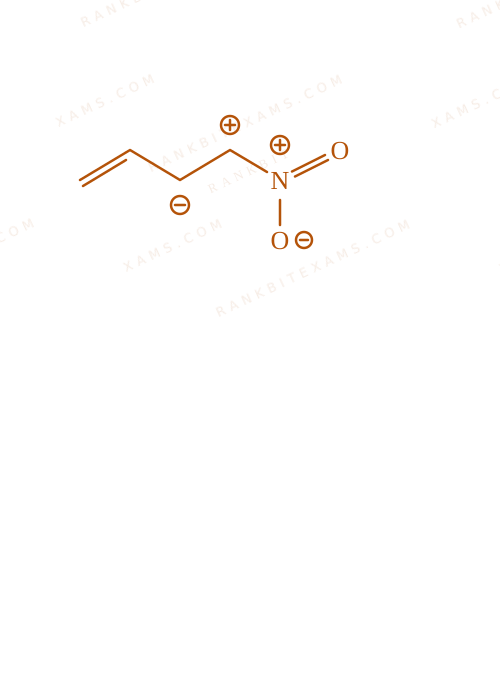
From the following, the least stable structure is :

Solution & Explanation

### Core Logic In structure 3, there are positive formal charges on two adjacent atoms (Oxygen and the Carbon adjacent to it). Like charges on adjacent atoms cause extreme electrostatic repulsion, making the structure highly unstable.
Resonance Effects diagram for Q62 - JEE Main 2026 Morning
### Pattern Recognition Rules of resonance stability: 1. Complete octets are more stable. 2. More covalent bonds = more stable. 3. Least charge separation is more stable. 4. Like charges on adjacent atoms create massive destabilization (Least stable scenario). ### Evaluation Rubric / Model Answer null ### Chapter Mix Class 11 Chemistry: Organic Chemistry - Some Basic Principles and Techniques

Reference Study Guides

More Organic Chemistry - Some Basic Principles and Techniques Previous-Year Questions — Page 4

Q33 jee_main_2025_07_april_morning IUPAC Nomenclature
Which of the following is the correct IUPAC name of given organic compound (X)?
Organic haloalkene structure X for Q33 - JEE Main 2025
The image shows structural representation of compound X with a double bond and a bromine substituent.
  • A. text2-Bromo-2-methylbut-2-ene
  • B. text3-Bromo-3-methylprop-2-ene
  • C. text1-Bromo-2-methylbut-2-ene
  • D. text4-Bromo-3-methylbut-2-ene

Solution

### Core Logic To determine the IUPAC name of the compound shown in
Organic haloalkene structure X for Q33 - JEE Main 2025
The image shows structural representation of compound X with a double bond and a bromine substituent.
: 1. Identify the principal functional group, which is the double bond (alkene). 2. Find the longest carbon chain containing the double bond: mathrmC1(H_2Br) - C2(CH_3) = C3(H) - C4(H_3) The longest chain has 4 carbons, which means the parent alkane is butane, and with a double bond it's "but-2-ene". 3. Number the chain from the end that gives lower locants to the double bond. Starting from left or right both give the double bond at position 2. However, starting from left gives substituent locants as 1 (for bromo) and 2 (for methyl), whereas starting from right gives substituent locants as 3 and 4. 4. Hence, correct numbering is: - textC1: bonded to Bromine (-textBr) - textC2: bonded to Methyl (-textCH_3) - textC3: alkene carbon - textC4: terminal methyl group
IUPAC numbered chain diagram for Q33
The image shows structural representation of compound X with a double bond and a bromine substituent.
Combining these rules, the name is: **1-Bromo-2-methylbut-2-ene**. ### Pattern Recognition Double bond takes precedence over halogen substituent in numbering direction. If double bond is symmetrical (at position 2 in a 4-carbon chain), use the substituent positions to break the tie, choosing lowest possible locants (1 and 2 vs 3 and 4). ### Evaluation Rubric / Model Answer null ### Chapter Mix Class 11 Chemistry: Organic Chemistry - Some Basic Principles and Techniques Class 12 Chemistry: Haloalkanes and Haloarenes
Q46 jee_main_2025_07_april_morning Quantitative Elemental Analysis
An organic compound weighing 500mathrm\ mg, produced 220mathrm\ mg of mathrmCO_2 on complete combustion. The percentage composition of carbon in the compound is ______ %. (nearest integer) (Given molar mass in mathrmg\ mol^-1 of mathrmC: 12, mathrmO: 16)
Numerical Answer. Answer: 12 to 12

Solution

### Related Formula \% mathrmC = frac1244 times fractextMass of mathrmCO_2 text producedtextMass of organic compound taken times 100 ### Core Logic Given: - Mass of organic compound taken = 500 text mg = 500 times 10^-3 text g - Mass of mathrmCO_2 produced = 220 text mg = 220 times 10^-3 text g Using the formula: \% mathrmC = frac1244 times frac220 times 10^-3500 times 10^-3 times 100 \% mathrmC = frac1244 times frac220500 times 100 \% mathrmC = frac1244 times 44 = 12 \% Thus, the percentage of carbon is 12. ### Pattern Recognition Carbon dioxide has exactly 12/44 approx 27.27\% carbon by mass. Multiply the mass fraction of mathrmCO_2 (220/500 = 0.44) by 12/44 to directly get 0.12 or 12\%. ### Evaluation Rubric / Model Answer A perfect step-by-step conversion of organic compound mass and combustion carbon dioxide mass to obtain a precise 12 percent carbon composition. ### Chapter Mix Class 11 Chemistry: Organic Chemistry - Some Basic Principles and Techniques
Q27 jee_main_2025_08_april_evening Reactive Intermediates and Reagents
Match the LIST-I with LIST-II:
LIST-ILIST-II
A. CarbocationI. Species that can supply a pair of electrons.
B. C-Free radicalII. Species that can receive a pair of electrons.
C. NucleophileIII. sp^2 hybridized carbon with empty p-orbital.
D. ElectrophileIV. sp^2/sp^3 hybridized carbon with one unpaired electron.
Choose the correct answer from the options given below:
  • A. textA-IV, B-II, C-III, D-I
  • B. textA-II, B-III, C-I, D-IV
  • C. textA-III, B-IV, C-II, D-I
  • D. textA-III, B-IV, C-I, D-II

Solution

### Core Logic Let us analyze each term carefully: * **A. Carbocation**: Features a positively charged trivalent carbon atom. It represents an sp^2 hybridized carbon with an empty unhybridized p-orbital.
Carbocation orbital hybridization diagram for Q27 - JEE Main 2025
* **B. Carbon Free Radical**: Contains a trivalent carbon carrying a single unpaired lone electron. It typically exhibits sp^2 or sp^3 hybridization depending on structural environments.
Carbocation orbital hybridization diagram for Q27 - JEE Main 2025
* **C. Nucleophile**: An electron-rich chemical species containing a lone pair or negative charge capable of donating/supplying a pair of electrons. * **D. Electrophile**: An electron-deficient chemical species possessing empty low-lying orbitals capable of accepting/receiving a pair of electrons. ### Step 1: Alignment Matrix Matching each item yields: * textA rightarrow textIII * textB rightarrow textIV * textC rightarrow textI * textD rightarrow textII This sequence aligns flawlessly with Option (4). ### Pattern Recognition Nucleophiles donate ('nucleo-loving' = seeks positive sites with its electrons), Electrophiles accept ('electro-loving' = seeks electron density). Carbocations explicitly harbor a vacant p-orbital because of their positive charge configuration, making identification extremely swift. ### Evaluation Rubric / Model Answer null ### Chapter Mix Class 11 Chemistry: Organic Chemistry - Some Basic Principles and Techniques
Q35 jee_main_2025_08_april_evening IUPAC Nomenclature
What is the correct IUPAC name of the following organic compound? {{Q_IMG1}}
Cyclic substituted alkene organic molecule structure for Q35
The molecule contains a five-membered carbon ring with one double bond, a hydroxyl substituent, and an ethyl group.
  • A. 4-Ethyl-1-hydroxycyclopent-2-ene
  • B. 1-Ethyl-3-hydroxycyclopent-2-ene
  • C. 1-Ethylcyclopent-2-en-3-ol
  • D. 4-Ethylcyclopent-2-en-1-ol

Solution

### Core Logic Let us apply official IUPAC priority indexing rules: 1. **Principal Functional Group**: The hydroxyl group (-textOH) possesses higher naming priority over double bonds and simple alkyl side chains. Thus, the carbon bearing the -textOH group is assigned position **C-1**. 2. **Numbering Direction**: We must number through the ring towards the double bond to assign it the lowest possible locant. Hence, the alkene carbons are given coordinates **C-2** and **C-3**. 3. **Locating Side Chains**: Proceeding with this direction puts the ethyl group at position **C-4**.
Numbered ring numbering system layout for 4-ethylcyclopent-2-en-1-ol
The molecule contains a five-membered carbon ring with one double bond, a hydroxyl substituent, and an ethyl group.
Assembling the structural parts alphabetically: * Substituent: `4-Ethyl` * Parent root: `cyclopent-2-en` * Suffix: `1-ol` Combined IUPAC format: **4-Ethylcyclopent-2-en-1-ol**. ### Pattern Recognition Principal suffix priority hierarchy: -textOH > textDouble bond > textAlkyl side-chain. Always fix the highest priority suffix at index 1 and head instantly towards the alkene bond to safely restrict locant numbers. ### Evaluation Rubric / Model Answer null ### Chapter Mix Class 11 Chemistry: Organic Chemistry - Some Basic Principles and Techniques
Q38 jee_main_2025_08_april_evening Quantitative Elemental Analysis
On complete combustion, 0.210 text g of an organic compound containing C, H, and O yielded 0.127 text g of textH_2textO and 0.307 text g of textCO_2. The mass percentages of hydrogen and oxygen in the given organic compound respectively are:
  • A. 53.41, 39.6
  • B. 6.72, 53.41
  • C. 7.55, 43.85
  • D. 6.72, 39.87

Solution

### Related Formula Percentage of Hydrogen in organic analysis: \%textH = frac218 times fractextMass of H_2OtextMass of Compound times 100 Percentage of Carbon: \%textC = frac1244 times fractextMass of CO_2textMass of Compound times 100 Percentage of Oxygen: \%textO = 100 - (\%textC + \%textH) ### Execution Step 1: Compute the mass percent of Hydrogen: \%textH = frac218 times frac0.1270.210 times 100 = frac0.2543.78 approx 6.72\% Step 2: Compute the mass percent of Carbon: \%textC = frac1244 times frac0.3070.210 times 100 = frac3.6849.24 approx 39.87\% Step 3: Deduce the remaining mass percent of Oxygen: \%textO = 100 - (39.87 + 6.72) = 100 - 46.59 = 53.41\% Thus, the values of hydrogen and oxygen percentage are 6.72\% and 53.41\%, matches with Option (2). ### Pattern Recognition Always focus on the order requested by the question stem. The query specifies 'hydrogen and oxygen respectively'. Option 2 and Option 4 both show these numbers but reversed—verifying the targeted sequence protects your score line. ### Evaluation Rubric / Model Answer null ### Chapter Mix Class 11 Chemistry: Organic Chemistry - Some Basic Principles and Techniques

More Organic Chemistry - Some Basic Principles and Techniques Questions — jee_main_2026_21_jan_morning

Practice all Organic Chemistry - Some Basic Principles and Techniques previous-year questions →

Rankbit System
JEE Physics: Waves (+15.5%) | Electrostatics: Concentric Shells (-29.7%) | Modern Physics: Photoelectric Clones (+34.2%) | Mathematics: Definite Integrals (+18.1%) | Chemistry: Coordination Splitting (-11.4%) | JEE Physics: Waves (+15.5%) | Electrostatics: Concentric Shells (-29.7%) | Modern Physics: Photoelectric Clones (+34.2%) | Mathematics: Definite Integrals (+18.1%) | Chemistry: Coordination Splitting (-11.4%)
YOUR FIRST PREP STEP STARTS HERE

We Map Every Repeating Question in Competitive Exams.

Say goodbye to generic mock test fatigue. RankBit uses smart analysis to group past exam questions into their foundational Repeating Question Types. Find chapter weightage, track repeating questions, and score higher with targeted practice.

Select Your Target Exam

Choose an exam track below to find formulas per chapter and patterns.

Syncing Exam Intelligence

Mapping formulas and patterns across all tracks…

PATH A — FULL LENGTH PRACTICE

Full Mock Test Hub

Simulate real NTA exam conditions with fully tracked mocks. Time yourself against past papers.

Now Live Open
PATH B — TARGETED PRACTICE

Topic-wise Practice Hub

Practice past-year questions one chapter at a time. Pick an exam → subject → chapter and get every PYQ for that topic — pulled together from all past papers — with the chapter's key formulas alongside.

Loading Questions... Browse Topics
Latest from the Blog
View all →

Loading articles...