Solution
Related Formula
Area of Equilateral Triangle = √(3)4 a²Where a is the side length.
Core Logic
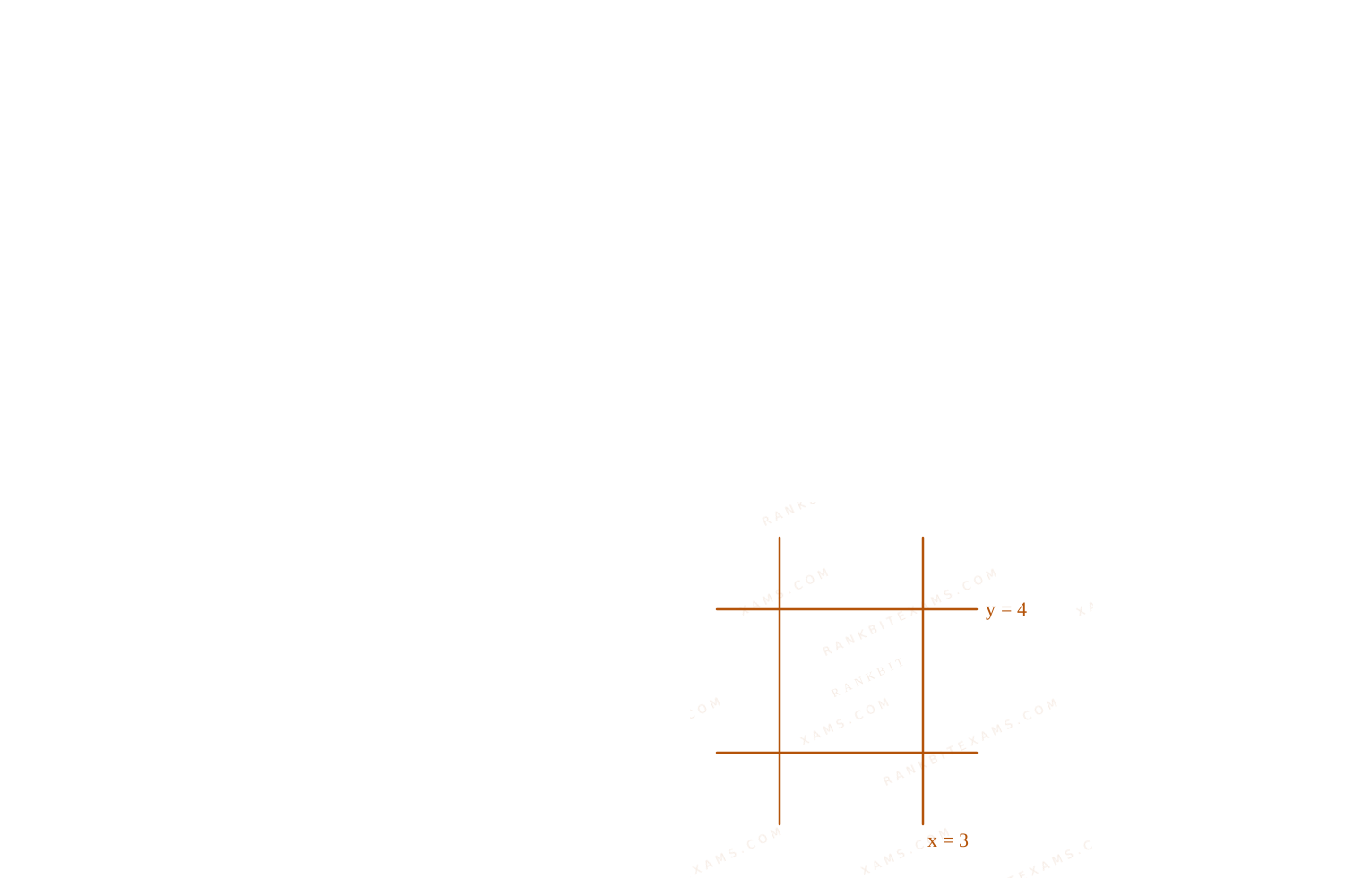
Let the side of the equilateral triangle be a. Let θ be the angle between the side AC and the parallel line L₂. Then, the angle between the side AB and the parallel line L₁ can be expressed via alternate geometry. Given distances from A to the lines form right-angled triangles.
Step 1: Set up geometric projections
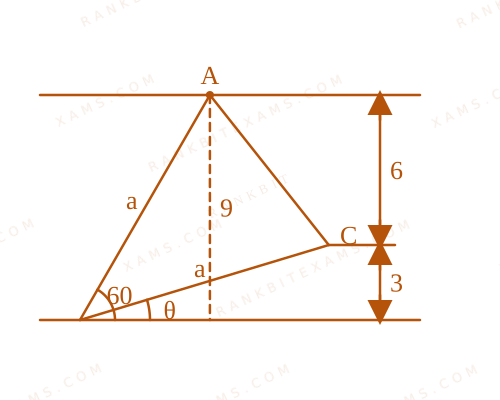
From vertex C to line passing through A parallel to L₁, L₂, the perpendicular distance is 3. In the right triangle formed, we have:
θ = (3)/(a)Similarly, point B lies on L₁. The perpendicular distance from A to L₁ is 6. However, combining the overall heights between the parallel lines, the total distance between L₁ and L₂ is 6 + 3 = 9. The projection of side BC (which connects L₁ and L₂) vertically is 9.
(60° + θ) = (9)/(a)Step 2: Solve the trigonometric system
Expand (60° + θ):
√(3)2 θ + (1)/(2) θ = (9)/(a)Substitute θ = (3)/(a) and θ = √(1 - ² θ) = √(1 - (9)/(a²)):
√(3)2 √(1 - (9)/(a²)) + (1)/(2) ((3)/(a)) = (9)/(a) √(3) √(1 - (9)/(a²)) + (3)/(a) = (18)/(a) √(3) √(1 - (9)/(a²)) = (15)/(a)Squaring both sides:
3 (1 - (9)/(a²)) = (225)/(a²) 3 - (27)/(a²) = (225)/(a²) 3 = (252)/(a²) ⇒ a² = 84Step 3: Calculate Area
Area of Δ ABC = √(3)4 a² = √(3)4 × 84 = 21√(3)Pattern Recognition
When a rigid polygon (like an equilateral triangle or square) is wedged between parallel lines, set a base orientation angle θ for one edge and use rotational shifts (e.g., 60° + θ) to project heights. Expanding the sine addition formula instantly yields the side length.
Chapter Mix
Class 11 Maths: Straight Lines Class 11 Maths: Trigonometric Functions