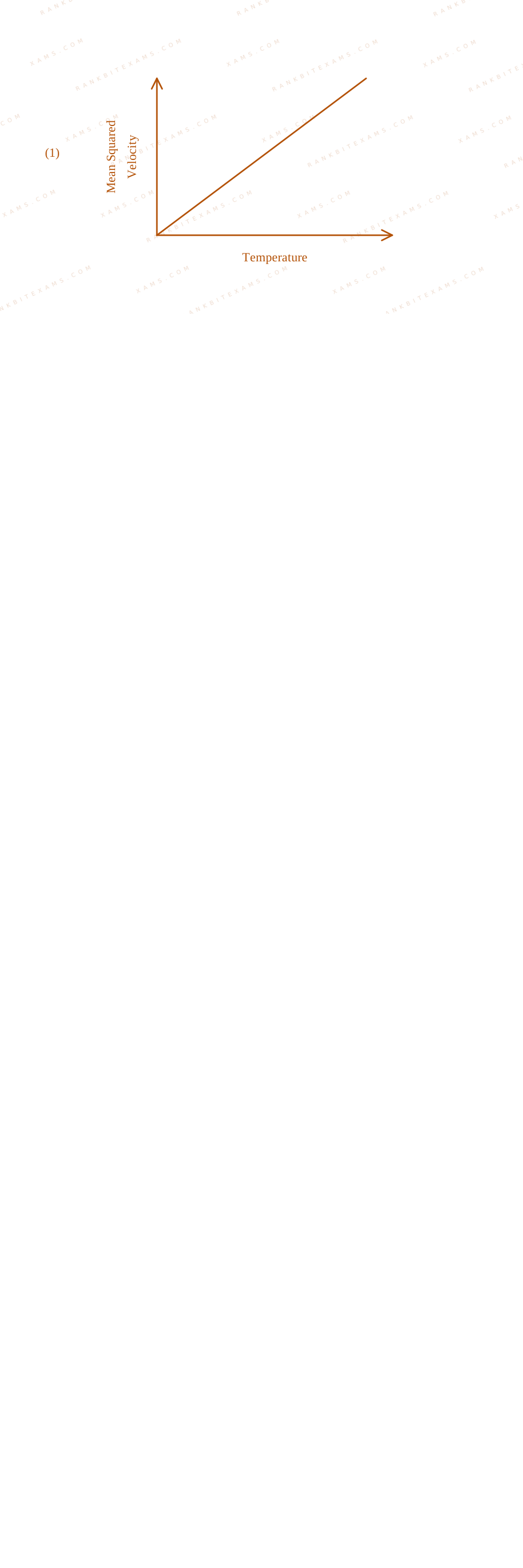
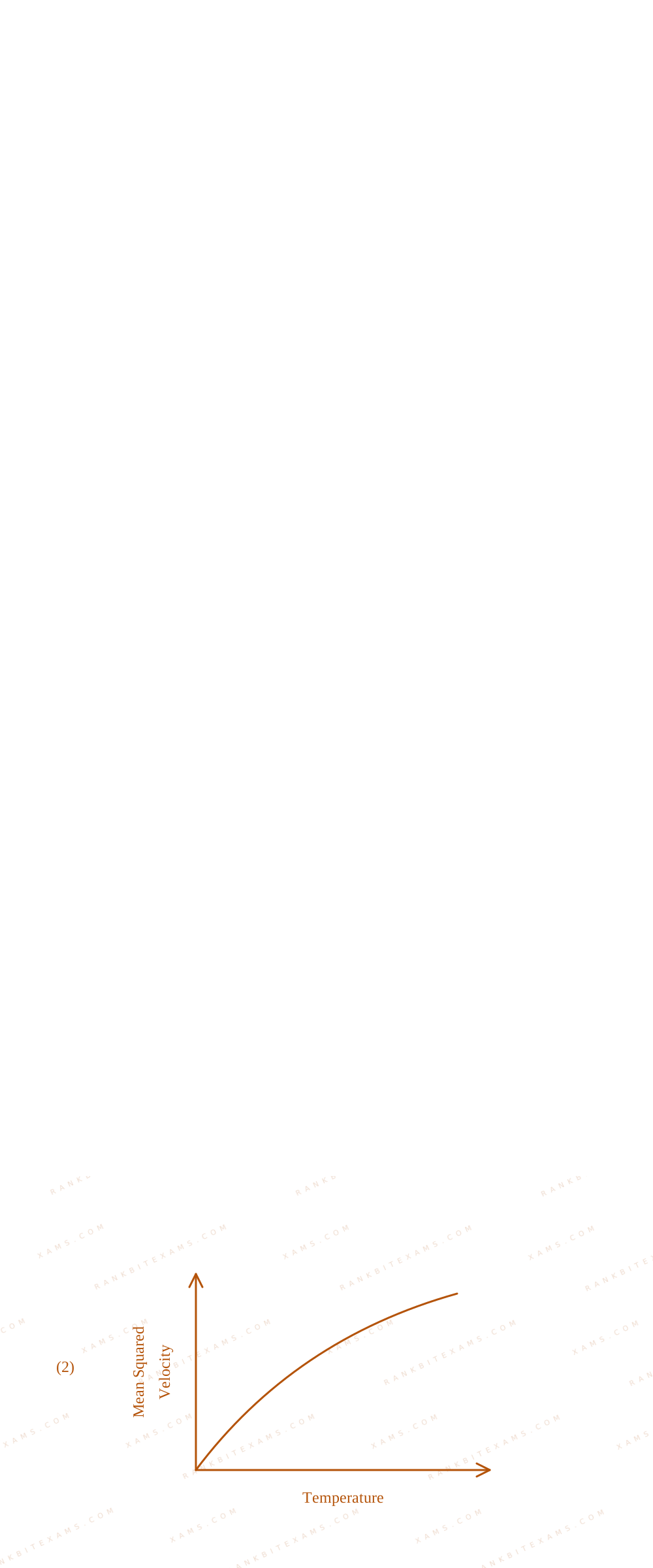

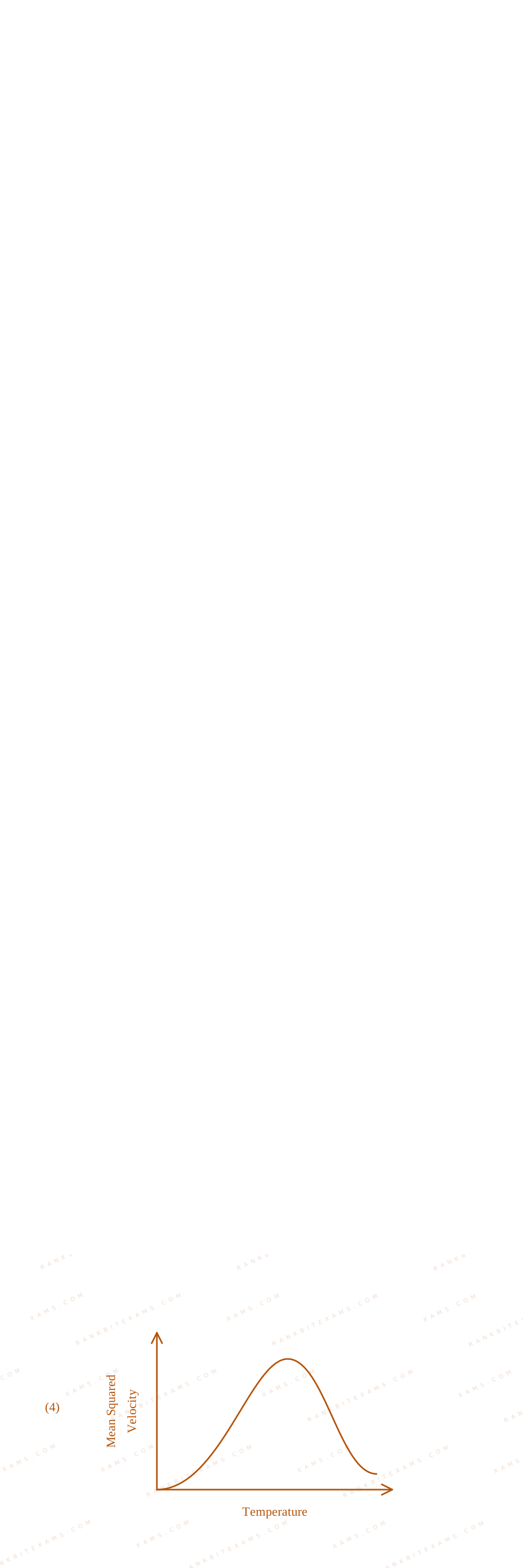
For a particular ideal gas which of the following graphs represents the variation of mean squared velocity of the gas molecules with temperature?

Solution & Explanation

Related Formula
Vrms = 3RTM Vrms² = 3RMT
Core Logic

The parameter asked is the mean squared velocity, which corresponds directly to Vrms².

From the ideal gas kinematics relation, we observe:

Vrms² ∝ T

Comparing this format against standard geometric linear templates (y = mx), the curve must map as a clean straight line originating from absolute zero zero coordinates.

Step 1: Final Conclusion

This linear profile matches Graph (1), selecting option (1).

Pattern Recognition

Watch the vertical ordinate labels carefully: Root-mean-square velocity scales as a sub-linear curve (T), while mean squared metric trends linearly directly (y ∝ x).

Chapter Mix

Class 11 Physics: Kinetic Theory

More Kinetic Theory Previous-Year Questions — Page 6

Q31 jee_main_2024_31_jan_morning Kinetic Energy Of Gas Molecules
The parameter that remains the same for molecules of all gases at a given temperature is :
  • A. kinetic energy
  • B. momentum
  • C. mass
  • D. speed

Solution

Related Formula
KE = (f)/(2)kT
Core Logic

The average translational kinetic energy of any gas molecule depends only on the absolute temperature of the gas and is independent of the nature or mass of the gas.

For 1 mole of any ideal gas, the average translational kinetic energy is (3)/(2)RT. Therefore, at a given temperature, the kinetic energy parameter is uniform across all ideal gases.

Pattern Recognition

Temperature is directly proportional to average translational kinetic energy. If T is constant, KE is constant for all gases regardless of mass.

Chapter Mix

Class 11 Physics: Kinetic Theory

More Kinetic Theory Questions — jee_main_2025_28_jan_morning

Practice all Kinetic Theory previous-year questions →

Rankbit System
JEE Physics: Waves (+15.5%) | Electrostatics: Concentric Shells (-29.7%) | Modern Physics: Photoelectric Clones (+34.2%) | Mathematics: Definite Integrals (+18.1%) | Chemistry: Coordination Splitting (-11.4%) | JEE Physics: Waves (+15.5%) | Electrostatics: Concentric Shells (-29.7%) | Modern Physics: Photoelectric Clones (+34.2%) | Mathematics: Definite Integrals (+18.1%) | Chemistry: Coordination Splitting (-11.4%)