JEE Main · Chemistry ↓ Falling

Organic Chemistry - Some Basic Principles and Techniques appeared 93 times across 3 years — 10.8% of Chemistry. This question is from Acidity of Organic Compounds.

Year 2026 2025 2024 Total
Questions 19 49 25 93

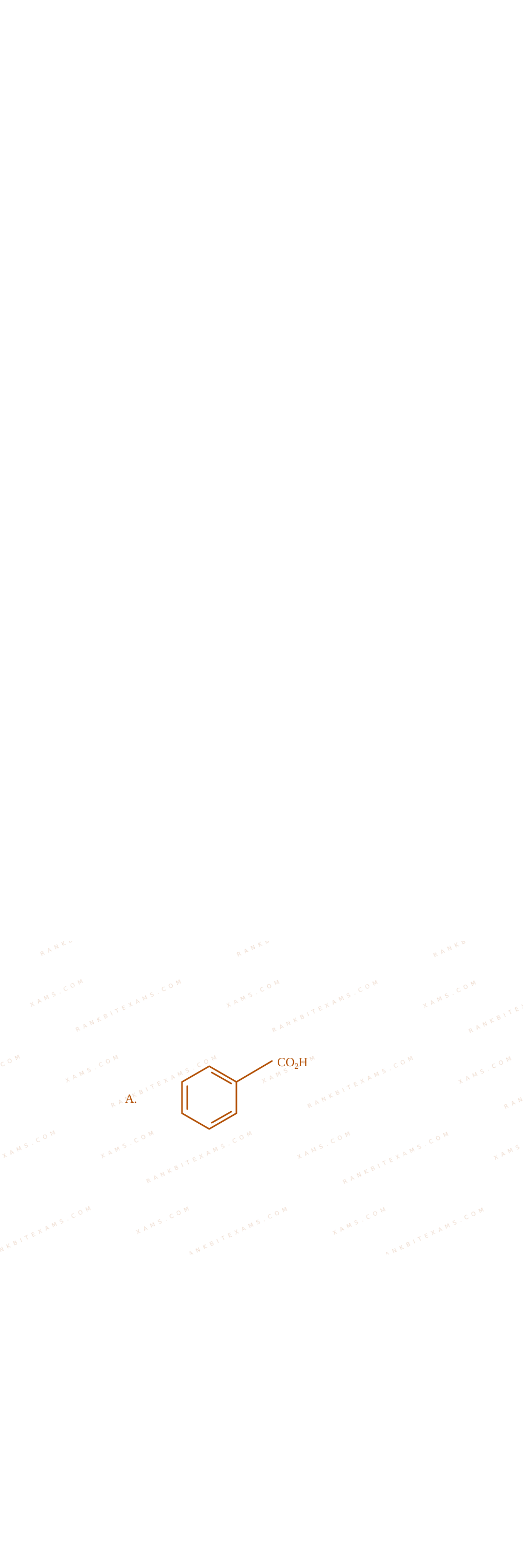
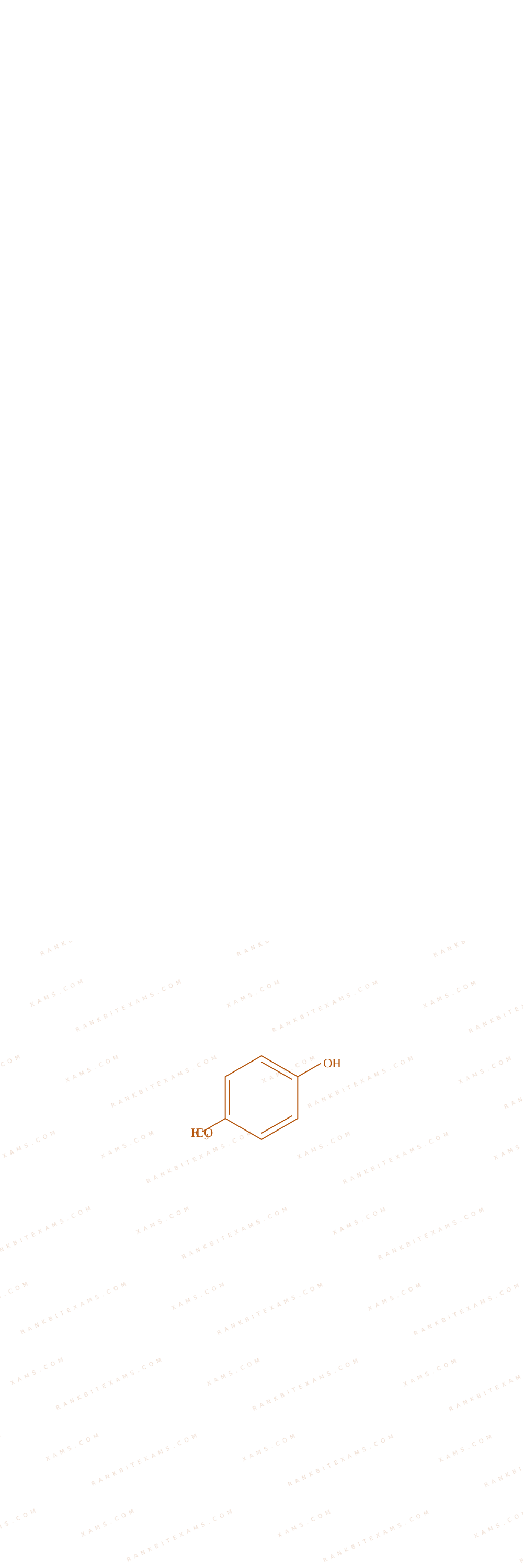
The compounds that produce CO₂ with aqueous NaHCO₃ solution are: A.
Acid structures profile for Q43 - JEE Main 2025 Morning
The prompt lists five structures labeled A through E evaluating structural acidities.
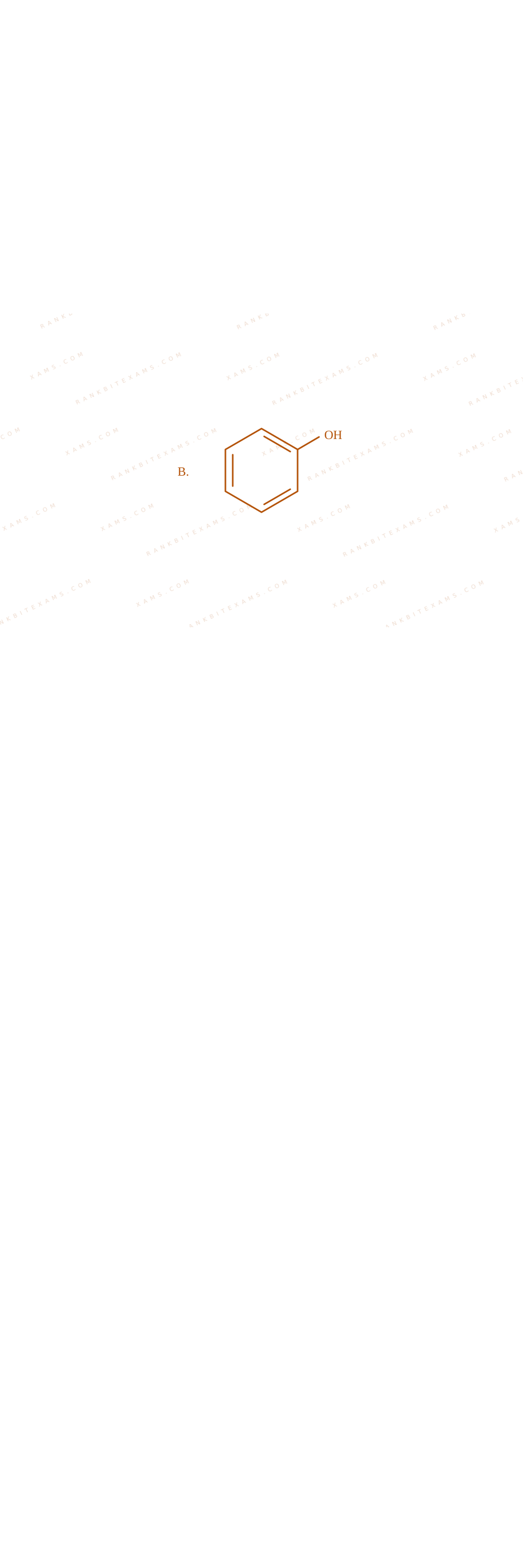
B.
Acid structures profile for Q43 - JEE Main 2025 Morning
The prompt lists five structures labeled A through E evaluating structural acidities.
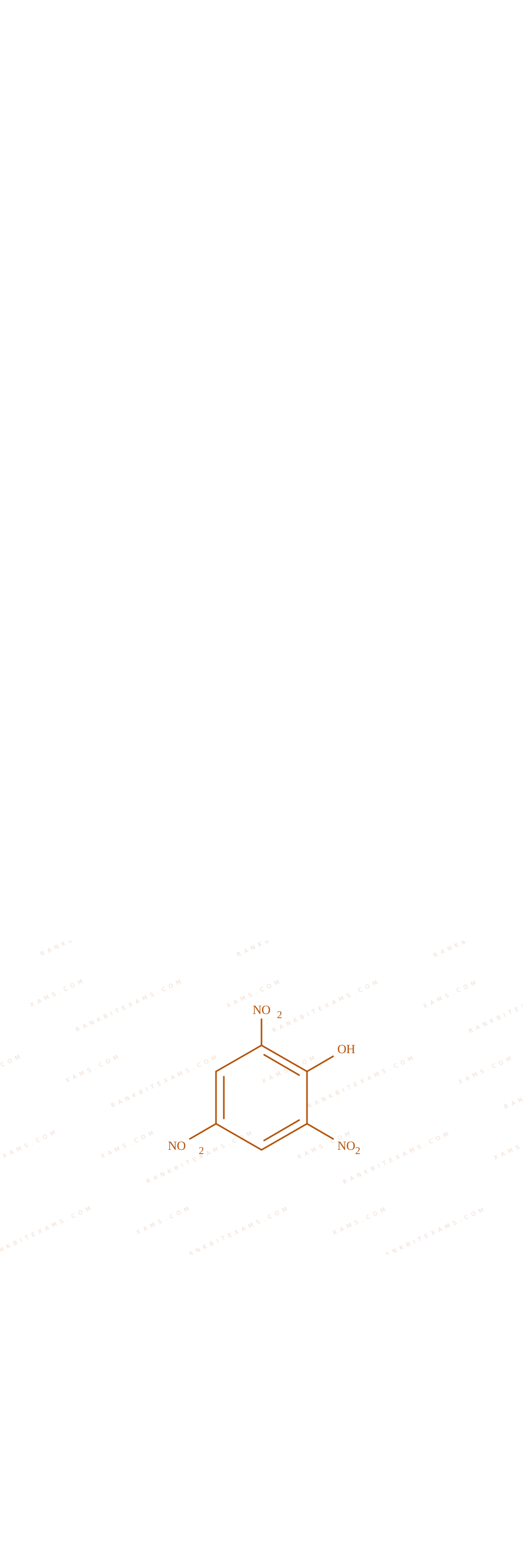
C.
Acid structures profile for Q43 - JEE Main 2025 Morning
The prompt lists five structures labeled A through E evaluating structural acidities.
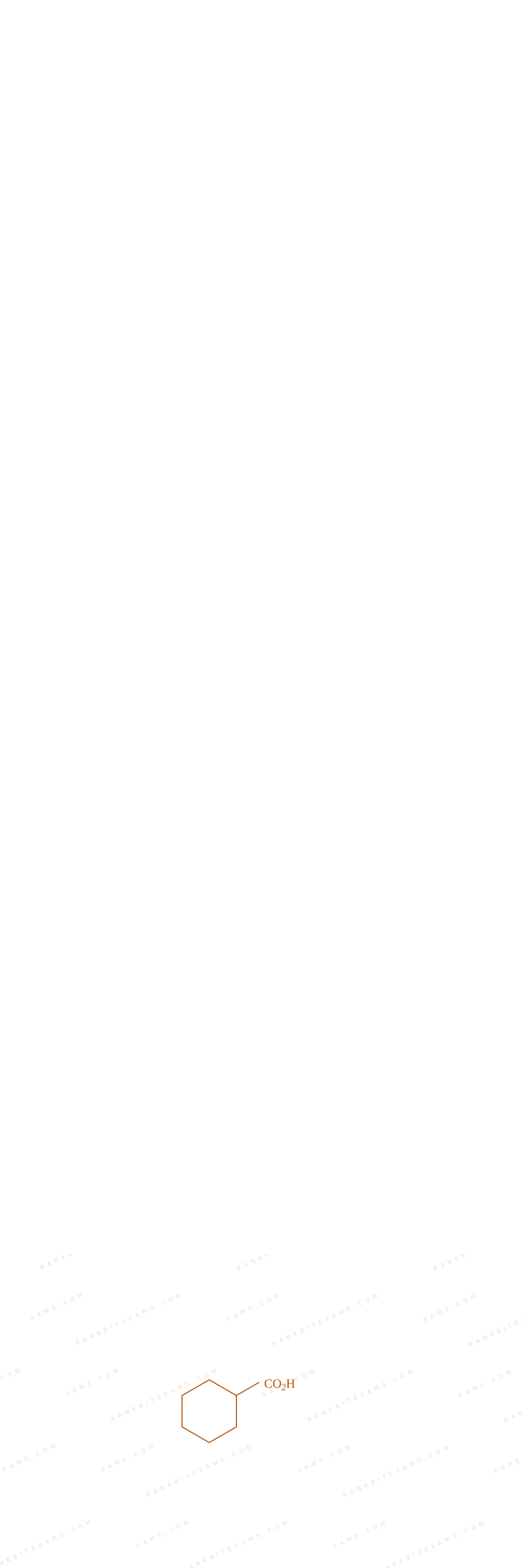
D.
Acid structures profile for Q43 - JEE Main 2025 Morning
The prompt lists five structures labeled A through E evaluating structural acidities.
E.
Acid structures profile for Q43 - JEE Main 2025 Morning
The prompt lists five structures labeled A through E evaluating structural acidities.
Choose the correct answer from the options given below:

Solution & Explanation

Core Logic

Organic compounds react with sodium bicarbonate (NaHCO₃) to liberate CO₂ gas if they are stronger acids than carbonic acid (H₂CO₃). Evaluating the structures:

  • A: Benzoic acid, which is significantly more acidic than carbonic acid.
  • C: Picric acid (2,4,6-trinitrophenol). Due to three strong electron-withdrawing nitro groups, its acidity exceeds typical carboxylic acids and H₂CO₃.
  • D: Benzenesulfonic acid, a highly strong mineral-like organic acid.
  • B & E: Standard phenols or weakly substituted phenols, which are less acidic than carbonic acid and do not liberate CO₂.
  • Therefore, structures A, C, and D give a positive test result.

Pattern Recognition

Sees: Sodium bicarbonate test for organic systems. Shortcut: Only carboxylic acids, sulfonic acids, and highly nitrated phenols like picric acid possess sufficient proton acidity to displace CO₂ from bicarbonate ions.

Chapter Mix

Class 11 Chemistry: Organic Chemistry - Some Basic Principles and Techniques

Reference Study Guides

More Organic Chemistry - Some Basic Principles and Techniques Previous-Year Questions — Page 7

Q40 jee_main_2025_03_april_evening Hyperconjugation and Cation Stability
Given below are two statements: Statement I: Hyperconjugation is not a permanent effect. Statement II: In general, greater the number of alkyl groups attached to a positively charged C-atom, greater is the hyperconjugation interaction and stabilization of the cation. In the light of the above statements, choose the correct answer from the options given below :
  • A. Statement I is true but Statement II is false
  • B. Both Statement I and Statement II are false
  • C. Statement I is false but Statement II is true
  • D. Both Statement I and Statement II are true

Solution

Related Formula

The number of hyperconjugation structures is directly related to the count of α-hydrogen atoms:

Number of hyperconjugative structures = Number of α-hydrogens
Core Logic

Statement I Analysis:

  • Hyperconjugation (no-bond resonance) involves the delocalization of σ electrons of C-H bonds of an alkyl group directly attached to an atom of unsaturated system or a positively charged carbon atom. This is a permanent ground-state electronic effect, not dependent on external reagents. Thus, Statement I is False.
Step 1: Analyze Statement II
  • Statement II states that more alkyl groups attached to a carbocation center increase hyperconjugative stabilization. Each alkyl group brings additional σC-H bonds adjacent to the empty p-orbital, increasing the total count of α-hydrogens and enhancing charge delocalization. Thus, Statement II is True.
Step 2: Conclusion

Therefore, Statement I is False but Statement II is True, matching Option (3).

Pattern Recognition

Permanent organic effects include: Inductive, Mesomeric (Resonance), and Hyperconjugation effects. Temporary electronic effects include: Electromeric and Inductomeric effects (which require an attacking reagent to manifest).

Chapter Mix

Class 11 Chemistry: Organic Chemistry - Some Basic Principles and Techniques
Q33 jee_main_2025_07_april_morning IUPAC Nomenclature
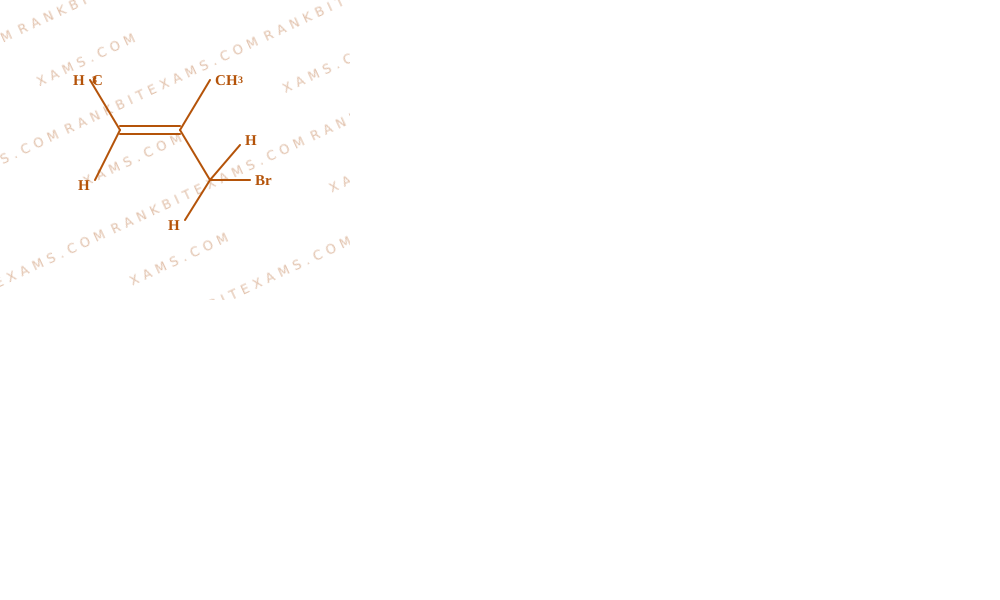
Which of the following is the correct IUPAC name of given organic compound (X)?
Organic haloalkene structure X for Q33 - JEE Main 2025
The image shows structural representation of compound X with a double bond and a bromine substituent.
  • A. 2-Bromo-2-methylbut-2-ene
  • B. 3-Bromo-3-methylprop-2-ene
  • C. 1-Bromo-2-methylbut-2-ene
  • D. 4-Bromo-3-methylbut-2-ene

Solution

Core Logic

To determine the IUPAC name of the compound shown in

Organic haloalkene structure X for Q33 - JEE Main 2025
The image shows structural representation of compound X with a double bond and a bromine substituent.
:

  • Identify the principal functional group, which is the double bond (alkene).
  • Find the longest carbon chain containing the double bond:
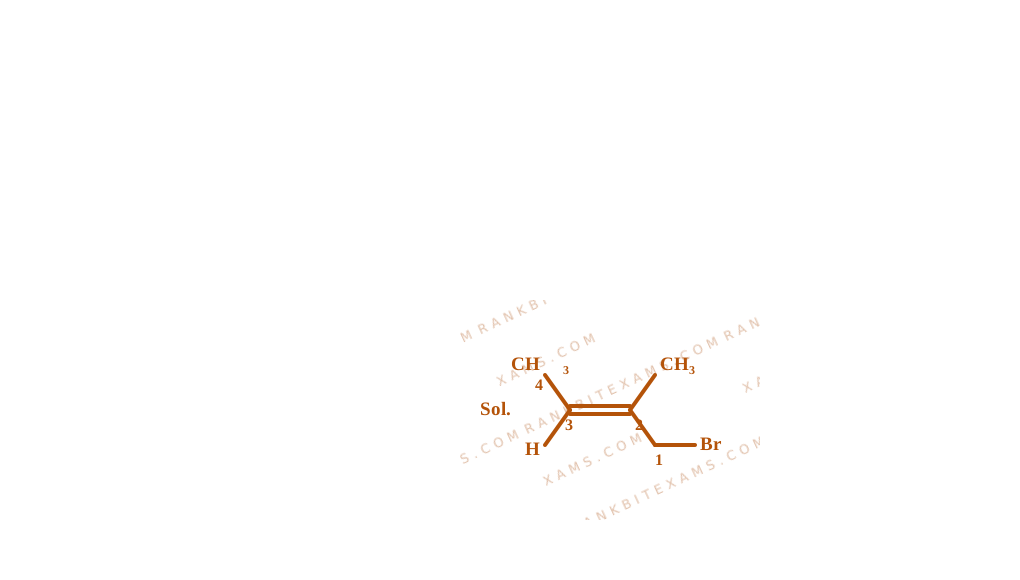
C1(H₂Br) - C2(CH₃) = C3(H) - C4(H₃)

The longest chain has 4 carbons, which means the parent alkane is butane, and with a double bond it's "but-2-ene".

  • Number the chain from the end that gives lower locants to the double bond. Starting from left or right both give the double bond at position 2. However, starting from left gives substituent locants as 1 (for bromo) and 2 (for methyl), whereas starting from right gives substituent locants as 3 and 4.
  • Hence, correct numbering is:
  • C1: bonded to Bromine (-Br)
  • C2: bonded to Methyl (-CH₃)
  • C3: alkene carbon
  • C4: terminal methyl group
  • IUPAC numbered chain diagram for Q33
    The image shows structural representation of compound X with a double bond and a bromine substituent.

    Combining these rules, the name is: 1-Bromo-2-methylbut-2-ene.

Pattern Recognition

Double bond takes precedence over halogen substituent in numbering direction. If double bond is symmetrical (at position 2 in a 4-carbon chain), use the substituent positions to break the tie, choosing lowest possible locants (1 and 2 vs 3 and 4).

Chapter Mix

Class 11 Chemistry: Organic Chemistry - Some Basic Principles and Techniques Class 12 Chemistry: Haloalkanes and Haloarenes
Q46 jee_main_2025_07_april_morning Quantitative Elemental Analysis
An organic compound weighing 500 mg, produced 220 mg of CO₂ on complete combustion. The percentage composition of carbon in the compound is ______ %. (nearest integer) (Given molar mass in g mol⁻¹ of C: 12, O: 16)
Numerical Answer. Answer: 12 to 12

Solution

Related Formula
% C = (12)/(44) × Mass of CO₂ producedMass of organic compound taken × 100
Core Logic

Given:

  • Mass of organic compound taken = 500 mg = 500 × 10⁻³ g
  • Mass of CO₂ produced = 220 mg = 220 × 10⁻³ g
  • Using the formula:

% C = (12)/(44) × 220 × 10⁻³500 × 10⁻³ × 100 % C = (12)/(44) × (220)/(500) × 100 % C = (12)/(44) × 44 = 12 %

Thus, the percentage of carbon is 12.

Pattern Recognition

Carbon dioxide has exactly 12/44 ≈ 27.27% carbon by mass. Multiply the mass fraction of CO₂ (220/500 = 0.44) by 12/44 to directly get 0.12 or 12%.

Evaluation Rubric / Model Answer

A perfect step-by-step conversion of organic compound mass and combustion carbon dioxide mass to obtain a precise 12 percent carbon composition.

Chapter Mix

Class 11 Chemistry: Organic Chemistry - Some Basic Principles and Techniques
Q jee_main_2025_08_april_evening IUPAC Nomenclature
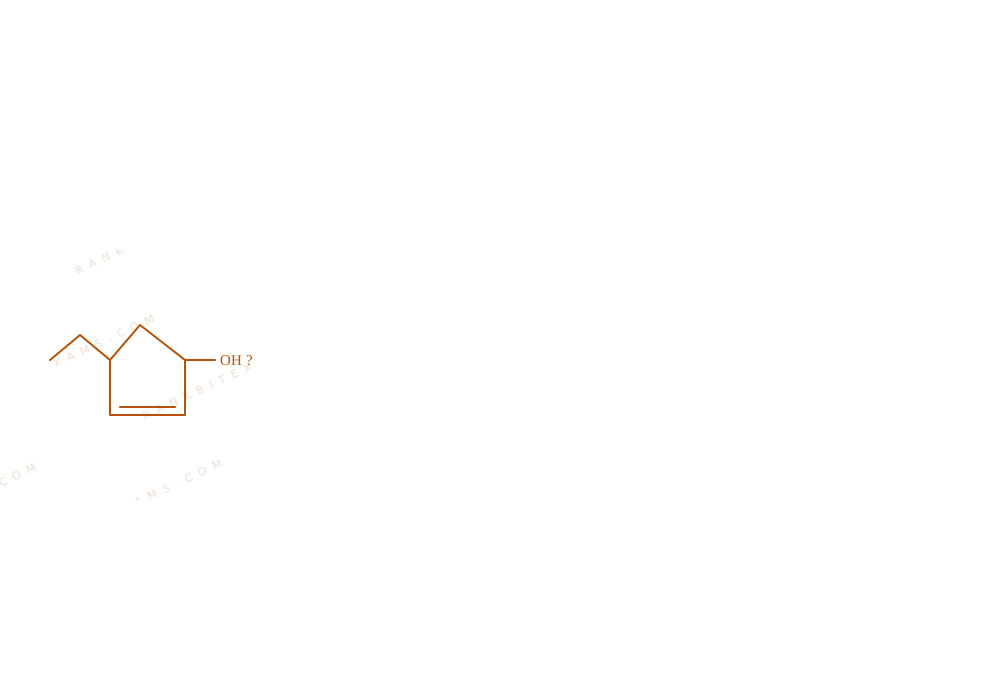
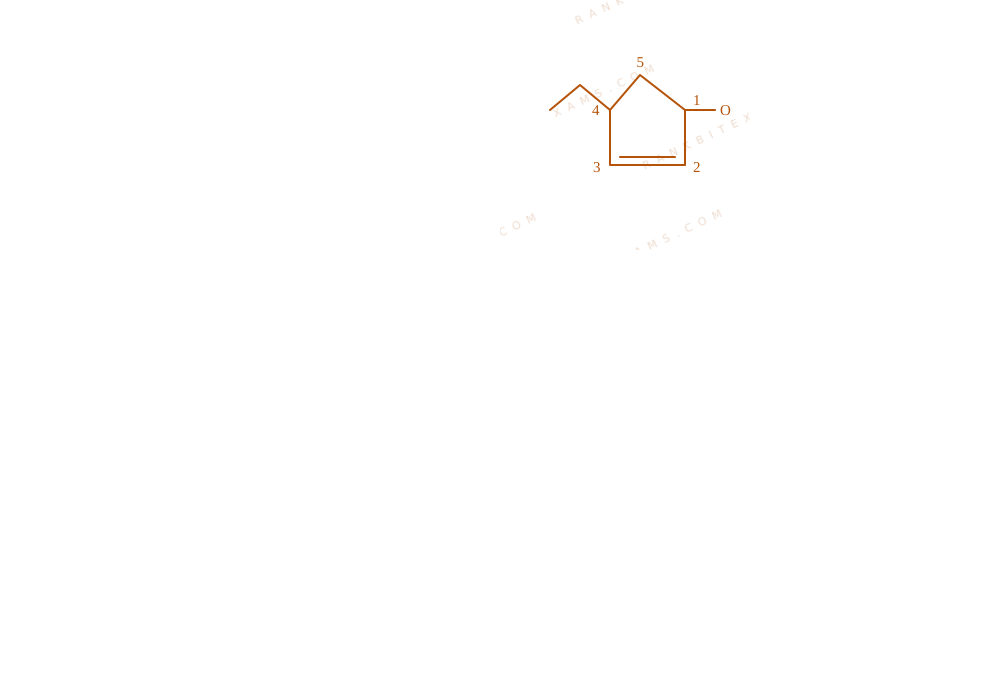
What is the correct IUPAC name of the following organic compound?
Cyclic substituted alkene organic molecule structure for Q35
The molecule contains a five-membered carbon ring with one double bond, a hydroxyl substituent, and an ethyl group.
  • A. 4-Ethyl-1-hydroxycyclopent-2-ene
  • B. 1-Ethyl-3-hydroxycyclopent-2-ene
  • C. 1-Ethylcyclopent-2-en-3-ol
  • D. 4-Ethylcyclopent-2-en-1-ol

Solution

Core Logic

Let us apply official IUPAC priority indexing rules:

  • Principal Functional Group: The hydroxyl group (-OH) possesses higher naming priority over double bonds and simple alkyl side chains. Thus, the carbon bearing the -OH group is assigned position C-1.
  • Numbering Direction: We must number through the ring towards the double bond to assign it the lowest possible locant. Hence, the alkene carbons are given coordinates C-2 and C-3.
  • Locating Side Chains: Proceeding with this direction puts the ethyl group at position C-4.
    Numbered ring numbering system layout for 4-ethylcyclopent-2-en-1-ol
    The molecule contains a five-membered carbon ring with one double bond, a hydroxyl substituent, and an ethyl group.
  • Assembling the structural parts alphabetically:

  • Substituent: `4-Ethyl`
  • Parent root: `cyclopent-2-en`
  • Suffix: `1-ol`
  • Combined IUPAC format: 4-Ethylcyclopent-2-en-1-ol.

Pattern Recognition

Principal suffix priority hierarchy: -OH > Double bond > Alkyl side-chain. Always fix the highest priority suffix at index 1 and head instantly towards the alkene bond to safely restrict locant numbers.

Chapter Mix

Class 11 Chemistry: Organic Chemistry - Some Basic Principles and Techniques
Q27 jee_main_2025_08_april_evening Reactive Intermediates and Reagents
Match the LIST-I with LIST-II:
LIST-ILIST-II
A. CarbocationI. Species that can supply a pair of electrons.
B. C-Free radicalII. Species that can receive a pair of electrons.
C. NucleophileIII. sp² hybridized carbon with empty p-orbital.
D. ElectrophileIV. sp²/sp³ hybridized carbon with one unpaired electron.
Choose the correct answer from the options given below:
  • A. A-IV, B-II, C-III, D-I
  • B. A-II, B-III, C-I, D-IV
  • C. A-III, B-IV, C-II, D-I
  • D. A-III, B-IV, C-I, D-II

Solution

Core Logic

Let us analyze each term carefully:

  • A. Carbocation: Features a positively charged trivalent carbon atom. It represents an sp² hybridized carbon with an empty unhybridized p-orbital.
    Carbocation orbital hybridization diagram for Q27 - JEE Main 2025
    Carbocation orbital hybridization diagram for Q27 - JEE Main 2025
  • B. Carbon Free Radical: Contains a trivalent carbon carrying a single unpaired lone electron. It typically exhibits sp² or sp³ hybridization depending on structural environments.
    Carbocation orbital hybridization diagram for Q27 - JEE Main 2025
    Carbocation orbital hybridization diagram for Q27 - JEE Main 2025
  • C. Nucleophile: An electron-rich chemical species containing a lone pair or negative charge capable of donating/supplying a pair of electrons.
  • D. Electrophile: An electron-deficient chemical species possessing empty low-lying orbitals capable of accepting/receiving a pair of electrons.
Step 1: Alignment Matrix

Matching each item yields:

  • A arrow III
  • B arrow IV
  • C arrow I
  • D arrow II
  • This sequence aligns flawlessly with Option (4).

Pattern Recognition

Nucleophiles donate ('nucleo-loving' = seeks positive sites with its electrons), Electrophiles accept ('electro-loving' = seeks electron density). Carbocations explicitly harbor a vacant p-orbital because of their positive charge configuration, making identification extremely swift.

Chapter Mix

Class 11 Chemistry: Organic Chemistry - Some Basic Principles and Techniques

More Organic Chemistry - Some Basic Principles and Techniques Questions — jee_main_2025_28_jan_morning

Practice all Organic Chemistry - Some Basic Principles and Techniques previous-year questions →

Rankbit System
JEE Physics: Waves (+15.5%) | Electrostatics: Concentric Shells (-29.7%) | Modern Physics: Photoelectric Clones (+34.2%) | Mathematics: Definite Integrals (+18.1%) | Chemistry: Coordination Splitting (-11.4%) | JEE Physics: Waves (+15.5%) | Electrostatics: Concentric Shells (-29.7%) | Modern Physics: Photoelectric Clones (+34.2%) | Mathematics: Definite Integrals (+18.1%) | Chemistry: Coordination Splitting (-11.4%)