Solution
Related Formula
Area of Δ = (1)/(2) × base × heightCore Logic
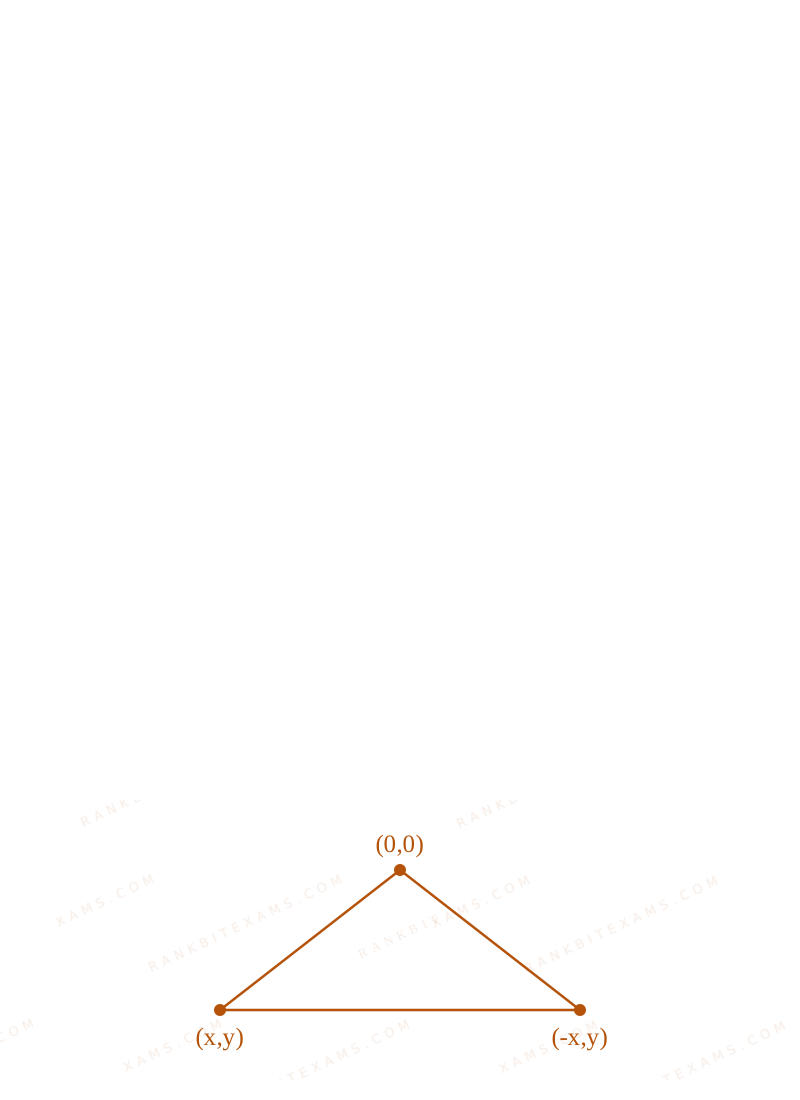
The vertices of the triangle are (0, 0), (x, y), and (-x, y). The base of the triangle lies along the horizontal line segment joining (-x, y) and (x, y). Length of base = 2x. The height of the triangle from (0,0) to the line segment is y. So, Area Δ = (1)/(2) (2x) (y) = xy (Assuming x > 0).
Step 1: Setting up the area function
Substitute y = -2x² + 54 into the area function:
Area(Δ) = A(x) = x(-2x² + 54) = -2x³ + 54xStep 2: Differentiating to find maximum area
To find the maximum area, take the derivative with respect to x and set it to zero:
A'(x) = (dA)/(dx) = -6x² + 54Setting A'(x) = 0:
-6x² + 54 = 0 ⇒ 6x² = 54 ⇒ x² = 9Since x represents half the base length, x = 3.
Step 3: Calculating maximum area
Substitute x = 3 back into the area function:
Amax = 3(-2(3)² + 54) = 3(-18 + 54) = 3(36) = 108Pattern Recognition
For symmetric figures inscribed under a parabolic arch, the area function A(x) = x · y(x) is standard. Differentiate and find the critical point directly.
Chapter Mix
Class 12 Maths: Application of Derivatives