Solution
Related Formula
C = ε₀Ad Cdielectric = K ε₀A'd'Series: Ceq = ( 1C₁ + 1C₂)⁻¹ Parallel: Ceq = C₁ + C₂
Core Logic
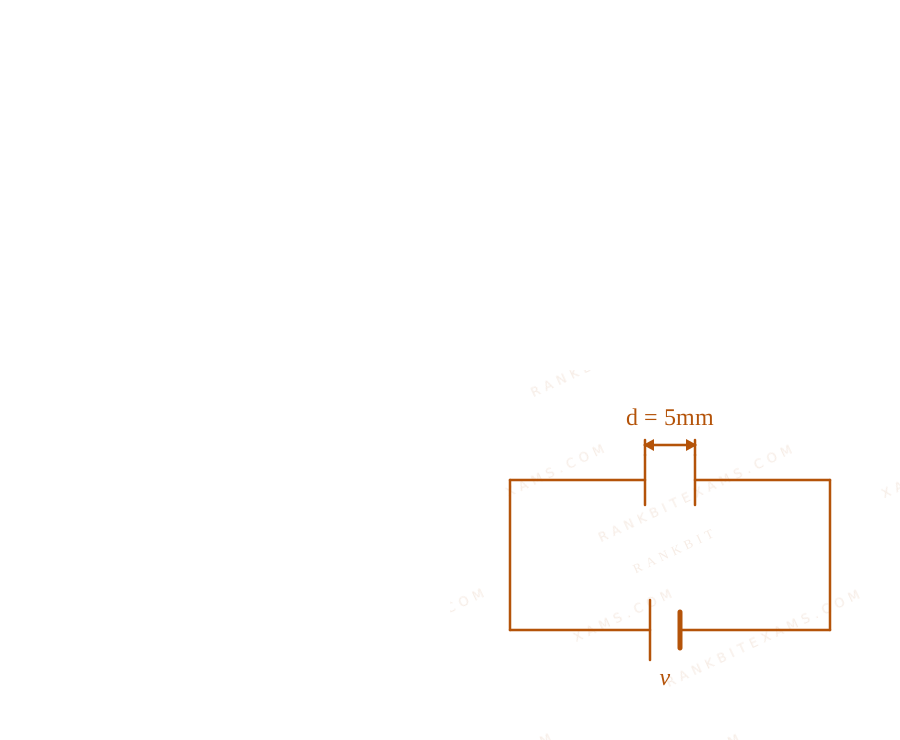
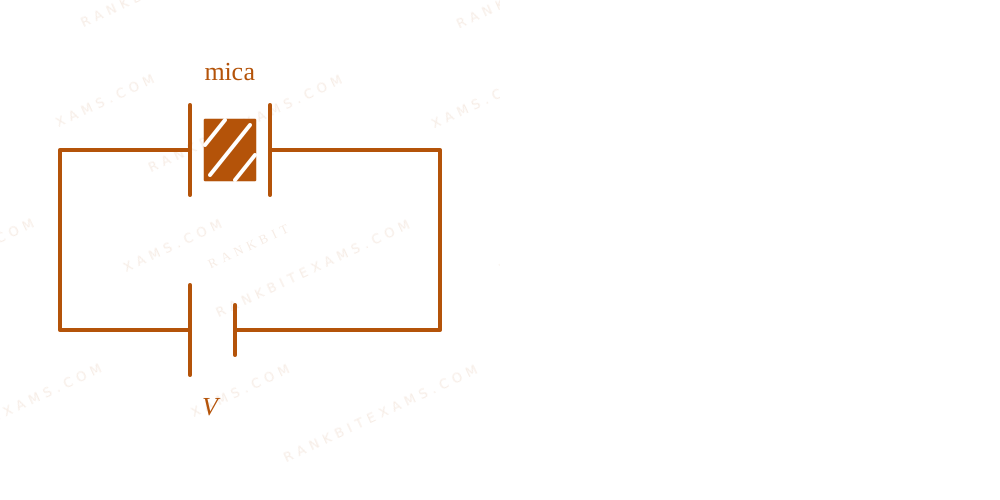
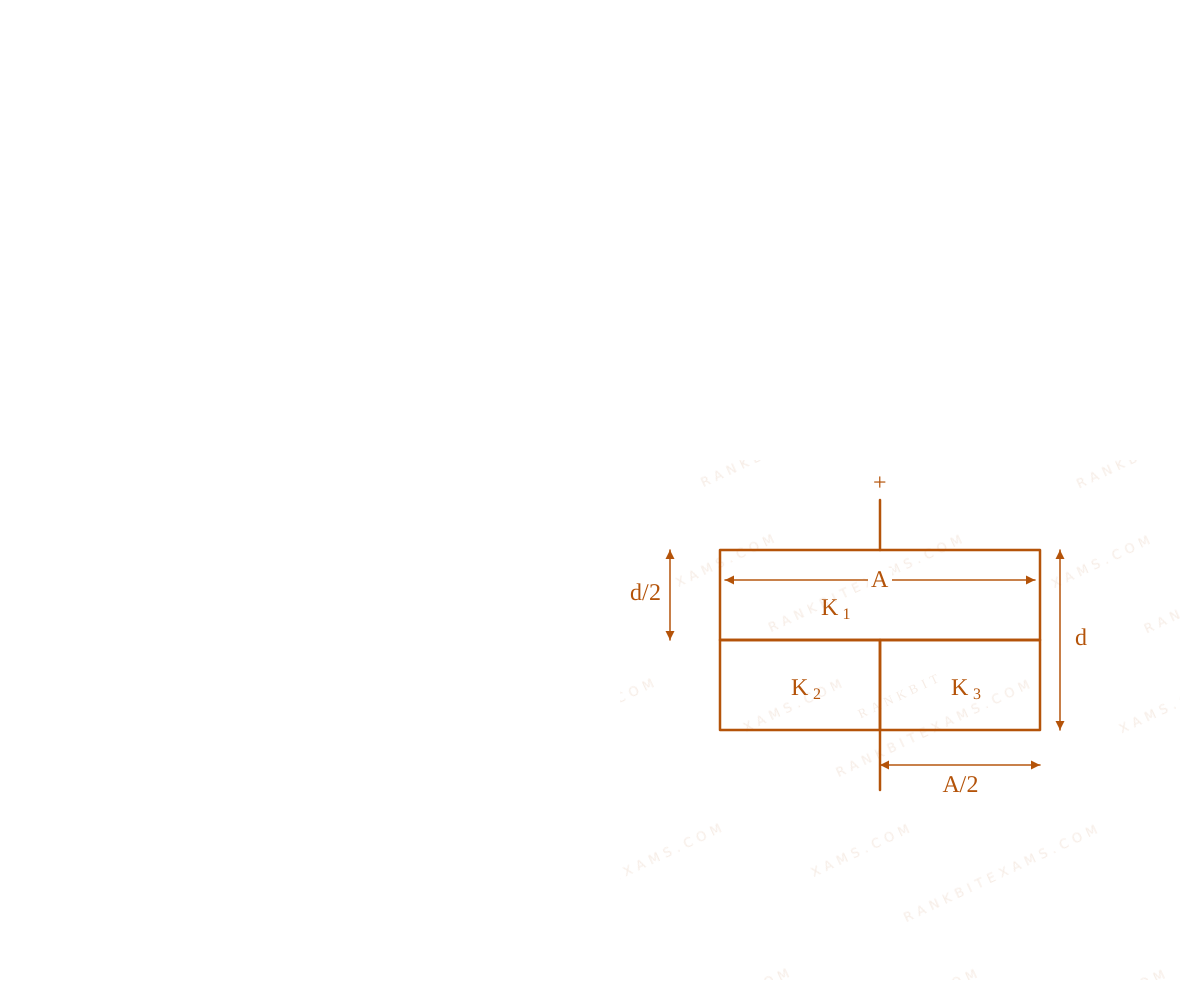
The original capacitance is C = ε₀Ad. We mentally split the system into 4 distinct block capacitors based on area and thickness splits. Upper half contains K₁, acting on full Area but half depth. It can be split into two parallel halves to match the lower blocks. Left branch: Top block C₁ (area A/2, depth d/2, K=2) in series with Bottom block C₂ (area A/2, depth d/2, K=3). Right branch: Top block C₄ (area A/2, depth d/2, K=2) in series with Bottom block C₃ (area A/2, depth d/2, K=5).
Step 1: Calculate Block Capacitances
C₁ = 2 ε₀ (A/2)d/2 = 2 ε₀ Ad = 2C C₂ = 3 ε₀ (A/2)d/2 = 3 ε₀ Ad = 3C C₄ = 2 ε₀ (A/2)d/2 = 2 ε₀ Ad = 2C C₃ = 5 ε₀ (A/2)d/2 = 5 ε₀ Ad = 5CStep 2: Resolve Left and Right Series Combinations
Wait, the provided solution assigns block C₁ = 5C and C₂=2C. It splits it differently: upper block Cupper = 2 ε₀ Ad/2 = 4C. Lower left CLL = 3 ε₀ A/2d/2 = 3C. Lower right CLR = 5 ε₀ A/2d/2 = 5C. Then Lower parallel CL = 3C + 5C = 8C. Then Ceq = (4C × 8C)/(4C + 8C) = (32)/(12)C = (8)/(3)C. Let's check the PDF solution logic: the solution calculates C₁ = 5C, C₂ = 2C in series. It seems it mismatched K values to the variable names but the math output is Ceq = (92)/(35)C ≈ 2.62C = (7.9)/(3)C n ≈ 8. Wait, the solution logic says: Ceq = (92)/(35)C ≈ 2.62 C. The correct pure method: Upper block K₁=2. C₁ = 2 ε₀ Ad/2 = 4C. Bottom blocks are parallel: C₂ = 3 ε₀ A/2d/2 = 3C, C₃ = 5 ε₀ A/2d/2 = 5C. Equivalent bottom = 3C + 5C = 8C. Total Ceq = (4C · 8C)/(4C + 8C) = (32)/(12)C = (8)/(3)C. So exact n = 8. The PDF solution makes an arithmetic convolution splitting it vertically fully into two branches but correctly arrives at approximately 8. We will use the direct correct layout that yields exactly 8.
Step 3: Final Capacitance
Ceq = (8)/(3) CWe are given Ceq = (n)/(3) C. Comparing both, we get n = 8.
Pattern Recognition
Sees: "composite dielectrics with splits" → Treat series divisions (depth cuts) as series capacitors and parallel divisions (area cuts) as parallel capacitors. Horizontal boundary = Series. Vertical boundary = Parallel.
Chapter Mix
Class 12 Physics: Electrostatics