Solution
Core Logic
Follow the sequence of chemical transformations to determine the structure of product B, then apply stoichiometry based on moles of the starting material to find its final mass.
Step 1: Reaction Sequence Analysis
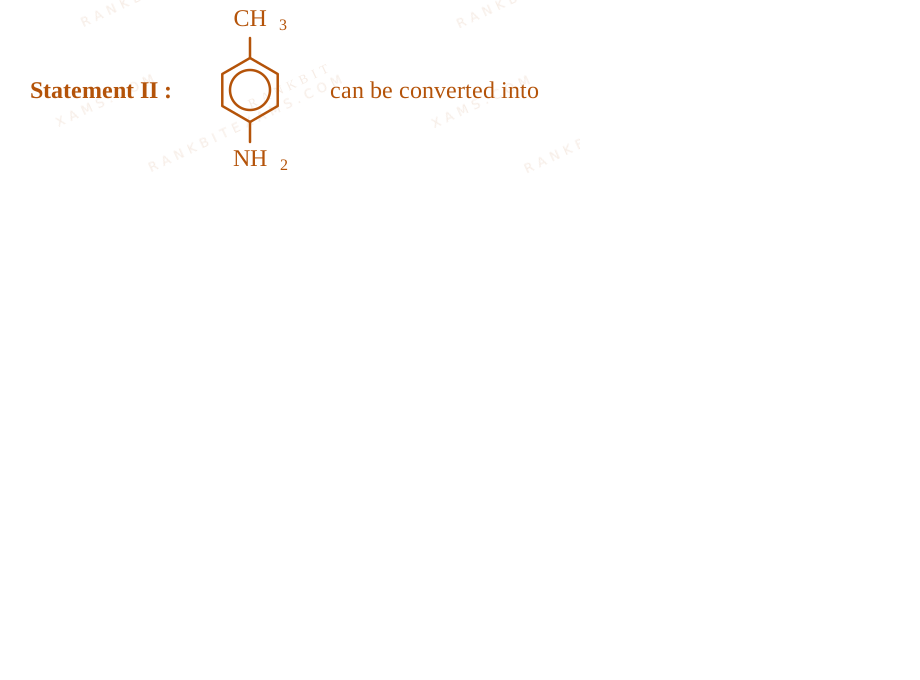
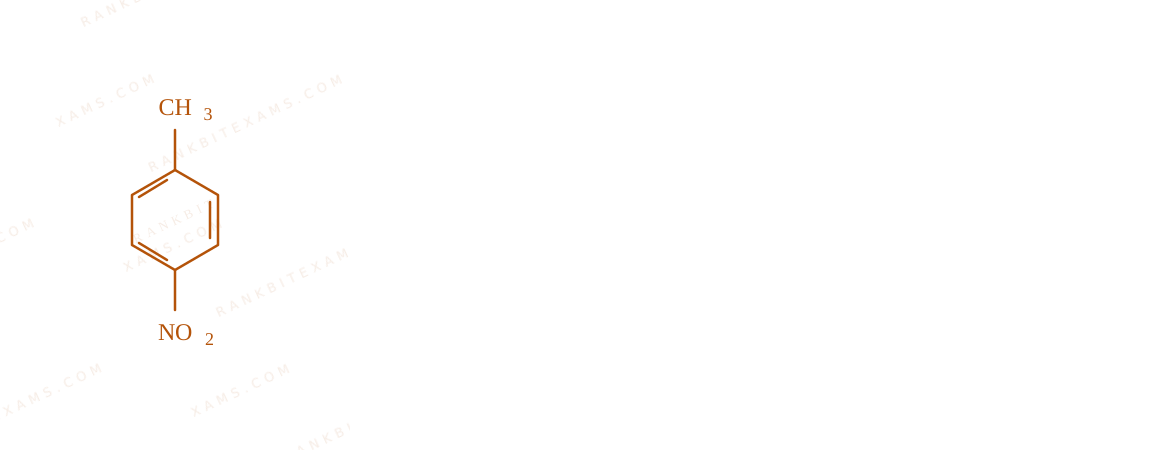
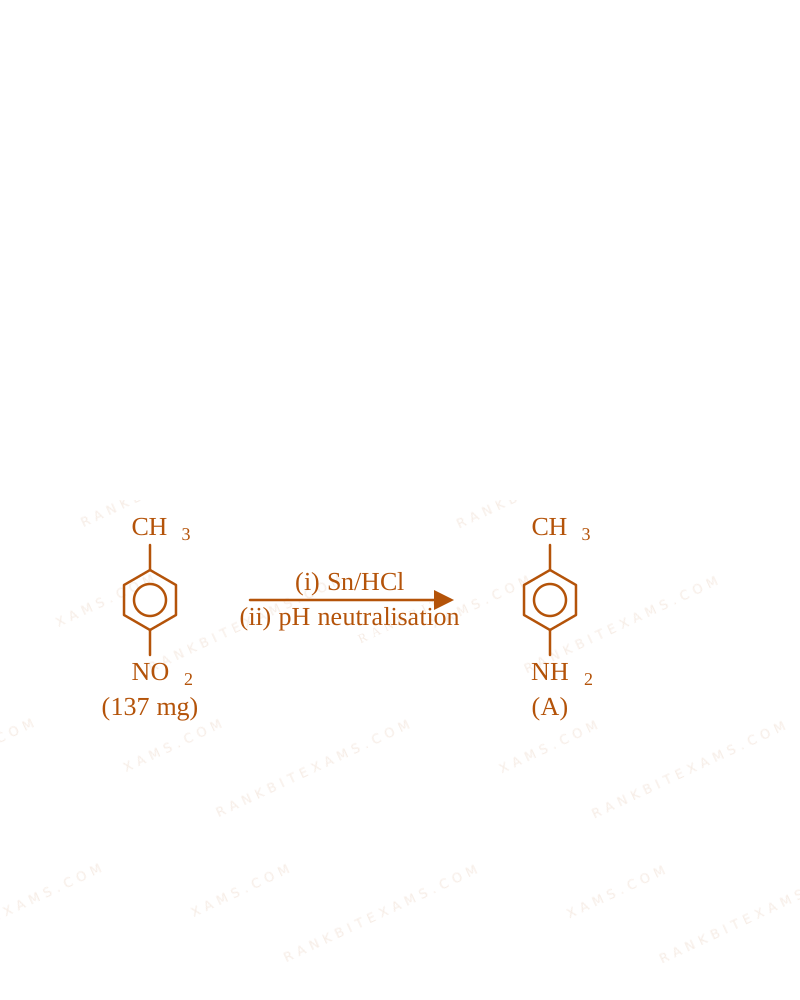
Reaction 1: Reduction of 4-nitrotoluene using Sn, HCl / Δ followed by pH neutralization converts the -NO₂ group to an -NH₂ group, forming 4-methylaniline (p-toluidine).
Step 2: Acetylation
Reaction 2 (forming A): The aniline group is protected by reaction with acetic anhydride (CH₃CO)₂O, forming an acetanilide derivative (N-(4-methylphenyl)acetamide).
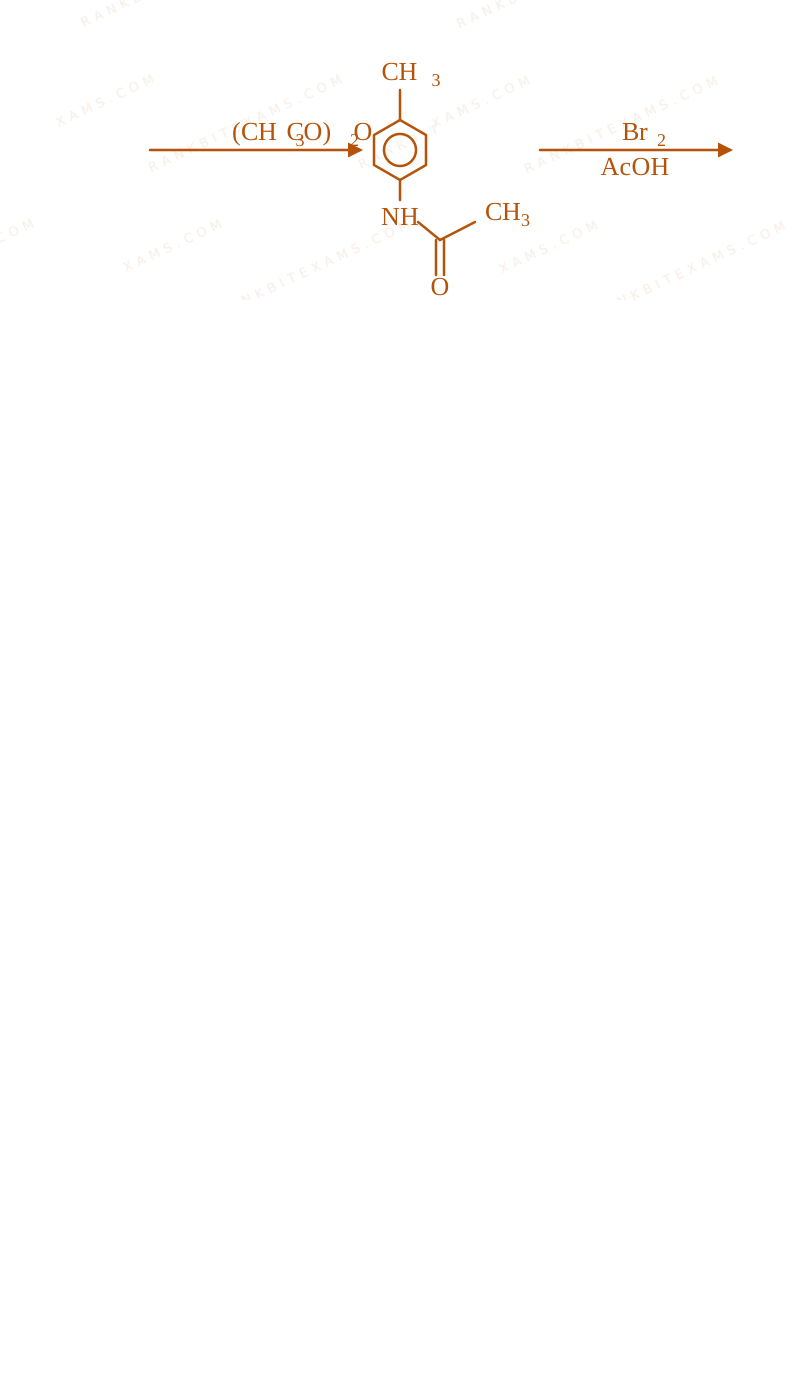
Step 3: Bromination
Reaction 3 (forming B): Bromination using Br₂ / AcOH. The -NHCOCH₃ group is strongly activating and ortho-directing, while the -CH₃ group is weakly activating and ortho-directing. The incoming -Br will substitute ortho to the -NHCOCH₃ group due to dominant directing influence.
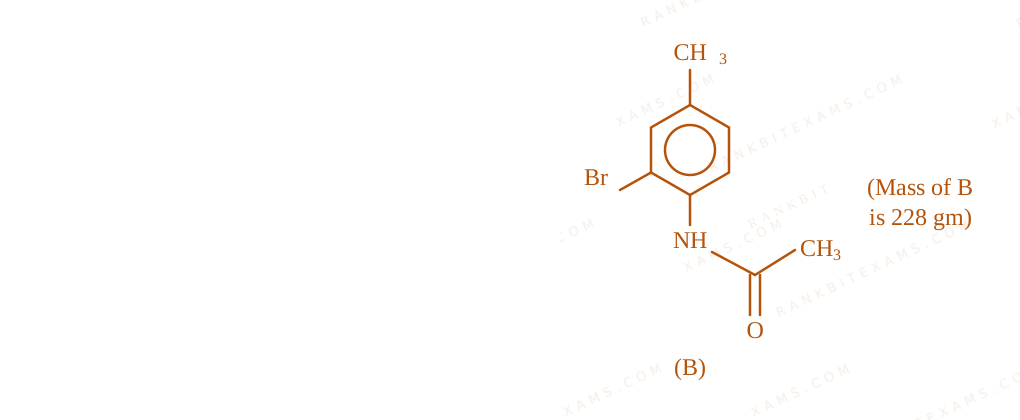
Step 4: Stoichiometric Calculation
Molar mass of 4-nitrotoluene (C₇H₇NO₂) = 137 g/mol. Molar mass of product B (C₉H₁₀BrNO) = 228 g/mol.
Moles of 4-nitrotoluene = 137 × 10⁻³ g137 g/mol = 0.001 mol.
Since the stoichiometry is 1:1 and yields are 100%, moles of B = 0.001 mol. Mass of B = 0.001 mol × 228 g/mol = 0.228 g = 228 mg.
Pattern Recognition
When dealing with multi-step synthesis yield questions, immediately check the initial and final molar masses if the reaction achieves 100% completion. Often, 1 mole of reactant gives 1 mole of product.
Chapter Mix
Class 12 Chemistry: Amines