
Rankbit System
JEE Physics: Waves (+15.5%) | Electrostatics: Concentric Shells (-29.7%) | Modern Physics: Photoelectric Clones (+34.2%) | Mathematics: Definite Integrals (+18.1%) | Chemistry: Coordination Splitting (-11.4%) | JEE Physics: Waves (+15.5%) | Electrostatics: Concentric Shells (-29.7%) | Modern Physics: Photoelectric Clones (+34.2%) | Mathematics: Definite Integrals (+18.1%) | Chemistry: Coordination Splitting (-11.4%)

Solution & Explanation

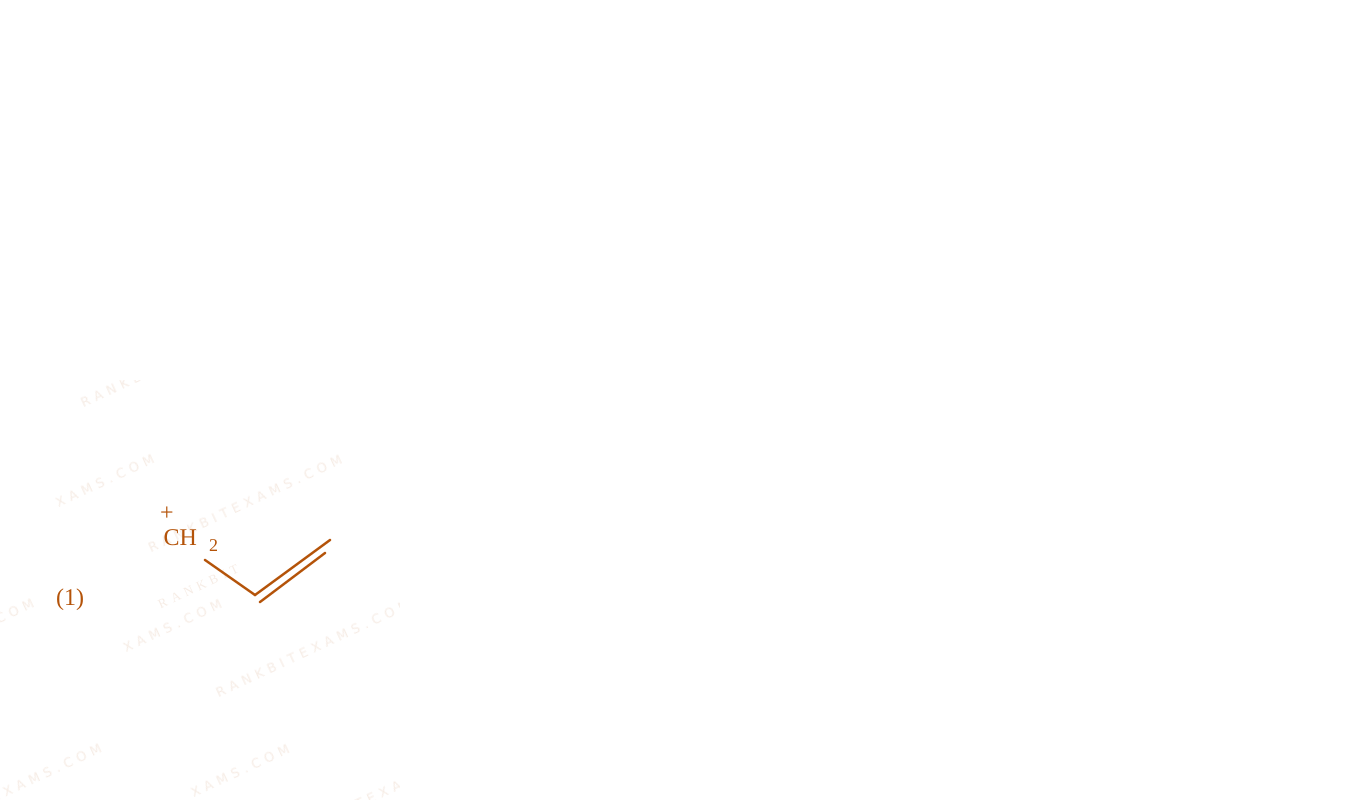
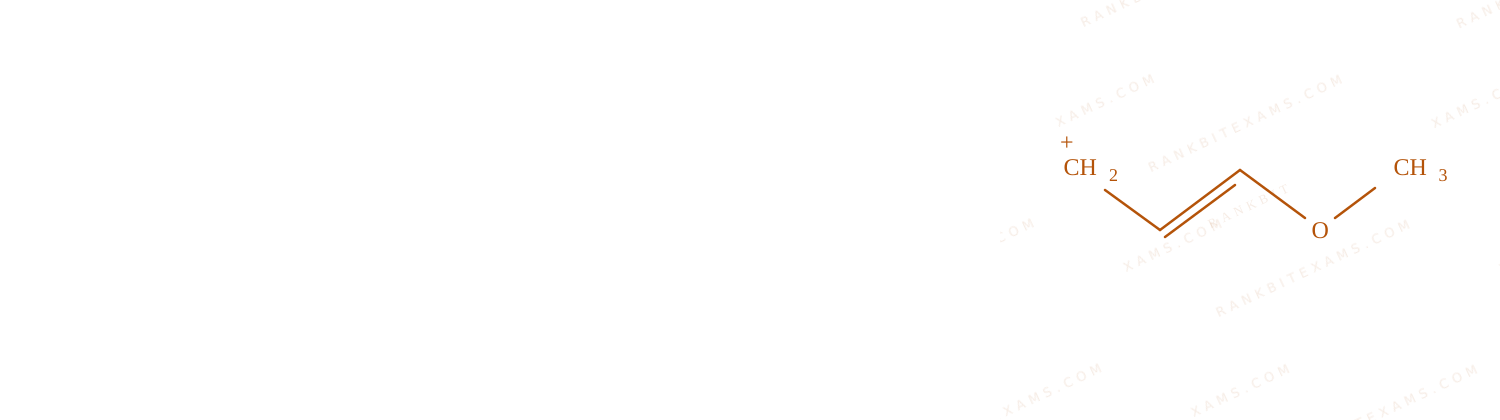
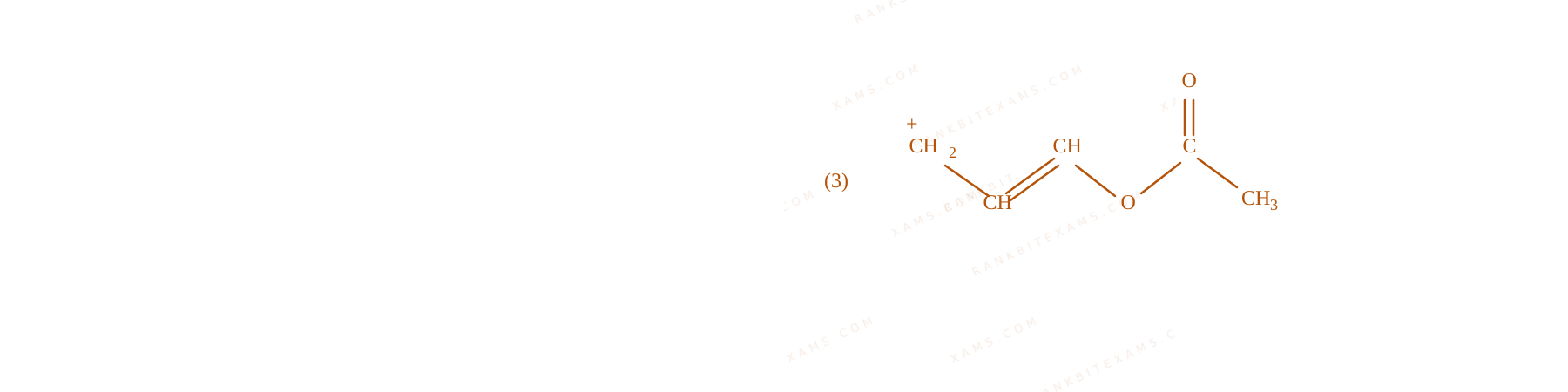
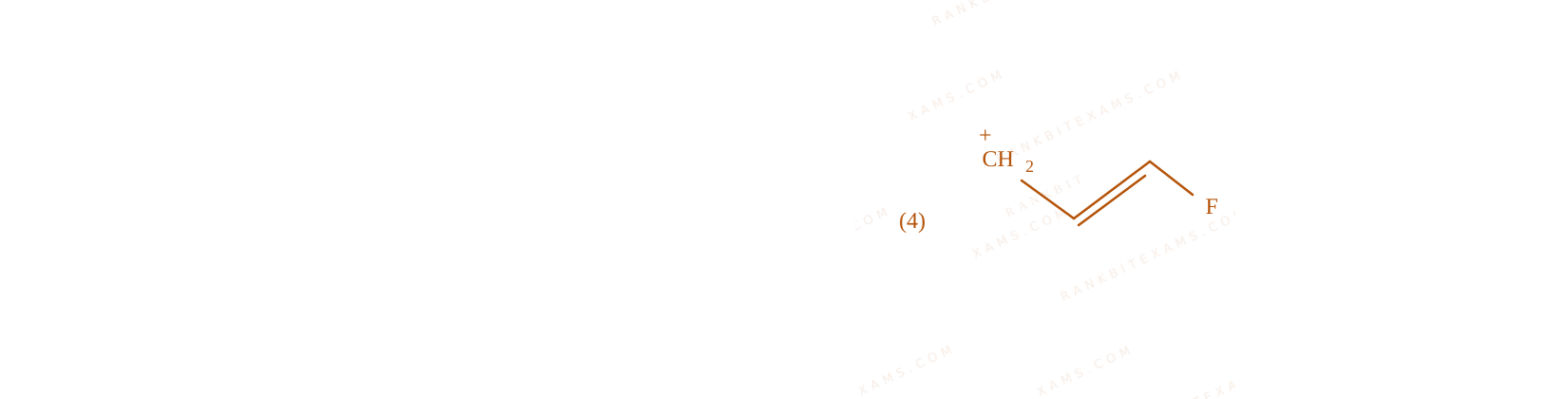
### Core Logic Carbocations are stabilized by structural factors such as the inductive effect (+I), mesomeric effect (+M), and hyperconjugation. In Structure (2), the carbocation center is situated directly adjacent to a strong electronic donor methoxy group (-OCH_3). This configuration allows highly effective lone pair donation into the vacant p-orbital of the carbocation via the structural +M mesomeric path, rendering it exceptionally stable. ### Pattern Recognition An adjacent heteroatom with a lone pair (O, N) triggers dynamic back-bonding stability (+M), which fundamentally outweighs basic hyperconjugation trends. ### Evaluation Rubric / Model Answer null ### Chapter Mix Class 11 Chemistry: Organic Chemistry - Some Basic Principles and Techniques
More Organic Chemistry - Some Basic Principles and Techniques Previous-Year Questions — Page 9

Q26 2025 Nucleophiles and Electrophiles
Total number of nucleophiles from the following is :- mathrm N H _ 3, mathrm P h S H, (mathrm H _ 3 mathrm C) _ 2 mathrm S, mathrm H _ 2 mathrm C = mathrm C H _ 2, stackrel ominus mathrm O mathrm H, mathrm H _ 3 mathrm O ^ oplus, (mathrm C H _ 3) _ 2 mathrm C O, > = mathrm N C H _ 3
  • A. 5
  • B. 4
  • C. 7
  • D. 6

Solution

### Related Formula Nucleophiles are electron-rich species containing lone pairs of electrons or pi-bonds that can donate an electron pair to an electrophilic center. ### Core Logic Let us examine each species: * mathrmNH_3: Contains a lone pair on nitrogen ightarrow Nucleophile [cite: 743, 745] * mathrmPhSH: Contains lone pairs on sulfur ightarrow Nucleophile [cite: 743, 745] * (mathrmH_3mathrmC)_2mathrmS: Contains lone pairs on sulfur ightarrow Nucleophile [cite: 743, 745] * mathrmH_2mathrmC=mathrmCH_2: Contains a nucleophilic pi-bond ightarrow Nucleophile [cite: 743, 745] * stackrelominusmathrmOmathrmH: Negatively charged with lone pairs ightarrow Nucleophile [cite: 743, 745] * mathrmH_3mathrmO^oplus: Electron deficient, positively charged oxygen cannot donate electrons ightarrow Electrophile * (mathrmCH_3)_2mathrmCO: Carbonyl carbon is electrophilic * >=mathrmNCH_3: Imine carbon is electrophilic Thus, the total number of nucleophiles is 5[cite: 741, 743]. ### Pattern Recognition Neutral molecules with lone pairs (N, S) or alkenes/alkynes with available pi-electrons operate as good nucleophiles, along with full anions[cite: 743, 745]. ### Evaluation Rubric / Model Answer null ### Chapter Mix Class 11 Chemistry: Organic Chemistry - Some Basic Principles and Techniques
Q30 2025 IUPAC Nomenclature of Organic Compounds
Match List-I with List-II.
List-I (Structure)List-II (IUPAC Name)(A) mathrmH_3C-CH_2-CH(C_2H_5)-CH_2-CH(CH_3)-C_2H_5(I) 4-Methylpent-1-ene(B) mathrm(CH_3)_2C(C_3H_7)_2(II) 3-Ethyl-5-methylheptane(C) mathrmCH_2=C(CH_3)-CH=CH-CH_3(III) 4,4-Dimethylheptane(D) mathrm(CH_3)_2CH-CH_2-CH=CH_2(IV) 2-Methyl-1,3-pentadiene Choose the correct answer from the options given below:
  • A. \text{(A)-(III), (B)-(II), (C)-(IV), (D)-(I)}
  • B. \text{(A)-(III), (B)-(II), (C)-(I), (D)-(IV)}
  • C. \text{(A)-(II), (B)-(III), (C)-(IV), (D)-(I)}
  • D. \text{(A)-(II), (B)-(III), (C)-(I), (D)-(IV)}

Solution

### Related Formula IUPAC Rules select the longest principal carbon chain and number it to give substituents the lowest possible locants. ### Core Logic Let's systematic decode each name : * (A) Longest chain contains 7 carbons (heptane) with an ethyl group at position 3 and a methyl group at position 5 ightarrow 3-Ethyl-5-methylheptane (II) . * (B) C expanded yields a 7 carbon main chain with two methyl groups at carbon-4 ightarrow 4,4-Dimethylheptane (III) . * (C) 5-carbon diene numbered from the left double bond side ightarrow 2-Methyl-1,3-pentadiene (IV) . * (D) 5-carbon alkene starting from the double bond end ightarrow 4-Methylpent-1-ene (I) . Therefore, matching sequence: (A)-(II), (B)-(III), (C)-(IV), (D)-(I). ### Pattern Recognition Expanding compressed groupings such as mathrm(C_3H_7)_2 prevents errors regarding parent chain carbon counts. ### Evaluation Rubric / Model Answer null ### Chapter Mix Class 11 Chemistry: Organic Chemistry - Some Basic Principles and Techniques
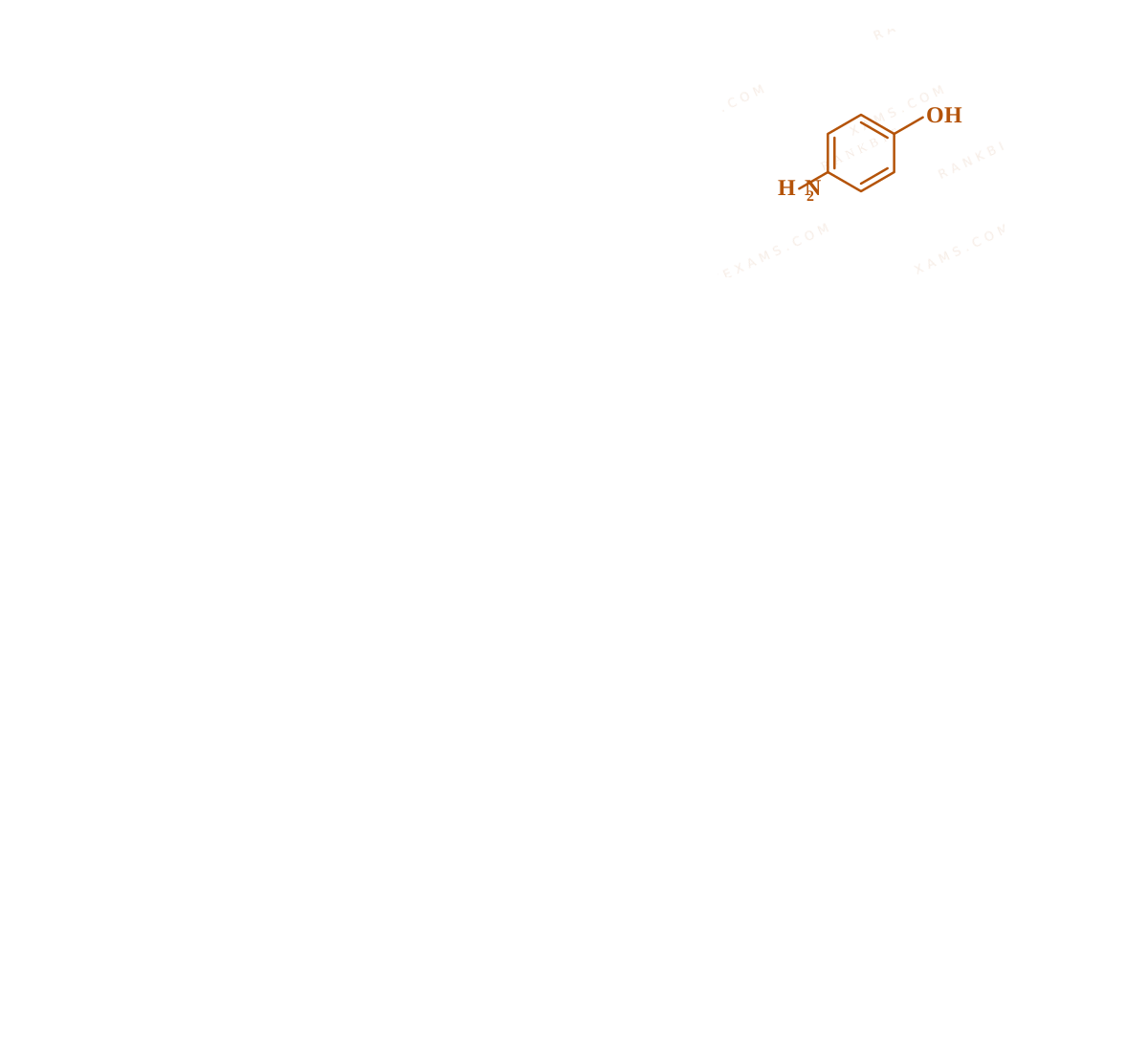
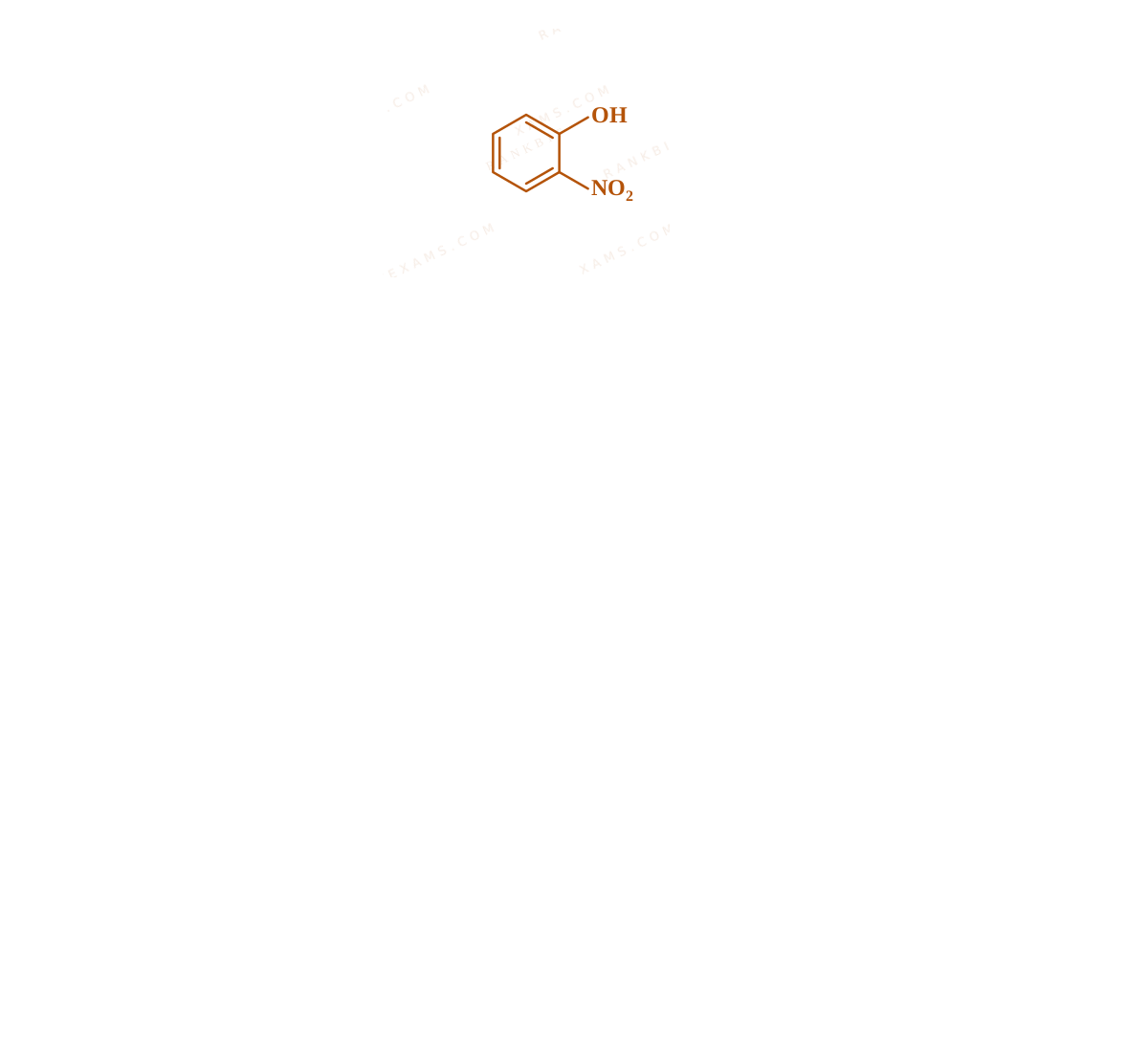
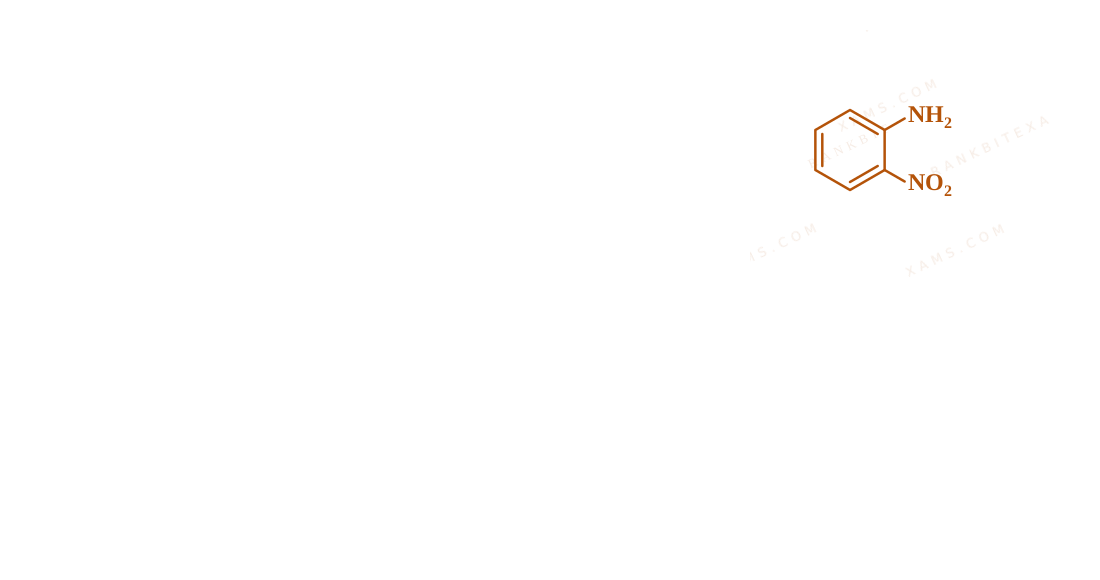
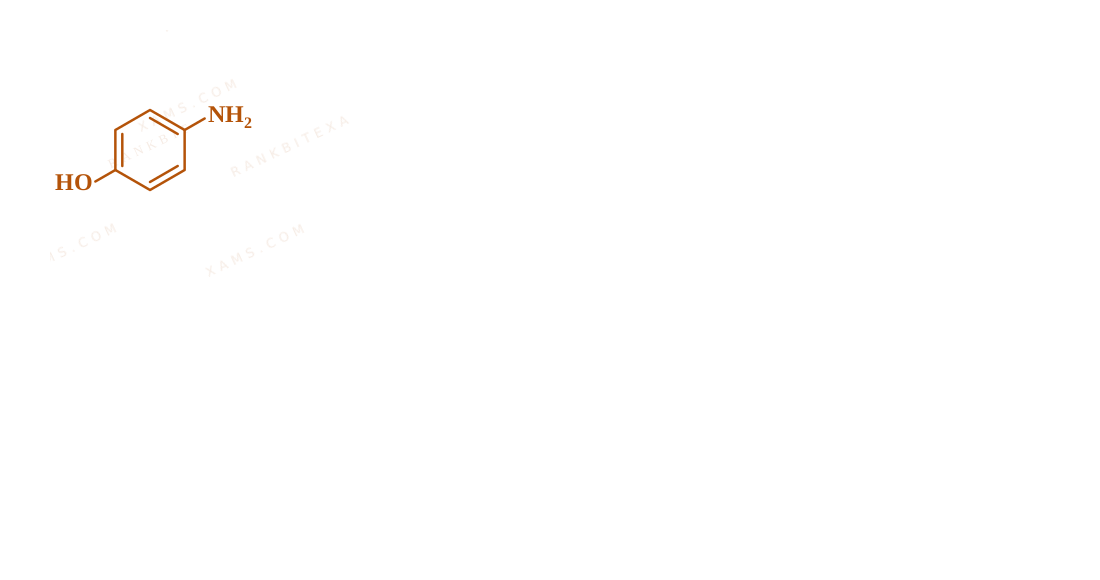
Q44 2025 Purification of Organic Compounds - Steam Distillation
The steam volatile compounds among the following are:
(A)
Steam volatile compounds isomers for Q44 - JEE Main 2025 Morning
Four different disubstituted benzene structures are indexed to show spatial isomer distributions.
(B)
Steam volatile compounds isomers for Q44 - JEE Main 2025 Morning
Four different disubstituted benzene structures are indexed to show spatial isomer distributions.
(C)
Steam volatile compounds isomers for Q44 - JEE Main 2025 Morning
Four different disubstituted benzene structures are indexed to show spatial isomer distributions.
(D)
Steam volatile compounds isomers for Q44 - JEE Main 2025 Morning
Four different disubstituted benzene structures are indexed to show spatial isomer distributions.
Choose the correct answer from the options given below:
  • A. (B) and (D) only
  • B. (A) and (C) only
  • C. (A) and (B) only
  • D. (A), (B) and (C) only

Solution

### Related Formula textIntramolecular H-bonding implies textLower boiling point implies textSteam Volatile ### Core Logic Purification via steam distillation requires a high relative vapor pressure at the boiling point of water. Let us assess the isomers : * (A) o-Nitrophenol contains an -mathrmOH group right next to an -mathrmNO_2 group, allowing for strong intramolecular hydrogen bonding. This minimizes external interactions, lowering the boiling point and making it steam volatile . * (B) o-Nitroaniline similarly stabilizes itself via internal intramolecular hydrogen bonding between the amine and nitro components, making it steam volatile . * (C) & (D) The para isomers form extensive intermolecular networks with neighboring molecules, which significantly elevates their boiling points and prevents steam volatility . Hence, compounds (A) and (B) are steam volatile, matching option (3). ### Pattern Recognition ortho-substituted functional networks form self-contained internal loops through hydrogen bonding, preventing external pairing and maximizing volatility. ### Evaluation Rubric / Model Answer null ### Chapter Mix Class 11 Chemistry: Organic Chemistry - Some Basic Principles and Techniques Class 11 Chemistry: Chemical Bonding and Molecular Structure
Q48 2025 Sigma and Pi Bonds
The sum of sigma (sigma) and mathrmpi(pi) bonds in Hex-1,3-dien-5-yne is ________.
Numerical Answer. Answer: 15 to 15

Solution

### Related Formula textSingle bond = 1sigma, quad textDouble bond = 1sigma + 1pi, quad textTriple bond = 1sigma + 2pi ### Core Logic Let us map out the complete structural bond geometry of Hex-1,3-dien-5-yne : mathrmH_2C=CH-CH=CH-Cequiv CH Counting the individual bonds : * Carbon-Hydrogen (mathrmC-H) single bonds = 2 + 1 + 1 + 1 + 1 = 6 \, sigma bonds * Carbon-Carbon single, double, and triple linkages: * mathrmC_1=mathrmC_2 ightarrow 1sigma + 1pi * mathrmC_2-mathrmC_3 ightarrow 1sigma * mathrmC_3=mathrmC_4 ightarrow 1sigma + 1pi * mathrmC_4-mathrmC_5 ightarrow 1sigma * mathrmC_5equivmathrmC_6 ightarrow 1sigma + 2pi Total values : textTotal sigma text bonds = 6 + 5 = 11 textTotal pi text bonds = 1 + 1 + 2 = 4 textSum (sigma + pi) = 11 + 4 = 15 ### Pattern Recognition Do not skip implicit mathrmC-H single bonds when scanning skeletal formulas, as each counts as a full sigma bond. ### Evaluation Rubric / Model Answer null ### Chapter Mix Class 11 Chemistry: Organic Chemistry - Some Basic Principles and Techniques

More Organic Chemistry - Some Basic Principles and Techniques Questions — jee_main_2025_24_jan_morning

Practice all Organic Chemistry - Some Basic Principles and Techniques previous-year questions →

YOUR FIRST PREP STEP STARTS HERE

We Map Every Repeating Question in Competitive Exams.

Say goodbye to generic mock test fatigue. RankBit uses smart analysis to group past exam questions into their foundational Repeating Question Types. Find chapter weightage, track repeating questions, and score higher with targeted practice.

Select Your Target Exam

Choose an exam track below to find formulas per chapter and patterns.

Syncing Exam Intelligence

Mapping formulas and patterns across all tracks…

PATH A — FULL LENGTH PRACTICE

Full Mock Test Hub

Simulate real NTA exam conditions with fully tracked mocks. Time yourself against past papers.

Under Development
PATH B — TARGETED PRACTICE

Topic-wise Practice Hub

Practice past-year questions one chapter at a time. Pick an exam → subject → chapter and get every PYQ for that topic — pulled together from all past papers — with the chapter's key formulas alongside.

Loading Questions... Browse Topics
Latest from the Blog
View all →

Loading articles...