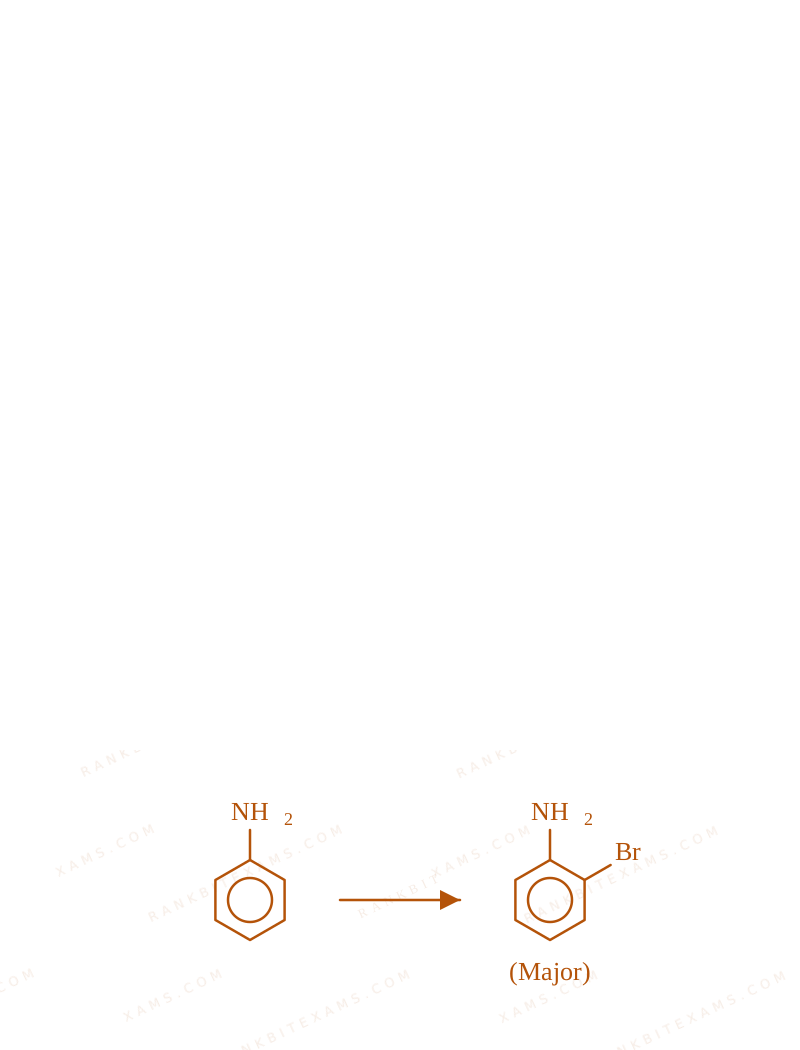
For reaction
The image shows a multi-step organic conversion starting with sulfanilic acid intermediate structure mapping to a selectively brominated major product.
The correct order of set of reagents for the above conversion is :
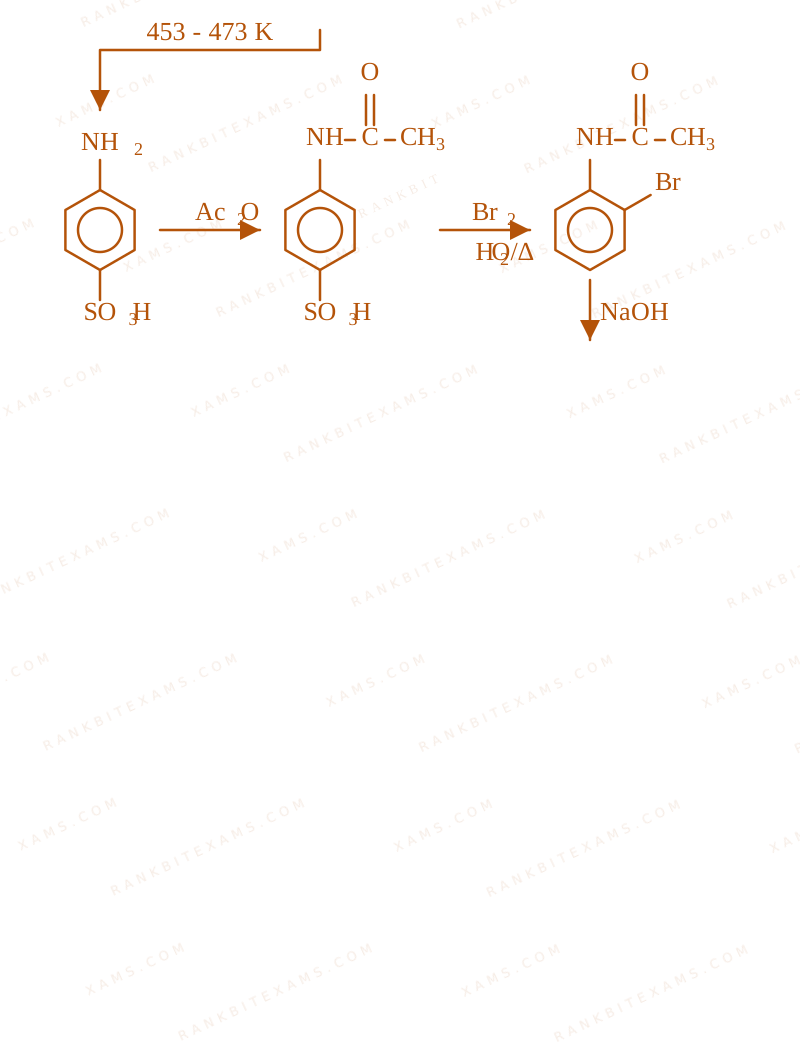
To direct selective monobromination ortho to the amino functionality while utilizing the masking capability of the sulfonic acid group:
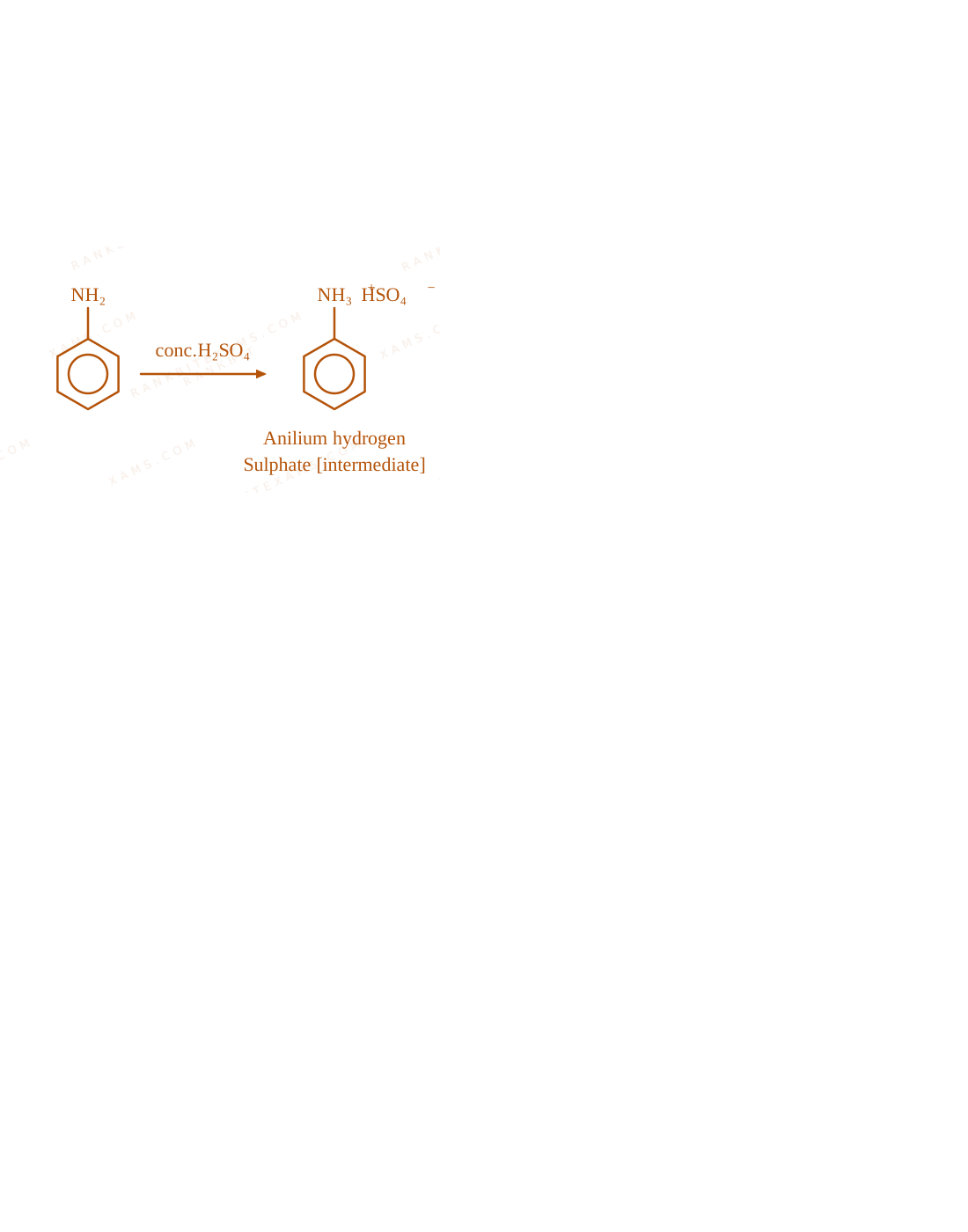
Treating Aniline with conc. H2SO₄$\mathrm{H}{2}SO_{4}$ at high temperature (453-473 K$453-473\text{ K}$) yields Sulfanilic acid due to para sulfonating preference.
Acetylation with Ac₂O$\mathrm{Ac}_{2}O$ protects the amine as an acetanilide functionality to moderate activation power and prevent over-bromination.
Electrophilic substitution using Br₂$\mathrm{Br}_{2}$ selectively places bromine at the position ortho to the protected acetamido group (the only available activated site since para is occupied).
Acidic/thermal desulfonation via H₂O(Δ)$\mathrm{H}_{2}O(\Delta)$ cleaves the para-sulfonic acid group.
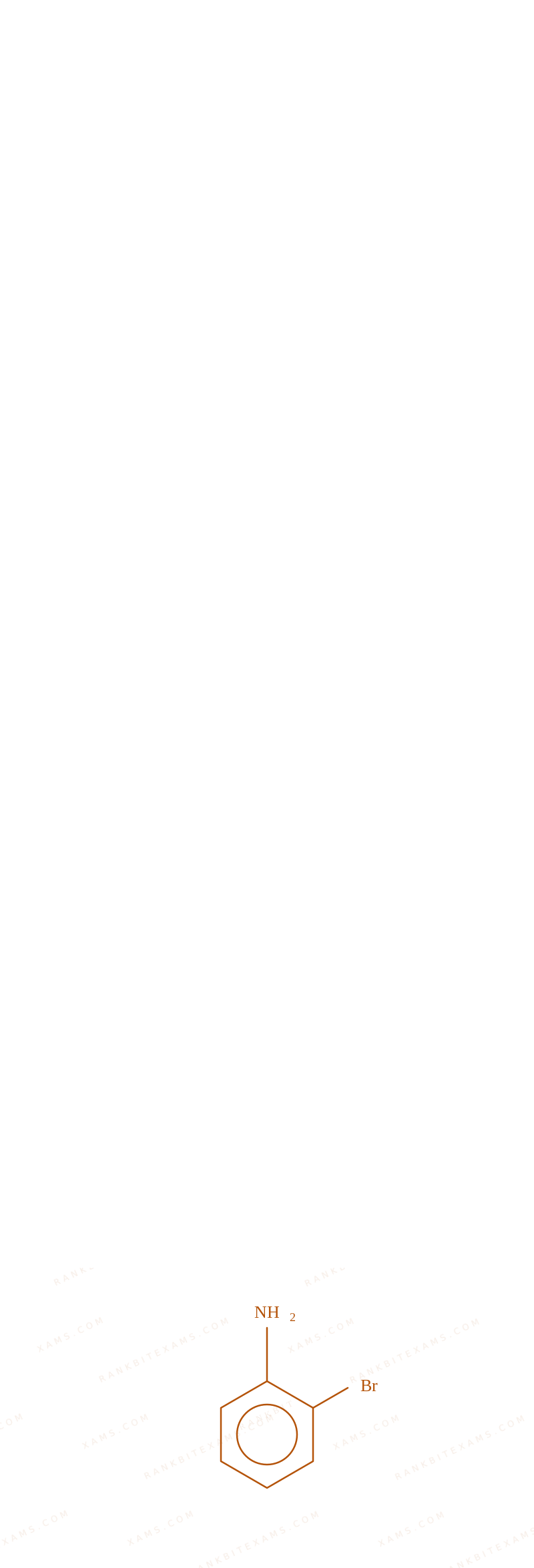
Alkaline hydrolysis with NaOH$\mathrm{NaOH}$ removes the acetyl protecting group to regenerate the pristine primary amine structure yielding ortho-bromoaniline.
Step-by-Step Mechanism
The reaction mechanism progresses linearly through the designated strategic intermediates:
The image shows a multi-step organic conversion starting with sulfanilic acid intermediate structure mapping to a selectively brominated major product.The image shows a multi-step organic conversion starting with sulfanilic acid intermediate structure mapping to a selectively brominated major product.The image shows a multi-step organic conversion starting with sulfanilic acid intermediate structure mapping to a selectively brominated major product.
Pattern Recognition
When dealing with aniline conversions requiring blocked para positions followed by a removal step, look for the sequence tracking: Sulfonation arrow$\rightarrow$ Protection arrow$\rightarrow$ Halogenation arrow$\rightarrow$ Desulfonation arrow$\rightarrow$ Deprotection.
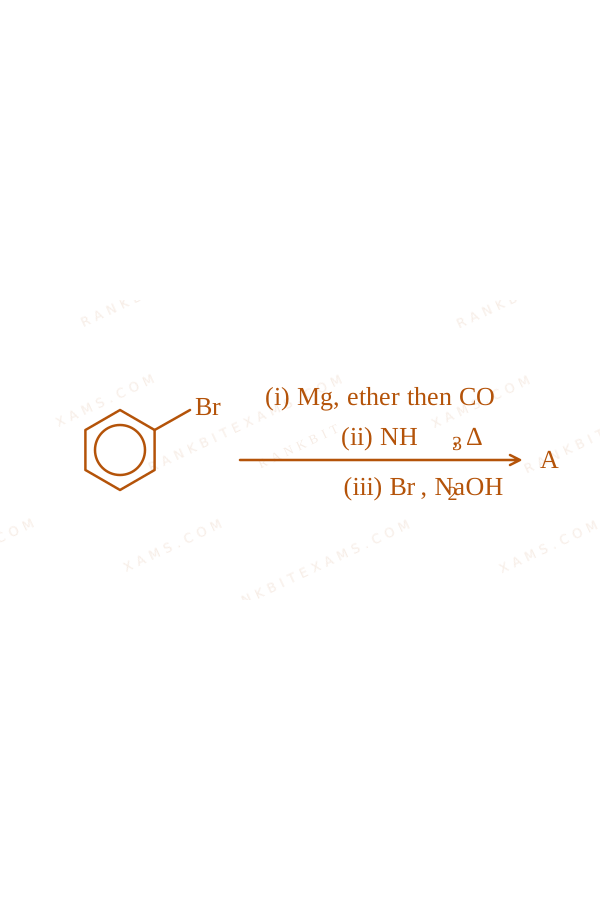
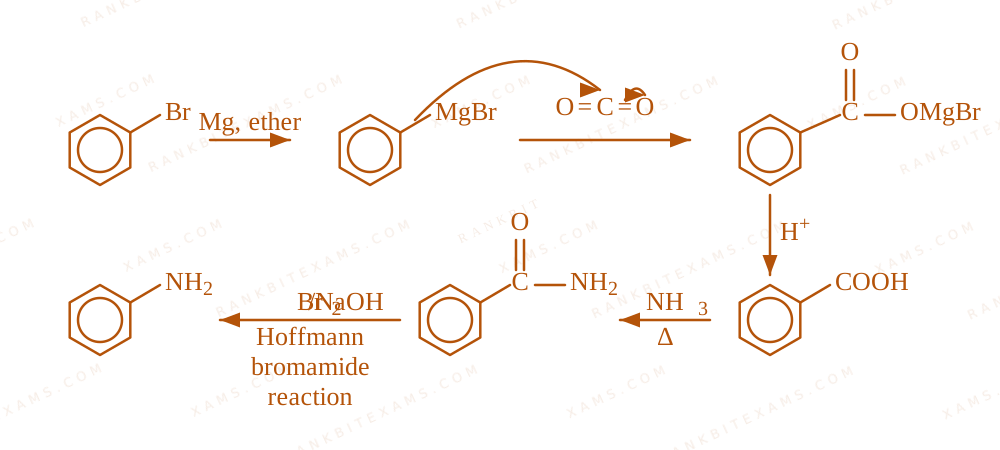
The image outlines a synthesis pathway converting bromobenzene through several steps finally using Hoffmann bromamide reaction.
Step 1: Tracing the product
The final product 'A' is Aniline.
Chapter Mix
Class 12 Chemistry: Amines
Class 12 Chemistry: Aldehydes, Ketones and Carboxylic Acids
Class 12 Chemistry: Haloalkanes and Haloarenes
Q78jee_main_2024_30_jan_morningChemical Reactions of Amines
Following is a confirmatory test for aromatic primary amines. Identify reagent (A) and (B)
Ph-NH₂ A Ph-N₂^+Cl^- B Scarlet red dye$Ph-NH_2 \xrightarrow{A} Ph-N_2^+Cl^- \xrightarrow{B} \text{Scarlet red dye}$
The reaction sequence represents the classic dye test for aromatic primary amines.
Step 1 (Diazotization): Aniline (Ph-NH₂$Ph-NH_2$) reacts with nitrous acid (generated in situ from NaNO₂ + HCl$NaNO_2 + HCl$) at low temperature (0-5^° C$0-5^\circ C$) to form benzene diazonium chloride (Ph-N₂^+Cl^-$Ph-N_2^+Cl^-$).
Thus, Reagent A is NaNO₂ + HCl$NaNO_2 + HCl$ at 0-5^° C$0-5^\circ C$.
Step 2: Coupling Reaction
Step 2: The diazonium salt undergoes an electrophilic substitution (coupling reaction) with an electron-rich aromatic ring to form an azo dye.
The formation of a 'scarlet red dye' is specifically the result of coupling benzene diazonium chloride with β$\beta$-naphthol in a weakly basic medium (NaOH).
Chemical Reactions of Amines solution diagram for Q78 - JEE Main 2024 Morning
Chapter Mix
Class 12 Chemistry: Amines
Qjee_main_2024_31_jan_eveningReactions of Diazonium Salts
The azo-dye (Y) formed in the following reactions is
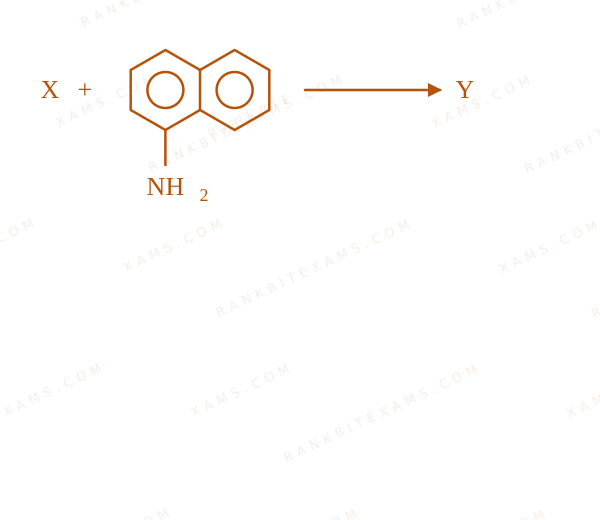
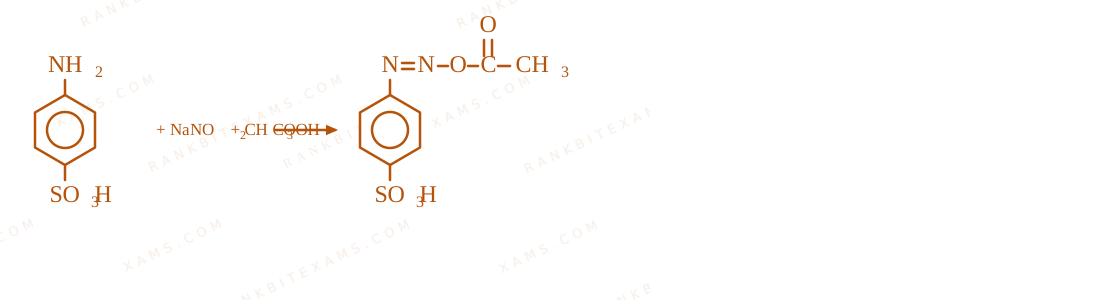
Sulphanilic acid + NaNO₂ + CH₃COOH arrow X$\text{Sulphanilic acid } + NaNO_2 + CH_3COOH \rightarrow X$The image shows the reaction of intermediate X with N,N-dimethylaniline to form an azo dye (Y).
A.
B.
C.
D.
Solution
Core Logic
Sulphanilic acid reacts with NaNO₂$NaNO_2$ and CH₃COOH$CH_3COOH$ to form a diazonium salt (X).
The diazonium salt (X) then reacts with N,N-dimethylaniline (given in the coupling step image). The coupling takes place at the para position of the highly activated N,N-dimethylaniline ring.
This coupling yields Methyl Orange, an azo dye. Its structure is p$p$-dimethylaminoazobenzenesulphonic acid.
The image shows the reaction of intermediate X with N,N-dimethylaniline to form an azo dye (Y).
Step 1: Final Identification
The final product (Y) matches option (4) structurally, containing the sulphonic acid group on one ring, the azo linkage, and the N,N-dimethylamine group on the para position of the other ring.
Chapter Mix
Class 12 Chemistry: Amines
Q70jee_main_2024_31_jan_eveningChemical Reactions of Amines
Given below are two statements:
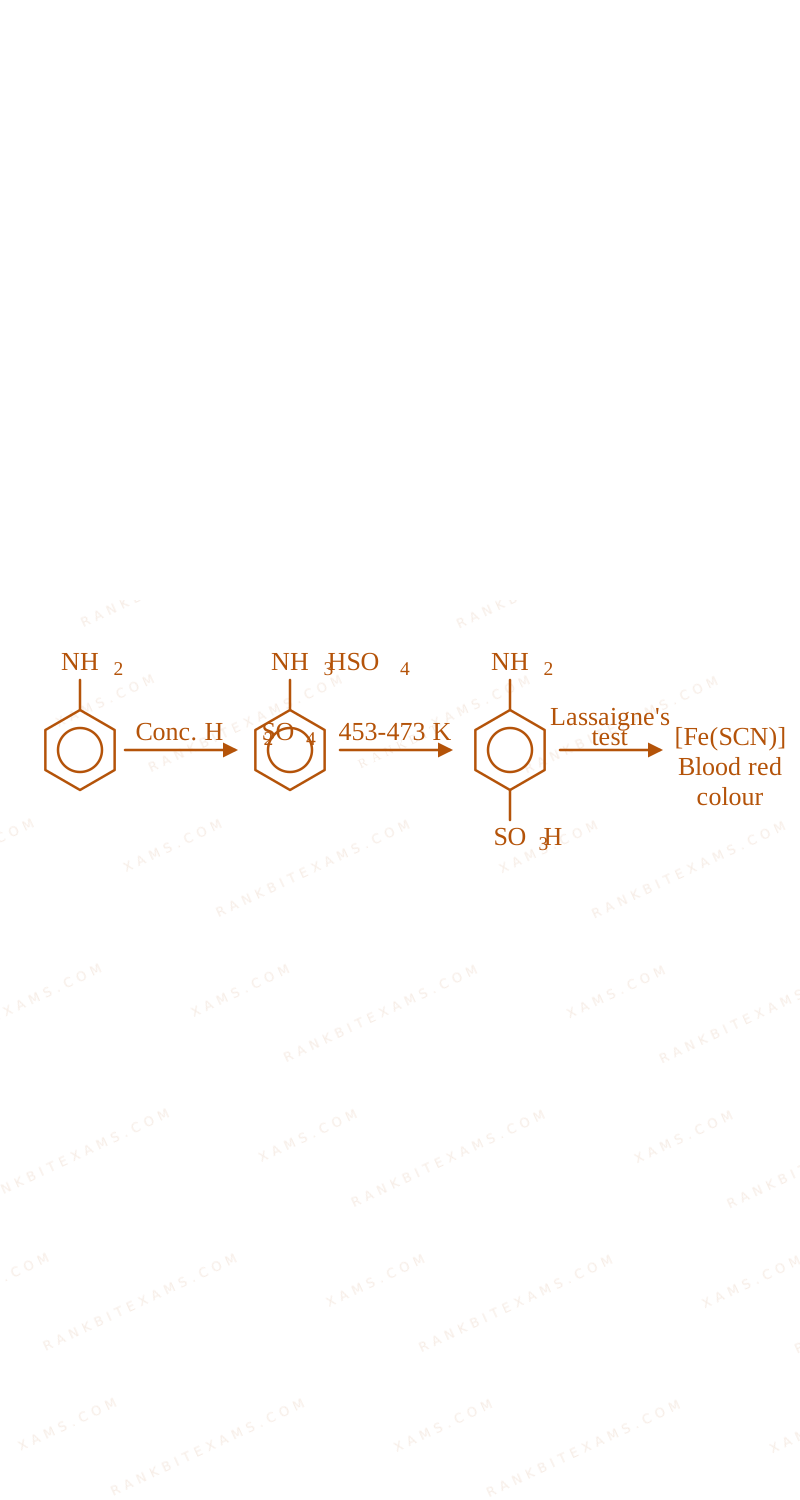
Statement I: Aniline reacts with con. H₂SO₄$H_2SO_4$ followed by heating at 453-473 K gives p-aminobenzene sulphonic acid, which gives blood red colour in the 'Lassaigne's test'.
Statement II: In Friedel-Crafts alkylation and acylation reactions, aniline forms salt with the AlCl₃$AlCl_3$ catalyst. Due to this, nitrogen of aniline acquires a positive charge and acts as deactivating group.
In the light of the above statements, choose the correct answer from the options given below:
A.(1) Statement I is false but statement II is true$\text{(1) Statement I is false but statement II is true}$
B.(2) Both statement I and statement II are false$\text{(2) Both statement I and statement II are false}$
C.(3) Statement I is true but statement II is false$\text{(3) Statement I is true but statement II is false}$
D.(4) Both statement I and statement II are true$\text{(4) Both statement I and statement II are true}$
Solution
Core Logic
Statement I: Aniline reacting with concentrated H₂SO₄$H_2SO_4$ gives anilinium hydrogensulphate, which on heating at 453-473 K produces sulphanilic acid (p-aminobenzene sulphonic acid). Because sulphanilic acid contains both Nitrogen and Sulphur, it gives a blood-red colouration in Lassaigne's test due to the formation of thiocyanate ion SCN^-$SCN^-$ which reacts with Fe³⁺$Fe^{3+}$ to form [Fe(SCN)]²⁺$[Fe(SCN)]^{2+}$. Thus, Statement I is true.
Statement II: In Friedel-Crafts reactions, the Lewis acid catalyst AlCl₃$AlCl_3$ reacts with the lone pair on the nitrogen atom of aniline to form a salt. This generates a positive charge on the nitrogen, transforming the -NH₂$-NH_2$ group from a strong activating group into a strong deactivating group, thus preventing the Friedel-Crafts reaction from occurring. Thus, Statement II is true.
Chemical Reactions of Amines diagram for Q70 - JEE Main 2024 Evening
Step 1: Final Conclusion
Both Statement I and Statement II are true. Option (4) is correct.
Chapter Mix
Class 12 Chemistry: Amines
Class 11 Chemistry: Organic Chemistry - Some Basic Principles and Techniques
Q83jee_main_2024_31_jan_eveningAcylation of Amines
A compound (x) with molar mass 108 ~g mol⁻¹$108\mathrm{~g\,mol^{-1}}$ undergoes acetylation to give product with molar mass 192 ~g mol⁻¹$192\mathrm{~g\,mol^{-1}}$. The number of amino groups in the compound (x) is ________.
During the acetylation of an amino group, one hydrogen atom (mass = 1 g/mol$1\text{ g/mol}$) is replaced by an acetyl group (-COCH₃$-COCH_3$, mass = 43 g/mol$43\text{ g/mol}$).
Gain in molecular weight for every one -NH₂$-NH_2$ group acetylated = 43 - 1 = 42 g/mol$43 - 1 = 42\text{ g/mol}$.
Step 1: Calculating Number of Groups
Total increase in molecular weight = Final mass - Initial mass = 192 - 108 = 84 g/mol$192 - 108 = 84\text{ g/mol}$.
Number of amino groups = Total mass increaseMass increase per group = (84)/(42) = 2$$\text{Number of amino groups} = \frac{\text{Total mass increase}}{\text{Mass increase per group}} = \frac{84}{42} = 2$$
Chapter Mix
Class 12 Chemistry: Amines
More Amines Questions — jee_main_2025_24_jan_evening
Practice past-year questions one chapter at a time. Pick an exam → subject → chapter and get every PYQ for that topic — pulled together from all past papers — with the chapter's key formulas alongside.