Q87
jee_main_2024_30_january_evening
Types of Redox Reactions
Total number of species from the following which can undergo disproportionation reaction
H₂O₂, ClO₃^-, P₄, Cl₂, Ag, Cu⁺¹, F₂, NO₂, K^+
Numerical Answer. Answer: 6 to 6
Solution
Core Logic
For a species to undergo disproportionation, it must contain an element that is present in an intermediate oxidation state. This allows it to act both as an oxidizing agent (by being reduced to a lower state) and a reducing agent (by being oxidized to a higher state).
Let's evaluate each species:
- H₂O₂: Oxygen is in -1. Can go to 0 (O₂) and -2 (H₂O). (Yes)
- ClO₃^-: Chlorine is in +5. Can go to +7 (ClO₄^-) and -1 (Cl^-). (Yes)
- P₄: Phosphorus is in 0. Can go to -3 (PH₃) and +1/+3/+5. (Yes)
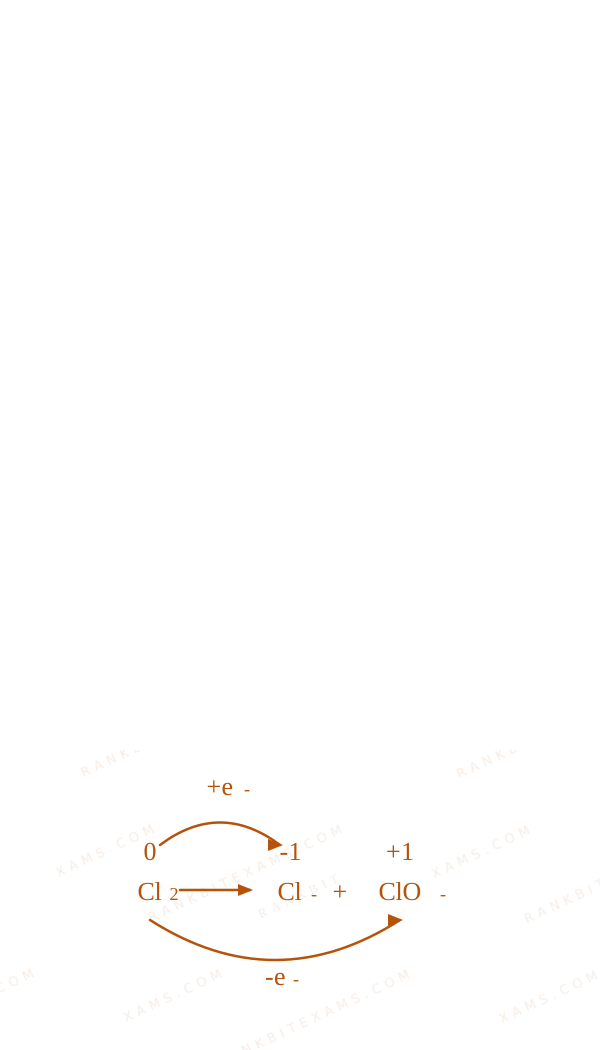
- Cl₂: Chlorine is in 0. Can go to -1 (Cl^-) and +1 (ClO^-). (Yes)
- Ag: Metal in 0 state. Cannot show negative oxidation state. (No)
- Cu⁺¹: Copper is in +1. Can go to 0 (Cu) and +2 (Cu²⁺). (Yes)
- F₂: Fluorine is the most electronegative, only shows 0 and -1. Cannot be oxidized to a positive state. (No)
- NO₂: Nitrogen is in +4. Can go to +5 (HNO₃) and +3 (HNO₂). (Yes)
- K^+: Potassium is in its highest oxidation state +1. Cannot be oxidized further. (No)
Step 1: Final Count
The species that can undergo disproportionation are: H₂O₂, ClO₃^-, P₄, Cl₂, Cu⁺¹, and NO₂. Total count is 6.
Pattern Recognition
Rule out maximum oxidation states (K^+), minimum oxidation states, and elements like F₂ which never show positive oxidation states.
Chapter Mix
Class 11 Chemistry: Redox Reactions
