
JEE Main · Chemistry ↑ Rising

Amines appeared 40 times across 3 years — 4.6% of Chemistry. This question is from Electrophilic Substitution in Amines.

Year 2026 2025 2024 Total
Questions 16 14 10 40

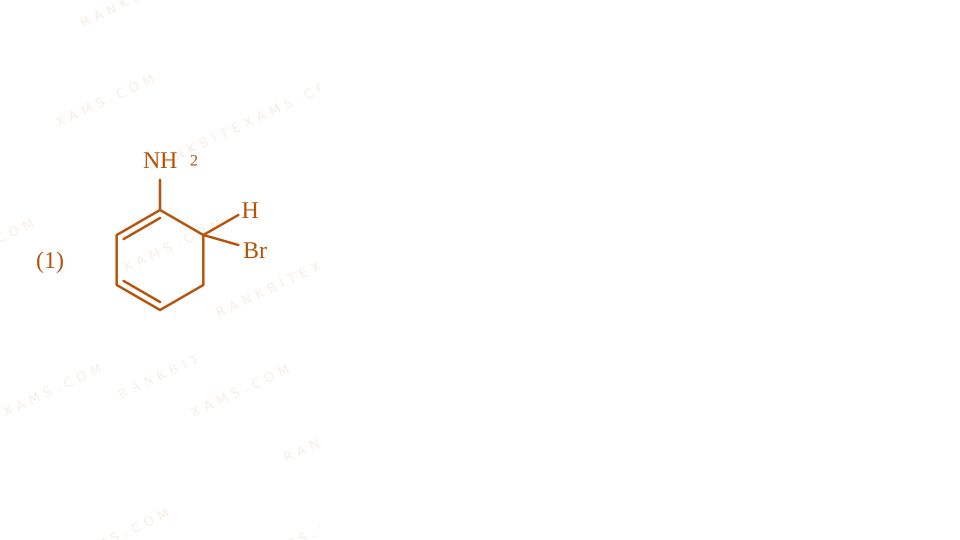
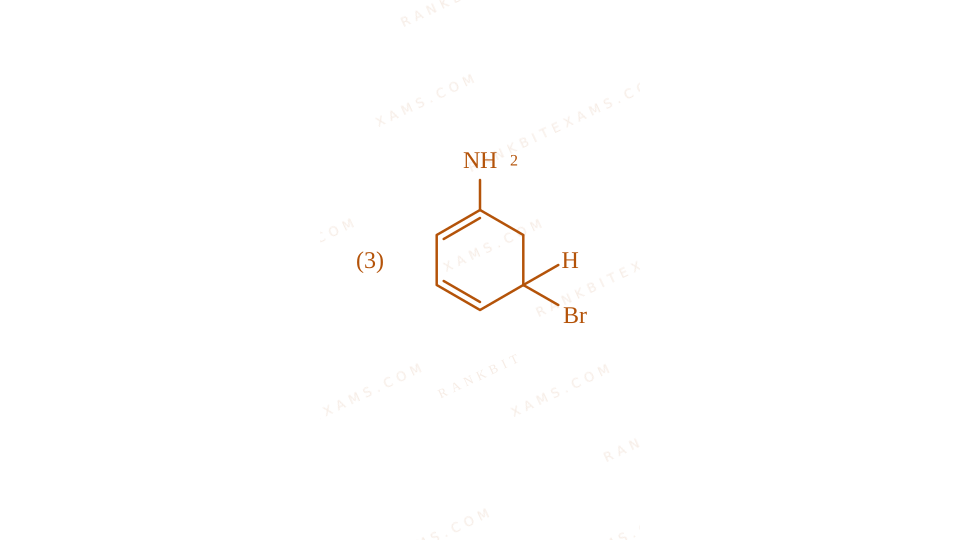
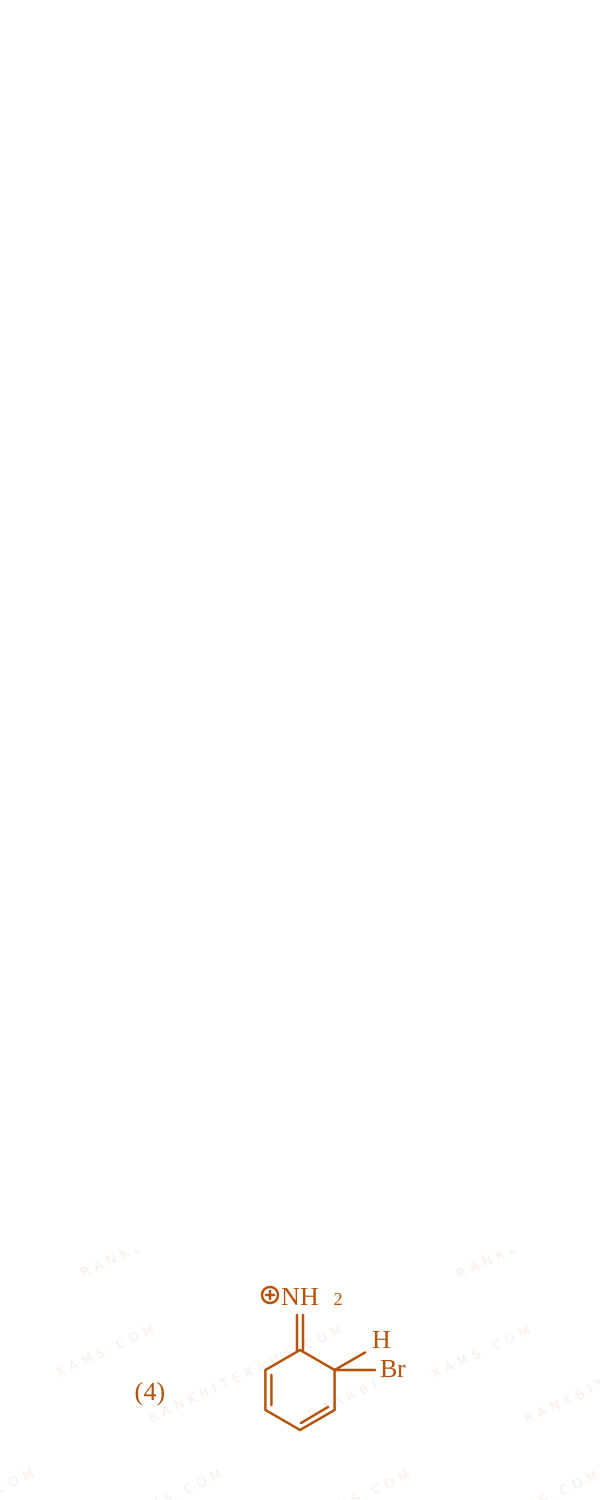
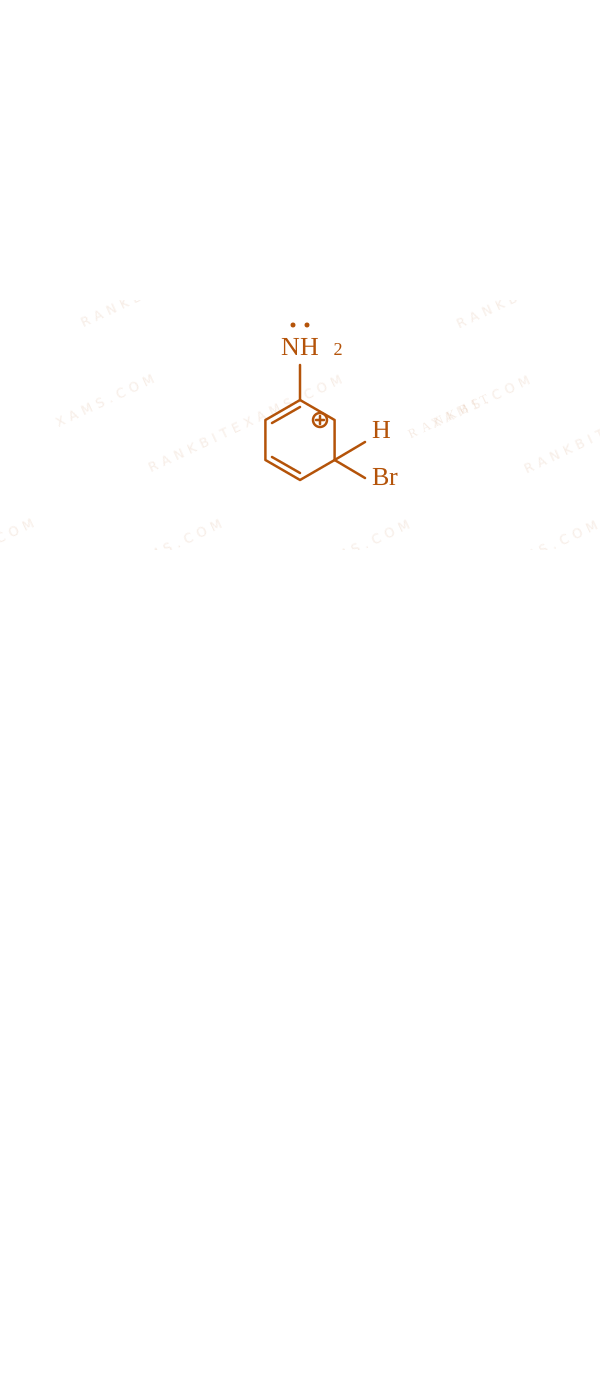
The arenium ion which is not involved in the bromination of Aniline is.

Solution & Explanation

Core Logic

Aniline undergoes electrophilic aromatic substitution (like bromination). The -NH₂ group is a strongly activating group and directs incoming electrophiles to the ortho and para positions due to resonance electron donation (+M effect).

Step 1: Identifying Sigma Complexes (Arenium Ions)

When an electrophile (Br^+) attacks the ring, an intermediate arenium ion (sigma complex) is formed.

  • If attack occurs at the ortho or para position, the positive charge is delocalized onto the carbon atom bearing the -NH₂ group. The lone pair on nitrogen can then stabilize this positive charge via resonance, forming a highly stable resonance structure (an octet-complete intermediate).
  • If attack occurs at the meta position, the positive charge delocalizes only over the remaining ring carbons and never rests on the carbon bearing the -NH₂ group. Thus, it misses the extra stabilization provided by the nitrogen lone pair.
  • Because the meta attack intermediate is less stable compared to ortho/para attack, and the -NH₂ is strictly o/p directing, the meta-arenium ion is NOT a primary intermediate involved in standard bromination pathways of neutral aniline.

Step 2: Conclusion

Option 3 displays the arenium ion resulting from a meta-attack (positive charge skips the -NH₂ substituted carbon).

Electrophilic Substitution in Amines diagram for Q68 - JEE Main 2024 Morning

Since -NH₂ is ortho/para directing, the meta-arenium ion will not be formed.

Chapter Mix

Class 12 Chemistry: Amines

Reference Study Guides

More Amines Previous-Year Questions — Page 4

Q66 jee_main_2026_28_january_evening Hinsberg Test
Total number of alkali insoluble solid sulphonamides obtained by reaction of given amines with Hinsberg's reagent is ..... Aniline, N-Methylaniline, Methanamine, N, N-Dimethylmethanamine, N-Methyl methanamine, Phenylmethanamine, N-propylaniline, N-phenylaniline, N, N-Dimethylaniline, Allyl amine, Isopropyl amine
  • A. (1) 4
  • B. (2) 2
  • C. (3) 8
  • D. (4) 5

Solution

Core Logic

Hinsberg reagent (Benzenesulfonyl chloride) reacts with: 1° Amines arrow Forms sulfonamide which is SOLUBLE in alkali. 2° Amines arrow Forms sulfonamide which is INSOLUBLE in alkali. 3° Amines arrow Do not react.

We need to find the total number of 2° amines from the list.

  • Aniline arrow 1°
  • N-Methylaniline arrow 2° (Reacts, insoluble) ✓
  • Methanamine arrow 1°
  • N, N-Dimethylmethanamine arrow 3°
  • N-Methyl methanamine arrow 2° (Reacts, insoluble) ✓
  • Phenylmethanamine arrow 1°
  • N-propylaniline arrow 2° (Reacts, insoluble) ✓
  • N-phenylaniline arrow 2° (Reacts, insoluble) ✓
  • N, N-Dimethylaniline arrow 3°
  • Allyl amine arrow 1°
  • Isopropyl amine arrow 1°
Step 1: Final Conclusion

There are exactly 4 secondary amines: N-Methylaniline, N-Methyl methanamine, N-propylaniline, and N-phenylaniline.

Pattern Recognition

Alkali insoluble sulfonamide = strictly Secondary Amine. Alkali soluble = Primary Amine.

Chapter Mix

Class 12 Chemistry: Amines
Q jee_main_2025_02_april_evening Diazotisation and Coupling Reactions
When a concentrated solution of sulphanilic acid and 1-naphthylamine is treated with nitrous acid (273 K) and acidified with acetic acid, the mass (g) of 0.1 mole of product formed is : Given molar mass in g~mol⁻¹ H:1, C:12, N:14, O:16, S:32
  • A. 343
  • B. 330
  • C. 33
  • D. 66

Solution

Related Formula
Mass (g) = Number of moles × Molar mass ( g~mol⁻¹)
Core Logic

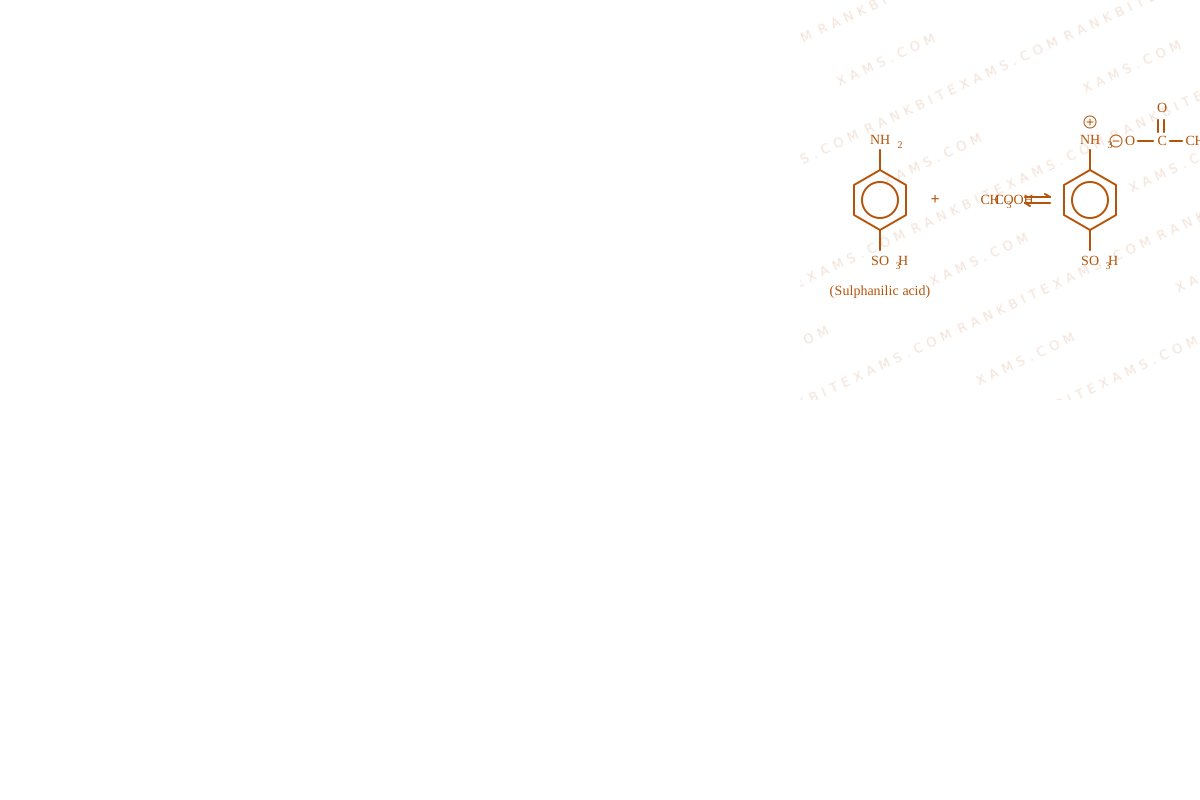
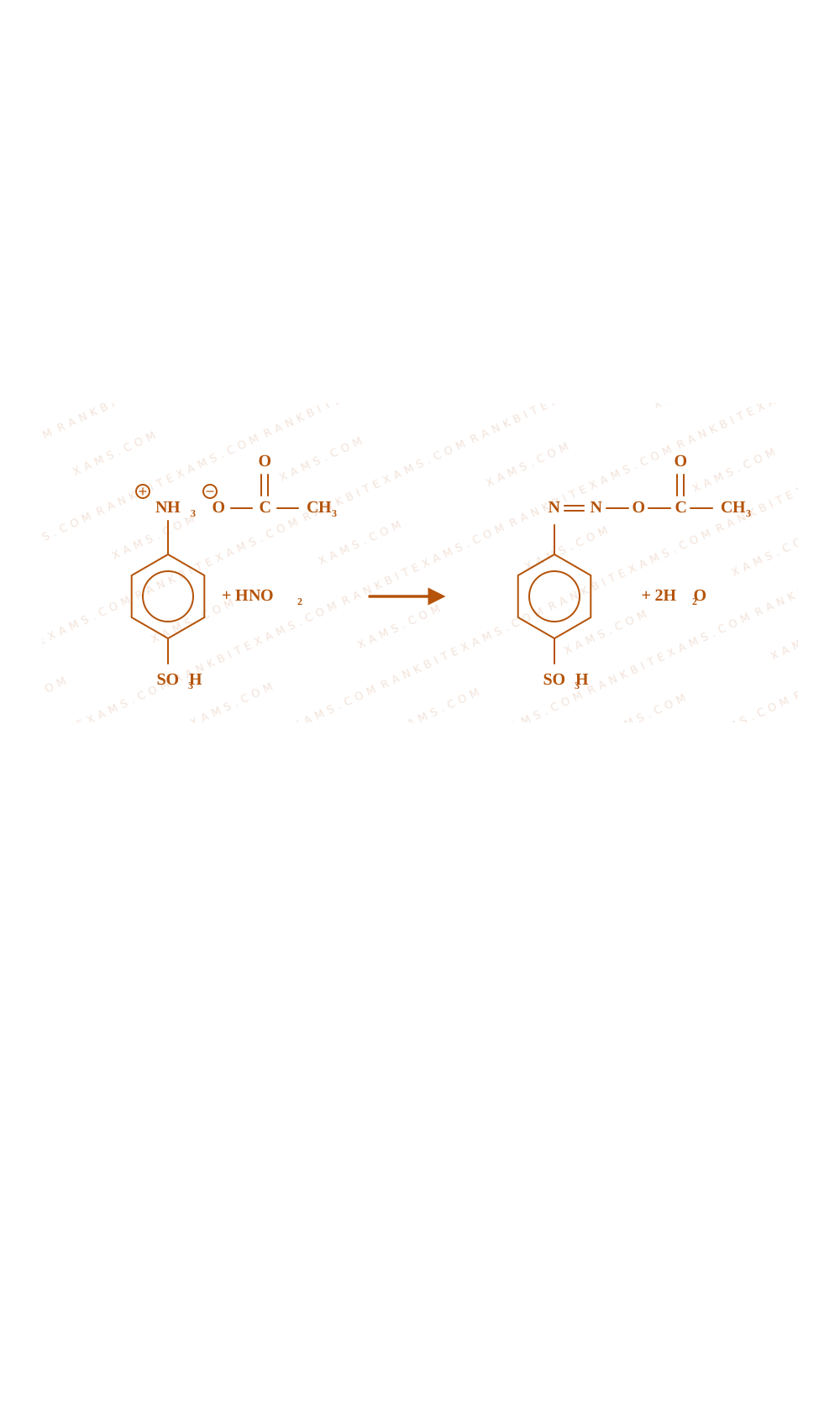
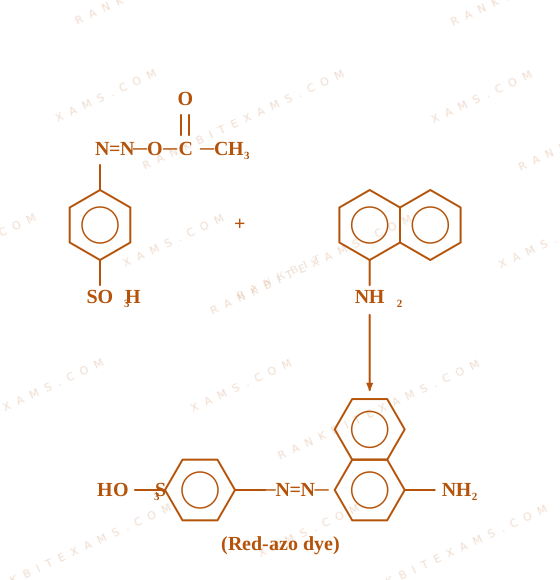
Sulphanilic acid is diazotized under cold conditions (273~K) with nitrous acid to form a diazonium salt intermediate. This diazonium salt undergoes a coupling reaction with 1-naphthylamine to form a red azo dye.

First, sulphanilic acid acts as a zwitterion and undergoes diazotization:

Azo-dye synthesis reaction from diazotized sulphanilic acid and 1-naphthylamine

Nitrous acid reacts with the amine to form the diazonium compound:

Azo-dye synthesis reaction from diazotized sulphanilic acid and 1-naphthylamine

This intermediate couples with 1-naphthylamine at the para-position to give the red azo dye compound:

Azo-dye synthesis reaction from diazotized sulphanilic acid and 1-naphthylamine

Step 1: Calculate the Molar Mass

The molecular formula of the red-azo dye formed is C₁₆H₁₃N₃O₃S. Let's calculate its molar mass using the given atomic masses:

Molar mass = 16(12) + 13(1) + 3(14) + 3(16) + 32 Molar mass = 192 + 13 + 42 + 48 + 32 = 327~ g~mol⁻¹
Step 2: Calculate the Mass of 0.1 Mole

Using the relation for mass:

Mass of 0.1~mole = 0.1 × 327 = 32.7~g ≈ 33~g

Hence, the nearest option is 33~g.

Pattern Recognition

Azo coupling reactions are clean electrophilic aromatic substitution reactions. Diazotized sulphanilic acid has a highly electron-withdrawing sulphonic acid group, making it an excellent electrophile that couples selectively at the para-position of 1-naphthylamine.

Chapter Mix

Class 12 Chemistry: Amines
Q38 jee_main_2025_02_april_morning Basic Strength of Amines
The correct order of basic nature on aqueous solution for the bases NH₃, H₂N-NH₂, CH₃CH₂NH₂, (CH₃CH₂)₂NH and (CH₃CH₂)₃N is:
  • A. (1) NH₃ < H₂N - NH₂ < (CH₃CH₂)₃N < CH₃CH₂NH₂ < (CH₃CH₂)₂NH
  • B. (2) NH₃ < H₂N - NH₂ < CH₃CH₂NH₂ < (CH₃CH₂)₂NH < (CH₃CH₂)₃N
  • C. (3) H₂N - NH₂ < NH₃ < (CH₃CH₂)₃N < CH₃CH₂NH₂ < (CH₃CH₂)₂NH
  • D. (4) NH₂ - NH₂ < NH₃ < CH₃CH₂NH₂ < (CH₃CH₂)₃N < (CH₃CH₂)₂NH

Solution

Related Formula

Basic strength in aqueous medium depends on three combined effects:

Basic Strength ∝ Inductive Effect (+I) + Solvation Energy - Steric Hindrance
Core Logic

Let's list structural elements row-by-row:

  • Ethyl substituted amine trends in aqueous systems uniquely align into a 2° > 3° > 1° configuration due to competing steric and hydration energies:
(Et)₂NH > (Et)₃N > EtNH₂
  • Ammonia (NH₃) is less basic than aliphatic substituted structures due to the absence of electron-donating alkyl clusters.
  • Hydrazine (H₂N-NH₂) is exceptionally weak compared to ammonia because the adjacent electronegative nitrogen creates an electron-withdrawing (-I) effect, while lone-pair repulsions reduce overall stability.
Step 1: Ordering

Assembling the fragments gives the complete verified thermodynamic order:

NH₂-NH₂ < NH₃ < CH₃CH₂NH₂ < (CH₃CH₂)₃N < (CH₃CH₂)₂NH
Pattern Recognition

Remember the standard numeric rules for aliphatic basic strength order in aqueous media:

  • Methyl amines follow: 213
  • Ethyl amines follow: 231
  • This simple sequence trick handles complex ranking items instantly.

Chapter Mix

Class 12 Chemistry: Amines
Q jee_main_2025_03_april_evening Aniline Reactions and Directing Effects
The sequence from the following that would result in giving predominantly 3, 4, 5-Tribromoaniline is :
  • A.
  • B.
  • C.
  • D.

Solution

Related Formula

Directing effects in multi-substituted benzenes:

  • -NH₂ is a strong activating group and ortho/para director.
  • -NO₂ is a strong deactivating, meta-directing group.
  • Diazotization followed by Sandmeyer reaction replaces an -NH₂ group with a halogen.
Core Logic

To prepare 3,4,5-tribromoaniline, we must introduce three bromine atoms adjacent to each other (meta to the final amino group, with one para and two meta). Let's trace the sequence in Option (3) starting from 4-nitroaniline (p-nitroaniline):

Step 1: Bromination of p-nitroaniline

Treatment of 4-nitroaniline with excess Br₂ in acetic acid:

  • The amino group (-NH₂) is a strong activator and directs to its ortho positions (positions 2 and 6).
  • Positions 2 and 6 are meta to the -NO₂ group, which is compatible.
  • This yields 2,6-dibromo-4-nitroaniline.
Step 2: Diazotization and replacement of amino group
  • NaNO₂ + HCl diazotizes the amino group to a diazonium salt:
R-NH₂ arrow R-N₂^+ Cl^-
  • Addition of CuBr (Sandmeyer reaction) replaces the diazonium group with bromine:
R-N₂^+ Cl^- CuBr R-Br

This yields 3,4,5-tribromonitrobenzene.

Step 3: Reduction of nitro group

Reduction of the nitro group using Sn/HCl converts -NO₂ to -NH₂:

R-NO₂ Sn, HCl R-NH₂

This yields 3,4,5-tribromoaniline as the predominant product. Thus, Option (3) is correct.

Pattern Recognition

To brominate meta positions relative to an amino group, use a nitro precursor at the para position. The -NH₂ group activates these positions first, after which the initial amino group is replaced with a halogen, and the nitro group is subsequently reduced back to a primary amine.

Chapter Mix

Class 12 Chemistry: Amines
Q jee_main_2025_07_april_morning Carbylamine Reaction
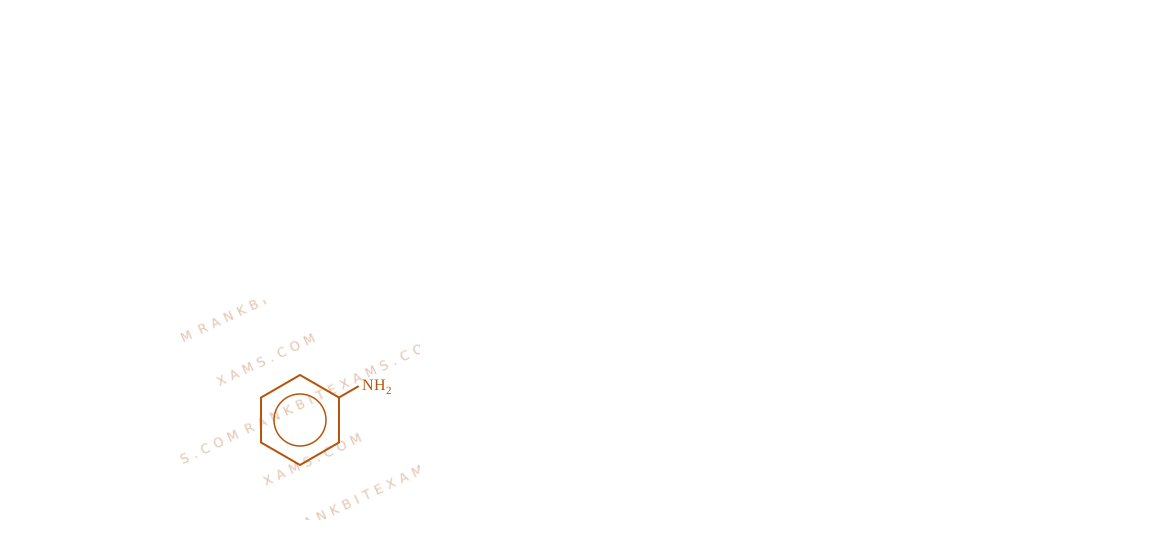
Which of the following amine(s) show(s) positive carbylamine test? A.
Carbylamine reactant aniline diagram for Q27 - JEE Main 2025
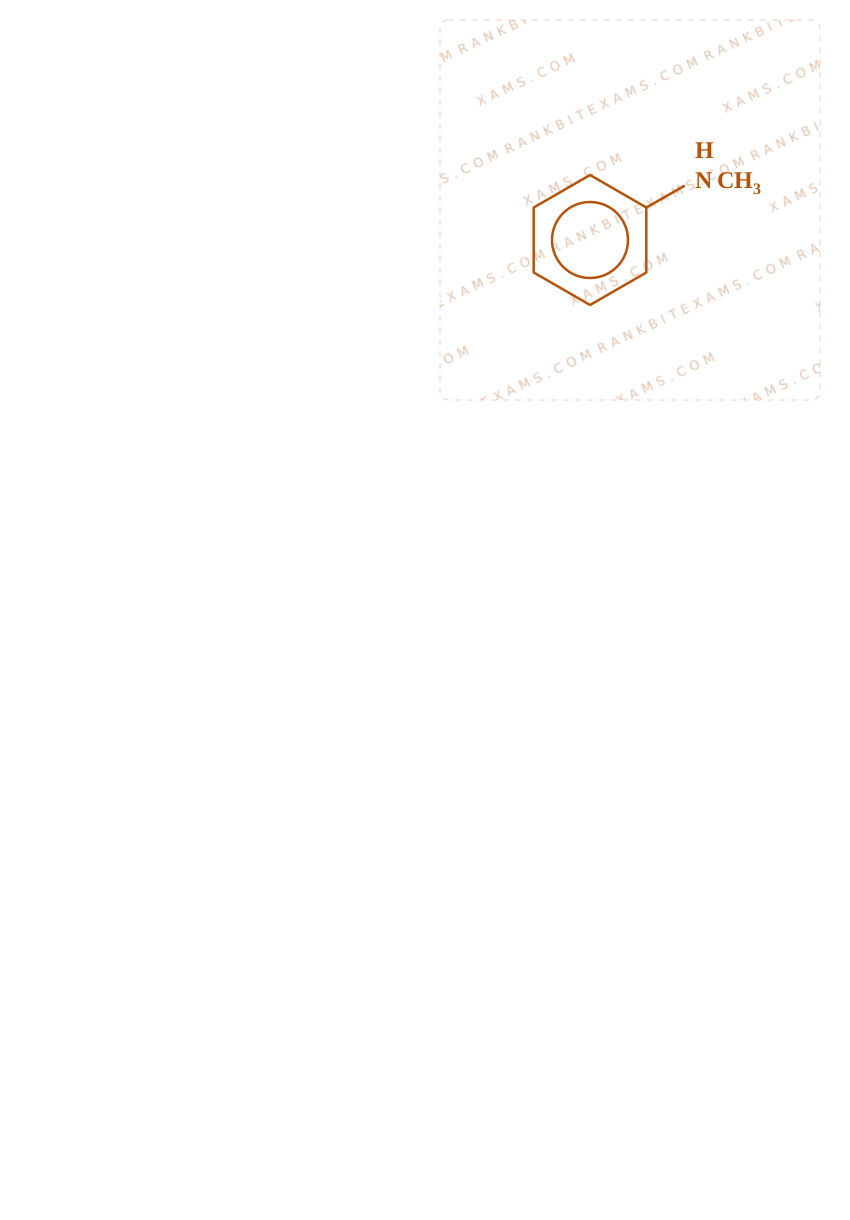
The structures depict Aniline (A) and N-Methylaniline (E) to distinguish primary and secondary aromatic amines.
B. (CH₃)₂NH C. CH₃NH₂ D. (CH₃)₃N E.
Carbylamine reactant aniline diagram for Q27 - JEE Main 2025
The structures depict Aniline (A) and N-Methylaniline (E) to distinguish primary and secondary aromatic amines.
Choose the correct answer from the options given below:
  • A. A and E Only
  • B. C Only
  • C. A and C Only
  • D. B, C and D Only

Solution

Related Formula
R-NH₂ + CHCl₃ + 3KOH arrow R-NC + 3KCl + 3H₂O
Core Logic

Only primary (1^°) aliphatic and aromatic amines yield a positive carbylamine test (forming foul-smelling alkyl/aryl isocyanides).

  • A is Aniline (primary aromatic amine) arrow Positive
  • B is Dimethylamine (secondary aliphatic amine) arrow Negative
  • C is Methylamine (primary aliphatic amine) arrow Positive
  • D is Trimethylamine (tertiary aliphatic amine) arrow Negative
  • E is N-Methylaniline (secondary aromatic amine) arrow Negative
  • Thus, only A and C show a positive test.

Pattern Recognition

Shortcut: Look directly for any amine with a plain -NH₂ functional group. Secondary (-NH-) and tertiary (-N-) amines never react.

Chapter Mix

Class 12 Chemistry: Amines
More Amines Questions — jee_main_2024_29_jan_morning

Practice all Amines previous-year questions →

Rankbit System
JEE Physics: Waves (+15.5%) | Electrostatics: Concentric Shells (-29.7%) | Modern Physics: Photoelectric Clones (+34.2%) | Mathematics: Definite Integrals (+18.1%) | Chemistry: Coordination Splitting (-11.4%) | JEE Physics: Waves (+15.5%) | Electrostatics: Concentric Shells (-29.7%) | Modern Physics: Photoelectric Clones (+34.2%) | Mathematics: Definite Integrals (+18.1%) | Chemistry: Coordination Splitting (-11.4%)
