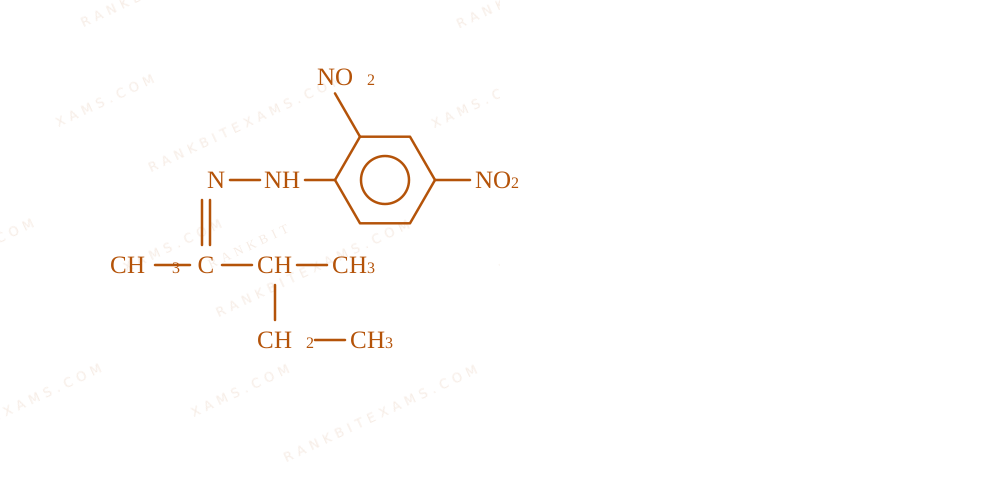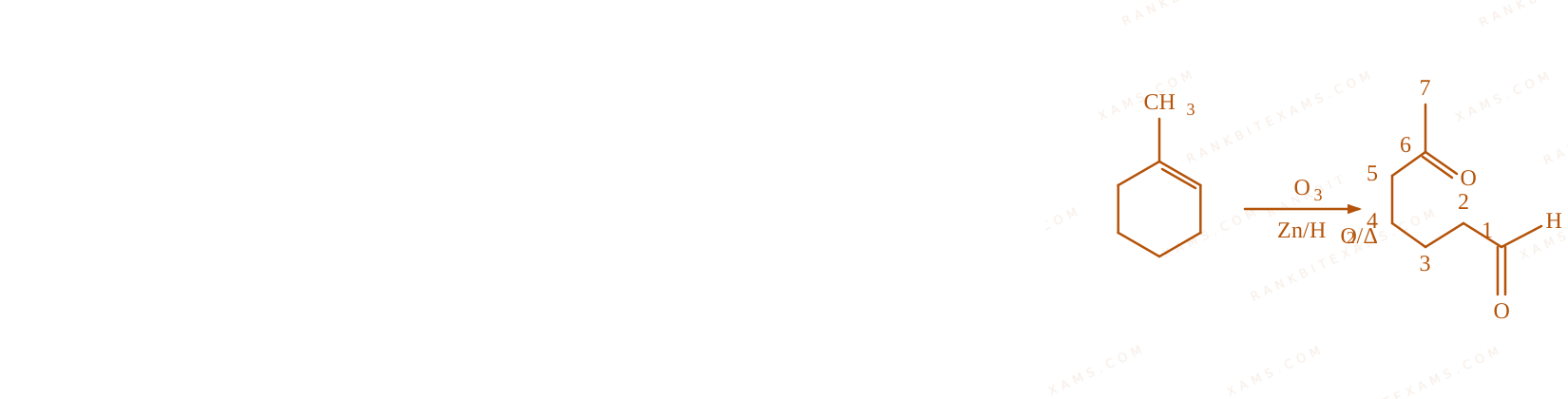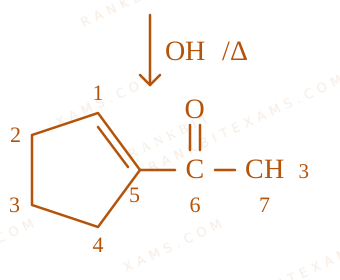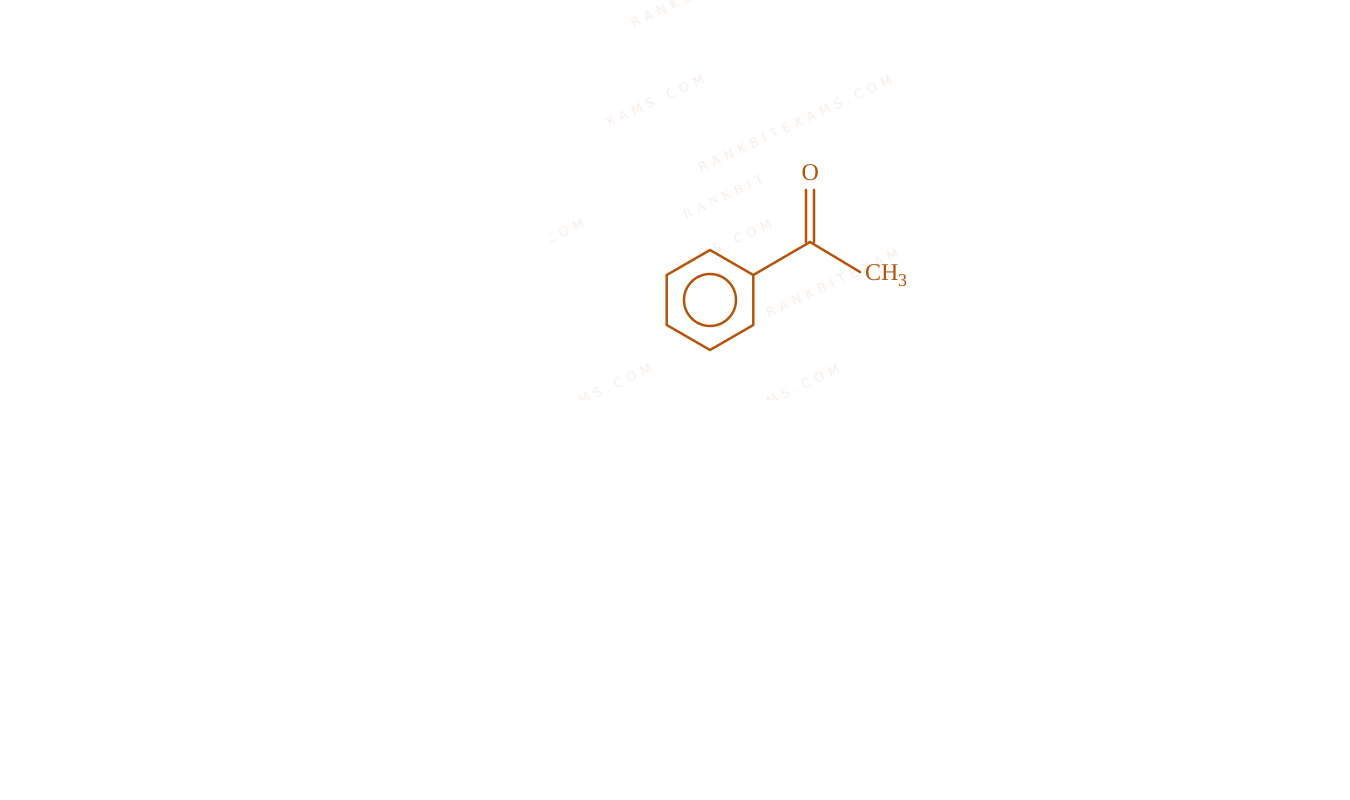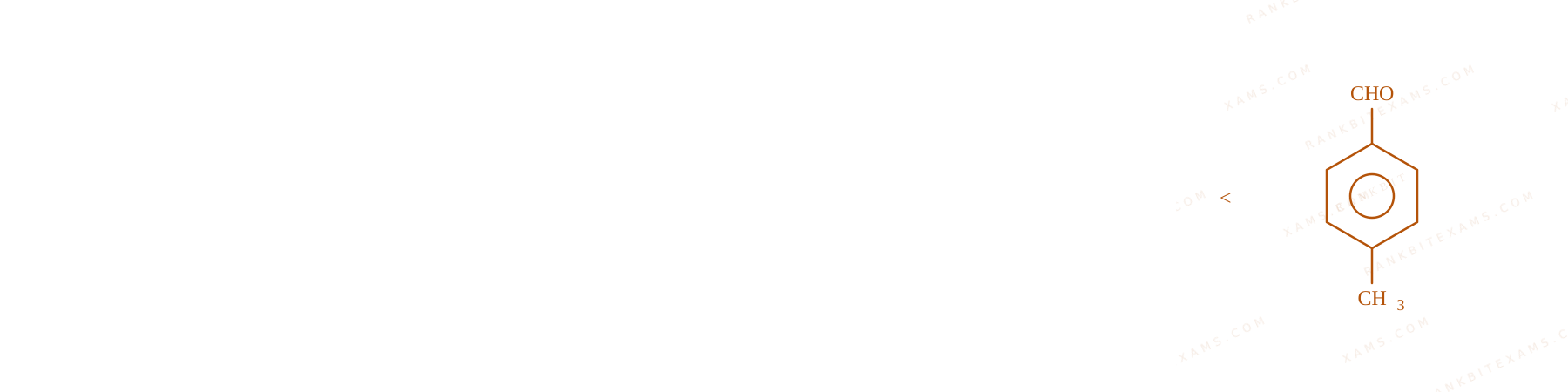
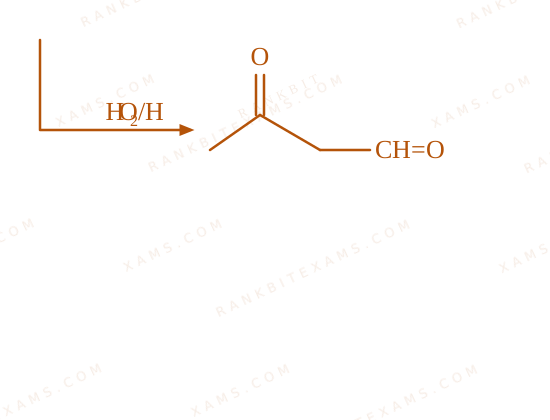
An organic compound “P” of molecular formula C_6H_12O_3 gives positive Iodoform test but negative Tollen’s test. When “P” is treated with dilute acid, it produces “Q”. “Q” gives positive Tollen’s test and also iodoform test. The structure of “P” is :

Solution & Explanation

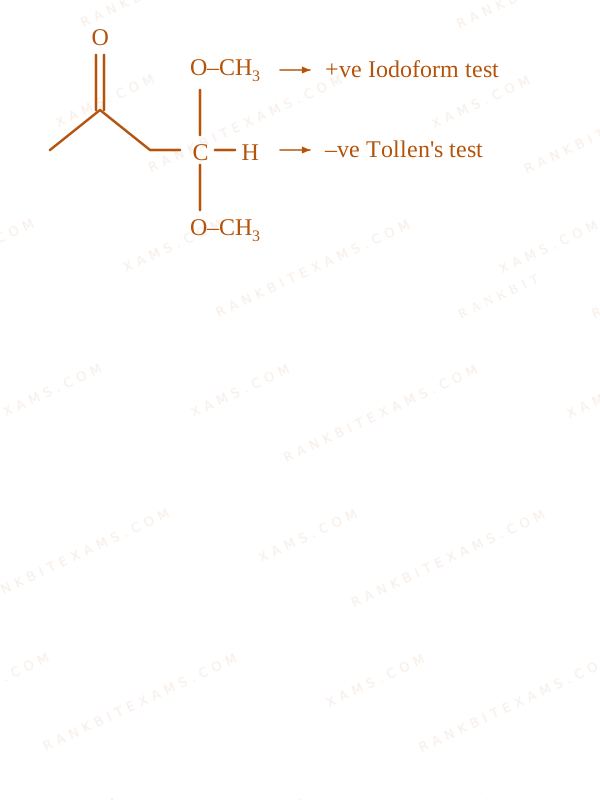
### Core Logic Compound P (C_6H_12O_3) gives a positive iodoform test, indicating it has a methyl ketone group (CH_3CO-). It gives a negative Tollen's test, indicating no free aldehyde group. On acidic hydrolysis, P yields Q. Compound Q gives both positive iodoform test and Tollen's test, meaning Q contains both a methyl ketone and an aldehyde group. Looking at the options, if P is an acetal of an aldehyde, acidic hydrolysis will regenerate the aldehyde. Option 2 is mathrmCH_3-CO-CH_2-CH(OCH_3)_2 (an acetal of aldehyde). This compound 'P' has a CH_3CO- group (positive iodoform) and an acetal (protected aldehyde, negative Tollen's). On hydrolysis: mathrmCH_3-CO-CH_2-CH(OCH_3)_2 xrightarrowmathrmH_2O/H^+ mathrmCH_3-CO-CH_2-CHO + 2mathrmCH_3OH The product Q (mathrmCH_3-CO-CH_2-CHO) has a methyl ketone (positive iodoform test) and an aldehyde (positive Tollen's test).
Chemical Reactions of Aldehydes and Ketones diagram for Q61 - JEE Main 2026 Morning
### Pattern Recognition Whenever an aldehyde test becomes positive *after* hydrolysis, it points to a protected aldehyde, usually an acetal or hemiacetal. A compound with molecular formula C_n H_2n O_3 often represents a keto-acetal. ### Evaluation Rubric / Model Answer null ### Chapter Mix Class 12 Chemistry: Aldehydes, Ketones and Carboxylic Acids Class 12 Chemistry: Alcohols, Phenols and Ethers
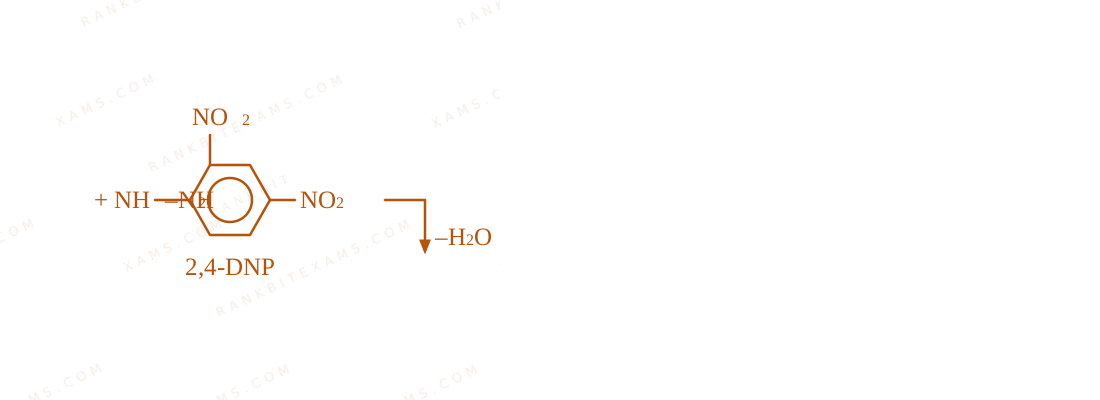
Chemical Reactions of Aldehydes and Ketones diagram for Q61 - JEE Main 2026 Morning

Reference Study Guides

More Aldehydes, Ketones and Carboxylic Acids Previous-Year Questions — Page 6

Q89 jee_main_2024_29_jan_morning Chemical Reactions of Aldehydes and Ketones
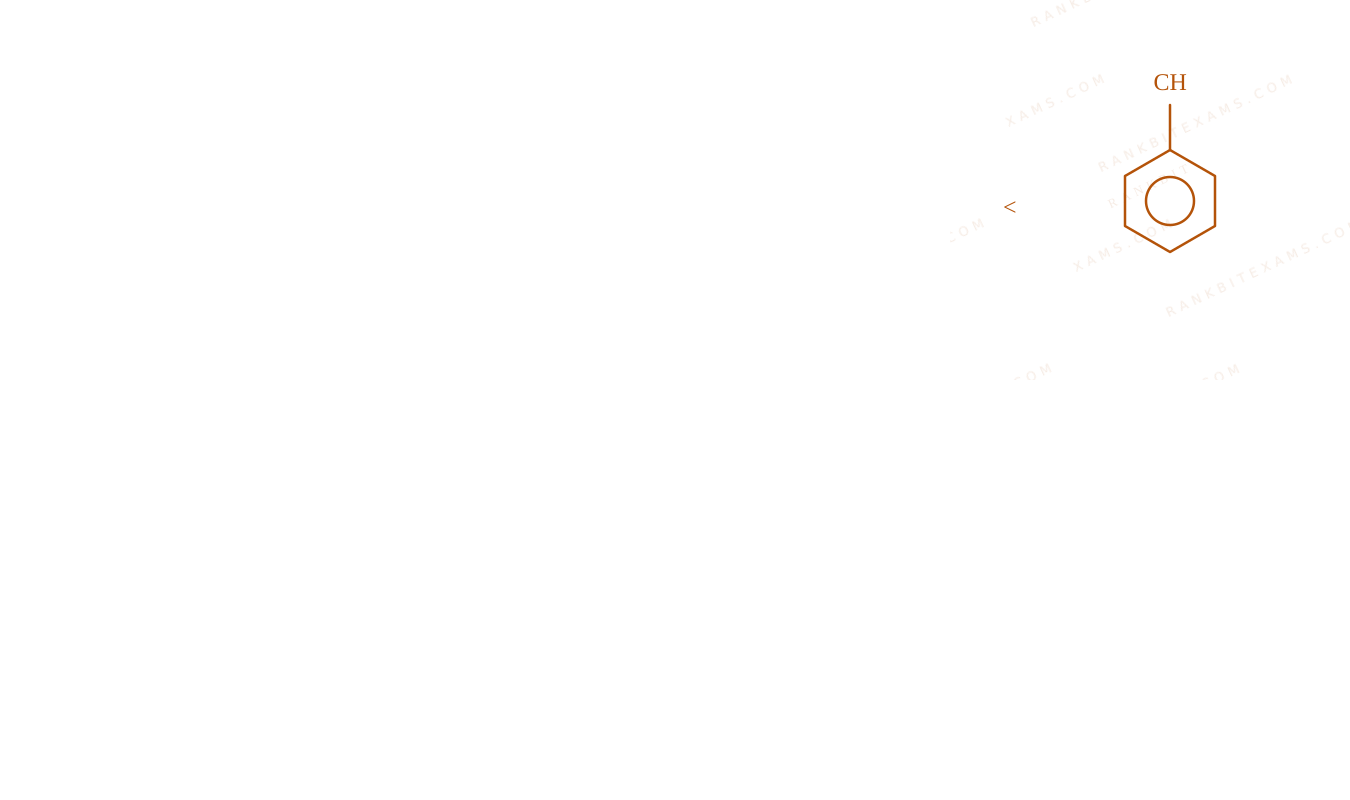
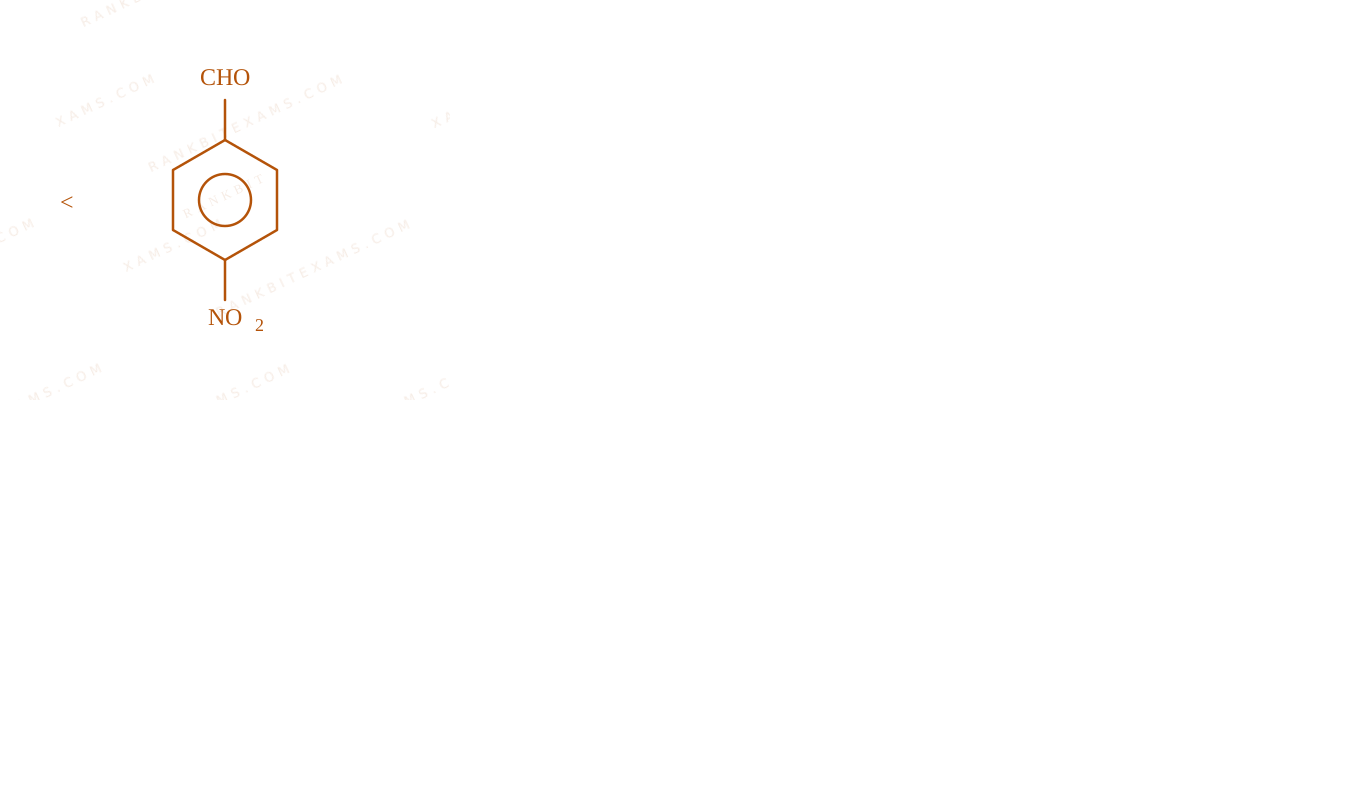
From the compounds given below, number of compounds which give positive Fehling's test is \_\_\_\_\_. Benzaldehyde, Acetaldehyde, Acetone, Acetophenone, Methanal, 4-nitrobenzaldehyde, cyclohexane carbaldehyde.
Numerical Answer. Answer: 3 to 3

Solution

### Core Logic Fehling's test is a mild oxidizing test used primarily to distinguish aliphatic aldehydes from ketones and aromatic aldehydes. - **Aliphatic aldehydes** (like methanal, acetaldehyde, cyclohexane carbaldehyde) give a positive Fehling's test (formation of red-brown precipitate of Cu_2O). - **Aromatic aldehydes** (like benzaldehyde, 4-nitrobenzaldehyde) lack alpha-hydrogens in a purely aliphatic environment and are not sufficiently easily oxidized to give a positive Fehling's test. - **Ketones** (like acetone, acetophenone) generally do not give a positive Fehling's test (except alpha-hydroxy ketones). ### Step 1: Evaluation of Given Compounds 1. Benzaldehyde: Aromatic aldehyde rightarrow Negative 2. Acetaldehyde (CH_3CHO): Aliphatic aldehyde rightarrow Positive 3. Acetone: Ketone rightarrow Negative 4. Acetophenone: Ketone rightarrow Negative 5. Methanal (HCHO): Aliphatic aldehyde rightarrow Positive 6. 4-nitrobenzaldehyde: Aromatic aldehyde rightarrow Negative 7. Cyclohexane carbaldehyde: Aliphatic aldehyde rightarrow Positive The compounds giving a positive test are Acetaldehyde, Methanal, and Cyclohexane carbaldehyde. ### Pattern Recognition Tollens' reagent oxidizes ALL aldehydes (aliphatic + aromatic). Fehling's reagent is weaker and only oxidizes ALIPHATIC aldehydes. ### Evaluation Rubric / Model Answer null ### Chapter Mix Class 12 Chemistry: Aldehydes Ketones and Carboxylic Acids
Q64 jee_main_2024_30_january_evening Cannizzaro Reaction
m-chlorobenzaldehyde on treatment with 50\% KOH solution yields
  • A.
  • B.
  • C.
  • D.

Solution

### Core Logic m-chlorobenzaldehyde lacks alpha-hydrogen atoms. Therefore, when treated with concentrated base like 50\% KOH, it undergoes a disproportionation redox reaction known as the Cannizzaro reaction. Two molecules of the aldehyde react: one gets oxidized to the corresponding carboxylate ion (m-chlorobenzoate ion), and the other gets reduced to the corresponding alcohol (m-chlorobenzyl alcohol). ### Step 1: Reaction The reaction proceeds as:
Cannizzaro reaction of m-chlorobenzaldehyde diagram for Q64 - JEE Main 2024 Evening
### Pattern Recognition No alpha-hydrogen + Conc. Alkali (50\% KOH/NaOH) = Cannizzaro (Oxidation to salt of carboxylic acid + Reduction to primary alcohol). ### Evaluation Rubric / Model Answer null ### Chapter Mix Class 12 Chemistry: Aldehydes Ketones and Carboxylic Acids
Q62 jee_main_2024_30_jan_morning Preparation of Aldehydes
This reduction reaction is known as:
Preparation of Aldehydes diagram for Q62 - JEE Main 2024 Morning
The image shows the catalytic hydrogenation of benzoyl chloride to benzaldehyde in the presence of Pd-BaSO4.
  • A. textRosenmund reduction
  • B. textWolff-Kishner reduction
  • C. textStephen reduction
  • D. textEtard reduction

Solution

### Related Formula R-COCl + H_2 xrightarrowPd/BaSO_4 R-CHO + HCl ### Core Logic The reaction depicts the partial reduction of an acid chloride (benzoyl chloride) to an aldehyde (benzaldehyde) using hydrogen gas in the presence of a poisoned palladium catalyst (Pd supported on BaSO_4).
Preparation of Aldehydes solution diagram for Q62 - JEE Main 2024 Morning
The image shows the catalytic hydrogenation of benzoyl chloride to benzaldehyde in the presence of Pd-BaSO4.
This specific reaction is known as the Rosenmund reduction. ### Pattern Recognition Acid Chloride + H_2, Pd/BaSO_4 rightarrow Aldehyde is strictly the Rosenmund reduction. The BaSO_4 poisons the catalyst to prevent over-reduction to an alcohol. ### Evaluation Rubric / Model Answer null ### Chapter Mix Class 12 Chemistry: Aldehydes, Ketones and Carboxylic Acids
Q70 jee_main_2024_30_jan_morning Nomenclature
Structure of 4-Methylpent-2-enal is
  • A. H_2C=C(CH_3)-CH_2-C(=O)H
  • B. CH_3-CH_2-C(CH_3)=CH-C(=O)H
  • C. CH_3-CH_2-CH=C(CH_3)-C(=O)H
  • D. CH_3-CH(CH_3)-CH=CH-C(=O)H

Solution

### Core Logic Decode the IUPAC name: 4-Methylpent-2-enal 1. Word root: 'pent' rightarrow 5 carbon principal chain. 2. Primary suffix: '2-en' rightarrow Double bond starting at carbon 2. 3. Secondary suffix: 'al' rightarrow Aldehyde group (-CHO) at carbon 1. 4. Substituent: '4-Methyl' rightarrow A methyl group (-CH3) at carbon 4. ### Step 1: Drafting the structure Numbering starts from the aldehyde carbon. C^5 - C^4 - C^3 = C^2 - C^1(=O)H Attach the methyl at C^4: CH_3 - CH(CH_3) - CH = CH - CHO This matches Option 4. ### Evaluation Rubric / Model Answer null ### Chapter Mix Class 12 Chemistry: Aldehydes, Ketones and Carboxylic Acids Class 11 Chemistry: Organic Chemistry - Some Basic Principles and Techniques
Q73 jee_main_2024_30_jan_morning Preparation of Aldehydes
In the given reactions identify the reagent A and reagent B.
Preparation of Aldehydes diagram for Q73 - JEE Main 2024 Morning
The image shows the oxidation of toluene to benzaldehyde via two different pathways requiring reagents A and B.
  • A. textA-CrO_3, textB-CrO_3
  • B. textA-CrO_3, textB-CrO_2Cl_2
  • C. textA-CrO_2Cl_2, textB-CrO_2Cl_2
  • D. textA-CrO_2Cl_2, textB-CrO_3

Solution

### Core Logic Pathway 1 (Upper): Toluene is treated with Reagent 'A' and acetic anhydride (CH_3CO)_2O to form an intermediate (benzylidene diacetate), which on hydrolysis gives benzaldehyde. The reagent used here is Chromic oxide (CrO_3). Thus, A is CrO_3. Pathway 2 (Lower): Toluene is treated with Reagent 'B' in CS_2 to form a chromium complex intermediate, which on hydrolysis yields benzaldehyde. This is the Etard reaction, and the reagent used is Chromyl chloride (CrO_2Cl_2). Thus, B is CrO_2Cl_2.
Preparation of Aldehydes solution diagram for Q73 - JEE Main 2024 Morning
The image shows the oxidation of toluene to benzaldehyde via two different pathways requiring reagents A and B.
### Step 1: Selection Therefore, A = CrO_3 and B = CrO_2Cl_2. ### Pattern Recognition Etard reaction always uses Chromyl chloride (CrO_2Cl_2). Oxidation of toluene with acetic anhydride uses Chromic acid (CrO_3). Both stop the oxidation at the aldehyde stage via intermediate formation. ### Evaluation Rubric / Model Answer null ### Chapter Mix Class 12 Chemistry: Aldehydes, Ketones and Carboxylic Acids

More Aldehydes, Ketones and Carboxylic Acids Questions — jee_main_2026_21_jan_morning

Practice all Aldehydes, Ketones and Carboxylic Acids previous-year questions →

Rankbit System
JEE Physics: Waves (+15.5%) | Electrostatics: Concentric Shells (-29.7%) | Modern Physics: Photoelectric Clones (+34.2%) | Mathematics: Definite Integrals (+18.1%) | Chemistry: Coordination Splitting (-11.4%) | JEE Physics: Waves (+15.5%) | Electrostatics: Concentric Shells (-29.7%) | Modern Physics: Photoelectric Clones (+34.2%) | Mathematics: Definite Integrals (+18.1%) | Chemistry: Coordination Splitting (-11.4%)
YOUR FIRST PREP STEP STARTS HERE

We Map Every Repeating Question in Competitive Exams.

Say goodbye to generic mock test fatigue. RankBit uses smart analysis to group past exam questions into their foundational Repeating Question Types. Find chapter weightage, track repeating questions, and score higher with targeted practice.

Select Your Target Exam

Choose an exam track below to find formulas per chapter and patterns.

Syncing Exam Intelligence

Mapping formulas and patterns across all tracks…

PATH A — FULL LENGTH PRACTICE

Full Mock Test Hub

Simulate real NTA exam conditions with fully tracked mocks. Time yourself against past papers.

Now Live Open
PATH B — TARGETED PRACTICE

Topic-wise Practice Hub

Practice past-year questions one chapter at a time. Pick an exam → subject → chapter and get every PYQ for that topic — pulled together from all past papers — with the chapter's key formulas alongside.

Loading Questions... Browse Topics
Latest from the Blog
View all →

Loading articles...