JEE Main · Chemistry → Steady

Aldehydes, Ketones and Carboxylic Acids appeared 46 times across 3 years — 5.4% of Chemistry. This question is from Aldol Condensation and Ozonolysis.

Year 2026 2025 2024 Total
Questions 14 21 11 46

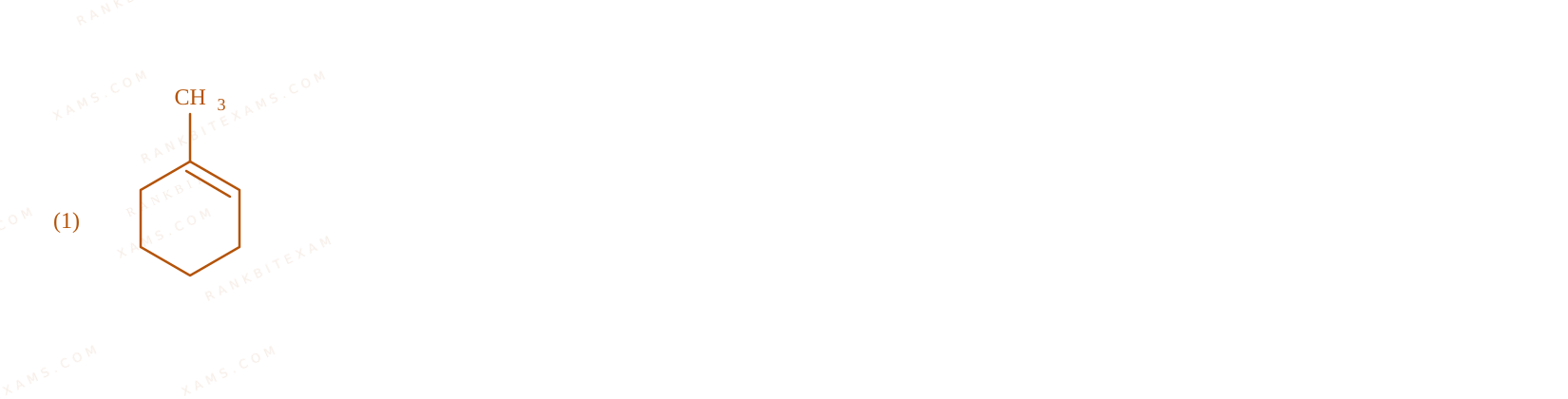
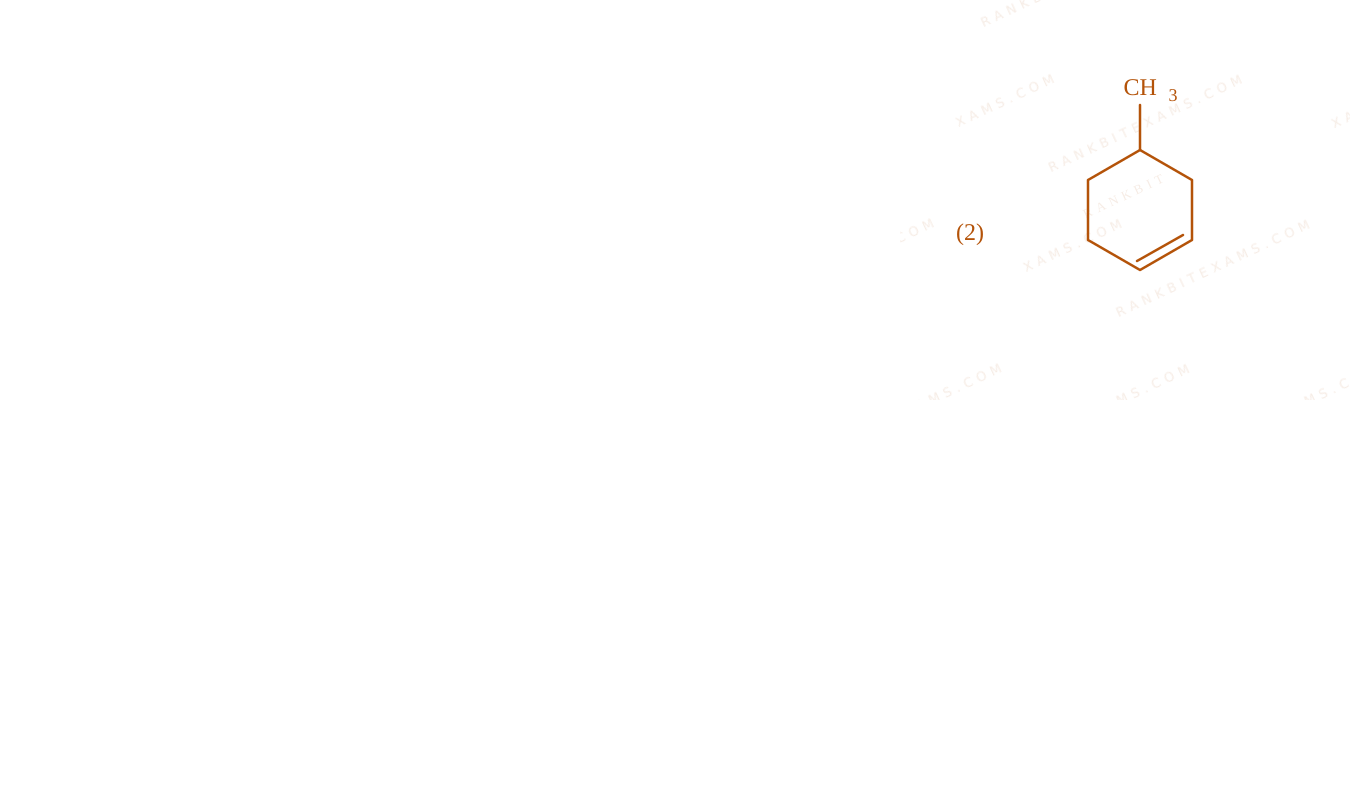
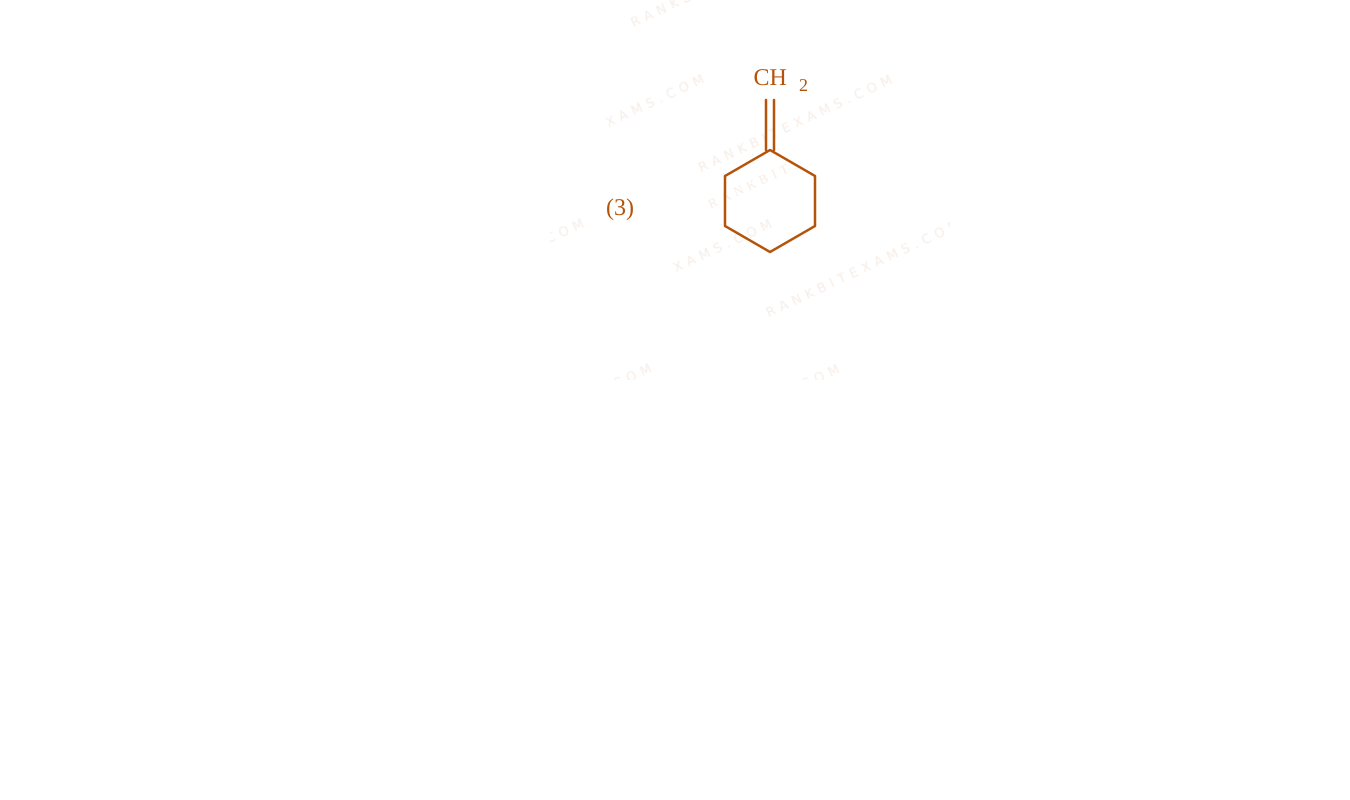
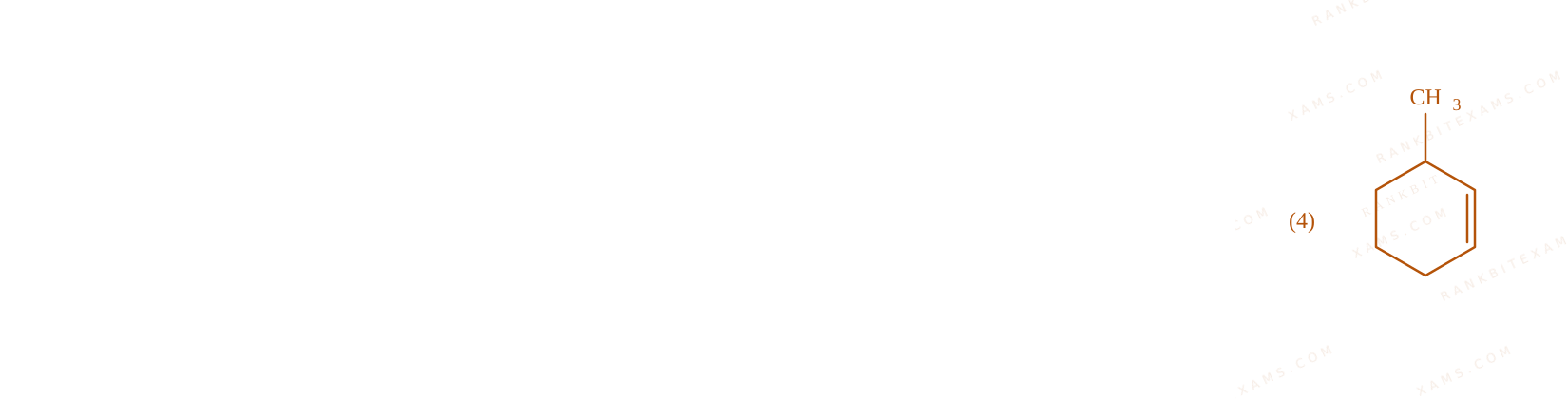
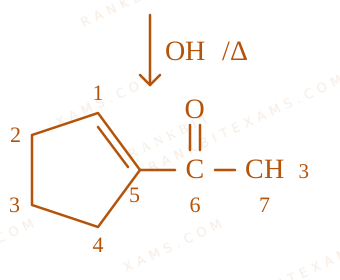
Aman has been asked to synthesise the molecule ring with C—CH3 (x). He thought of preparing the molecule using an aldol condensation reaction. He found a few cyclic alkenes in his laboratory. He thought of performing ozonolysis reaction on alkene to produce a dicarbonyl compound followed by aldol reaction to prepare “x”. Predict the suitable alkene that can lead to the formation of “x”.

Solution & Explanation

Core Logic

Analyzing the retro-synthesis path step-by-step:

  • The objective compound is 1-acetylcyclopentene.
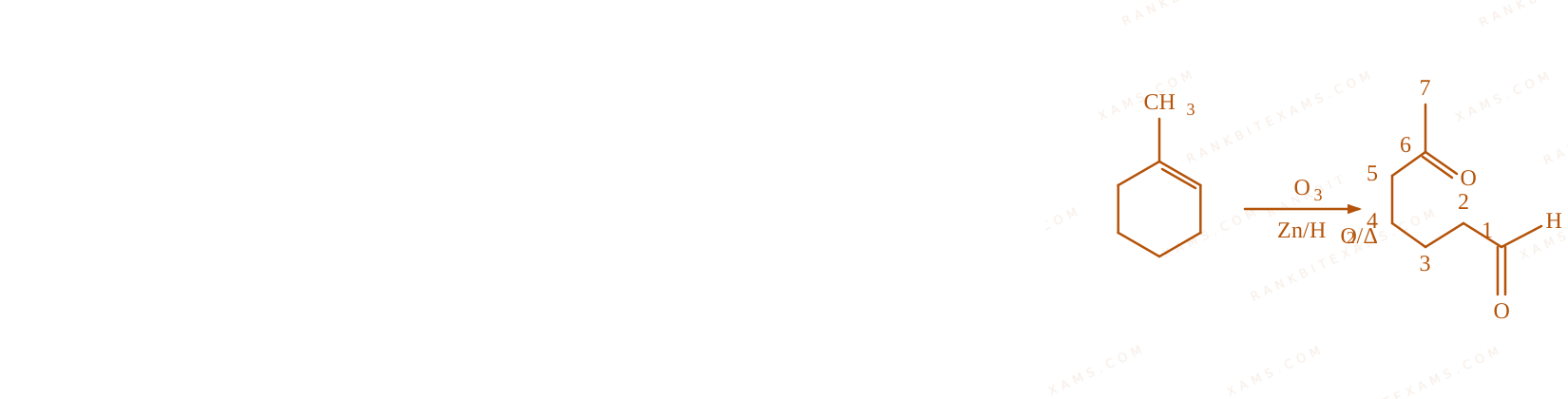
  • Performing reductive ozonolysis (O₃, Zn/H₂O) on 1-methylcyclohexene (Option A) symmetrically breaks the internal endocyclic double bond to form heptane-2,6-dione, a dicarbonyl system.
    Aldol Condensation and Ozonolysis reaction part 1 for Q41
    Aldol Condensation and Ozonolysis reaction part 1 for Q41
  • Adding a base intermediate trigger (OH⁻, Δ) drives an intramolecular aldol condensation: the methyl group carbanion at position 1 attacks the carbon 6 ketone site. This ring-closing event effectively drops water to synthesize the 5-membered cyclopentene core molecule attached to the acetyl unit.
    Aldol Condensation and Ozonolysis reaction part 1 for Q41
    Aldol Condensation and Ozonolysis reaction part 1 for Q41
Pattern Recognition

Counting carbon coordinates is essential. Reductive cleavage transforms a 6-membered ring into an open heptane system, which easily self-condenses into a stable 5-membered ring attached to a methyl ketone side chain.

Chapter Mix

Class 12 Chemistry: Aldehydes, Ketones and Carboxylic Acids

More Aldehydes, Ketones and Carboxylic Acids Previous-Year Questions — Page 10

Q jee_main_2024_31_jan_morning Reactions with Grignard Reagent
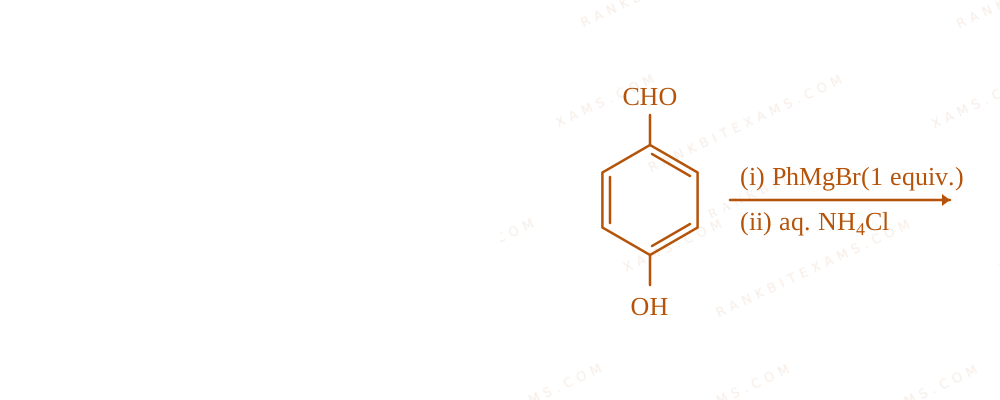
The product of the following reaction is P.
Reactions with Grignard Reagent diagram for Q84 - JEE Main 2024 Morning
The image shows p-hydroxybenzaldehyde reacting with one equivalent of PhMgBr followed by aqueous ammonium chloride.
The number of hydroxyl groups present in the product P is
Numerical Answer. Answer: 0 to 0

Solution

Core Logic

The given reactant is p-hydroxybenzaldehyde, which contains both a phenolic -OH group (acidic) and an aldehyde group (electrophilic).

When one equivalent of Grignard reagent (PhMgBr) is added, it behaves primarily as a strong base due to the presence of an acidic proton. Acid-base reactions are extremely fast compared to nucleophilic additions.

The acidic phenolic -OH reacts with PhMgBr:

PhMgBr + HO-C₆H₄-CHO arrow Ph-H (Benzene) + BrMg-O-C₆H₄-CHO

Upon workup with aq. NH₄Cl, the phenoxide ion simply regenerates the starting p-hydroxybenzaldehyde. However, the question asks for the number of hydroxyl groups present in the formed product (Benzene).
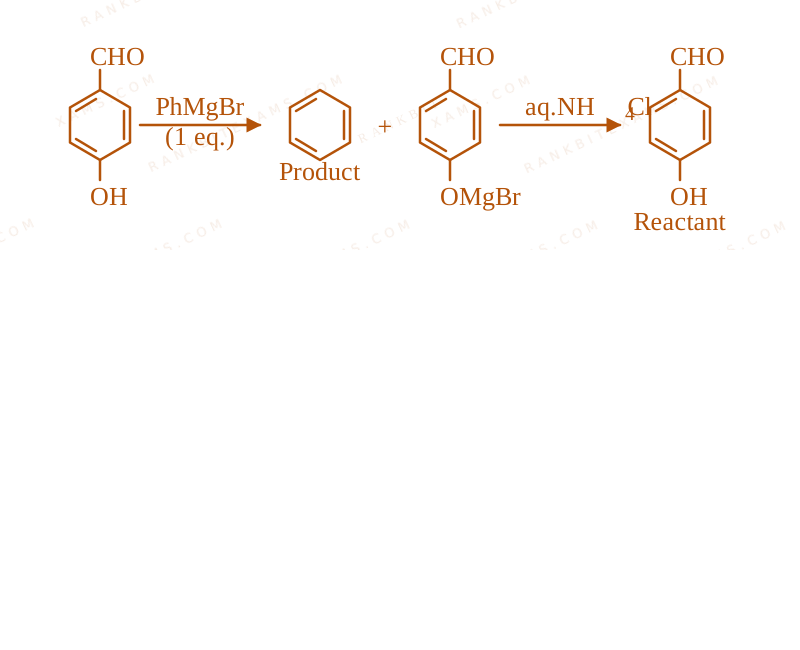
Reactions with Grignard Reagent diagram for Q84 - JEE Main 2024 Morning
The image shows p-hydroxybenzaldehyde reacting with one equivalent of PhMgBr followed by aqueous ammonium chloride.

The distinct product formed in the reaction is Benzene. Benzene has 0 hydroxyl groups.

Pattern Recognition

Whenever a Grignard reagent encounters a molecule with an acidic hydrogen (alcohol, phenol, amine, alkyne), it will invariably act as a base first. If only 1 equivalent is used, nucleophilic addition to carbonyls will NOT happen.

Chapter Mix

Class 12 Chemistry: Aldehydes, Ketones and Carboxylic Acids Class 12 Chemistry: Alcohols, Phenols and Ethers

Rankbit System
JEE Physics: Waves (+15.5%) | Electrostatics: Concentric Shells (-29.7%) | Modern Physics: Photoelectric Clones (+34.2%) | Mathematics: Definite Integrals (+18.1%) | Chemistry: Coordination Splitting (-11.4%) | JEE Physics: Waves (+15.5%) | Electrostatics: Concentric Shells (-29.7%) | Modern Physics: Photoelectric Clones (+34.2%) | Mathematics: Definite Integrals (+18.1%) | Chemistry: Coordination Splitting (-11.4%)