Q50
jee_main_2025_07_april_morning
Valence Bond Theory
The number of paramagnetic complexes among [FeF₆]³⁻, [Fe(CN)₆]³⁻, [Mn(CN)₆]³⁻, [Co(C₂O₄)₃]³⁻, [MnCl₆]³⁻ and [CoF₆]³⁻, which involve d²sp³ hybridization is ______.
Numerical Answer. Answer: 2 to 2
Solution
Core Logic
Let's systematically analyze the coordination, ligand strength, hybridization, and magnetic behavior of each complex:
- [FeF₆]³⁻:
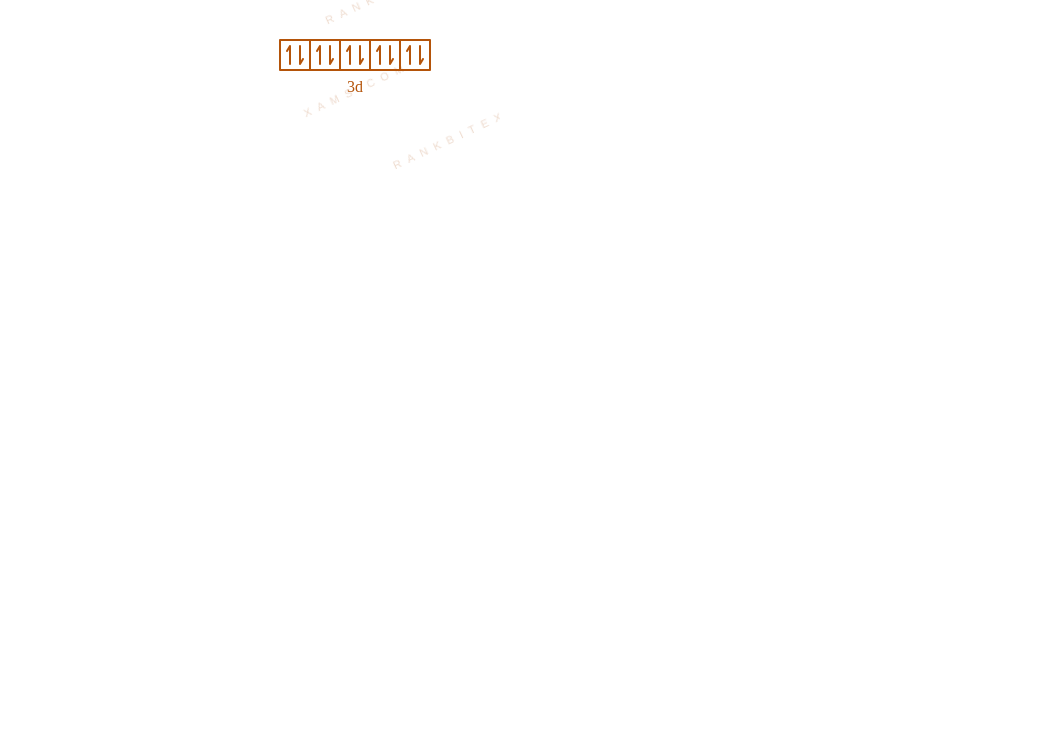
- Fe³⁺ (3d⁵). F^- is a weak-field ligand (WFL). No pairing occurs.
- Outer-orbital complex: sp³d².
- Paramagnetic (5 unpaired electrons).
- [Fe(CN)₆]³⁻:
- Fe³⁺ (3d⁵). CN^- is a strong-field ligand (SFL). Pairing occurs.
- Config: t2g⁵ eg⁰ (one unpaired electron remains Paramagnetic).
- Inner-orbital complex: d²sp³.
- [Mn(CN)₆]³⁻:
- Mn³⁺ (3d⁴). CN^- is an SFL. Pairing occurs.
- Config: t2g⁴ eg⁰ (two unpaired electrons remain Paramagnetic).
- Inner-orbital complex: d²sp³.
- [Co(C₂O₄)₃]³⁻:
- Co³⁺ (3d⁶). Oxalate is a chelating SFL here. Full pairing occurs.
- Config: t2g⁶ eg⁰ (zero unpaired electrons Diamagnetic).
- Inner-orbital complex: d²sp³.
- [MnCl₆]³⁻:
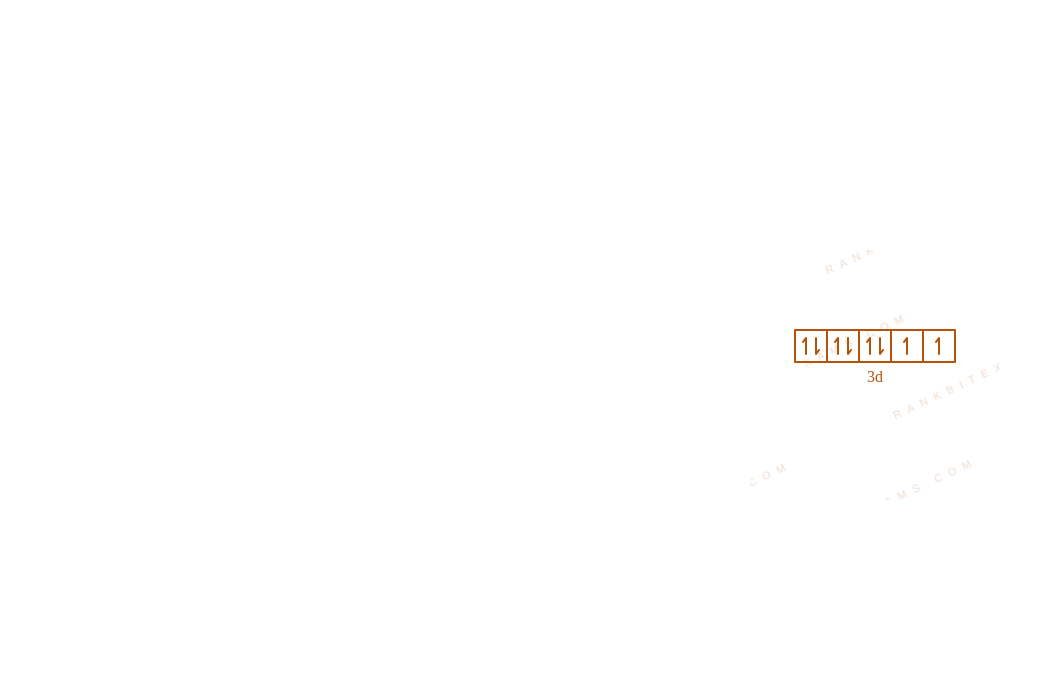
- Mn³⁺ (3d⁴). Cl^- is a WFL. No pairing occurs.
- Outer-orbital complex: sp³d².
- Paramagnetic (4 unpaired electrons).
- [CoF₆]³⁻:
- Co³⁺ (3d⁶). F^- is a WFL. No pairing occurs.
- Outer-orbital complex: sp³d².
- Paramagnetic (4 unpaired electrons).
Thus, only [Fe(CN)₆]³⁻ and [Mn(CN)₆]³⁻ are both paramagnetic and involve d²sp³ hybridization.
Pattern Recognition
VBT shortcut:
- Strong-field ligand complexes with d⁴--d⁶ central ions form inner-orbital d²sp³ complexes.
- Of those, check the number of electrons: d⁶ is completely paired (diamagnetic), but d⁵ ([Fe(CN)₆]³⁻) and d⁴ ([Mn(CN)₆]³⁻) both leave unpaired electrons in the t2g orbitals (paramagnetic).
Evaluation Rubric / Model Answer
Detailed individual classification of each complex based on VBT/CFT to yield the correct count of 2 inner-orbital paramagnetic complexes.
Chapter Mix
Class 12 Chemistry: Coordination Compounds