
Match the LIST-I with LIST-II.
LIST-I (Molecule/ion)LIST-II (Bond pair : lone pair on the central atom)
(A) mathrmICl_2^-(I) 4 : 2
(B) mathrmH_2mathrmO(II) 4 : 1
(C) mathrmSO_2(III) 2 : 3
(D) mathrmXeF_4(IV) 2 : 2
Choose the correct answer from the options given below:

Solution & Explanation

### Core Logic Let's find the number of bond pairs (sigma-bonds or regions) and lone pairs on the central atom of each species: 1. **mathrmICl_2^-**: - Central atom Iodine has 7 valence electrons + 1 negative charge = 8 electrons. - Forms 2 single bonds (bond pairs = 2). - Remaining 6 electrons form 3 lone pairs. - Ratio is 2 : 3 (Matches LIST-II, III).
VSEPR linear shape of ICl2-
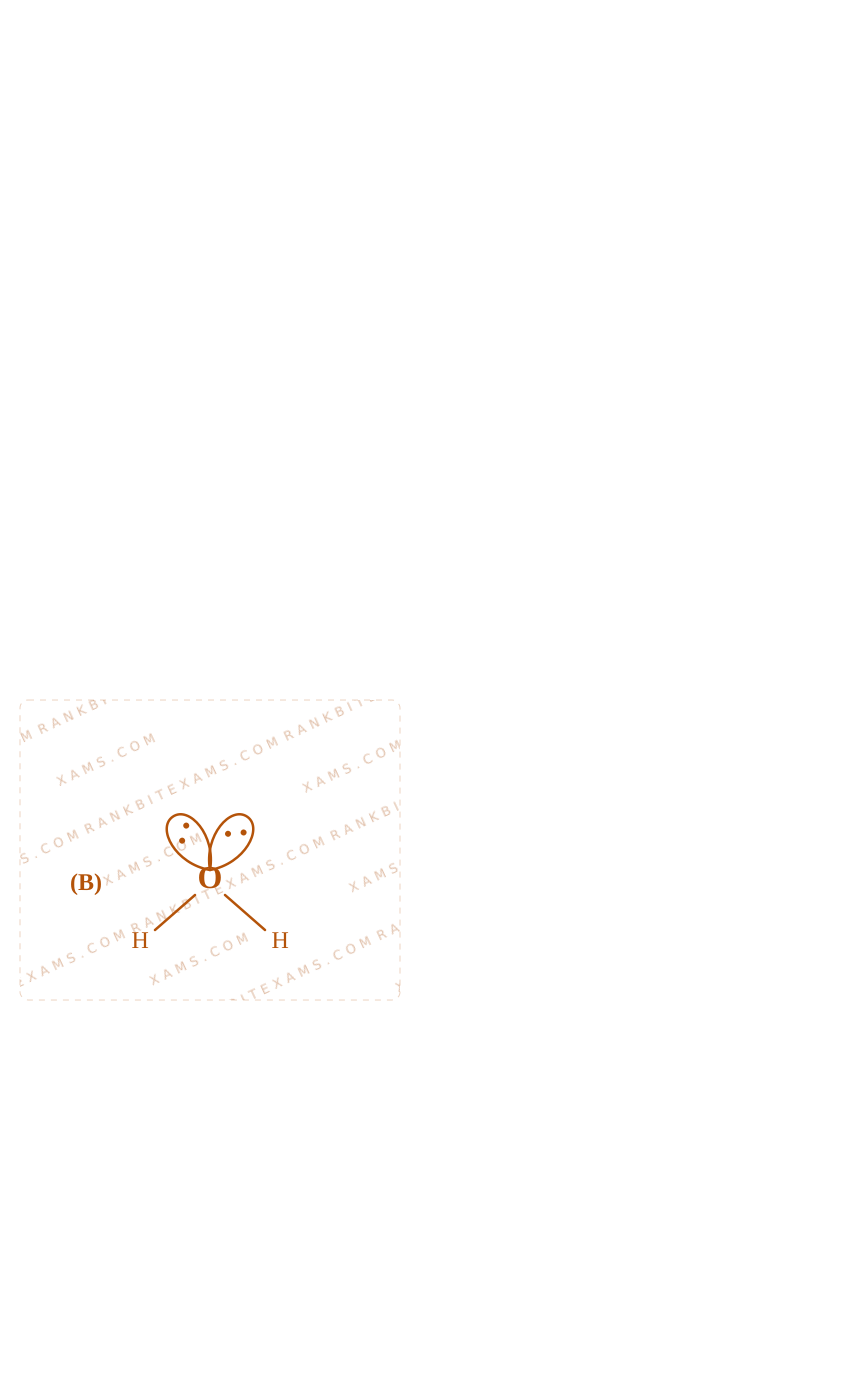
2. **mathrmH_2mathrmO**: - Oxygen has 6 valence electrons. - Forms 2 bond pairs with Hydrogens. - Remaining 4 electrons form 2 lone pairs. - Ratio is 2 : 2 (Matches LIST-II, IV).
VSEPR linear shape of ICl2-
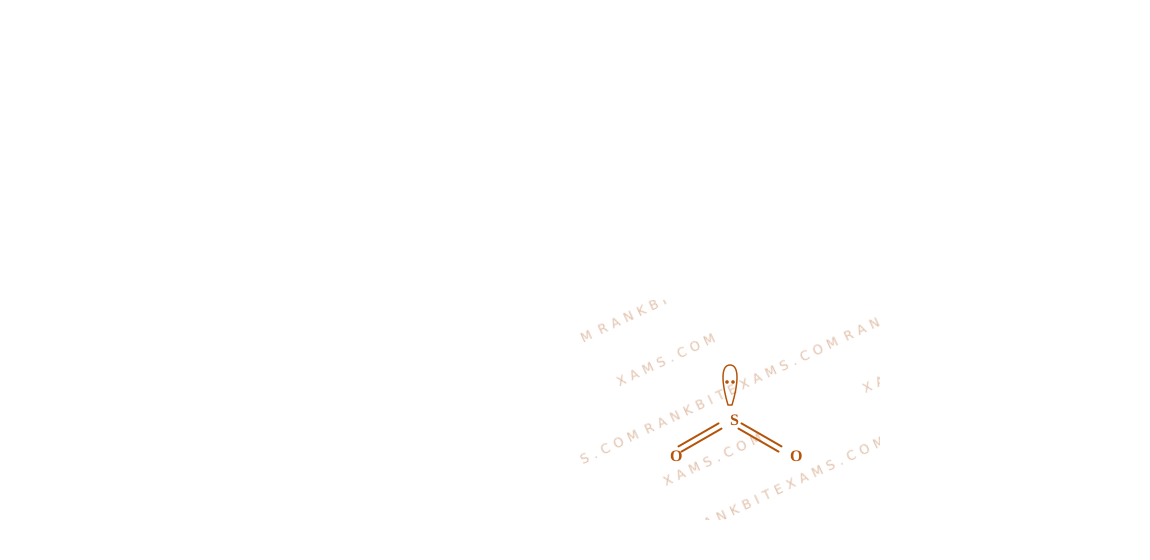
3. **mathrmSO_2**: - Sulfur has 6 valence electrons. - Forms 2 double bonds (which are counted as 4 bonding pairs of electrons/bond pairs in typical VSEPR representations here). - Remaining 2 electrons form 1 lone pair. - Ratio is 4 : 1 (Matches LIST-II, II).
VSEPR linear shape of ICl2-
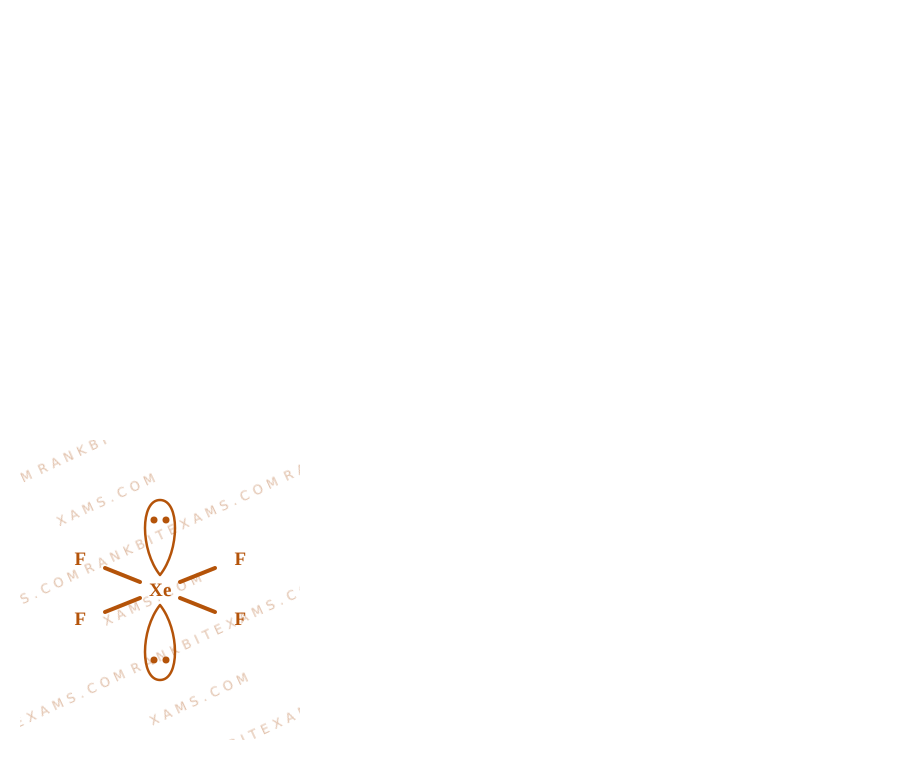
4. **mathrmXeF_4**: - Xenon has 8 valence electrons. - Forms 4 bond pairs with Fluorines. - Remaining 4 electrons form 2 lone pairs. - Ratio is 4 : 2 (Matches LIST-II, I).
VSEPR linear shape of ICl2-
Thus, the correct mapping is: A-III, B-IV, C-II, D-I. ### Pattern Recognition For match-the-column with VSEPR structures: - Always find steric number: textSteric Number = frac12(V + M - C + A). - Water is 2 bond pairs, 2 lone pairs (sp^3) rightarrow B-IV. This alone helps eliminate multiple incorrect options immediately. ### Evaluation Rubric / Model Answer null ### Chapter Mix Class 11 Chemistry: Chemical Bonding and Molecular Structure

More Chemical Bonding and Molecular Structure Previous-Year Questions — Page 7

Q85 jee_main_2024_31_jan_morning Hybridization
The number of species from the following in which the central atom uses sp^3 hybrid orbitals in its bonding is NH_3, SO_2, SiO_2, BeCl_2, CO_2, H_2O, CH_4, BF_3
Numerical Answer. Answer: 4 to 4

Solution

### Core Logic Analyzing the hybridization of the central atom in each species: - NH_3: 3 bp + 1 lp = 4 electron domains rightarrow sp^3 - SO_2: 2 bp + 1 lp = 3 electron domains rightarrow sp^2 - SiO_2: A giant covalent network where each Si is bonded to 4 oxygens tetrahedrally rightarrow sp^3 - BeCl_2: 2 bp + 0 lp = 2 electron domains rightarrow sp - CO_2: 2 bp + 0 lp = 2 electron domains rightarrow sp - H_2O: 2 bp + 2 lp = 4 electron domains rightarrow sp^3 - CH_4: 4 bp + 0 lp = 4 electron domains rightarrow sp^3 - BF_3: 3 bp + 0 lp = 3 electron domains rightarrow sp^2 Total species with sp^3 hybridization: NH_3, SiO_2, H_2O, CH_4. Total count = 4. ### Evaluation Rubric / Model Answer null ### Chapter Mix Class 11 Chemistry: Chemical Bonding and Molecular Structure
Rankbit System
JEE Physics: Waves (+15.5%) | Electrostatics: Concentric Shells (-29.7%) | Modern Physics: Photoelectric Clones (+34.2%) | Mathematics: Definite Integrals (+18.1%) | Chemistry: Coordination Splitting (-11.4%) | JEE Physics: Waves (+15.5%) | Electrostatics: Concentric Shells (-29.7%) | Modern Physics: Photoelectric Clones (+34.2%) | Mathematics: Definite Integrals (+18.1%) | Chemistry: Coordination Splitting (-11.4%)