JEE Main · Mathematics ↓ Falling

Binomial Theorem appeared 37 times across 3 years — 4.3% of Mathematics. This question is from Trinomial Expansion.

Year 2026 2025 2024 Total
Questions 9 17 11 37

Let (1 + x + x²)¹⁰ = a₀ + a₁x + a₂x² + + a₂₀x²⁰. If (a₁ + a₃ + a₅ + + a₁₉) - 11a₂ = 121k, then k is equal to

Numerical Answer Type:
Enter a numerical value Answer: 239 to 239 +4 marks

Solution & Explanation

Related Formula

For trinomial expansion:

(1+x+x²)ⁿ = Σr=0²ⁿ aᵣ x^r

Symmetric coefficients can be extracted by substituting x=1 and x=-1.

Core Logic

Let's perform the substitution:

  • For x = 1:
3¹⁰ = a₀ + a₁ + a₂ + + a₂₀ --- (1)
  • For x = -1:
1¹⁰ = a₀ - a₁ + a₂ - a₃ + + a₂₀ --- (2)
Step 1: Extracting odd term sum

Subtracting (2) from (1):

3¹⁰ - 1 = 2(a₁ + a₃ + a₅ + + a₁₉) a₁ + a₃ + a₅ + + a₁₉ = 3¹⁰ - 12

Since 3⁵ = 243 3¹⁰ = 59049:

a₁ + a₃ + a₅ + + a₁₉ = (59049 - 1)/(2) = 29524
Step 2: Finding a₂ and k

Using expansion formula to find a₂ (coefficient of x²):

(1 + x + x²)¹⁰ = Σ (10!)/(p! q! r!) xq + 2r (p+q+r = 10)

For q + 2r = 2:

  • Case 1: r=1, q=0 p=9. Coefficient = (10!)/(9! 0! 1!) = 10
  • Case 2: r=0, q=2 p=8. Coefficient = (10!)/(8! 2! 0!) = 45
a₂ = 10 + 45 = 55

Now substitute into the target relation:

29524 - 11(55) = 29524 - 605 = 28919 121k = 28919 k = 239
Pattern Recognition

Substituting standard complex roots or positive units is the fastest way to resolve sum of subset coefficients in polynomial expansions. Always use partition calculations for the early index terms (a₁, a₂) rather than standard multinomial permutations to avoid calculation mistakes.

Chapter Mix

Class 11 Mathematics: Binomial Theorem
Reference Study Guides

More Binomial Theorem Previous-Year Questions — Page 4

Q67 jee_main_2025_29_jan_evening Remainder Problems
The remainder, when 7¹⁰³ is divided by 23, is equal to:
  • A. 14
  • B. 9
  • C. 17
  • D. 6

Solution

Related Formula

Modular arithmetic congruence rules:

A ≡ B m Aⁿ ≡ Bⁿ m
Core Logic

We need to compute 7¹⁰³ 23. Let's break the exponent down into manageable powers:

7¹⁰³ = 7 · (7²)⁵¹ = 7 · (49)⁵¹

Since 49 ≡ 3 23:

7¹⁰³ ≡ 7 · 3⁵¹ 23
Step 1: Simplify Higher Power Components

Break down 3⁵¹ using 3³ = 27 ≡ 4 23:

3⁵¹ = (3³)¹⁷ = 27¹⁷ ≡ 4¹⁷ 23

So the expression becomes:

7 · 4¹⁷ = 7 · 4 · (4²)⁸ = 28 · 16⁸

Since 28 ≡ 5 23 and 16 ≡ -7 23:

≡ 5 · (-7)⁸ = 5 · 7⁸ 23
Step 2: Final Remainder Evaluation

Now compute 7⁸ using 7² = 49 ≡ 3 23:

7⁸ = (7²)⁴ ≡ 3⁴ = 81 23

Since 81 ≡ 12 23:

Expression ≡ 5 · 12 = 60 23

Dividing 60 by 23 (23 × 2 = 46) yields a remainder of: 60 - 46 = 14

Pattern Recognition

Using negative remainders (like 16 ≡ -7) reduces large multiplication outputs instantly during binary power modular loops.

Chapter Mix

Class 11 Mathematics: Binomial Theorem

Q jee_main_2025_03_april_morning Rational Terms in Expansion
The sum of all rational terms in the expansion of (2 + √(3))⁸ is:
  • A. 16923
  • B. 3763
  • C. 33845
  • D. 18817

Solution

Related Formula

General term in the binomial expansion of (a+b)ⁿ:

Tᵣ₊₁ = ⁿCᵣ · an-r · b^r
Core Logic

For a term to be rational in (2+√(3))⁸, the power of √(3) must be an even integer. Thus, r can only take even values from 0 to 8

r in 0, 2, 4, 6, 8
Step 1: Calculating individual rational terms

Sum up terms explicitly for all valid values of r :

Sum = ⁸C₀(2)⁸ + ⁸C₂(2)⁶(√(3))² + ⁸C₄(2)⁴(√(3))⁴ + ⁸C₆(2)²(√(3))⁶ + ⁸C₈(√(3))⁸

Compute the individual numeric values :

  • r=0: 1 · 256 = 256
  • r=2: 28 · 64 · 3 = 5376
  • r=4: 70 · 16 · 9 = 10080
  • r=6: 28 · 4 · 27 = 3024
  • r=8: 1 · 1 · 81 = 81
Total Sum = 256 + 5376 + 10080 + 3024 + 81 = 18817
Pattern Recognition

Notice that the sum of all rational terms can also be viewed as the rational part of the expanded configuration, equivalent to (2+√(3))⁸ + (2-√(3))⁸2.

Chapter Mix

Class 11 Mathematics: Binomial Theorem

Q59 jee_main_2025_03_april_morning Binomial Coefficients Series
If Σr=1⁹( r + 32r)·⁹Cᵣ = α ((3)/(2))⁹ - β, where α, β in N, then (α + β)² is equal to:
  • A. 27
  • B. 9
  • C. 81
  • D. 18

Solution

Related Formula
  • Σr=1ⁿ r · ⁿCᵣ x^r = nx(1+x)ⁿ⁻¹
  • Binomial Theorem expansion: Σr=0ⁿ ⁿCᵣ x^r = (1+x)ⁿ
Core Logic

Split the given series summation into two independent parts:

Sum = Σr=1⁹ (r)/(2^r) · ⁹Cᵣ + 3Σr=1⁹ (1)/(2^r) · ⁹Cᵣ

Simplify the first sub-sum using the index relation r · ⁹Cᵣ = 9 · ⁸Cᵣ₋₁:

Σr=1⁹ (9)/(2^r) · ⁸Cᵣ₋₁ = (9)/(2)Σr=1⁹ ⁸Cᵣ₋₁((1)/(2))r-1 = (9)/(2)(1 + (1)/(2))⁸ = (9)/(2)((3)/(2))⁸

Simplify the second sub-sum by including missing index r=0:

3[Σr=0⁹ ⁹Cᵣ((1)/(2))^r - 1] = 3[(1 + (1)/(2))⁹ - 1] = 3((3)/(2))⁹ - 3
Step 1: Combining the components

Combine both evaluations to fit into requested representation shape:

Total Sum = (9)/(2)((3)/(2))⁸ + 3((3)/(2))⁹ - 3

Convert the fractional leading term:

(9)/(2)((3)/(2))⁸ = 3 · (3)/(2)((3)/(2))⁸ = 3((3)/(2))⁹ Total Sum = 3((3)/(2))⁹ + 3((3)/(2))⁹ - 3 = 6((3)/(2))⁹ - 3

Matching coefficients gives:

α = 6, β = 3

Evaluate the required squared value:

(α + β)² = (6 + 3)² = 81
Pattern Recognition

Splitting variable factors into standard combinatoric property fractions simplifies coefficient conversions with geometric series denominators.

Chapter Mix

Class 11 Mathematics: Binomial Theorem

Q63 jee_main_2025_04_april_evening Properties of Binomial Coefficients
If 1² · ( ¹⁵ C₁ ) + 2² · ( ¹⁵ C₂ ) + 3² · ( ¹⁵ C₃ ) + + 15² · ( ¹⁵ C₁₅ ) = 2m · 3ⁿ · 5k, where m, n, k ∈ N, then m + n + k is equal to :-
  • A. 19
  • B. 21
  • C. 18
  • D. 20

Solution

Related Formula

The general property linking indices to binomial coefficients is:

r · nr = n · n-1r-1
Core Logic

The given series can be structured using summation notation:

S = Σr=1¹⁵ r² · 15r

Apply the identity r · 15r = 15 · 14r-1 to reduce one factor of r:

S = Σr=1¹⁵ r · [ 15 · 14r-1 ] = 15 Σr=1¹⁵ r · 14r-1
Step 1: Splitting the linear term

Rewrite the index variable r as (r - 1) + 1 to align with the binomial lower index:

S = 15 Σr=1¹⁵ ((r - 1) + 1) · 14r-1 S = 15 Σr=1¹⁵ (r - 1) · 14r-1 + 15 Σr=1¹⁵ 14r-1

Applying the property again to the first summation term: (r-1) 14r-1 = 14 13r-2:

S = 15 · 14 Σr=2¹⁵ 13r-2 + 15 Σr=1¹⁵ 14r-1
Step 2: Evaluating the Sums and Prime Factorization

Using the standard total sum of binomial coefficients Σk=0ⁿ nk = 2ⁿ:

S = 15 · 14 · 2¹³ + 15 · 2¹⁴

Factor out 15 · 2¹³ from the expression:

S = 15 · 2¹³ (14 + 2) = 15 · 2¹³ (16) = 15 · 2¹³ · 2⁴ S = 15 · 2¹⁷ = (3¹ · 5¹) · 2¹⁷

Matching this with the given format 2^m · 3ⁿ · 5^k, we identify: m = 17, n = 1, and k = 1.

Step 3: Calculating the sum of exponents

Evaluating the targeted summation:

m + n + k = 17 + 1 + 1 = 19
Pattern Recognition

For a series of the type Σ r² nr, remember the standard identity shortcut: n(n-1)2ⁿ⁻² + n2ⁿ⁻¹. Plugging in n=15 instantly outputs 15(14)2¹³ + 15(2¹⁴), bypasses matching terms manually.

Chapter Mix

Class 11 Mathematics: Binomial Theorem

Q54 jee_main_2025_04_april_morning Properties of Binomial Coefficients
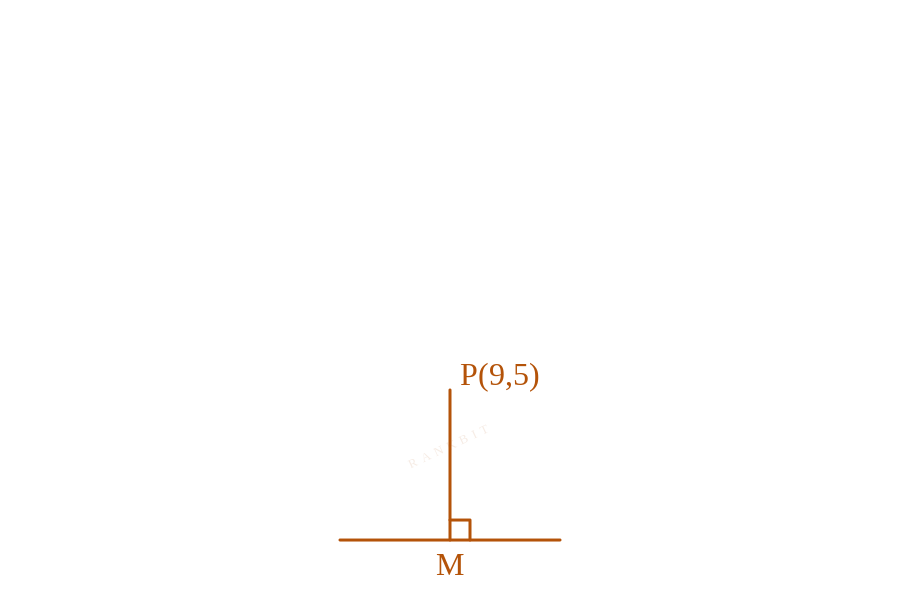
For an integer n ≥ 2, if the arithmetic mean of all coefficients in the binomial expansion of (x + y)2n - 3 is 16, then the distance of the point P(2n - 1, n² - 4n) from the line x + y = 8 is:
  • A. √(2)
  • B. 2√(2)
  • C. 5√(2)
  • D. 3√(2)

Solution

Related Formula

Sum of binomial coefficients for (x+y)^m is 2^m. Total number of terms is m + 1. Perpendicular distance formula from (x₀, y₀) to ax + by + c = 0:

d = |ax₀ + by₀ + c|√(a² + b²)
Core Logic

The power is m = 2n - 3. Sum of coefficients = 22n - 3. Total terms = 2n - 2. Given Arithmetic Mean:

22n - 32n - 2 = 16 22n - 32(n - 1) = 16 22n - 4 = 16(n - 1)

Testing integer values, n = 5 satisfies the equation perfectly since 2⁶ = 64 and 16(5 - 1) = 64.

Step 1: Determine Coordinates of Point P

Substitute n = 5 into P(2n - 1, n² - 4n): x₀ = 2(5) - 1 = 9 y₀ = 5² - 4(5) = 5 Thus, P = (9, 5).

Properties of Binomial Coefficients diagram for Q54 - JEE Main 2025 Morning

Step 2: Calculate Perpendicular Distance

Find the distance from (9,5) to the line x + y - 8 = 0:

d = | 9 + 5 - 8√(1² + 1²)| = 6√(2) = 3√(2)
Pattern Recognition

Binomial coefficient logic tightly constrains n to small integers. Use inspection quickly when polynomial-exponential configurations arise.

Chapter Mix

Class 11 Mathematics: Binomial Theorem Class 11 Mathematics: Straight Lines

More Binomial Theorem Questions — jee_main_2025_03_april_evening

Practice all Binomial Theorem previous-year questions →

Rankbit System
JEE Physics: Waves (+15.5%) | Electrostatics: Concentric Shells (-29.7%) | Modern Physics: Photoelectric Clones (+34.2%) | Mathematics: Definite Integrals (+18.1%) | Chemistry: Coordination Splitting (-11.4%) | JEE Physics: Waves (+15.5%) | Electrostatics: Concentric Shells (-29.7%) | Modern Physics: Photoelectric Clones (+34.2%) | Mathematics: Definite Integrals (+18.1%) | Chemistry: Coordination Splitting (-11.4%)