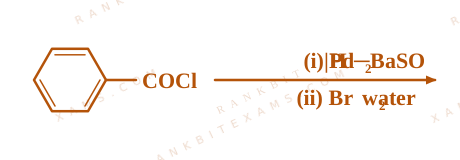
Consider the following reactions. From these reactions which reaction will give carboxylic acid as a major product?
(A) mathrmR - C equiv N xrightarrow[textmild condition]mathrm(i) H^+ / H_2O$\mathrm{R - C \equiv N} \xrightarrow[\text{mild condition}]{\mathrm{(i) H^+ / H_2O}}$
(B) mathrmR - MgX xrightarrow[mathrm(ii) H_3O^+]mathrm(i) CO_2$\mathrm{R - MgX} \xrightarrow[\mathrm{(ii) H_3O^+}]{{\mathrm{(i) CO_2}}}$
(C) mathrmR - C equiv N xrightarrow[mathrm(ii) H_3O^+]mathrm(i) SnCl_2 / HCl$\mathrm{R - C \equiv N} \xrightarrow[\mathrm{(ii) H_3O^+}]{{\mathrm{(i) SnCl_2 / HCl}}}$
(D) mathrmR cdot CH_2 cdot OH xrightarrowmathrmPCC$\mathrm{R \cdot CH_2 \cdot OH} \xrightarrow{\mathrm{PCC}}$
(E)Preparation of Carboxylic Acids
Choose the correct answer from the options given below:
A.textA and D only$\text{A and D only}$
B.textA, B and E only$\text{A, B and E only}$
C.textB, C and E only$\text{B, C and E only}$
D.textB and E only$\text{B and E only}$
Solution & Explanation
### Related Formula
mathrmR-MgX + CO_2 rightarrow R-COOMgX xrightarrowH_3O^+ R-COOH$$\mathrm{R-MgX + CO_2 \rightarrow R-COOMgX \xrightarrow{H_3O^+} R-COOH}$$
### Core Logic
Let's analyze each reaction path to determine the major organic product:
- **Reaction (A)**: Acidic hydrolysis of a nitrile under *mild conditions* yields an amide:
mathrmR-Cequiv N rightarrow R-CONH_2$$\mathrm{R-C\equiv N \rightarrow R-CONH_2}$$
(Full conversion to carboxylic acid requires strong conditions and extended heating).
- **Reaction (B)**: Carbonation of Grignard reagent using solid carbon dioxide (dry ice) followed by acid hydrolysis yields a carboxylic acid:
mathrmR-MgX + CO_2 rightarrow R-COOMgX xrightarrowH_3O^+ R-COOH$$\mathrm{R-MgX + CO_2 \rightarrow R-COOMgX \xrightarrow{H_3O^+} R-COOH}$$
- **Reaction (C)**: Stephen reduction converts nitrile to aldehyde:
mathrmR-Cequiv N xrightarrowSnCl_2/HCl R-CH=NH xrightarrowH_3O^+ R-CHO$$\mathrm{R-C\equiv N \xrightarrow{SnCl_2/HCl} R-CH=NH \xrightarrow{H_3O^+} R-CHO}$$
- **Reaction (D)**: Pyridinium chlorochromate (PCC) is a mild oxidising agent that converts primary alcohols selectively to aldehydes:
mathrmR-CH_2-OH xrightarrowPCC R-CHO$$\mathrm{R-CH_2-OH \xrightarrow{PCC} R-CHO}$$
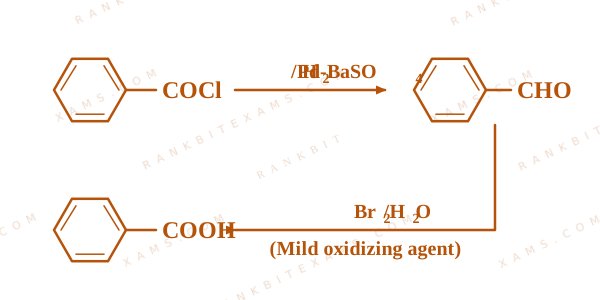
- **Reaction (E)**
Preparation of Carboxylic Acids : Rosenmund reduction reduces acid chloride to aldehyde first:
rightarrow$\rightarrow$ R-CHO
Subsequent oxidation with bromine water (which is a mild oxidising agent that selective oxidizes aldehydes but does not affect ketones) converts the aldehyde to carboxylic acid:
mathrmR-CHO xrightarrowBr_2/water R-COOH$$\mathrm{R-CHO \xrightarrow{Br_2/water} R-COOH}$$
### Step 1: Final Tally
Thus, reactions (B) and (E) successfully yield carboxylic acid as the major organic product.
### Pattern Recognition
Remember: Bromine water (mathrmBr_2/H_2O$\mathrm{Br_2/H_2O}$) is a mild, selective oxidising agent commonly used to oxidise aldoses and other aldehydes to monocarboxylic acids without degrading carbon-carbon chains.
### Evaluation Rubric / Model Answer
null
### Chapter Mix
Class 12 Chemistry: Aldehydes, Ketones and Carboxylic Acids
More Aldehydes, Ketones and Carboxylic Acids Previous-Year Questions — Page 4
Q40jee_main_2025_24_jan_morningReactivity towards Nucleophilic Addition
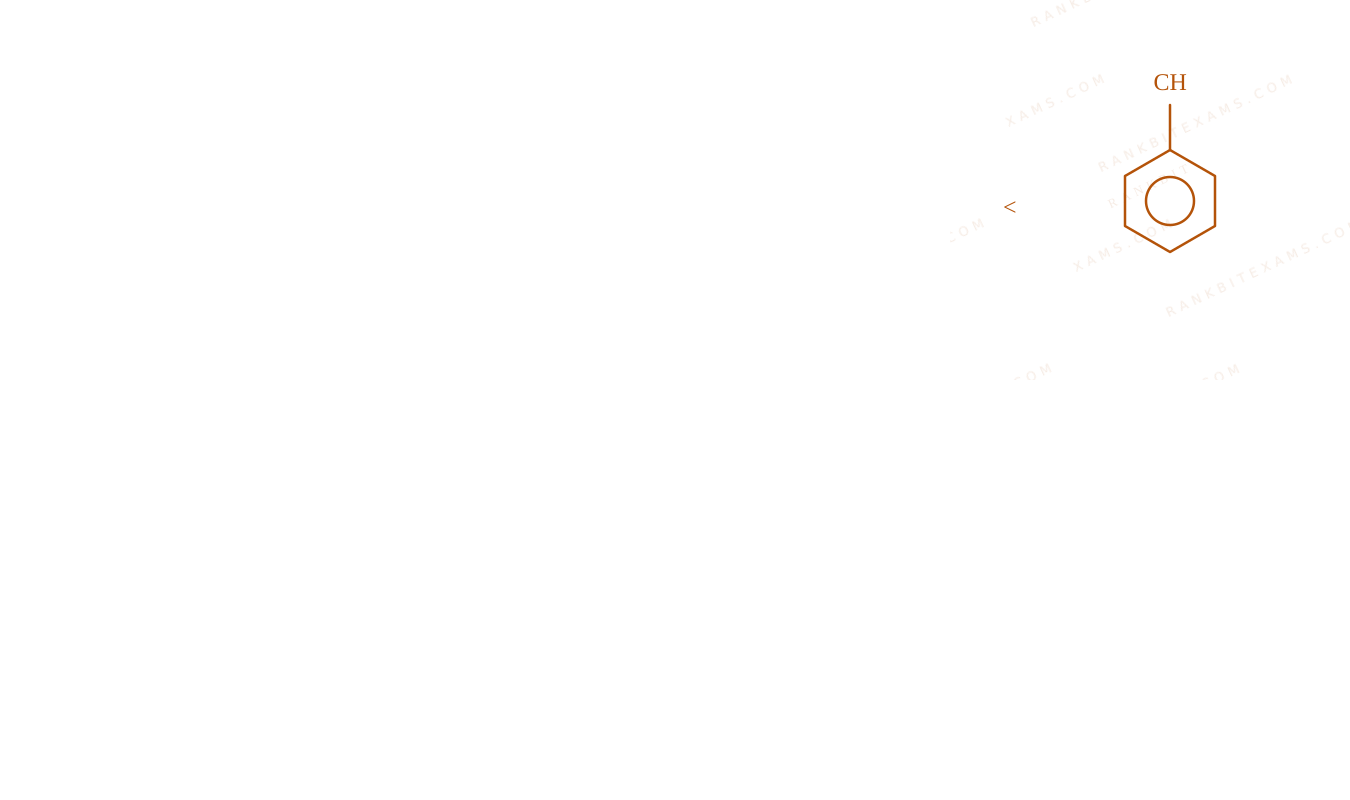
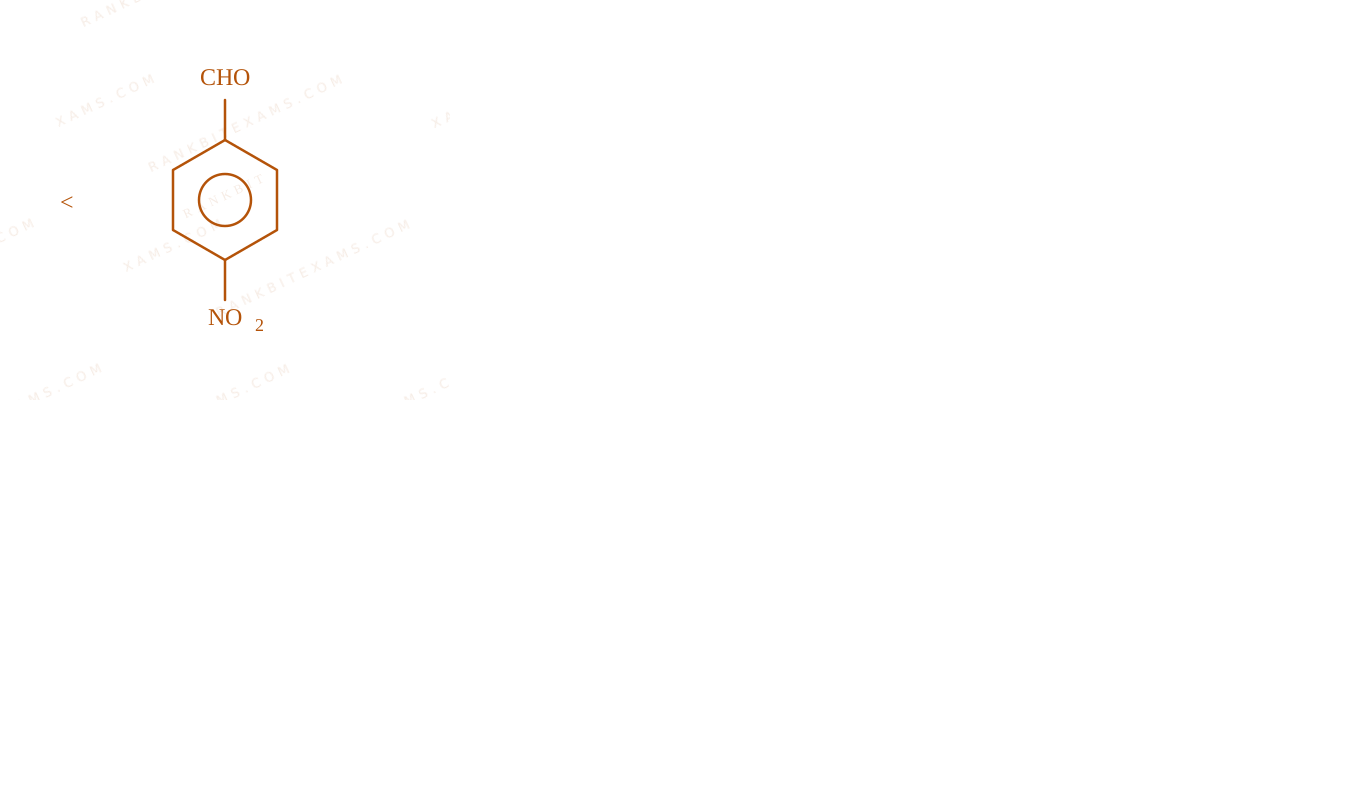
A. benzaldehyde <$<$ acetophenone <$<$ p-nitrobenzaldehyde <$<$ p-tolualdehyde
B. acetophenone <$<$ benzaldehyde <$<$ p-tolualdehyde <$<$ p-nitrobenzaldehyde
C. acetophenone <$<$ p-tolualdehyde <$<$ benzaldehyde <$<$ p-nitrobenzaldehyde
D. p-nitrobenzaldehyde <$<$ benzaldehyde <$<$ p-tolualdehyde <$<$ acetophenone
Solution
### Core Logic
Reactivity in nucleophilic addition reactions is governed by a combination of **steric hindrance** and **electronic effects** around the electrophilic carbonyl carbon:
1. Ketones are significantly less reactive than aldehydes due to the bulkiness and electron-donating inductive effect (+I$+I$) of their two alkyl/aryl groups. Thus, **acetophenone** has the lowest reactivity.
2. For substituted benzaldehydes, electron-withdrawing groups heighten the partial positive charge on the carbonyl carbon, accelerating nucleophilic attack. Conversely, electron-donating groups suppress reactivity.
Symmetry breakdown structures are shown below:
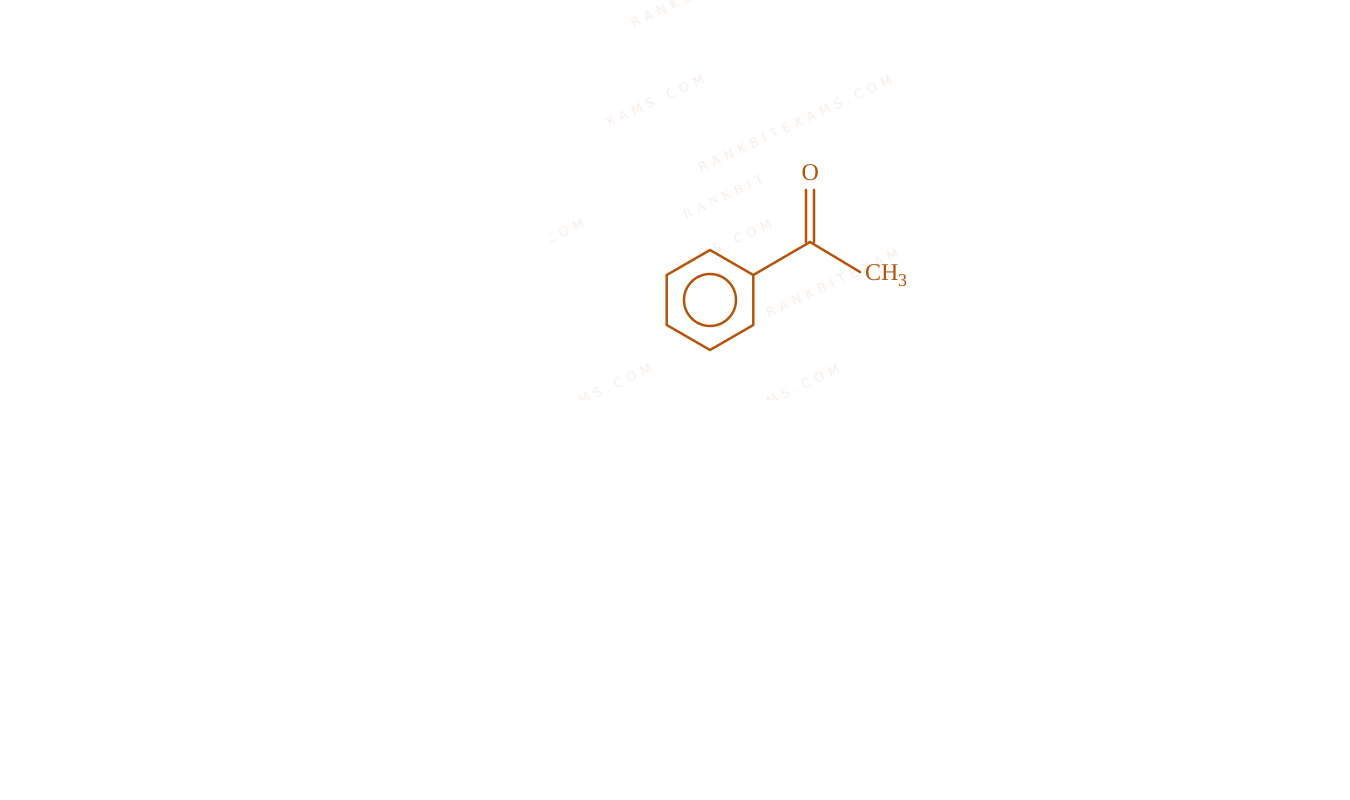
- Acetophenone: Acetophenone structure for reactivity comparison
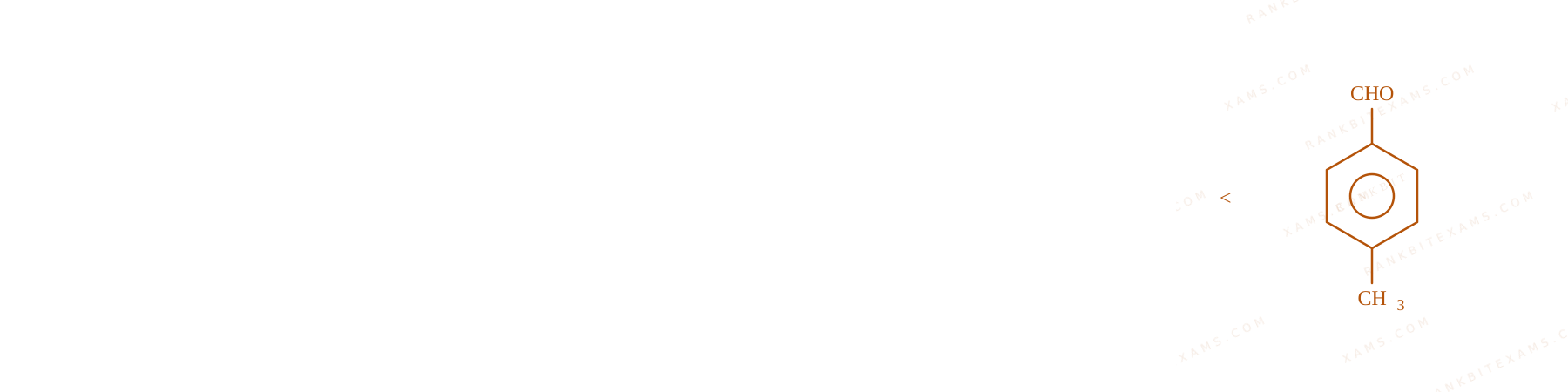
- p-tolualdehyde: Acetophenone structure for reactivity comparison
- Benzaldehyde: Acetophenone structure for reactivity comparison
- p-nitrobenzaldehyde: Acetophenone structure for reactivity comparison
- Methoxy/methyl donors decrease reactivity: textp-tolualdehyde < textbenzaldehyde$\text{p-tolualdehyde} < \text{benzaldehyde}$
- Nitro group (-mathrmNO_2$-\mathrm{NO}_2$) acts as a strong electron-withdrawing agent via both -M$-M$ and -I$-I$ pathways, maximizing the electrophilic nature of the carbonyl site. Therefore, **p-nitrobenzaldehyde** is the most reactive.
Thus, the correct order of reactivity is:
textacetophenone < textp-tolualdehyde < textbenzaldehyde < textp-nitrobenzaldehyde$$\text{acetophenone} < \text{p-tolualdehyde} < \text{benzaldehyde} < \text{p-nitrobenzaldehyde}$$
### Pattern Recognition
Aldehydes naturally exhibit higher reactivity than ketones. Electron-withdrawing groups (-mathrmNO_2$-\mathrm{NO}_2$) accelerate addition pathways, whereas electron-donating groups (-mathrmCH_3$-\mathrm{CH}_3$) impede them.
### Evaluation Rubric / Model Answer
null
### Chapter Mix
Class 12 Chemistry: Aldehydes, Ketones and Carboxylic Acids
Q41jee_main_2025_24_jan_morningAldol Condensation and Ozonolysis
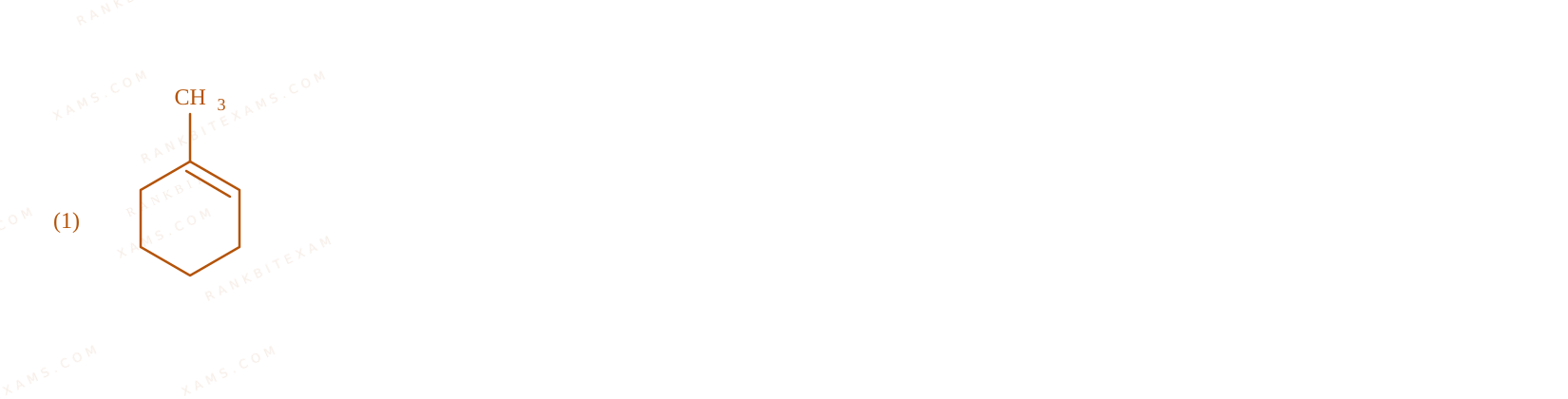
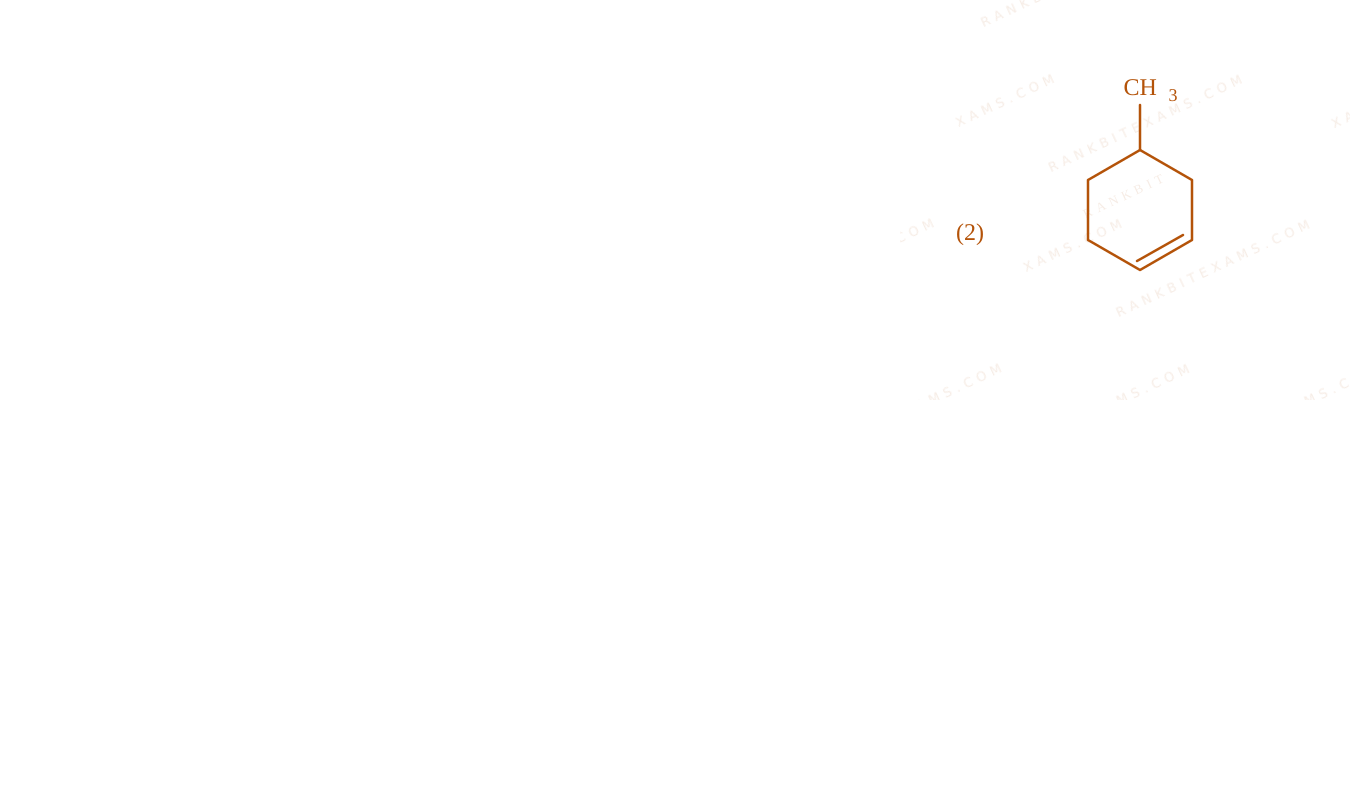
Aman has been asked to synthesise the molecule ring with C—CH3 (x). He thought of preparing the molecule using an aldol condensation reaction. He found a few cyclic alkenes in his laboratory. He thought of performing ozonolysis reaction on alkene to produce a dicarbonyl compound followed by aldol reaction to prepare “x”. Predict the suitable alkene that can lead to the formation of “x”.
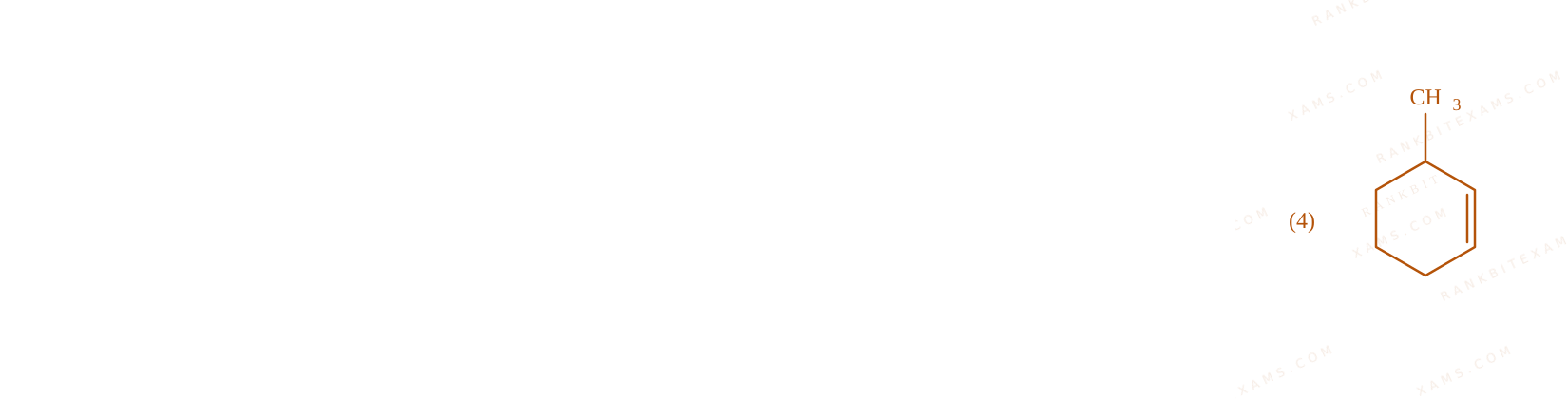
A. Option A Aldol Condensation and Ozonolysis
B. Option B Aldol Condensation and Ozonolysis
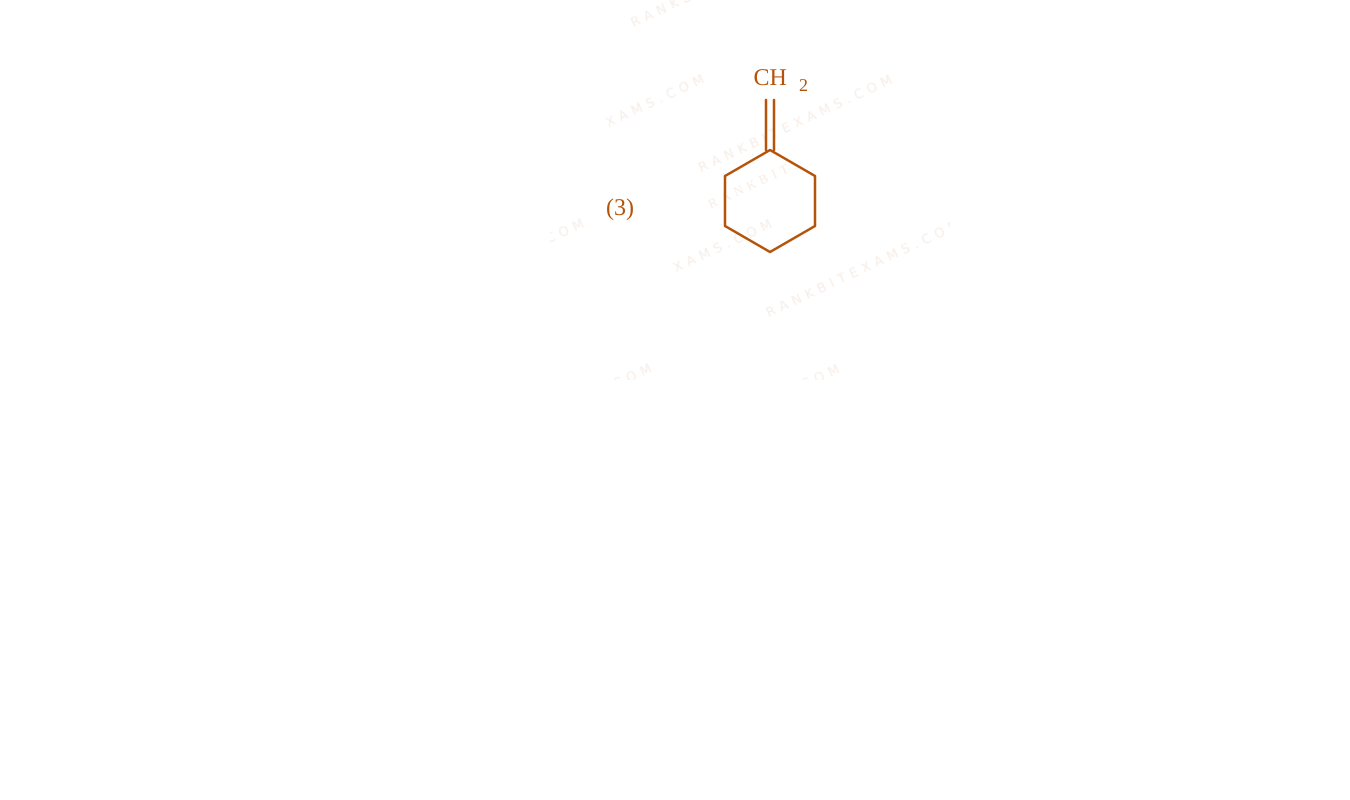
C. Option C Aldol Condensation and Ozonolysis
D. Option D Aldol Condensation and Ozonolysis
Solution
### Core Logic
Analyzing the retro-synthesis path step-by-step:
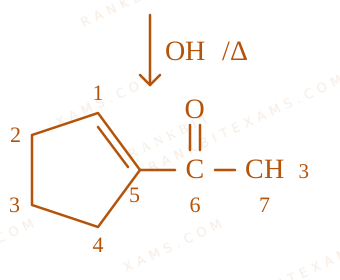
1. The objective compound is 1-acetylcyclopentene.
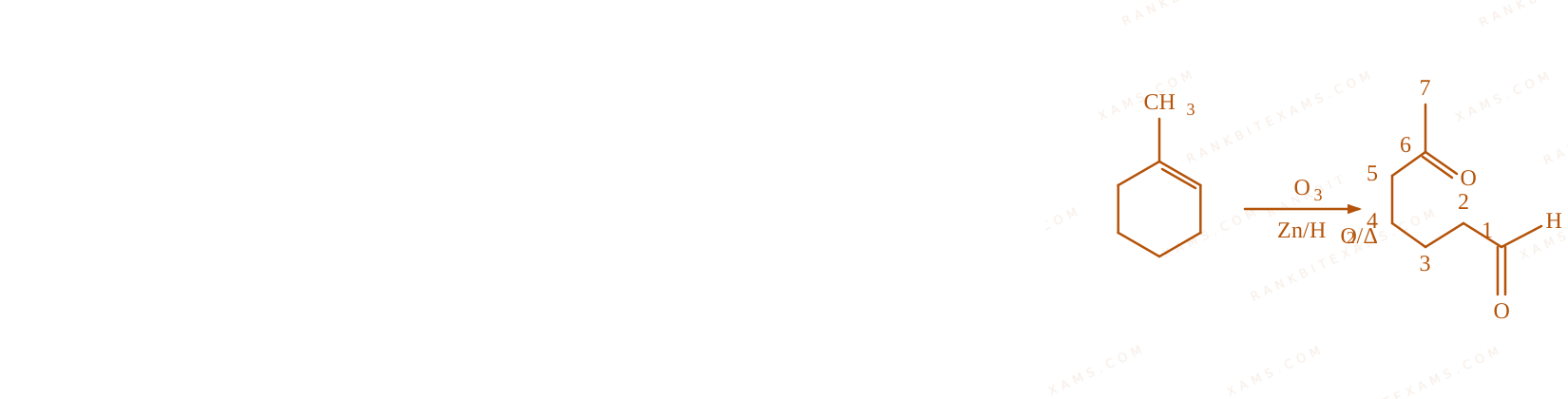
2. Performing reductive ozonolysis (O_3, Zn/H_2O$O_3, Zn/H_2O$) on 1-methylcyclohexene (Option A) symmetrically breaks the internal endocyclic double bond to form heptane-2,6-dione, a dicarbonyl system. Aldol Condensation and Ozonolysis reaction part 1 for Q41
3. Adding a base intermediate trigger (OH^-, Delta$OH^{-}, \Delta$) drives an intramolecular aldol condensation: the methyl group carbanion at position 1 attacks the carbon 6 ketone site. This ring-closing event effectively drops water to synthesize the 5-membered cyclopentene core molecule attached to the acetyl unit. Aldol Condensation and Ozonolysis reaction part 1 for Q41
### Pattern Recognition
Counting carbon coordinates is essential. Reductive cleavage transforms a 6-membered ring into an open heptane system, which easily self-condenses into a stable 5-membered ring attached to a methyl ketone side chain.
### Evaluation Rubric / Model Answer
null
### Chapter Mix
Class 12 Chemistry: Aldehydes, Ketones and Carboxylic Acids
Q45jee_main_2025_24_jan_morningChemical Reactions of Ketones
The product (A) formed in the following reaction sequence is :
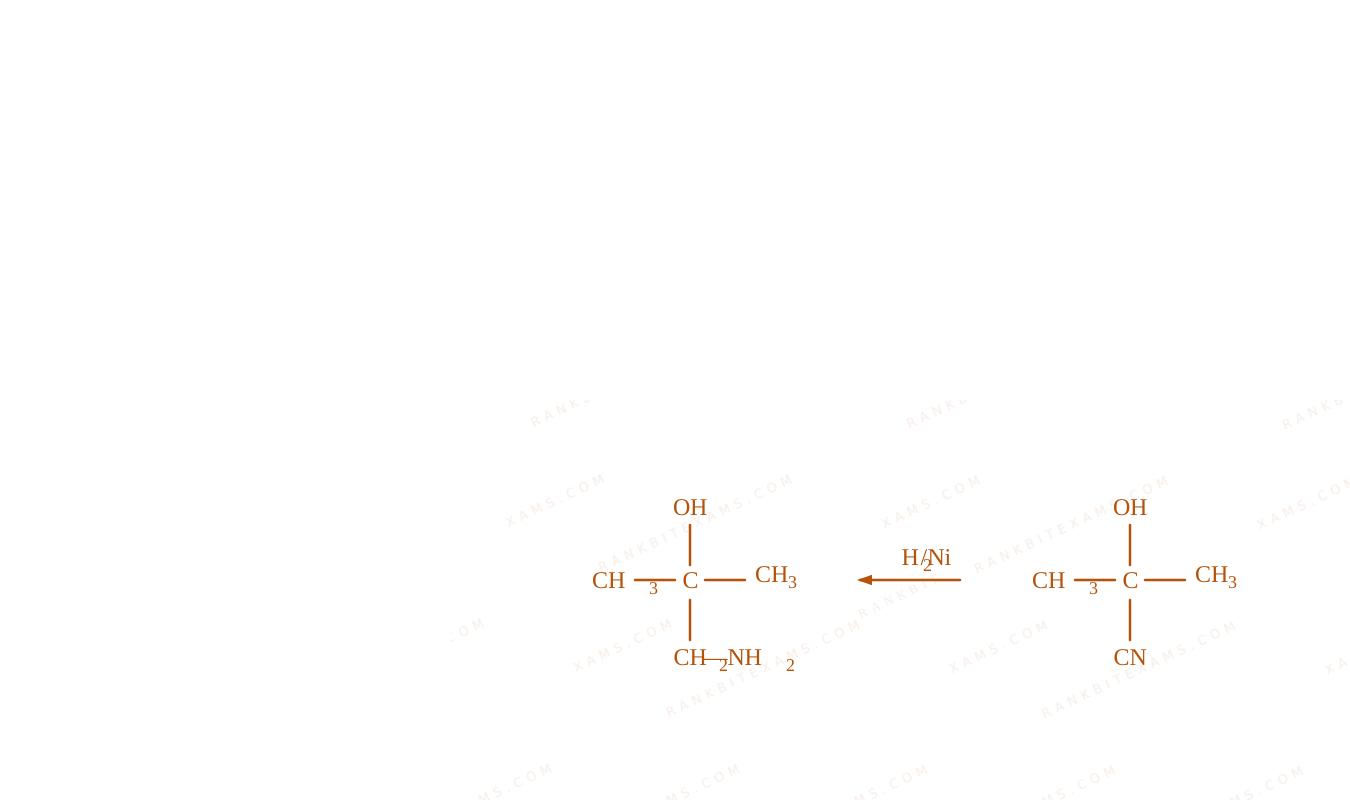
mathrm C H _ 3 - mathrm C equiv mathrm C H xrightarrow [ (mathrm i i) mathrm H _ 2 / mathrm N i ](mathrm i) mathrm H g ^ 2 +, mathrm H _ 2 mathrm S O _ 4 (A)$$\mathrm {C H} _ {3} - \mathrm {C} \equiv \mathrm {C H} \xrightarrow [ (\mathrm {i i}) \mathrm {H} _ {2} / \mathrm {N i} ]{(\mathrm {i}) \mathrm {H} g ^ {2 +}, \mathrm {H} _ {2} \mathrm {S O} _ {4}} (A)$$
### Core Logic
Breaking down the multi-step reaction path sequence:
1. Hydration of propyne using Kucherov's trigger condition (Hg^2+, H_2SO_4$Hg^{2+}, H_2SO_4$) adds water across the triple bond via Markovnikov's rule. The intermediate enol undergoes tautomerization to yield **acetone** (CH_3-CO-CH_3$CH_3-CO-CH_3$).
2. Reacting acetone with HCN$HCN$ drives nucleophilic addition at the carbonyl carbon, forming a **cyanohydrin** intermediate: CH_3-C(OH)(CH_3)-CN$CH_3-C(OH)(CH_3)-CN$.
3. Introducing a reducing agent (H_2/Ni$H_2/Ni$) selectively converts the nitrile group (-CN$-CN$) into a primary amine side chain (-CH_2-NH_2$-CH_2-NH_2$).
The final synthesized structure is: mathrmCH_3-mathrmC(mathrmOH)(mathrmCH_3)-mathrmCH_2-mathrmNH_2$\mathrm{CH}_3-\mathrm{C}(\mathrm{OH})(\mathrm{CH}_3)-\mathrm{CH}_2-\mathrm{NH}_2$. Chemical Reactions of Ketones step sequence product chart for Q45
### Pattern Recognition
Alkyne hydration produces a ketone carbonyl system. Cyanohydrin synthesis introduces a carbon coordinate, which subsequently reduces to a primary aliphatic amine functional group.
### Evaluation Rubric / Model Answer
null
### Chapter Mix
Class 12 Chemistry: Aldehydes, Ketones and Carboxylic Acids
Q48jee_main_2025_24_jan_morningReactions of Carboxylic Acids
Xg of benzoic acid on reaction with aq. mathrmNaHCO_3$\mathrm{NaHCO_3}$ release mathrmCO_2$\mathrm{CO}_{2}$ that occupied 11.2 L volume at STP. X is ______ g.
Numerical Answer.Answer: 61 to 61
Solution
### Related Formula
textMoles of gas at STP = fracVtext in Liters22.4 text L/mol$$\text{Moles of gas at STP} = \frac{V\text{ in Liters}}{22.4 \text{ L/mol}}$$
### Core Logic
The balanced acid-base reaction equation is:
C_6H_5COOH + NaHCO_3 rightarrow C_6H_5COO^-Na^+ + H_2O + CO_2$$C_{6}H_{5}COOH + NaHCO_{3} \rightarrow C_{6}H_{5}COO^{-}Na^{+} + H_{2}O + CO_{2}$$
This stoichiometry shows a 1:1$1:1$ molar ratio between benzoic acid and the released carbon dioxide gas.
Calculate the total moles of evolved CO_2$CO_2$ gas at standard conditions:
textmoles of CO_2 = frac11.2text L22.4text L mol^-1 = 0.5text moles$$\text{moles of } CO_2 = \frac{11.2\text{ L}}{22.4\text{ L mol}^{-1}} = 0.5\text{ moles}$$
Thus, the reaction consumed exactly 0.5text moles$0.5\text{ moles}$ of benzoic acid (C_6H_5COOH$C_6H_5COOH$, molecular weight = 122text g/mol$122\text{ g/mol}$):
textmass consumed (X) = 0.5 times 122 = 61text grams$$\text{mass consumed (X)} = 0.5 \times 122 = 61\text{ grams}$$
### Pattern Recognition
Carboxylic acids react with sodium bicarbonate in a straightforward 1:1$1:1$ molar ratio, releasing exactly 1 mole of carbon dioxide gas per mole of acid group.
### Evaluation Rubric / Model Answer
null
### Chapter Mix
Class 12 Chemistry: Aldehydes, Ketones and Carboxylic Acids
Q37jee_main_2025_28_jan_eveningOxidation of Alkylbenzenes
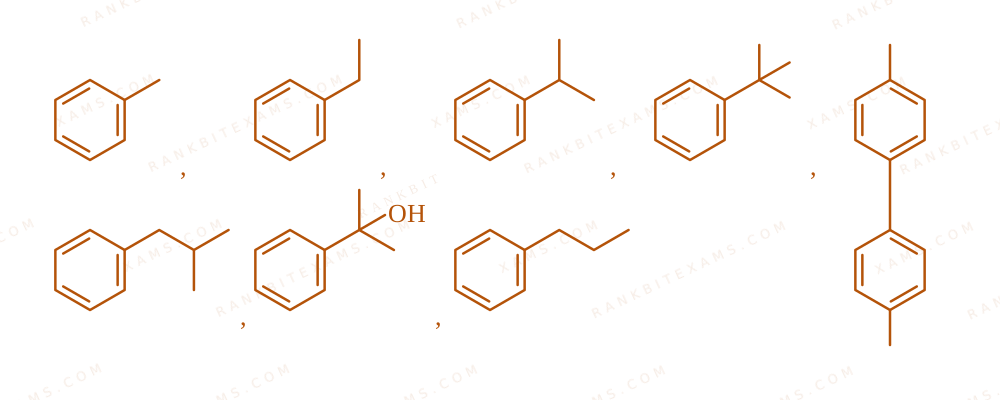
The total number of compounds from below when treated with hot KMnO_4$KMnO_{4}$ giving benzoic acid is:
The image lists seven distinct aromatic side-chain hydrocarbon structures to assess for side-chain oxidation.
A. 3
B. 4
C. 6
D. 5
Solution
### Related Formula
Side-chain oxidation criteria:
textAr-CH(R)_2 xrightarrowtexthot KMnO_4 textAr-COOH$$\text{Ar-CH(R)}_2 \xrightarrow{\text{hot } KMnO_4} \text{Ar-COOH}$$
Requires the presence of at least one benzylic hydrogen atom on the aromatic side chain structure.
### Core Logic
Alkyl side chains on a benzene ring are oxidized entirely down to a carboxylic acid group (benzoic acid) by strong oxidizing agents like hot alkaline KMnO_4$KMnO_4$, provided the benzylic carbon contains at least one hydrogen atom.
Evaluating the structures from the diagram:
1. Toluene (contains 3$3$ benzylic H) rightarrow$\rightarrow$ **Yields benzoic acid**
2. Ethylbenzene (contains 2$2$ benzylic H) rightarrow$\rightarrow$ **Yields benzoic acid**
3. Isopropylbenzene / Cumene (contains 1$1$ benzylic H) rightarrow$\rightarrow$ **Yields benzoic acid**
4. tert-Butylbenzene (contains 0$0$ benzylic H) rightarrow$\rightarrow$ **Resists oxidation**
5. Isobutylbenzene (contains 2$2$ benzylic H) rightarrow$\rightarrow$ **Yields benzoic acid**
6. 2-Phenylpropan-2-ol (contains 0$0$ benzylic H, tertiary alcohol center) rightarrow$\rightarrow$ **Resists oxidation**
7. n-Propylbenzene (contains 2$2$ benzylic H) rightarrow$\rightarrow$ **Yields benzoic acid**
8. The last biphenyl derivative undergoes complex disruption or ring cleavages and does not cleanly yield simple benzoic acid under standard monocyclic oxidation definitions.
### Step 1: Counting Valid Targets
The compounds that undergo oxidation to form benzoic acid are toluene, ethylbenzene, isopropylbenzene, isobutylbenzene, and n-propylbenzene.
Total count = 5 compounds.
The image lists seven distinct aromatic side-chain hydrocarbon structures to assess for side-chain oxidation.
### Pattern Recognition
Look immediately at the benzylic carbon (the carbon bonded directly to the ring). If it is a quaternary center (like in tert-butylbenzene) or lacks a hydrogen atom entirely, mark it as unreactive to hot KMnO_4$KMnO_4$ side-chain oxidation.
### Evaluation Rubric / Model Answer
null
### Chapter Mix
Class 12 Chemistry: Aldehydes, Ketones and Carboxylic Acids
We Map Every Repeating Question in Competitive Exams.
Say goodbye to generic mock test fatigue. RankBit uses smart analysis to group past exam questions into their foundational Repeating Question Types. Find chapter weightage, track repeating questions, and score higher with targeted practice.
Select Your Target Exam
Choose an exam track below to find formulas per chapter and patterns.
Syncing Exam Intelligence
Mapping formulas and patterns across all tracks…
PATH A — FULL LENGTH PRACTICE
Full Mock Test Hub
Simulate real NTA exam conditions with fully tracked mocks. Time yourself against past papers.
Practice past-year questions one chapter at a time. Pick an exam → subject → chapter and get every PYQ for that topic — pulled together from all past papers — with the chapter's key formulas alongside.