Q20
jee_main_2025_29_jan_evening
Hydrogen Spectrum
The number of spectral lines emitted by atomic hydrogen that is in the 4th energy level, is:
Solution
Related Formula
N = (n(n - 1))/(2)where n is the principal quantum number of the starting energy level.
Core Logic
For a hydrogen sample initially in the n = 4 level, the possible downward transition pathways to reach the ground state (n=1) are:
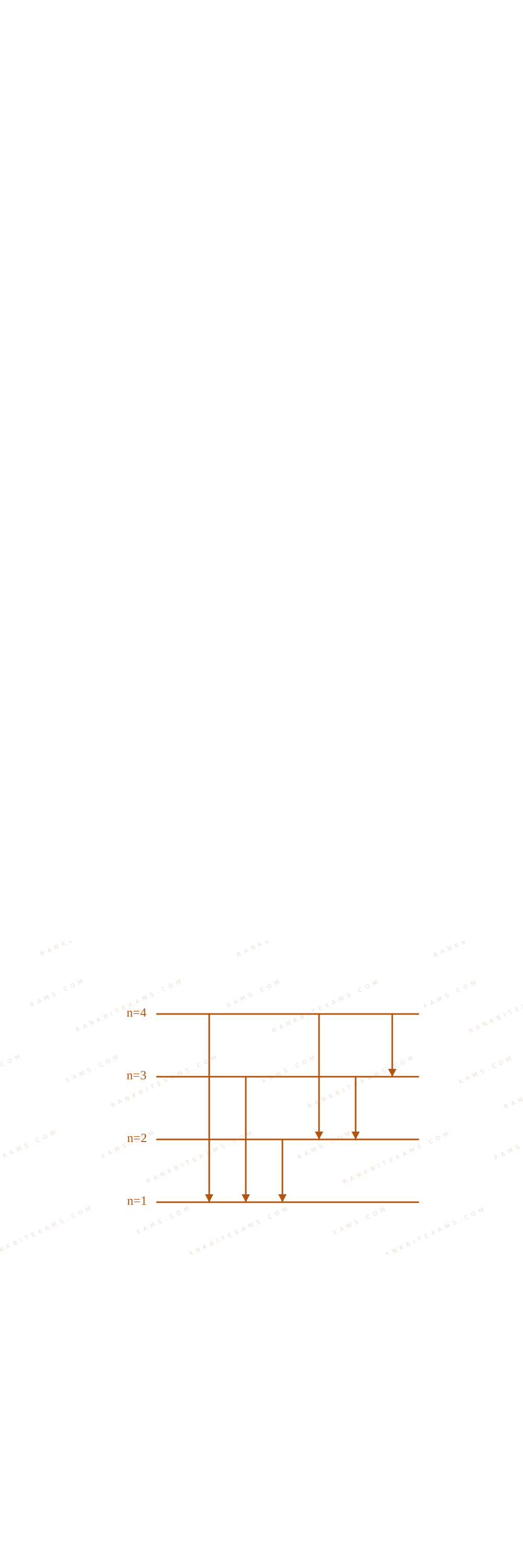
Using the combination formula for all transitions:
N = (4(4 - 1))/(2) = (4 × 3)/(2) = 6Thus, 6 distinct spectral lines are generated.
Pattern Recognition
Think of it as counting combinations of transitions between levels: ₙC₂. For n=4, ₄C₂ = 6 lines.
Chapter Mix
Class 12 Physics: Atoms