Q8
jee_main_2025_24_jan_evening
Velocity and Acceleration
The position vector of a moving body at any instant of time is given as r = (5t² i - 5t j)m. The magnitude and direction of velocity at t = 2s is,
Solution
Related Formula
v = d rdtCore Logic
Given position vector:
r = 5t² i - 5t jDifferentiating with respect to t:
v = 10t i - 5 jAt t = 2 s:
v = 20 i - 5 jMagnitude of velocity:
v = √((20)² + (-5)²) = √(400 + 25) = √(425) = 5√(17) m/sDirection analysis: 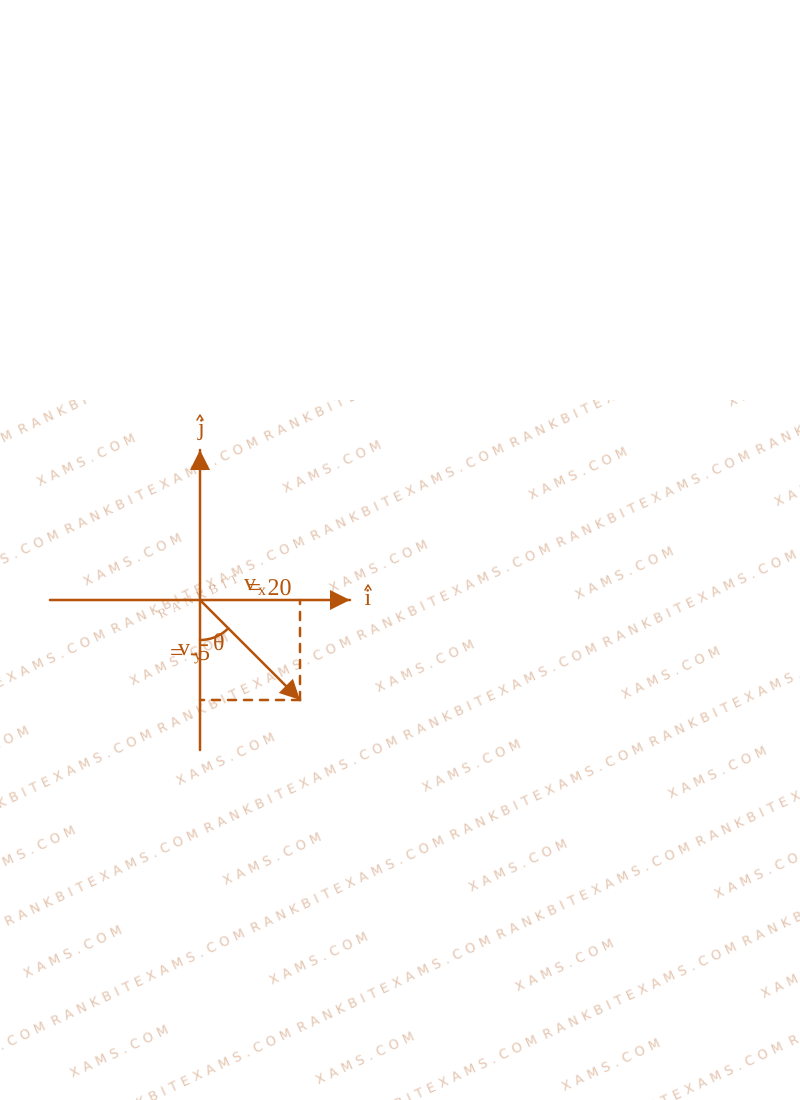
Pattern Recognition
Always read the reference axis carefully in direction questions. Here, the angle is measured from the negative Y-axis, making θ = vₓ / |vy|.
Chapter Mix
Class 11 Physics: Motion in a Plane
.svg)
