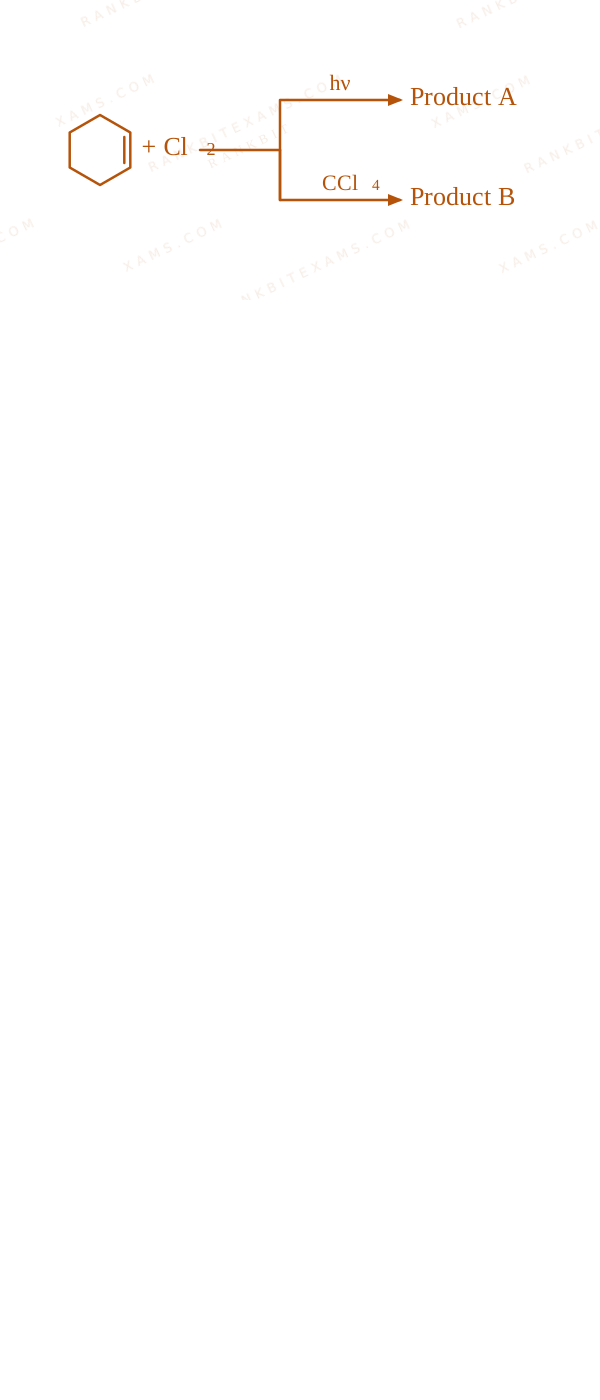
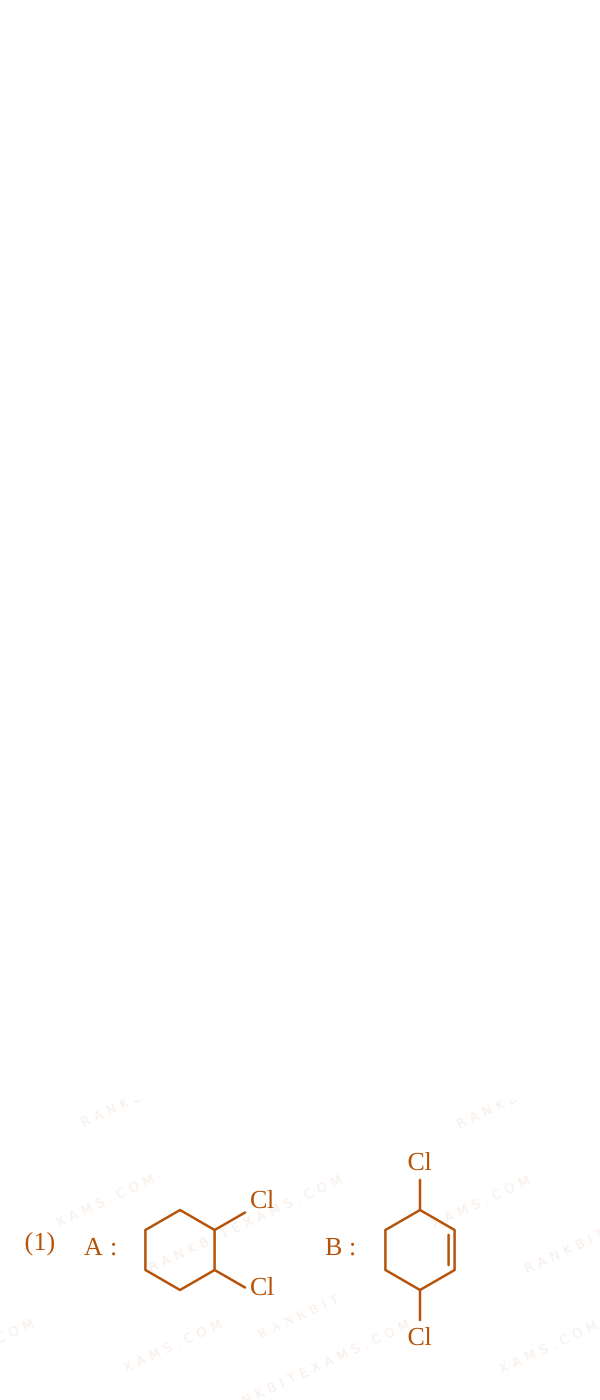
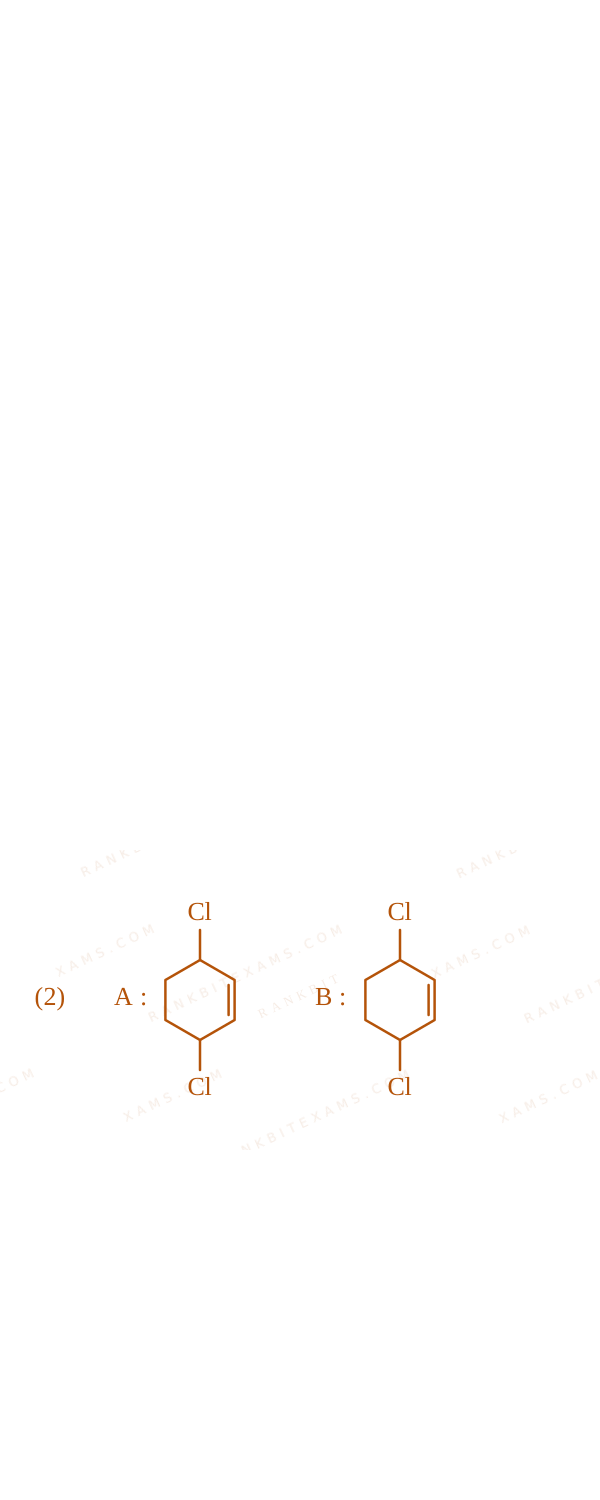
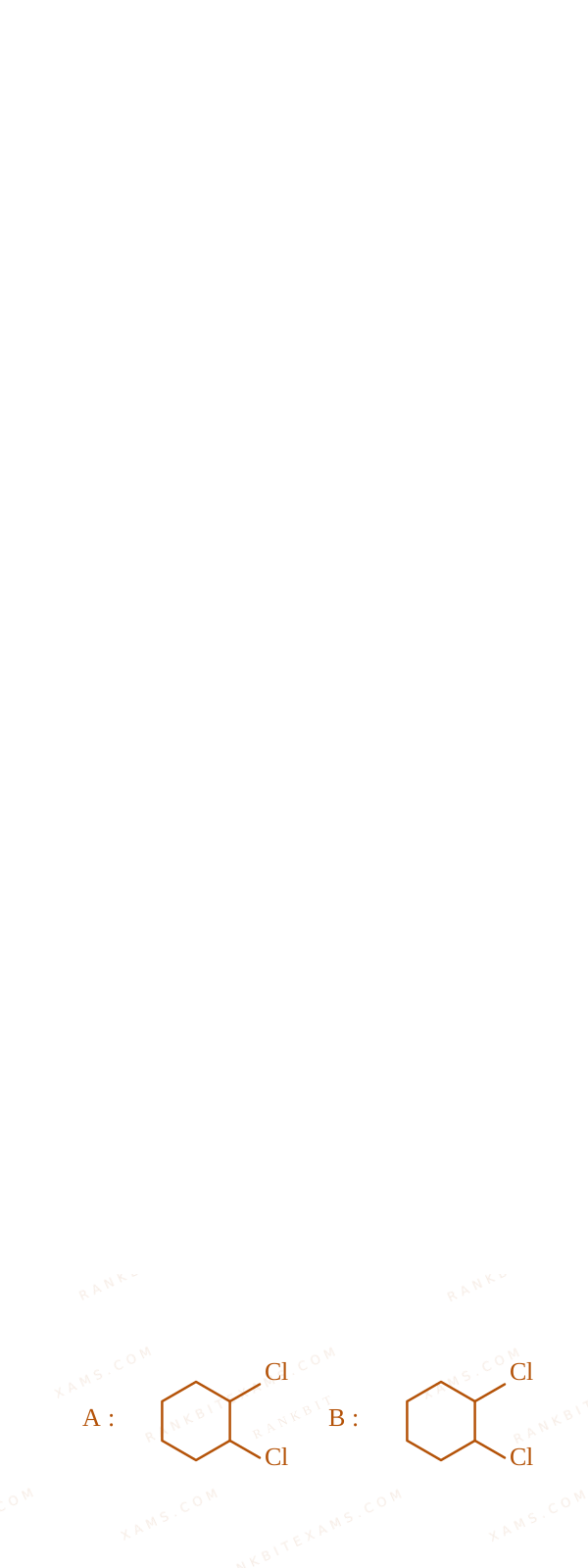
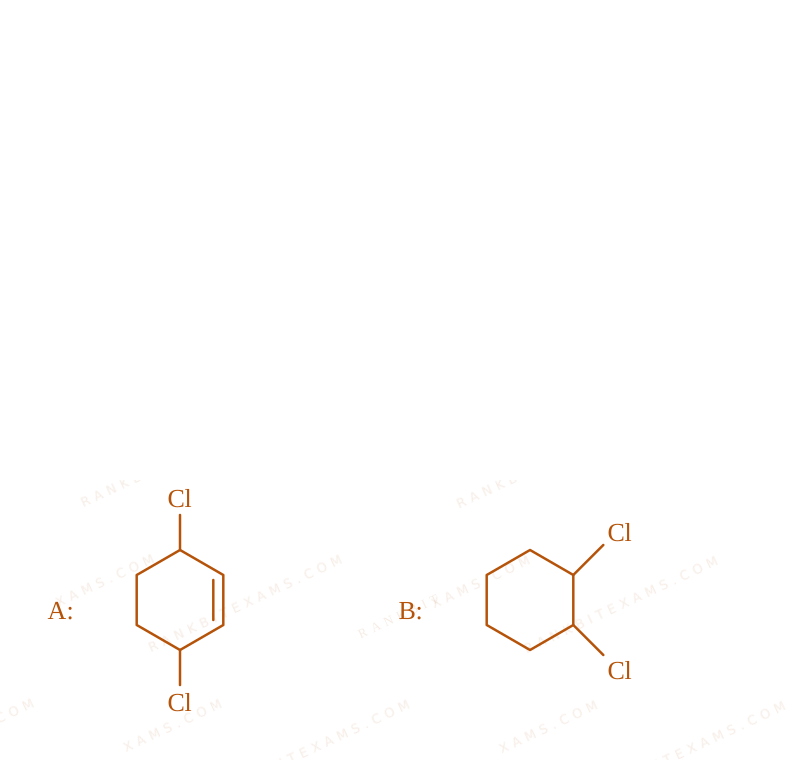

Identify product A and product B :
Addition Reactions of Alkenes diagram for Q71 - JEE Main 2024 Morning
Cyclohexene undergoing chlorination under two different conditions: light (hv) and dark with CCl4 solvent.

Solution & Explanation

### Core Logic The substrate is cyclohexene, which can undergo two distinct types of reactions with chlorine (Cl_2) depending on the reaction conditions. **Reaction 1: Condition hv (Product A)** In the presence of light (hnu) or high temperature, halogens undergo homolytic cleavage to generate free radicals. This triggers allylic substitution (a free radical substitution mechanism). The allylic position is targeted because the resulting allylic free radical is resonance stabilized. Thus, substitution occurs at the carbon adjacent to the double bond, yielding 3-chlorocyclohexene as Product A. **Reaction 2: Condition CCl_4 (Product B)** In the presence of a non-polar solvent like CCl_4 and without light/heat, Cl_2 undergoes an electrophilic addition reaction across the carbon-carbon double bond. A cyclic chloronium ion intermediate is formed, leading to anti-addition of two chlorine atoms. This yields 1,2-dichlorocyclohexane as Product B. ### Step 1: Structures of A and B
Addition Reactions of Alkenes diagram for Q71 - JEE Main 2024 Morning
Cyclohexene undergoing chlorination under two different conditions: light (hv) and dark with CCl4 solvent.
Product A preserves the double bond and substitutes a Cl at the allylic position. Product B loses the double bond and adds two Cl atoms adjacently. ### Pattern Recognition X_2 + light (hnu) = Free radical Allylic Substitution. X_2 + dark/solvent (CCl_4) = Electrophilic Addition across double bond. ### Evaluation Rubric / Model Answer null ### Chapter Mix Class 11 Chemistry: Hydrocarbons Class 12 Chemistry: Haloalkanes and Haloarenes

Reference Study Guides

More Hydrocarbons Previous-Year Questions — Page 5

Q84 jee_main_2024_31_jan_evening Halogenation of Alkanes (Isomers)
Number of isomeric products formed by mono-chlorination of 2-methylbutane in presence of sunlight is ________
Numerical Answer. Answer: 6 to 6

Solution

### Core Logic The structure of 2-methylbutane is CH_3-CH(CH_3)-CH_2-CH_3. It has four different types of hydrogen atoms, which can be substituted to form structural isomers: 1) 1-chloro-2-methylbutane: Chlorination at terminal CH_3 near branch. Yields a chiral center at C2 (2 enantiomers). 2) 2-chloro-2-methylbutane: Chlorination at the tertiary carbon (1 achiral product). 3) 2-chloro-3-methylbutane: Chlorination at the CH_2 group. Yields a chiral center at C2 (2 enantiomers). 4) 1-chloro-3-methylbutane: Chlorination at the far terminal CH_3. No chiral center (1 achiral product).
Halogenation of Alkanes (Isomers) diagram for Q84 - JEE Main 2024 Evening
### Step 1: Counting Stereoisomers Total isomeric products = 2 (from 1st) + 1 (from 2nd) + 2 (from 3rd) + 1 (from 4th) = 6. ### Pattern Recognition When asked for "isomeric products" in halogenation without specifying "structural isomers", you must count stereoisomers (enantiomers) as well. ### Evaluation Rubric / Model Answer null ### Chapter Mix Class 11 Chemistry: Hydrocarbons Class 12 Chemistry: Haloalkanes and Haloarenes
Q87 jee_main_2024_31_jan_morning Kolbe's Electrolysis
Number of alkanes obtained on electrolysis of a mixture of CH_3COONa and C_2H_5COONa is
Numerical Answer. Answer: 3 to 3

Solution

### Core Logic Kolbe's electrolytic method generates free radicals at the anode, which then combine to form alkanes. The given mixture yields two types of carboxylate radicals which decarboxylate to form alkyl radicals: CH_3COONa rightarrow dotCH_3 C_2H_5COONa rightarrow dotC_2H_5 These radicals can couple in three different ways: 1. Cross coupling: dotCH_3 + dotC_2H_5 rightarrow CH_3-CH_2-CH_3 (Propane) 2. Self-coupling 1: dotCH_3 + dotCH_3 rightarrow CH_3-CH_3 (Ethane) 3. Self-coupling 2: dotC_2H_5 + dotC_2H_5 rightarrow CH_3-CH_2-CH_2-CH_3 (Butane) Thus, a total of 3 different alkanes are formed. ### Evaluation Rubric / Model Answer null ### Chapter Mix Class 11 Chemistry: Hydrocarbons

More Hydrocarbons Questions — jee_main_2024_29_jan_morning

Practice all Hydrocarbons previous-year questions →

Rankbit System
JEE Physics: Waves (+15.5%) | Electrostatics: Concentric Shells (-29.7%) | Modern Physics: Photoelectric Clones (+34.2%) | Mathematics: Definite Integrals (+18.1%) | Chemistry: Coordination Splitting (-11.4%) | JEE Physics: Waves (+15.5%) | Electrostatics: Concentric Shells (-29.7%) | Modern Physics: Photoelectric Clones (+34.2%) | Mathematics: Definite Integrals (+18.1%) | Chemistry: Coordination Splitting (-11.4%)