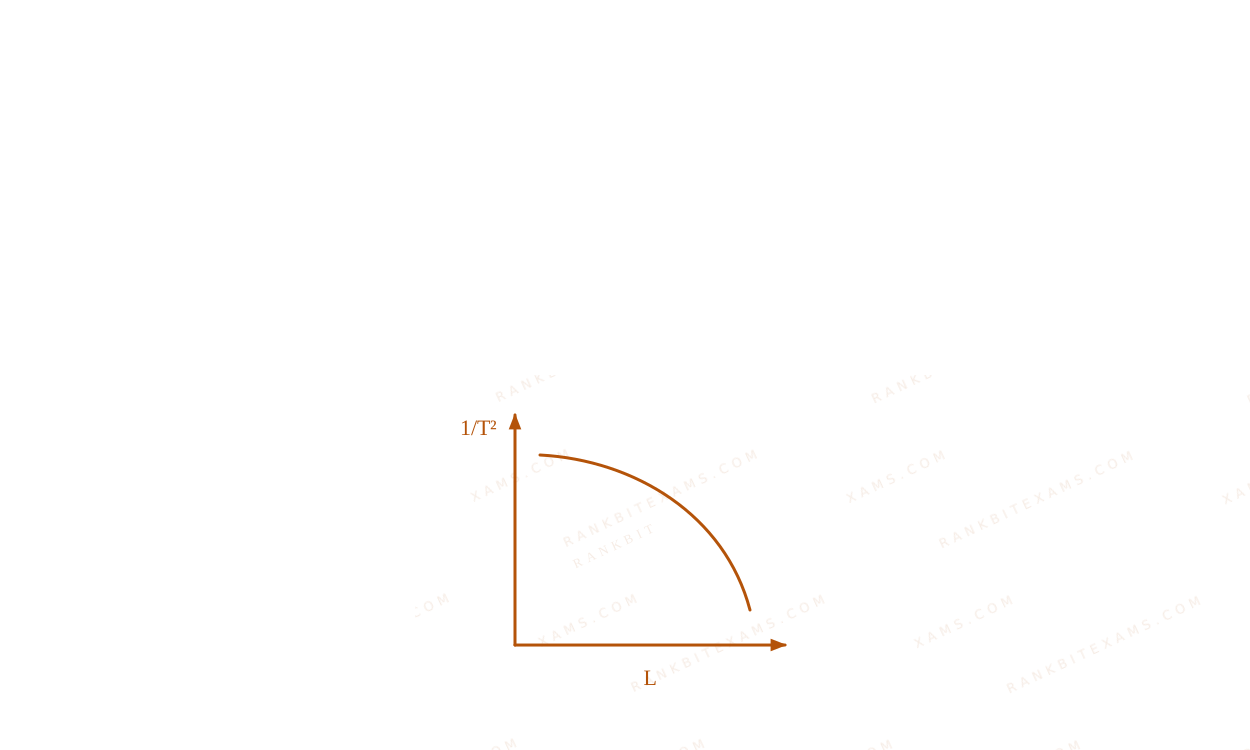
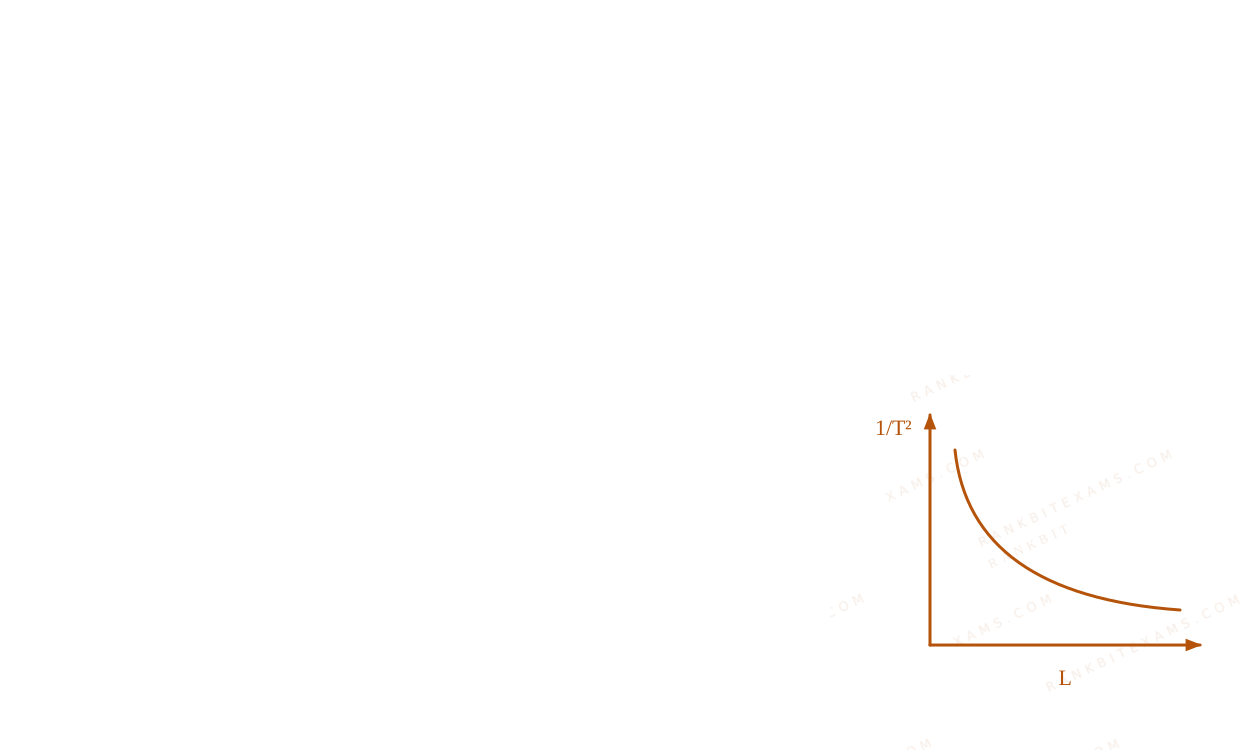
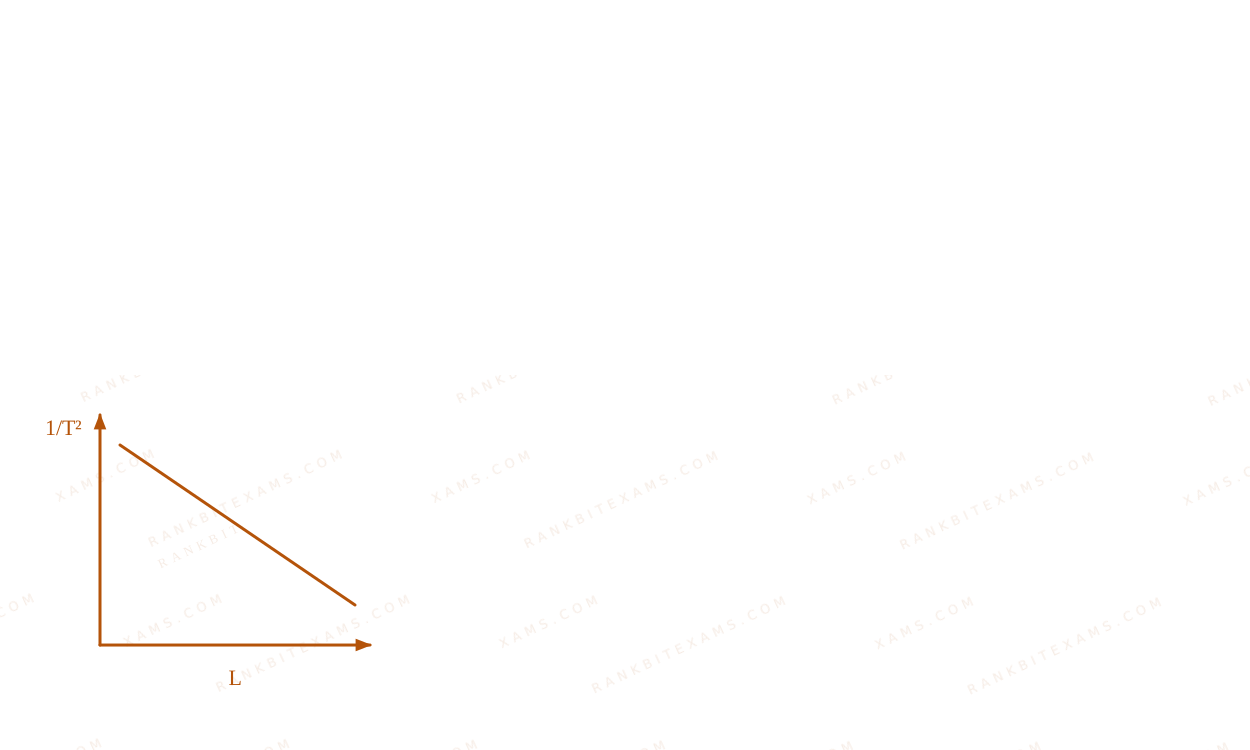
Using a simple pendulum experiment g is determined by measuring its time period T. Which of the following plots represent the correct relation between the pendulum length L and time period T?

Solution & Explanation

### Related Formula T = 2pi sqrtfracLg ### Core Logic Squaring both sides of the simple pendulum equation: T^2 = frac4pi^2 Lg Inverting T^2 to express 1/T^2 as a function of length L: frac1T^2 = fracg4pi^2 L This demonstrates that frac1T^2 propto frac1L. The relationship between 1/T^2 and L represents a rectangular hyperbola curve decreasing asymptotically.
Simple Pendulum 1/T^2 vs L graph for Q27 - JEE Main 2026 Evening
### Step 1: Final Conclusion Plot (2) correctly depicts the rectangular hyperbola curve for frac1T^2 versus L. ### Pattern Recognition Sees: Graph of 1/T^2 vs L. Formula check: T propto sqrtL implies T^2 propto L implies 1/T^2 propto 1/L, which is inversely proportional (hyperbolic curve). ### Evaluation Rubric / Model Answer null ### Chapter Mix Class 11 Physics: Simple Harmonic Motion

Reference Study Guides

More Simple Harmonic Motion Previous-Year Questions

Q jee_main_2025_02_april_morning Superposition of SHMs
A particle is subjected to two simple harmonic motions as: x_1 = sqrt7sin 5tmathrm~cm and x_2 = 2sqrt7sinleft(5t + fracpi3right)mathrm~cm where x is displacement and t is time in seconds. The maximum acceleration of the particle is x times 10^-2mathrm~ms^-2. The value of x is:
  • A. 175
  • B. 25sqrt7
  • C. 5sqrt7
  • D. 125

Solution

### Related Formula A = sqrtA_1^2 + A_2^2 + 2 A_1 A_2 cosphi a_max = omega^2 A ### Core Logic Both SHMs share the same frequency omega = 5mathrm~rad/s with phase difference phi = fracpi3. Amplitudes: A_1 = sqrt7mathrm~cm, A_2 = 2sqrt7mathrm~cm. The combined amplitude is: A = sqrt(sqrt7)^2 + (2sqrt7)^2 + 2(sqrt7)(2sqrt7)cosleft(fracpi3right) A = sqrt7 + 28 + 2(7)(2)left(frac12right) = sqrt35 + 14 = sqrt49 = 7mathrm~cm Converting to meters: A = 0.07mathrm~m The maximum acceleration is: a_max = omega^2 A = (5)^2 times 0.07 = 25 times 0.07 = 1.75mathrm~ms^-2 Equating to x times 10^-2mathrm~ms^-2: 1.75 = x times 10^-2 implies x = 175 ### Step 1: Final Conclusion The value of x is 175. ### Pattern Recognition When superposing two SHMs of identical frequency, use the standard phasor addition formula to obtain the combined amplitude A. Then compute maximum velocity v_max = omega A or maximum acceleration a_max = omega^2 A directly. ### Evaluation Rubric / Model Answer null ### Chapter Mix Class 11 Physics: Simple Harmonic Motion
Rankbit System
JEE Physics: Waves (+15.5%) | Electrostatics: Concentric Shells (-29.7%) | Modern Physics: Photoelectric Clones (+34.2%) | Mathematics: Definite Integrals (+18.1%) | Chemistry: Coordination Splitting (-11.4%) | JEE Physics: Waves (+15.5%) | Electrostatics: Concentric Shells (-29.7%) | Modern Physics: Photoelectric Clones (+34.2%) | Mathematics: Definite Integrals (+18.1%) | Chemistry: Coordination Splitting (-11.4%)