
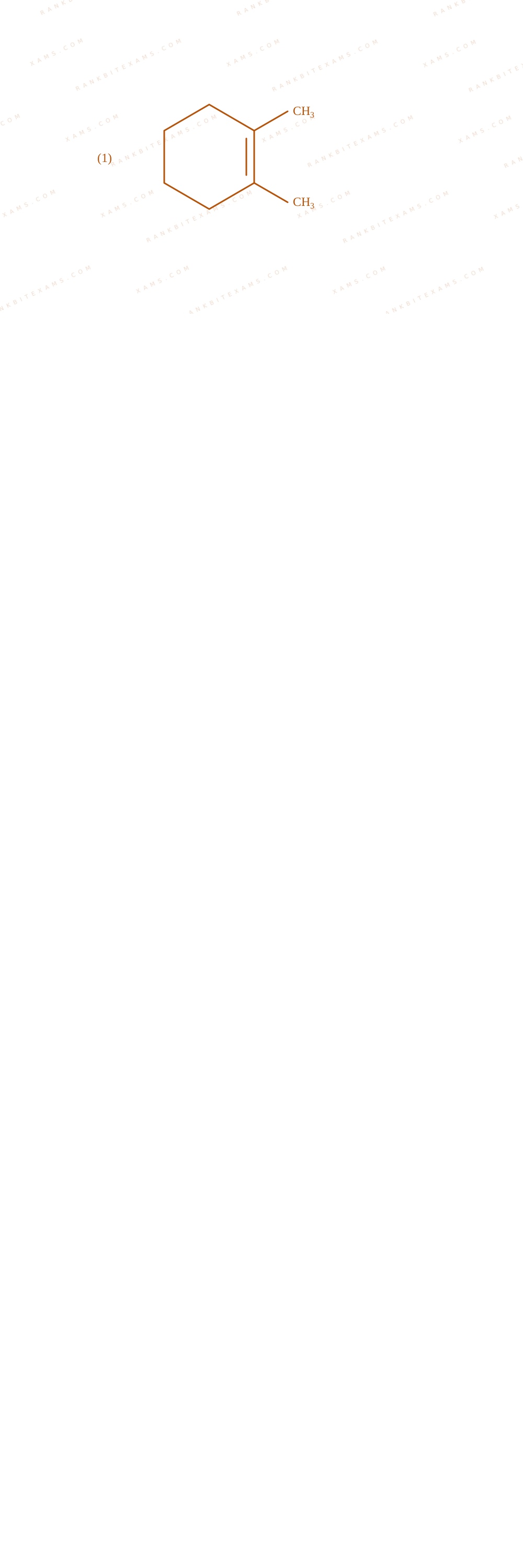

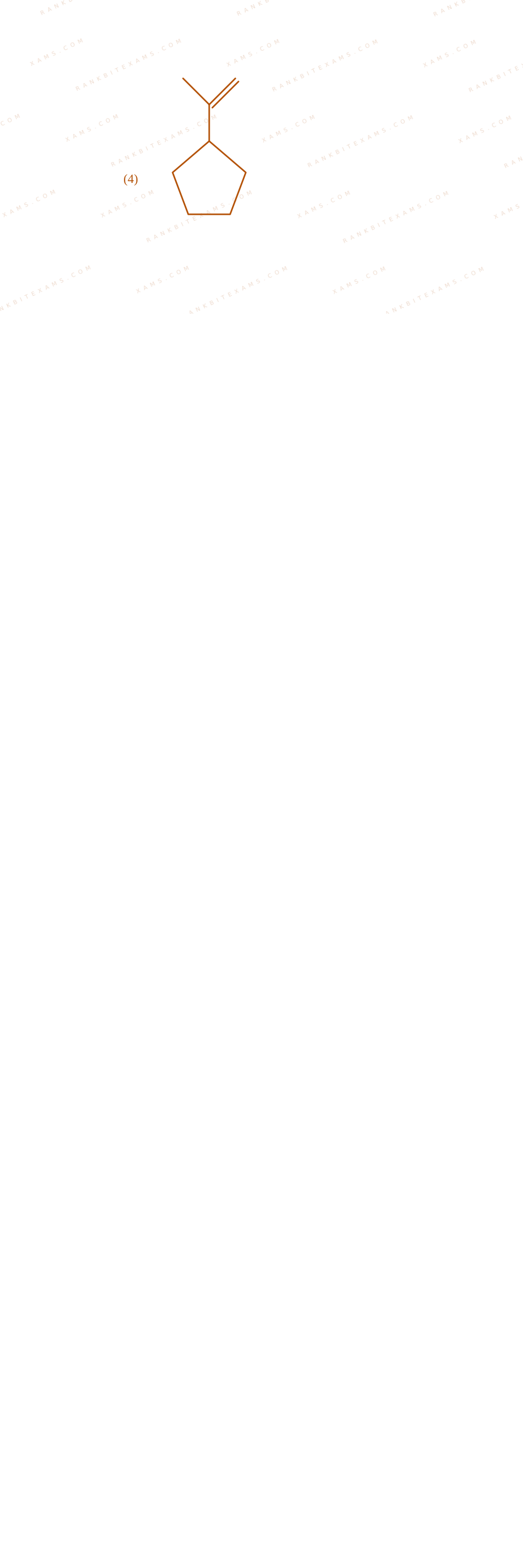


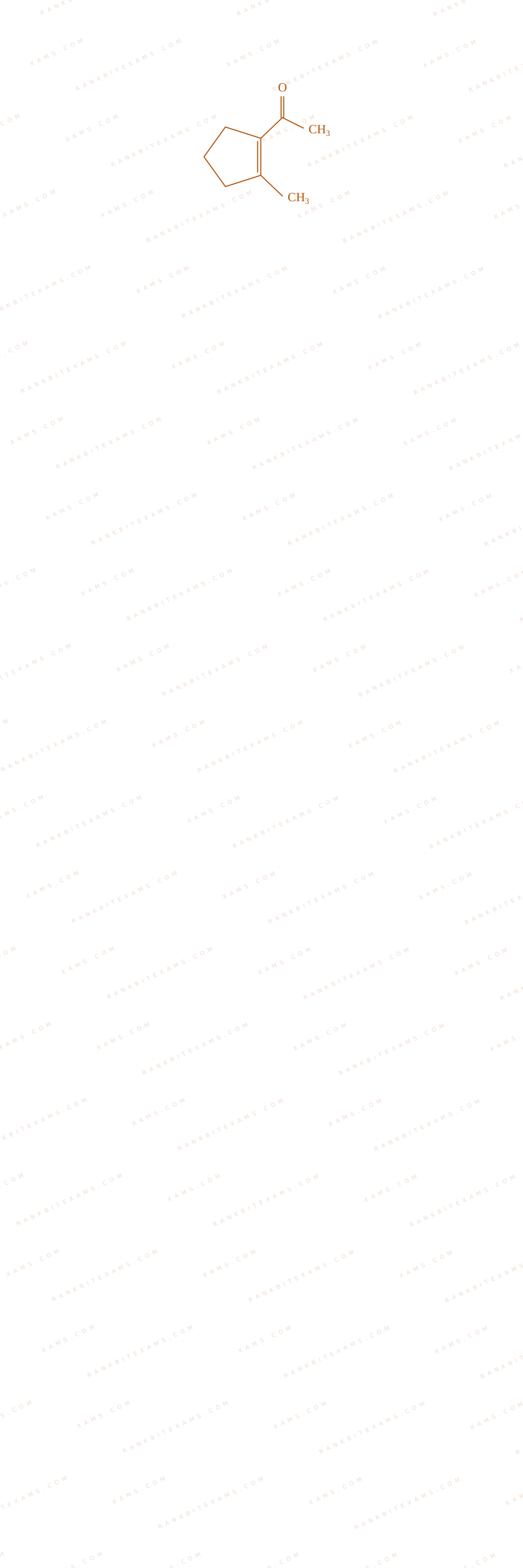
A molecule ("P") on treatment with acid undergoes rearrangement and gives ("Q") ("Q") on ozonolysis followed by reflux under alkaline condition gives ("R"). The structure of ("R") is given below:
Rearrangement and Ozonolysis product diagram for Q33 - JEE Main 2025 Morning
The image displays the chemical structure of product R obtained from rearrangement and subsequent reaction steps.
The structure of (mathbfPi^prime primemathbfP^prime prime) is

Solution & Explanation

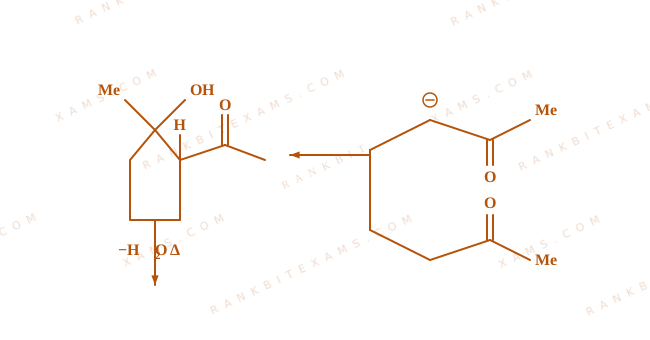
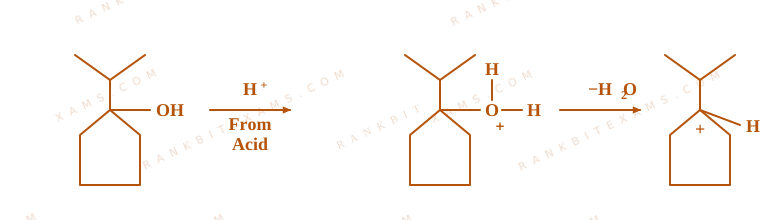
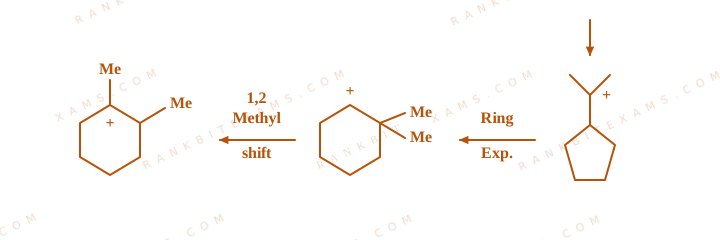
### Core Logic The reaction sequence indicates that molecule "P" undergoes an acid-catalyzed rearrangement to produce alkene/alcohol intermediate "Q". Subsequent ozonolysis breaks down the double bond system, and alkaline reflux sets up an intramolecular aldol condensation sequence to form the cyclic ketone system "R". Following the detailed ring contraction/expansion step templates outlined below:
Mechanism sequence step for Q33 - JEE Main 2025 Morning
The image displays the chemical structure of product R obtained from rearrangement and subsequent reaction steps.
Mechanism sequence step for Q33 - JEE Main 2025 Morning
The image displays the chemical structure of product R obtained from rearrangement and subsequent reaction steps.
Mechanism sequence step for Q33 - JEE Main 2025 Morning
The image displays the chemical structure of product R obtained from rearrangement and subsequent reaction steps.
Mechanism sequence step for Q33 - JEE Main 2025 Morning
The image displays the chemical structure of product R obtained from rearrangement and subsequent reaction steps.
Mechanism sequence step for Q33 - JEE Main 2025 Morning
The image displays the chemical structure of product R obtained from rearrangement and subsequent reaction steps.
Mechanism sequence step for Q33 - JEE Main 2025 Morning
The image displays the chemical structure of product R obtained from rearrangement and subsequent reaction steps.
Mechanism sequence step for Q33 - JEE Main 2025 Morning
The image displays the chemical structure of product R obtained from rearrangement and subsequent reaction steps.
Mechanism sequence step for Q33 - JEE Main 2025 Morning
The image displays the chemical structure of product R obtained from rearrangement and subsequent reaction steps.
### Pattern Recognition Sees: Acidic rearrangement rightarrow ozonolysis rightarrow intramolecular aldol condensation. Shortcut: Work backwards from the dicarbonyl fragments formed after opening the final product ring system. ### Evaluation Rubric / Model Answer null ### Chapter Mix Class 12 Chemistry: Aldehydes, Ketones and Carboxylic Acids
Reference Study Guides

More Aldehydes, Ketones and Carboxylic Acids Previous-Year Questions — Page 7

Q87 jee_main_2024_30_jan_morning Nucleophilic Addition Reactions
The compound formed by the reaction of ethanal with semicarbazide contains ________ number of nitrogen atoms.
Numerical Answer. Answer: 3 to 3

Solution

### Related Formula CH_3-CHO + H_2N-NH-CO-NH_2 rightarrow CH_3-CH=N-NH-CO-NH_2 + H_2O ### Core Logic Ethanal (CH_3CHO) reacts with semicarbazide (H_2N-NH-CO-NH_2) via nucleophilic addition followed by elimination of water to form a semicarbazone. ### Step 1: Product Analysis The product is Ethanal semicarbazone: CH_3-CH=N-NH-CO-NH_2. Counting the nitrogen atoms in this structure: 1. The imine nitrogen (=N-) 2. The amine nitrogen (-NH-) 3. The amide nitrogen (-NH_2) Total = 3 Nitrogen atoms. ### Evaluation Rubric / Model Answer null ### Chapter Mix Class 12 Chemistry: Aldehydes, Ketones and Carboxylic Acids
Q73 jee_main_2024_31_jan_evening Preparation of Aldehydes and Ketones
Identify the name reaction.
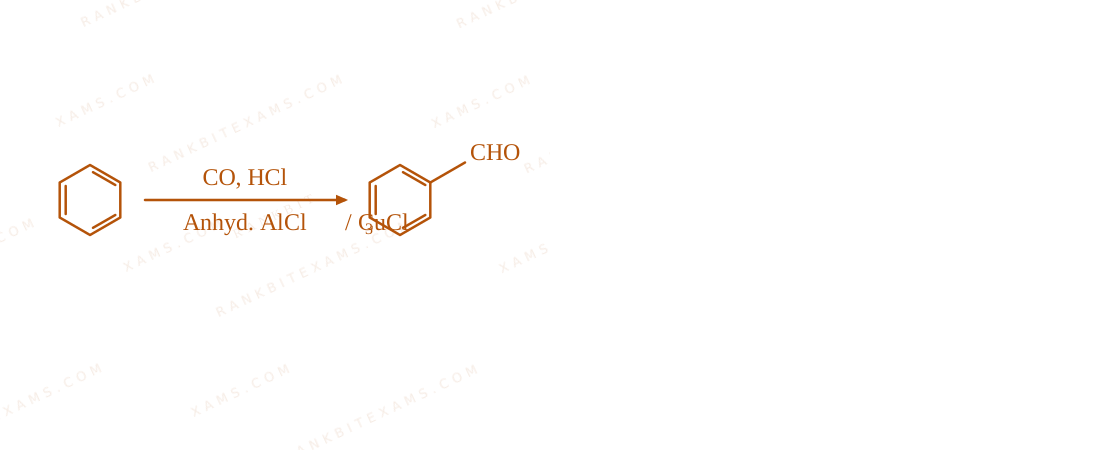
Preparation of Aldehydes and Ketones diagram for Q73 - JEE Main 2024 Evening
The image shows the conversion of benzene to benzaldehyde using CO, HCl, and Anhydrous AlCl3/CuCl.
  • A. text(1) Stephen reaction
  • B. text(2) Etard reaction
  • C. text(3) Gatterman-koch reaction
  • D. text(4) Rosenmund reduction

Solution

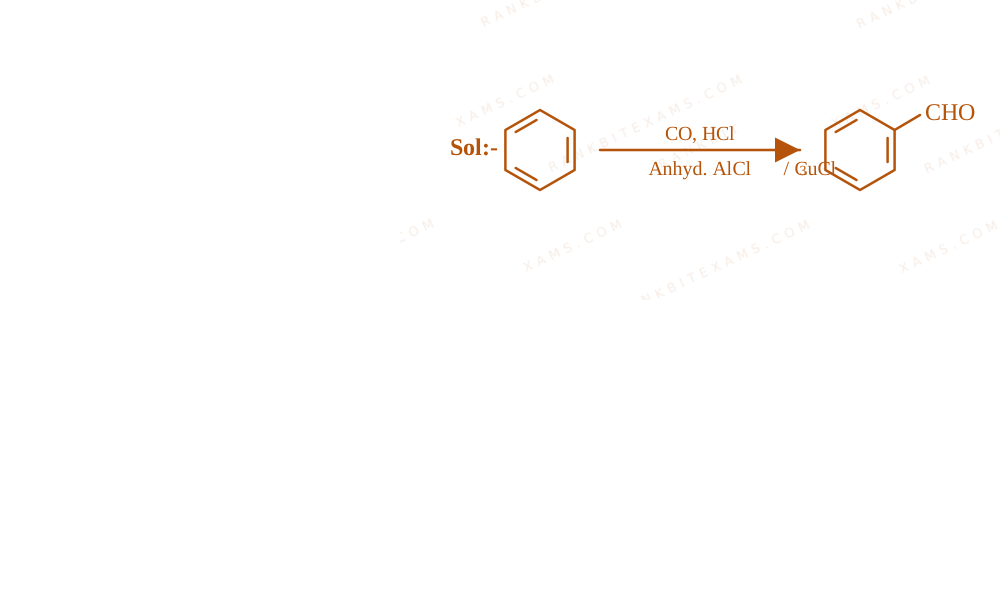
### Core Logic The reaction of benzene with carbon monoxide (CO) and hydrogen chloride (HCl) in the presence of anhydrous aluminium chloride (AlCl_3) and cuprous chloride (CuCl) to give benzaldehyde is known as the Gatterman-Koch reaction.
Preparation of Aldehydes and Ketones diagram for Q73 - JEE Main 2024 Evening
The image shows the conversion of benzene to benzaldehyde using CO, HCl, and Anhydrous AlCl3/CuCl.
### Pattern Recognition CO + HCl rightarrow Formyl chloride intermediate (in situ) with Lewis acid rightarrow formylation of benzene. This is definitively the Gatterman-Koch formylation. ### Evaluation Rubric / Model Answer null ### Chapter Mix Class 12 Chemistry: Aldehydes, Ketones and Carboxylic Acids
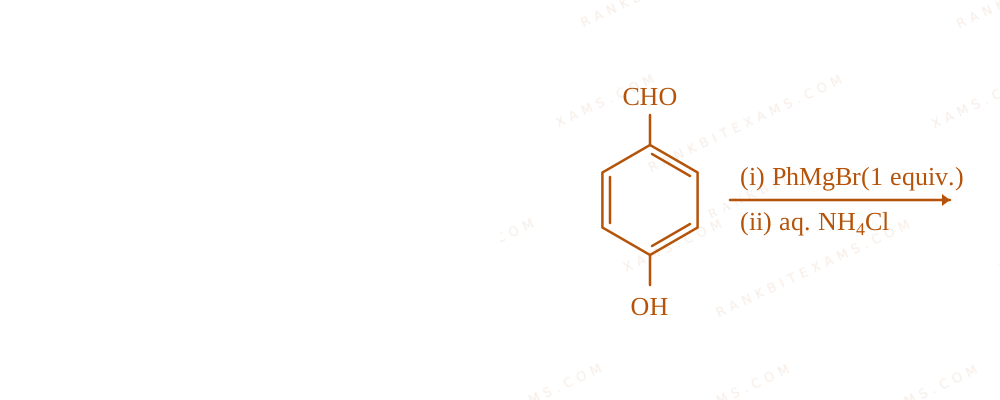
Q84 jee_main_2024_31_jan_morning Reactions with Grignard Reagent
The product of the following reaction is P.
Reactions with Grignard Reagent diagram for Q84 - JEE Main 2024 Morning
The image shows p-hydroxybenzaldehyde reacting with one equivalent of PhMgBr followed by aqueous ammonium chloride.
The number of hydroxyl groups present in the product P is
Numerical Answer. Answer: 0 to 0

Solution

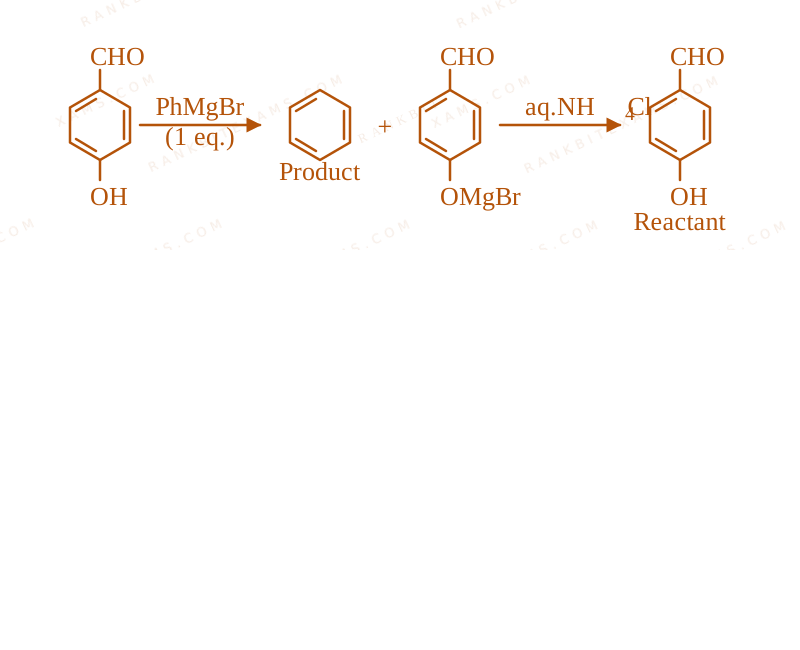
### Core Logic The given reactant is p-hydroxybenzaldehyde, which contains both a phenolic -OH group (acidic) and an aldehyde group (electrophilic). When one equivalent of Grignard reagent (PhMgBr) is added, it behaves primarily as a strong base due to the presence of an acidic proton. Acid-base reactions are extremely fast compared to nucleophilic additions. The acidic phenolic -OH reacts with PhMgBr: PhMgBr + HO-C_6H_4-CHO rightarrow Ph-H (Benzene) + BrMg-O-C_6H_4-CHO Upon workup with aq. NH_4Cl, the phenoxide ion simply regenerates the starting p-hydroxybenzaldehyde. However, the question asks for the number of hydroxyl groups present in the formed product (Benzene).
Reactions with Grignard Reagent diagram for Q84 - JEE Main 2024 Morning
The image shows p-hydroxybenzaldehyde reacting with one equivalent of PhMgBr followed by aqueous ammonium chloride.
The distinct product formed in the reaction is Benzene. Benzene has 0 hydroxyl groups. ### Pattern Recognition Whenever a Grignard reagent encounters a molecule with an acidic hydrogen (alcohol, phenol, amine, alkyne), it will invariably act as a base first. If only 1 equivalent is used, nucleophilic addition to carbonyls will NOT happen. ### Evaluation Rubric / Model Answer null ### Chapter Mix Class 12 Chemistry: Aldehydes, Ketones and Carboxylic Acids Class 12 Chemistry: Alcohols, Phenols and Ethers
More Aldehydes, Ketones and Carboxylic Acids Questions — jee_main_2025_28_jan_morning

Practice all Aldehydes, Ketones and Carboxylic Acids previous-year questions →

Rankbit System
JEE Physics: Waves (+15.5%) | Electrostatics: Concentric Shells (-29.7%) | Modern Physics: Photoelectric Clones (+34.2%) | Mathematics: Definite Integrals (+18.1%) | Chemistry: Coordination Splitting (-11.4%) | JEE Physics: Waves (+15.5%) | Electrostatics: Concentric Shells (-29.7%) | Modern Physics: Photoelectric Clones (+34.2%) | Mathematics: Definite Integrals (+18.1%) | Chemistry: Coordination Splitting (-11.4%)