
JEE Main · Chemistry → Steady

Aldehydes, Ketones and Carboxylic Acids appeared 46 times across 3 years — 5.4% of Chemistry. This question is from Rearrangement and Ozonolysis.

Year 2026 2025 2024 Total
Questions 14 21 11 46

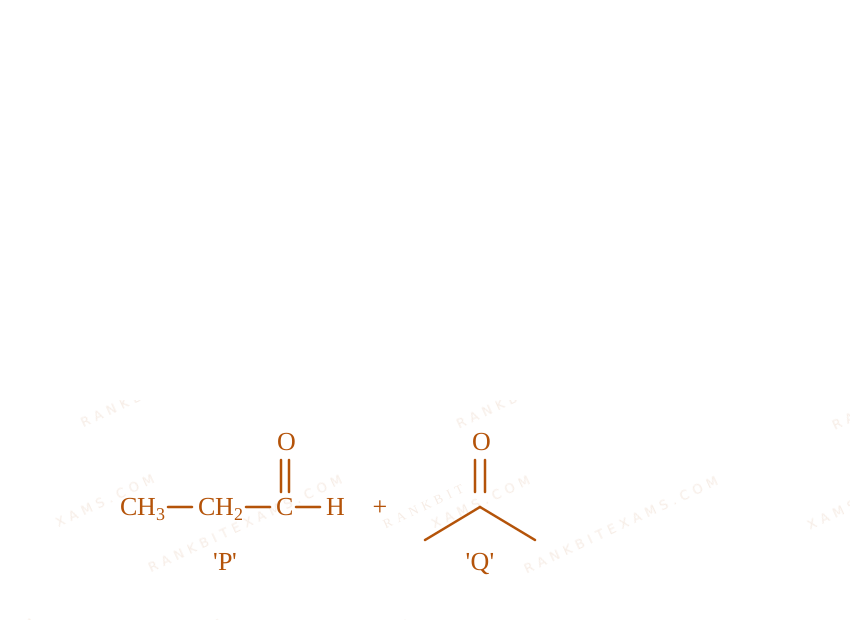
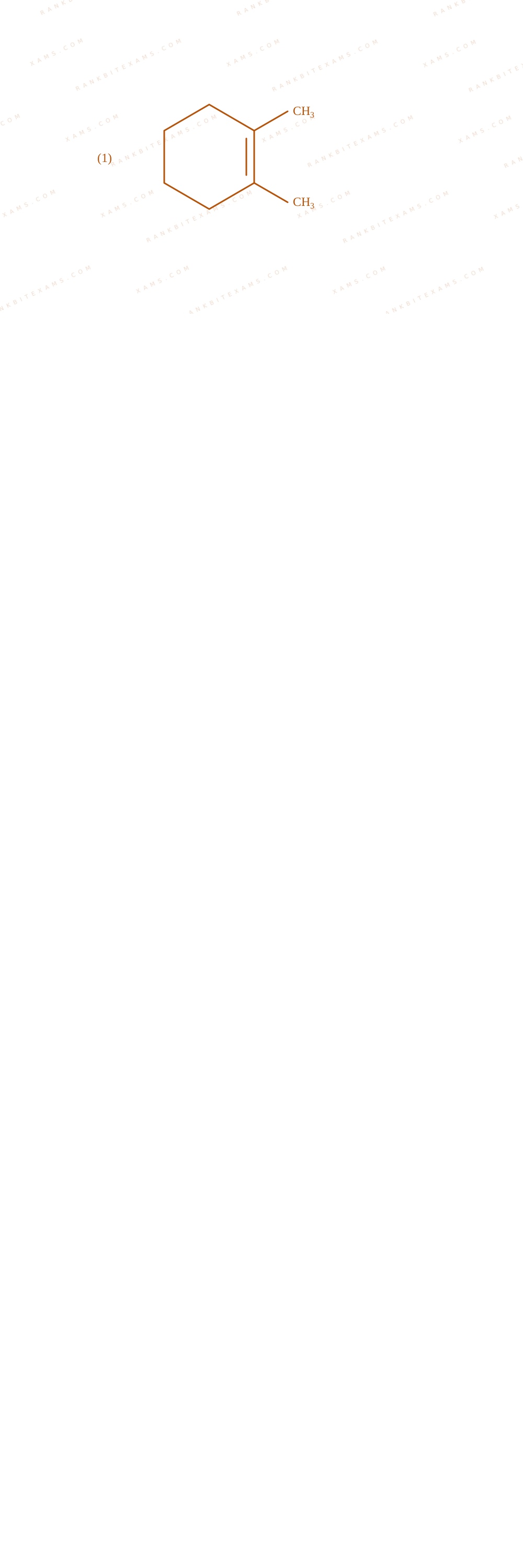
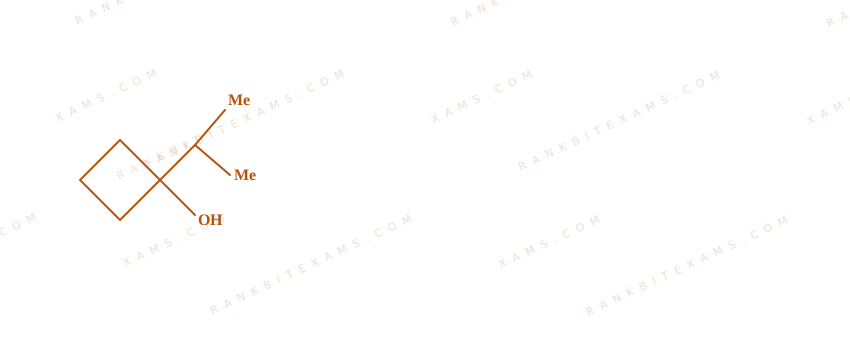
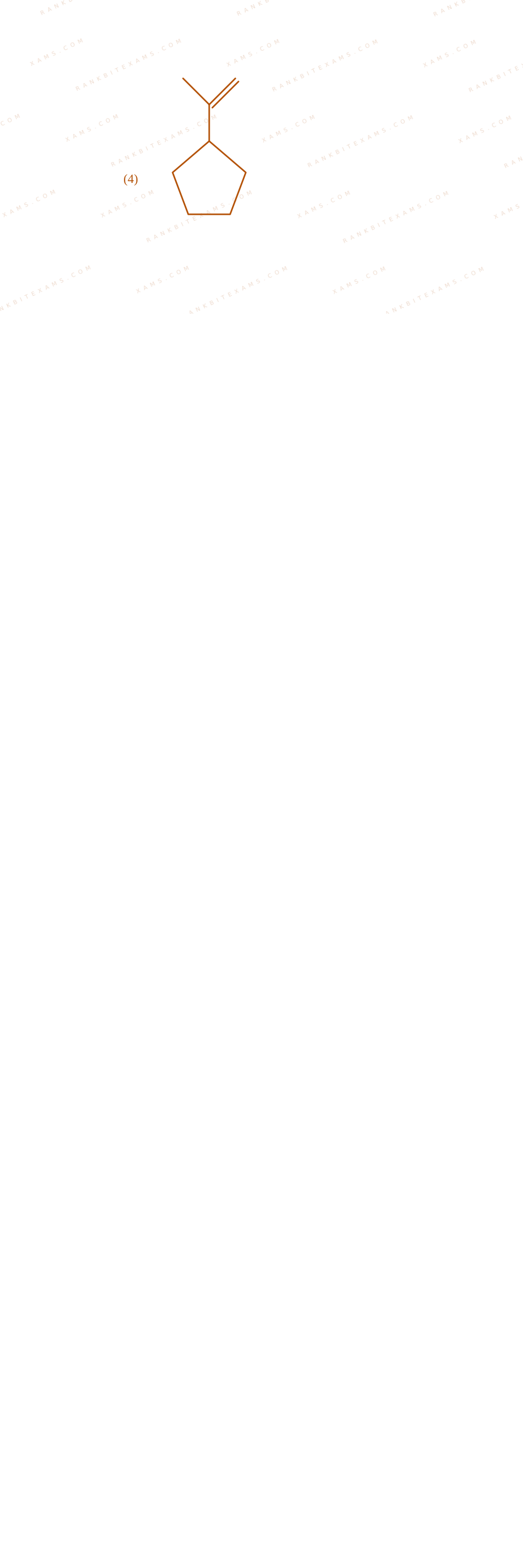
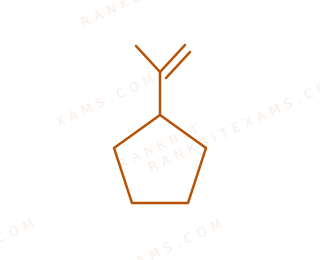
A molecule ("P") on treatment with acid undergoes rearrangement and gives ("Q") ("Q") on ozonolysis followed by reflux under alkaline condition gives ("R"). The structure of ("R") is given below:
Rearrangement and Ozonolysis product diagram for Q33 - JEE Main 2025 Morning
The image displays the chemical structure of product R obtained from rearrangement and subsequent reaction steps.
The structure of (P) is

Solution & Explanation

Core Logic

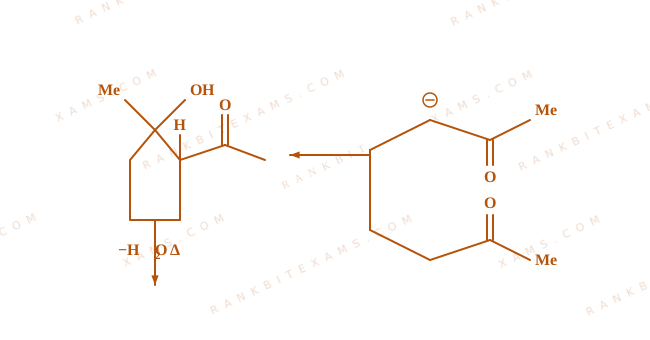
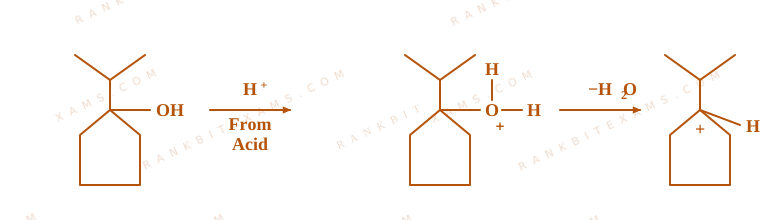
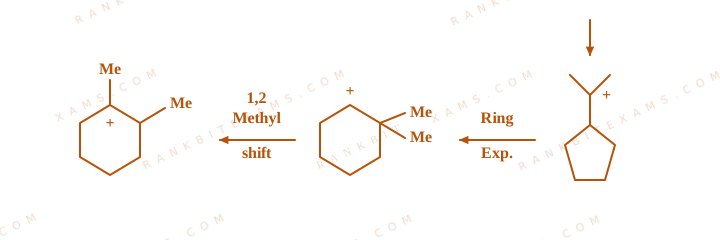
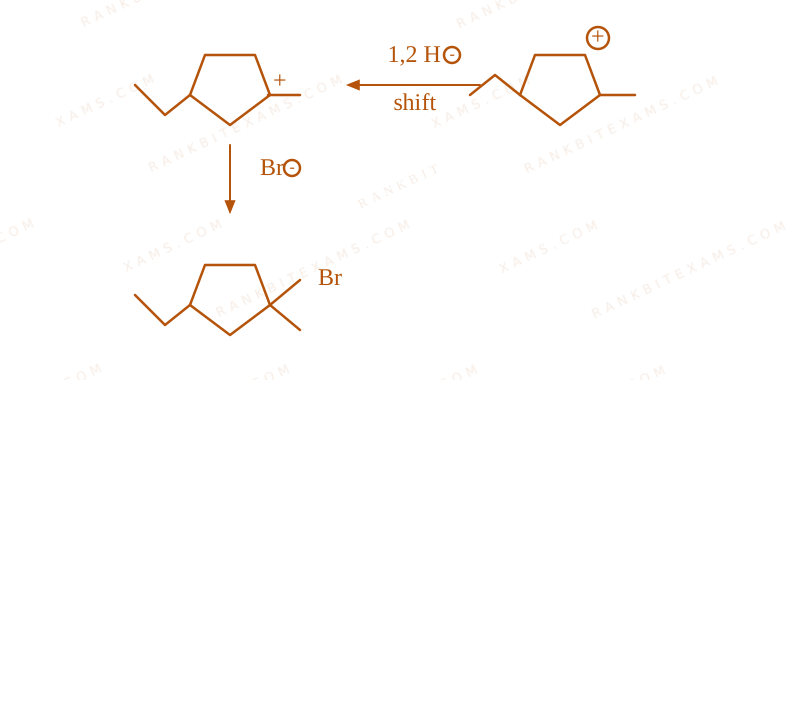
The reaction sequence indicates that molecule "P" undergoes an acid-catalyzed rearrangement to produce alkene/alcohol intermediate "Q". Subsequent ozonolysis breaks down the double bond system, and alkaline reflux sets up an intramolecular aldol condensation sequence to form the cyclic ketone system "R". Following the detailed ring contraction/expansion step templates outlined below:

Mechanism sequence step for Q33 - JEE Main 2025 Morning
The image displays the chemical structure of product R obtained from rearrangement and subsequent reaction steps.

Mechanism sequence step for Q33 - JEE Main 2025 Morning
The image displays the chemical structure of product R obtained from rearrangement and subsequent reaction steps.

Mechanism sequence step for Q33 - JEE Main 2025 Morning
The image displays the chemical structure of product R obtained from rearrangement and subsequent reaction steps.

Mechanism sequence step for Q33 - JEE Main 2025 Morning
The image displays the chemical structure of product R obtained from rearrangement and subsequent reaction steps.

Mechanism sequence step for Q33 - JEE Main 2025 Morning
The image displays the chemical structure of product R obtained from rearrangement and subsequent reaction steps.

Mechanism sequence step for Q33 - JEE Main 2025 Morning
The image displays the chemical structure of product R obtained from rearrangement and subsequent reaction steps.

Mechanism sequence step for Q33 - JEE Main 2025 Morning
The image displays the chemical structure of product R obtained from rearrangement and subsequent reaction steps.

Mechanism sequence step for Q33 - JEE Main 2025 Morning
The image displays the chemical structure of product R obtained from rearrangement and subsequent reaction steps.

Pattern Recognition

Sees: Acidic rearrangement arrow ozonolysis arrow intramolecular aldol condensation. Shortcut: Work backwards from the dicarbonyl fragments formed after opening the final product ring system.

Chapter Mix

Class 12 Chemistry: Aldehydes, Ketones and Carboxylic Acids

More Aldehydes, Ketones and Carboxylic Acids Previous-Year Questions — Page 2

Q56 jee_main_2026_23_january_morning Aldol Condensation and Ozonolysis
‘x’ is the product which is obtained from propanenitrile and stannous chloride in the presence of hydrochloric acid followed by hydrolysis. ‘y’ is the product which is obtained from the but-2-ene by the ozonolysis followed by hydrolysis. From the following, which product is not obtained when one mole of ‘x’ and one mole of ‘y’ react with each other in the presence of alkali followed by heating?
  • A. 2-Methylbut-2-enal
  • B. Pent-2-enal
  • C. 2-Methylpent-2-enal
  • D. 3-Methylbut-2-enal

Solution

Core Logic

First, identify products 'x' and 'y' based on the given name reactions.

Reaction 1: Stephen's Reduction Propanenitrile (CH₃-CH₂-C≡ N) reacts with SnCl₂ / HCl followed by H₃O^+ to give propanal. CH₃-CH₂-CHO is product (X).

Reaction 2: Reductive Ozonolysis But-2-ene (CH₃-CH=CH-CH₃) undergoes ozonolysis to give two moles of ethanal. CH₃-CHO is product (Y).

Step 1: Cross-Aldol Condensation

Reacting (X) and (Y) in alkali with heat leads to a cross-aldol condensation producing a mixture of four α,β-unsaturated aldehydes (two self-aldol and two cross-aldol products).

Reactants: CH₃-CH₂-CHO and CH₃-CHO

Step 2: Finding Products

Possible aldol condensation products:

  • Ethanal + Ethanal (Self) arrow But-2-enal
  • Propanal + Propanal (Self) arrow 2-Methylpent-2-enal
  • Ethanal (Enolate) + Propanal (Electrophile) arrow Pent-2-enal
  • Propanal (Enolate) + Ethanal (Electrophile) arrow 2-Methylbut-2-enal
  • Comparing with the given options, 3-Methylbut-2-enal is NOT formed.

Pattern Recognition

To quickly identify cross-aldol products, simply remove two α-hydrogens from one molecule and the carbonyl oxygen from the other, then connect them with a double bond.

Chapter Mix

Class 12 Chemistry: Aldehydes Ketones and Carboxylic Acids Class 11 Chemistry: Hydrocarbons
Q58 jee_main_2026_23_january_evening Iodoform Reaction
Iodoform Reaction diagram for Q58 - JEE Main 2026 Evening
Chemical structures related to the options provided for the iodoform differentiation test.
Iodoform test can differentiate between A. Methanol and Ethanol B. CH₃COOH and CH₃CH₂COOH C. Cyclohexene and cyclohexanone D. Diethyl ether and Pentan-3-one E. Anisole and acetone Choose the correct answer from the options given below:
  • A. A & E only
  • B. A & D only
  • C. A, B & E only
  • D. B, C & E only

Solution

Related Formula
R-CO-CH₃ NaOH + I₂ R-COONa + CHI₃ (Yellow ppt) R-CH(OH)-CH₃ NaOH + I₂ R-COONa + CHI₃ (Yellow ppt)
Core Logic

The iodoform test gives a positive result for compounds containing a methyl ketone group (-CO-CH₃) or a secondary alcohol with an adjacent methyl group (-CH(OH)-CH₃), which gets oxidized to a methyl ketone under the reaction conditions.

A. Methanol vs Ethanol: Ethanol (CH₃CH₂OH) contains the -CH(OH)-CH₃ terminal structure and gives a positive test. Methanol (CH₃OH) does not. (Can differentiate) B. Neither CH₃COOH nor CH₃CH₂COOH gives the iodoform test since carboxylic acids do not undergo this reaction despite having a terminal methyl in acetic acid. (Cannot differentiate) C. Neither cyclohexene nor cyclohexanone has a methyl group adjacent to the carbonyl/alcohol carbon. (Cannot differentiate) D. Neither diethyl ether (CH₃CH₂-O-CH₂CH₃) nor pentan-3-one (CH₃CH₂-CO-CH₂CH₃) has a methyl ketone group. (Cannot differentiate) E. Acetone (CH₃-CO-CH₃) gives a positive test. Anisole (Ph-O-CH₃) does not. (Can differentiate)

Step 1: Final Selection

Only pairs A and E contain exactly one compound that gives a positive iodoform test, allowing for chemical differentiation.

Pattern Recognition

Look strictly for CH₃-C=O or CH₃-CH-OH. If a molecule lacks these exact terminal fragments, it will fail the iodoform test.

Chapter Mix

Class 12 Chemistry: Aldehydes, Ketones and Carboxylic Acids Class 12 Chemistry: Alcohols, Phenols and Ethers

Q62 jee_main_2026_23_january_evening Haloform Reaction
Which of the following statements are TRUE about Haloform reaction? A. Sodium hypochlorite reacts with KI to give KOI. B. KOI is a reducing agent. C. α, β-unsaturated methylketone (CH₃-CH=CH-CO-CH₃) will give iodoform reaction. D. Isopropyl alcohol will not give iodoform test. E. Methanoic acid will give positive iodoform test. Choose the correct answer from the options given below:
  • A. A, C & E only
  • B. A, B & C only
  • C. A & C only
  • D. B, D & E only

Solution

Core Logic

Evaluate each statement:

A. NaOCl (Sodium hypochlorite) reacts with KI to produce KOI and NaCl. This statement is True.

NaOCl + KI arrow NaCl + KOI

B. KOI acts as a mild oxidizing agent, not a reducing agent. It is used to oxidize secondary alcohols to ketones in the iodoform reaction. This statement is False.

C. The molecule CH₃-CH=CH-CO-CH₃ has a terminal methyl ketone group (-CO-CH₃). The adjacent double bond does not interfere with the cleavage of the methyl group during the haloform test. It will yield yellow iodoform. This statement is True.

D. Isopropyl alcohol is CH₃-CH(OH)-CH₃. Since it is a secondary alcohol with an adjacent methyl group, it gets oxidized to acetone in situ and therefore gives a positive iodoform test. The statement says it will not give the test, which is False.

E. Methanoic acid (HCOOH) does not have a terminal methyl group attached to a carbonyl carbon, so it cannot undergo the haloform reaction. This statement is False.

Step 1: Final Selection

Only statements A and C are True.

Pattern Recognition

Alcohols with the CH₃-CH(OH)- moiety always test positive for iodoform. Reagents containing hypohalites (OCl^-, OI^-) are strong oxidizing agents, frequently used in organic synthesis precisely for their oxidative power.

Chapter Mix

Class 12 Chemistry: Aldehydes, Ketones and Carboxylic Acids

Q64 jee_main_2026_24_january_morning Tollen's Reagent Test
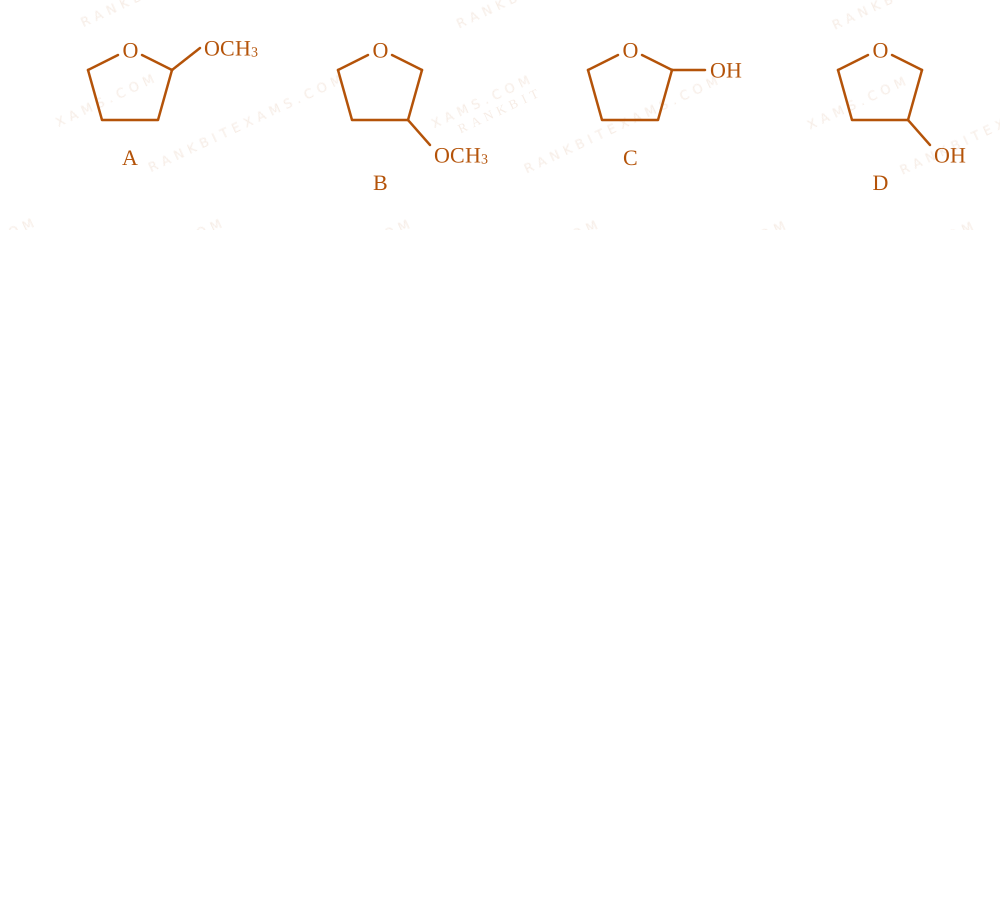
A student is given one compound among the following compounds that gives positive test with Tollen's reagent.
Four organic structures A, B, C, D
Four cyclic ether derivatives labeled A, B, C, and D are shown.
The compound is :
  • A. D
  • B. A
  • C. B
  • D. C

Solution

Core Logic

Tollen's reagent ([Ag(NH₃)₂]^+ in basic medium) is a mild oxidizing agent that oxidizes aldehydes (and α-hydroxy ketones) to carboxylate ions, giving a silver mirror. Acetals are stable in basic medium and will not react with Tollen's reagent. Hemiacetals, however, are in equilibrium with their open-chain aldehyde forms in aqueous basic solutions. Therefore, hemiacetals will give a positive Tollen's test.

Analyzing the options: (A) is an acetal (two -OCH₃ groups on the same carbon). (B) is a cyclic acetal (a ring oxygen and an -OCH₃ group on the same carbon). (C) is a cyclic hemiacetal (a ring oxygen and an -OH group on the same carbon). (D) is a di-ether (no acetal/hemiacetal linkage).

Step 1: Mechanism

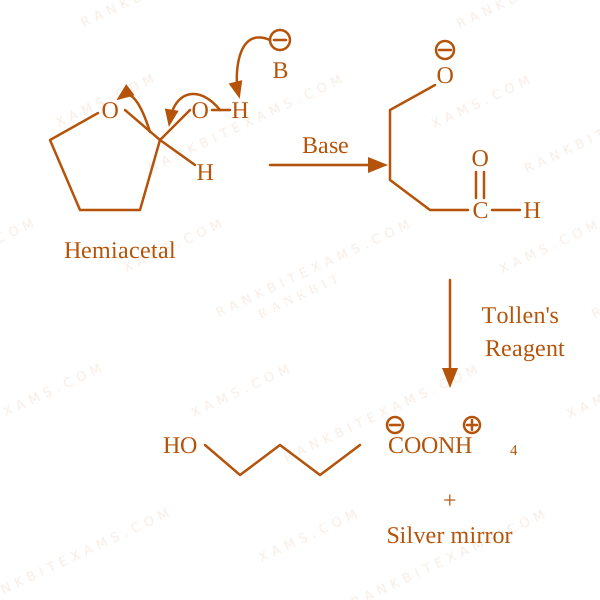
Under basic conditions, the hemiacetal (C) undergoes ring opening:

Ring opening of hemiacetal to aldehyde
Four cyclic ether derivatives labeled A, B, C, and D are shown.
The base deprotonates the hydroxyl group, kicking off the ring oxygen to form a free aldehyde. The resulting aldehyde then easily reacts with Tollen's reagent to produce the Silver mirror.

Step 2: Final Conclusion

Compound C is the only hemiacetal and thus gives a positive test.

Pattern Recognition

Always scan cyclic sugar-like structures for the anomeric carbon (a carbon bonded to two oxygens). If one is an -OH, it is a hemiacetal (reducing). If both are -OR, it is an acetal (non-reducing in base).

Chapter Mix

Class 12 Chemistry: Aldehydes, Ketones and Carboxylic Acids Class 12 Chemistry: Biomolecules

Q52 jee_main_2026_24_january_evening Chemical Reactions of Aldehydes and Ketones
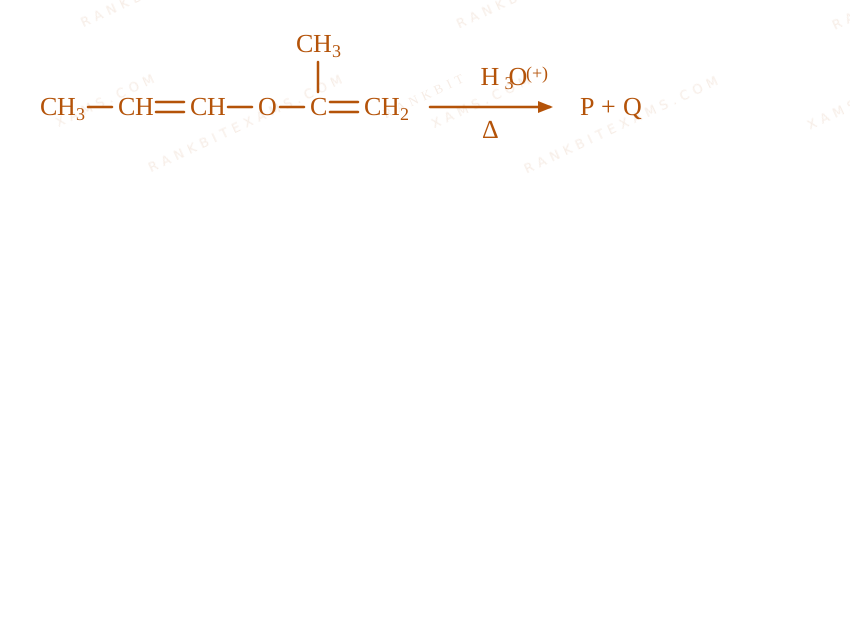
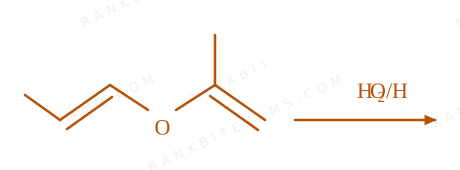
The unsaturated ether on acidic hydrolysis produces carbonyl compounds as shown below:- CH _ 3 - CH = CH - O - CH = CH _ 2 H _ 3 O ^ (+) CH _ 3 - CH _ 2 - CH = O and O = CH - CH _ 3 Based on this, predict the solution / reagent that will help to distinguish "P" and "Q" obtained in the following reaction.
Chemical Reactions of Aldehydes and Ketones diagram for Q52 - JEE Main 2026 Evening
The image shows the acid hydrolysis of a complex unsaturated ether yielding products P and Q.
  • A. Lucas reagent
  • B. 2,4-DNP reagent
  • C. Saturated NaHSO₃ solution
  • D. Fehling solution

Solution

Core Logic

Chemical Reactions of Aldehydes and Ketones diagram for Q52 - JEE Main 2026 Evening
The image shows the acid hydrolysis of a complex unsaturated ether yielding products P and Q.

Chemical Reactions of Aldehydes and Ketones diagram for Q52 - JEE Main 2026 Evening
The image shows the acid hydrolysis of a complex unsaturated ether yielding products P and Q.

After acidic hydrolysis of the given substrate, it forms two carbonyl compounds 'P' and 'Q'. One product is an aliphatic aldehyde, and the other product is a ketone. 'P' and 'Q' can be differentiated by Fehling's test. The aliphatic aldehyde (P) gives a positive Fehling test, reducing the complex to red Cu₂O precipitate. The ketone (Q) gives a negative Fehling test as it is not easily oxidized.

Pattern Recognition

Fehling's solution is the classic differentiating reagent for separating aliphatic aldehydes from ketones and aromatic aldehydes.

Chapter Mix

Class 12 Chemistry: Aldehydes, Ketones and Carboxylic Acids

Rankbit System
JEE Physics: Waves (+15.5%) | Electrostatics: Concentric Shells (-29.7%) | Modern Physics: Photoelectric Clones (+34.2%) | Mathematics: Definite Integrals (+18.1%) | Chemistry: Coordination Splitting (-11.4%) | JEE Physics: Waves (+15.5%) | Electrostatics: Concentric Shells (-29.7%) | Modern Physics: Photoelectric Clones (+34.2%) | Mathematics: Definite Integrals (+18.1%) | Chemistry: Coordination Splitting (-11.4%)