JEE Main · Chemistry → Steady

Aldehydes, Ketones and Carboxylic Acids appeared 45 times across 3 years — 5.4% of Chemistry. This question is from Reactivity towards Nucleophilic Addition.

Year 2026 2025 2024 Total
Questions 14 20 11 45

Which of the following arrangements with respect to their reactivity in nucleophilic addition reaction is correct?

Solution & Explanation

Core Logic

Reactivity in nucleophilic addition reactions is governed by a combination of steric hindrance and electronic effects around the electrophilic carbonyl carbon:

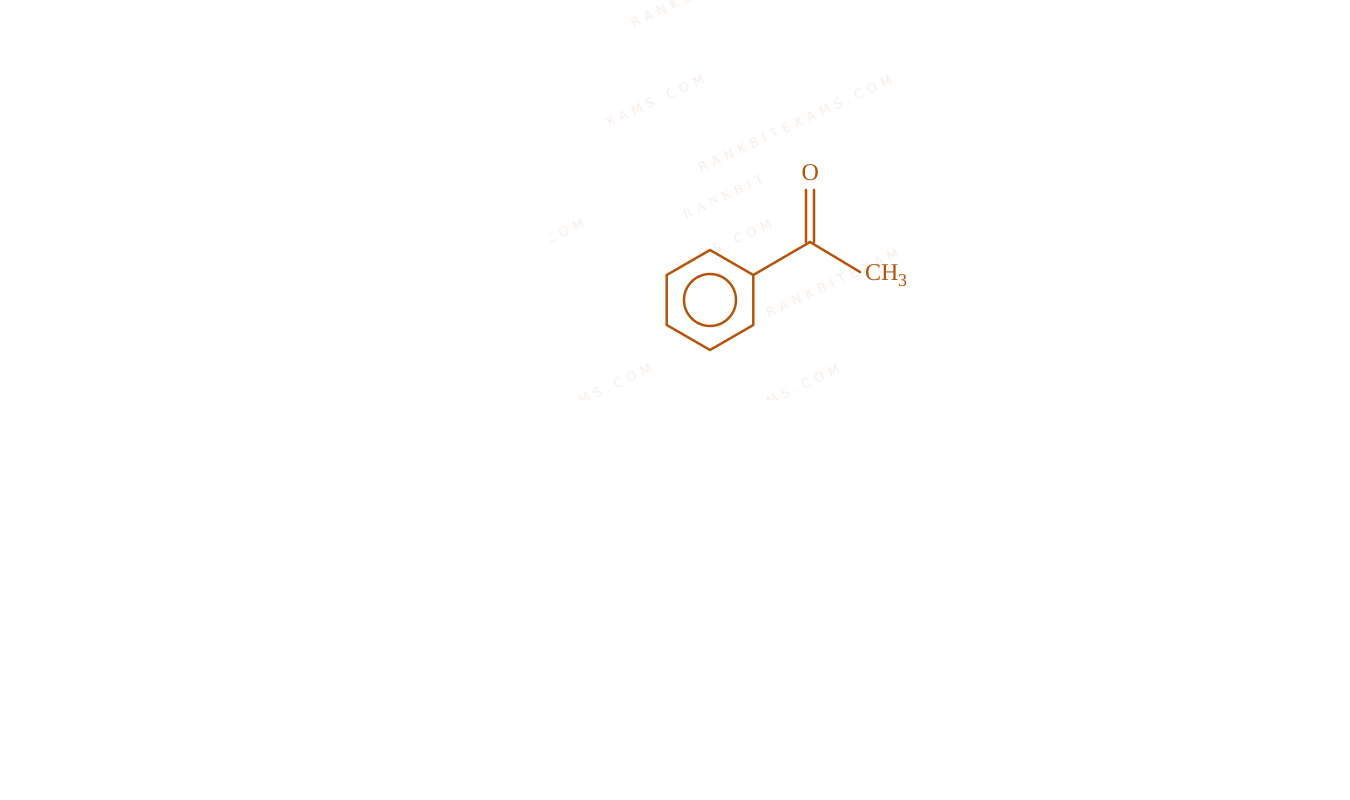
  • Ketones are significantly less reactive than aldehydes due to the bulkiness and electron-donating inductive effect (+I) of their two alkyl/aryl groups. Thus, acetophenone has the lowest reactivity.
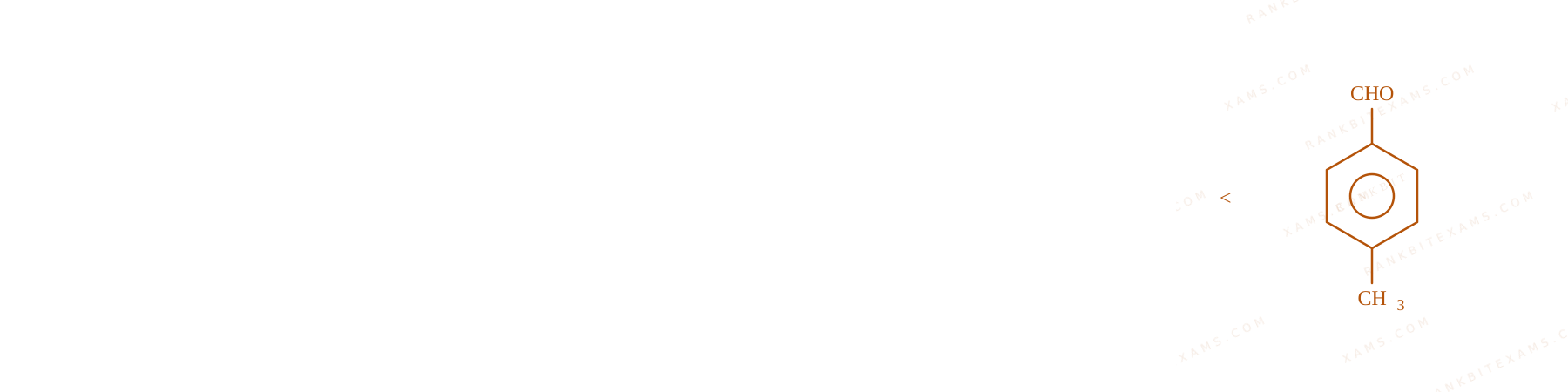
  • For substituted benzaldehydes, electron-withdrawing groups heighten the partial positive charge on the carbonyl carbon, accelerating nucleophilic attack. Conversely, electron-donating groups suppress reactivity.
  • Symmetry breakdown structures are shown below:

  • Acetophenone:
    Acetophenone structure for reactivity comparison
    Acetophenone structure for reactivity comparison
  • p-tolualdehyde:
    Acetophenone structure for reactivity comparison
    Acetophenone structure for reactivity comparison
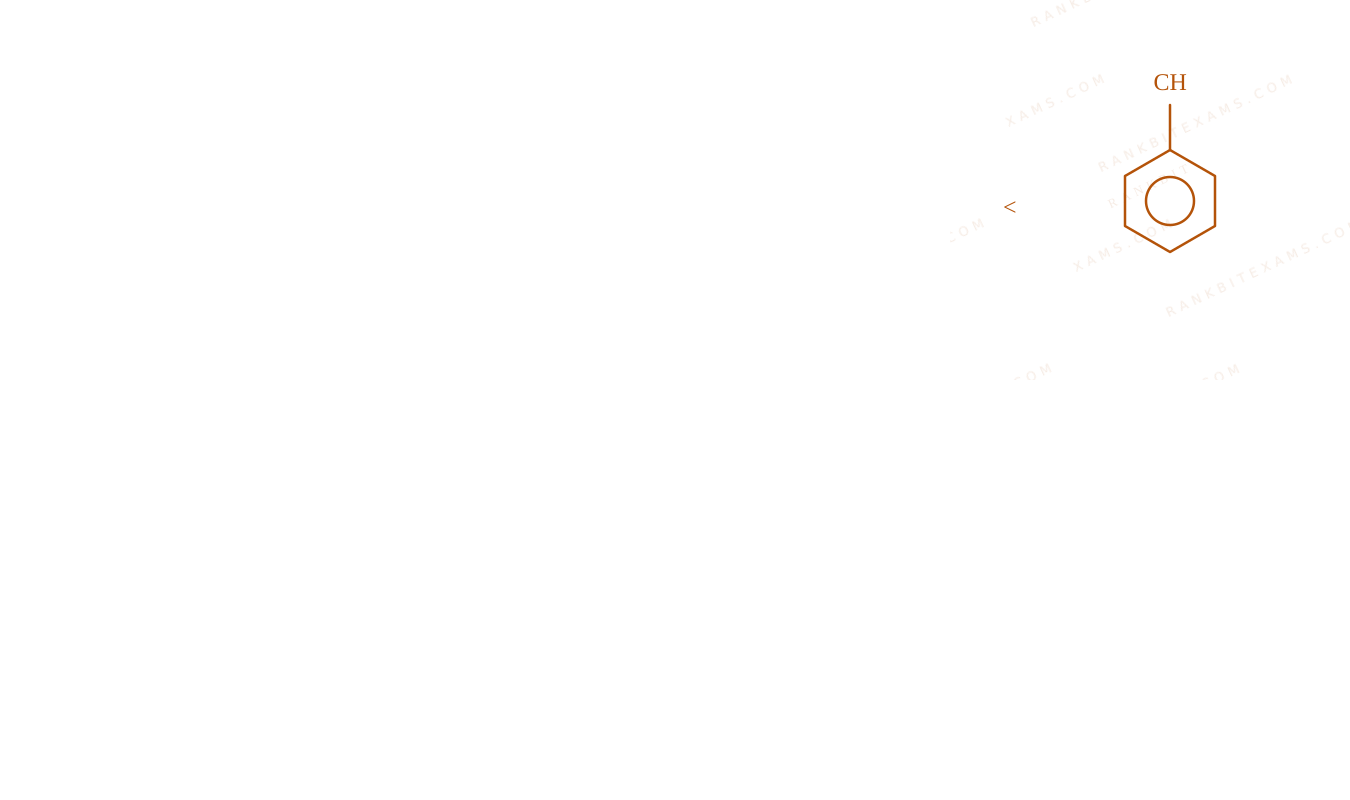
  • Benzaldehyde:
    Acetophenone structure for reactivity comparison
    Acetophenone structure for reactivity comparison
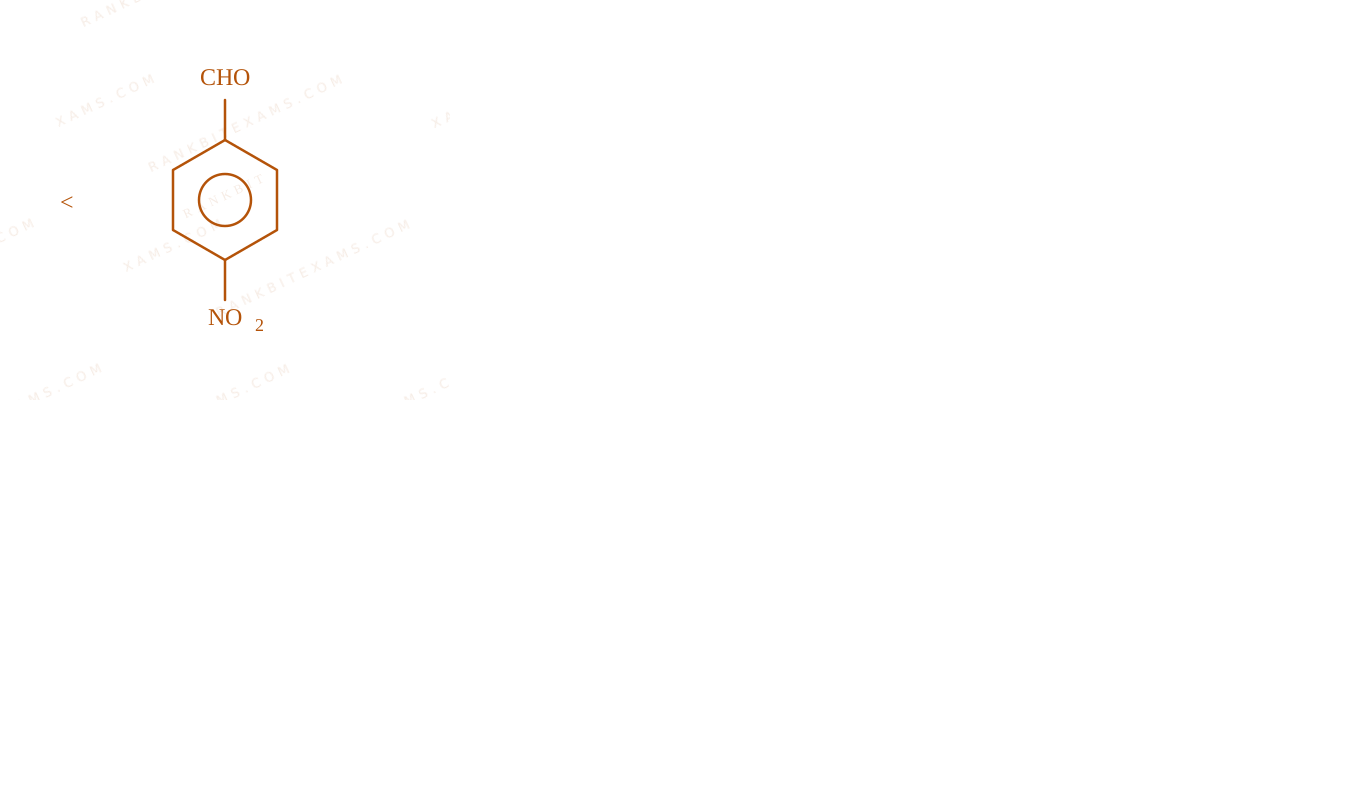
  • p-nitrobenzaldehyde:
    Acetophenone structure for reactivity comparison
    Acetophenone structure for reactivity comparison
  • Methoxy/methyl donors decrease reactivity: p-tolualdehyde < benzaldehyde
  • Nitro group (-NO₂) acts as a strong electron-withdrawing agent via both -M and -I pathways, maximizing the electrophilic nature of the carbonyl site. Therefore, p-nitrobenzaldehyde is the most reactive.
  • Thus, the correct order of reactivity is:

acetophenone < p-tolualdehyde < benzaldehyde < p-nitrobenzaldehyde
Pattern Recognition

Aldehydes naturally exhibit higher reactivity than ketones. Electron-withdrawing groups (-NO₂) accelerate addition pathways, whereas electron-donating groups (-CH₃) impede them.

Chapter Mix

Class 12 Chemistry: Aldehydes, Ketones and Carboxylic Acids

Reference Study Guides

More Aldehydes, Ketones and Carboxylic Acids Previous-Year Questions — Page 9

Q jee_main_2024_30_jan_morning Nomenclature
Structure of 4-Methylpent-2-enal is
  • A. H₂C=C(CH₃)-CH₂-C(=O)H
  • B. CH₃-CH₂-C(CH₃)=CH-C(=O)H
  • C. CH₃-CH₂-CH=C(CH₃)-C(=O)H
  • D. CH₃-CH(CH₃)-CH=CH-C(=O)H

Solution

Core Logic

Decode the IUPAC name: 4-Methylpent-2-enal

  • Word root: 'pent' arrow 5 carbon principal chain.
  • Primary suffix: '2-en' arrow Double bond starting at carbon 2.
  • Secondary suffix: 'al' arrow Aldehyde group (-CHO) at carbon 1.
  • Substituent: '4-Methyl' arrow A methyl group (-CH3) at carbon 4.
Step 1: Drafting the structure

Numbering starts from the aldehyde carbon.

C⁵ - C⁴ - C³ = C² - C¹(=O)H

Attach the methyl at C⁴:

CH₃ - CH(CH₃) - CH = CH - CHO

This matches Option 4.

Chapter Mix

Class 12 Chemistry: Aldehydes, Ketones and Carboxylic Acids Class 11 Chemistry: Organic Chemistry - Some Basic Principles and Techniques
Q jee_main_2024_30_jan_morning Preparation of Aldehydes
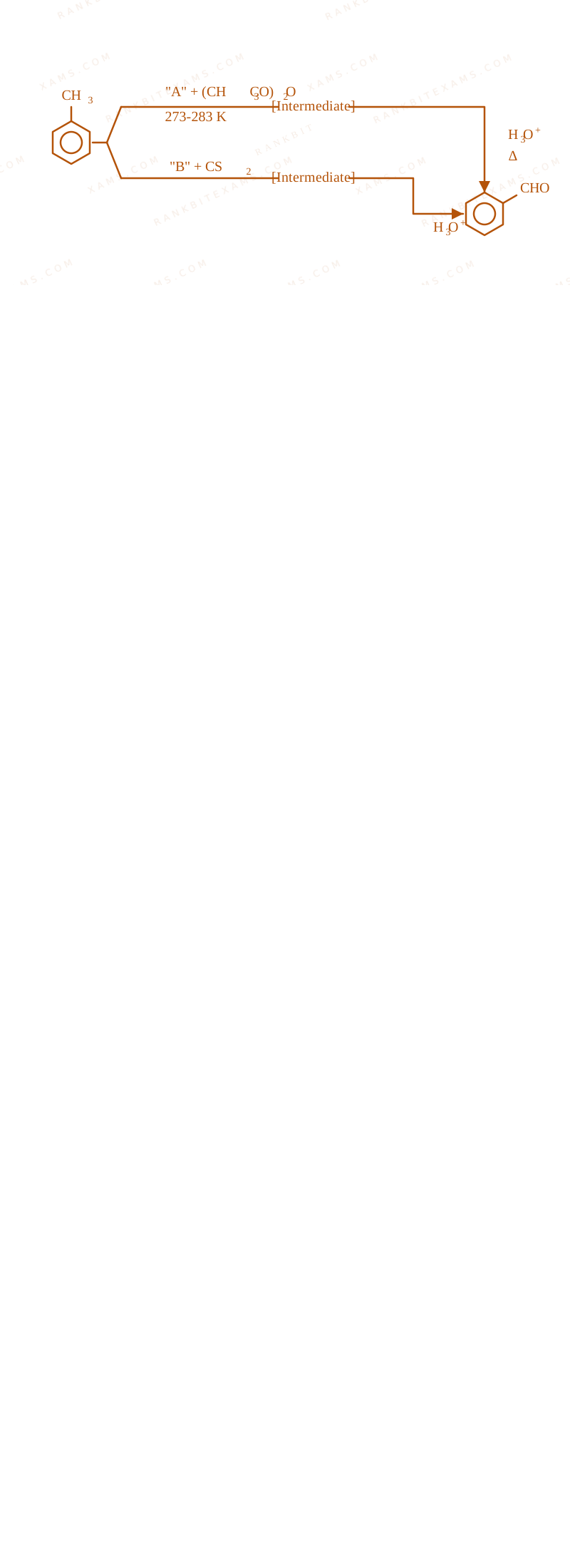
In the given reactions identify the reagent A and reagent B.
Preparation of Aldehydes diagram for Q73 - JEE Main 2024 Morning
The image shows the oxidation of toluene to benzaldehyde via two different pathways requiring reagents A and B.
  • A. A-CrO₃, B-CrO₃
  • B. A-CrO₃, B-CrO₂Cl₂
  • C. A-CrO₂Cl₂, B-CrO₂Cl₂
  • D. A-CrO₂Cl₂, B-CrO₃

Solution

Core Logic

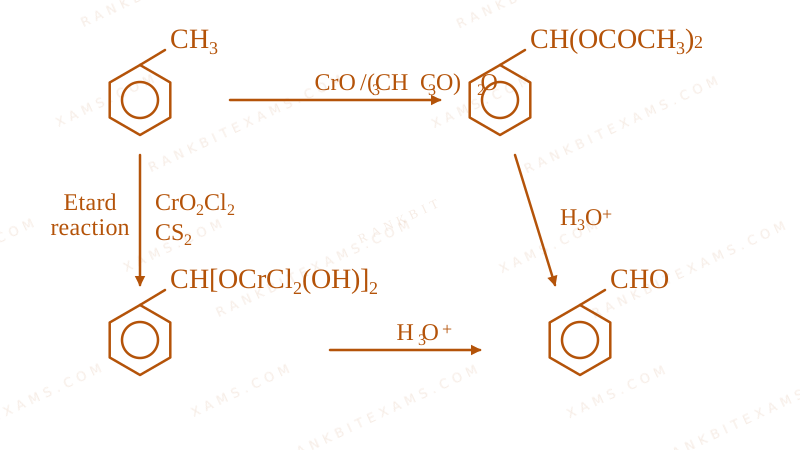
Pathway 1 (Upper): Toluene is treated with Reagent 'A' and acetic anhydride (CH₃CO)₂O to form an intermediate (benzylidene diacetate), which on hydrolysis gives benzaldehyde. The reagent used here is Chromic oxide (CrO₃). Thus, A is CrO₃.

Pathway 2 (Lower): Toluene is treated with Reagent 'B' in CS₂ to form a chromium complex intermediate, which on hydrolysis yields benzaldehyde. This is the Etard reaction, and the reagent used is Chromyl chloride (CrO₂Cl₂). Thus, B is CrO₂Cl₂.

Preparation of Aldehydes solution diagram for Q73 - JEE Main 2024 Morning
The image shows the oxidation of toluene to benzaldehyde via two different pathways requiring reagents A and B.

Step 1: Selection

Therefore, A = CrO₃ and B = CrO₂Cl₂.

Pattern Recognition

Etard reaction always uses Chromyl chloride (CrO₂Cl₂). Oxidation of toluene with acetic anhydride uses Chromic acid (CrO₃). Both stop the oxidation at the aldehyde stage via intermediate formation.

Chapter Mix

Class 12 Chemistry: Aldehydes, Ketones and Carboxylic Acids

Q87 jee_main_2024_30_jan_morning Nucleophilic Addition Reactions
The compound formed by the reaction of ethanal with semicarbazide contains ________ number of nitrogen atoms.
Numerical Answer. Answer: 3 to 3

Solution

Related Formula
CH₃-CHO + H₂N-NH-CO-NH₂ arrow CH₃-CH=N-NH-CO-NH₂ + H₂O
Core Logic

Ethanal (CH₃CHO) reacts with semicarbazide (H₂N-NH-CO-NH₂) via nucleophilic addition followed by elimination of water to form a semicarbazone.

Step 1: Product Analysis

The product is Ethanal semicarbazone: CH₃-CH=N-NH-CO-NH₂. Counting the nitrogen atoms in this structure:

  • The imine nitrogen (=N-)
  • The amine nitrogen (-NH-)
  • The amide nitrogen (-NH₂)
  • Total = 3 Nitrogen atoms.

Chapter Mix

Class 12 Chemistry: Aldehydes, Ketones and Carboxylic Acids

Q jee_main_2024_31_jan_evening Preparation of Aldehydes and Ketones
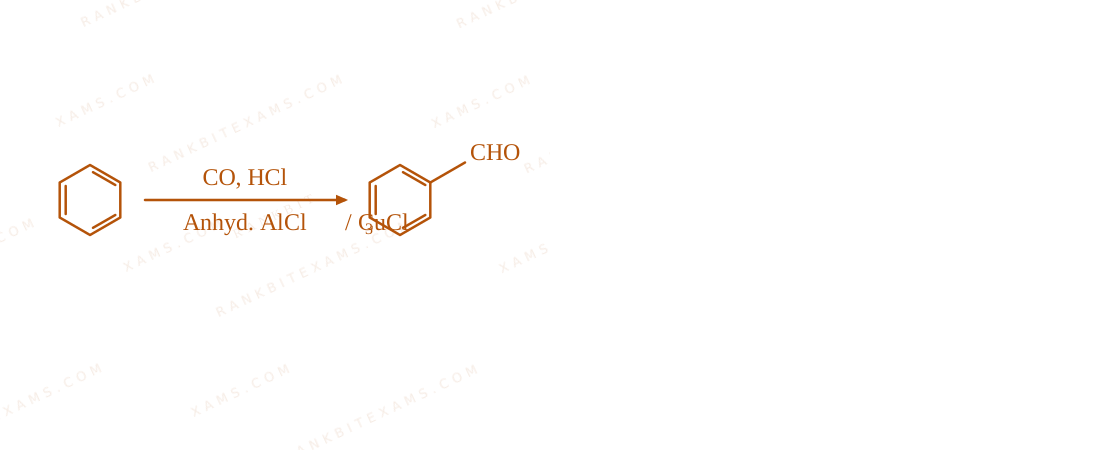
Identify the name reaction.
Preparation of Aldehydes and Ketones diagram for Q73 - JEE Main 2024 Evening
The image shows the conversion of benzene to benzaldehyde using CO, HCl, and Anhydrous AlCl3/CuCl.
  • A. Stephen reaction
  • B. Etard reaction
  • C. Gatterman-koch reaction
  • D. Rosenmund reduction

Solution

Core Logic

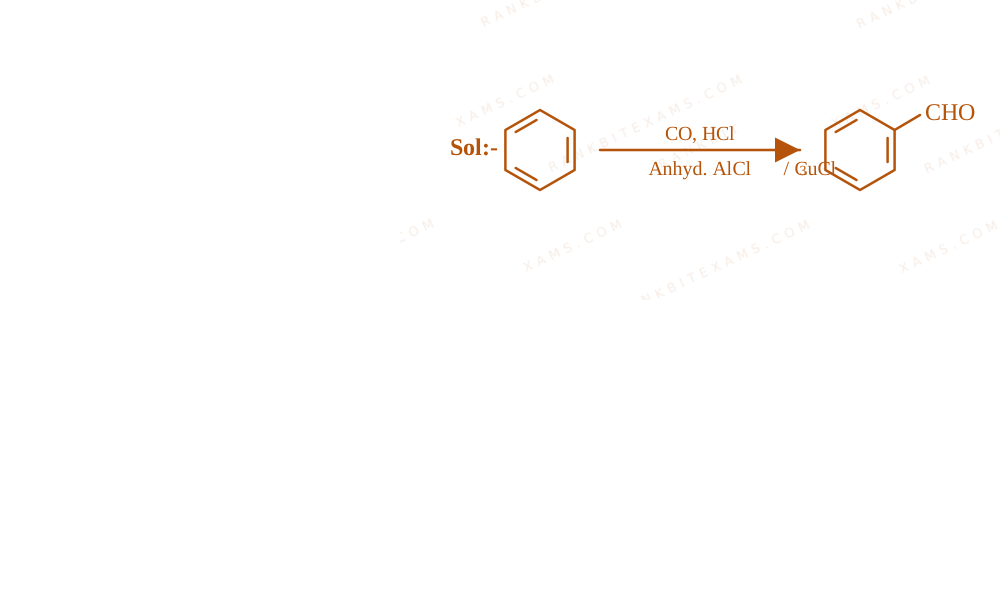
The reaction of benzene with carbon monoxide (CO) and hydrogen chloride (HCl) in the presence of anhydrous aluminium chloride (AlCl₃) and cuprous chloride (CuCl) to give benzaldehyde is known as the Gatterman-Koch reaction.

Preparation of Aldehydes and Ketones diagram for Q73 - JEE Main 2024 Evening
The image shows the conversion of benzene to benzaldehyde using CO, HCl, and Anhydrous AlCl3/CuCl.

Pattern Recognition

CO + HCl arrow Formyl chloride intermediate (in situ) with Lewis acid arrow formylation of benzene. This is definitively the Gatterman-Koch formylation.

Chapter Mix

Class 12 Chemistry: Aldehydes, Ketones and Carboxylic Acids

Q jee_main_2024_31_jan_morning Reactions with Grignard Reagent
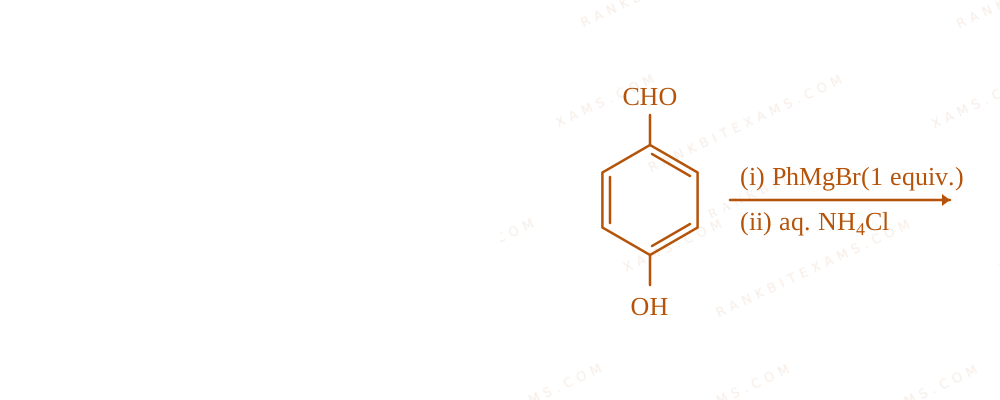
The product of the following reaction is P.
Reactions with Grignard Reagent diagram for Q84 - JEE Main 2024 Morning
The image shows p-hydroxybenzaldehyde reacting with one equivalent of PhMgBr followed by aqueous ammonium chloride.
The number of hydroxyl groups present in the product P is
Numerical Answer. Answer: 0 to 0

Solution

Core Logic

The given reactant is p-hydroxybenzaldehyde, which contains both a phenolic -OH group (acidic) and an aldehyde group (electrophilic).

When one equivalent of Grignard reagent (PhMgBr) is added, it behaves primarily as a strong base due to the presence of an acidic proton. Acid-base reactions are extremely fast compared to nucleophilic additions.

The acidic phenolic -OH reacts with PhMgBr:

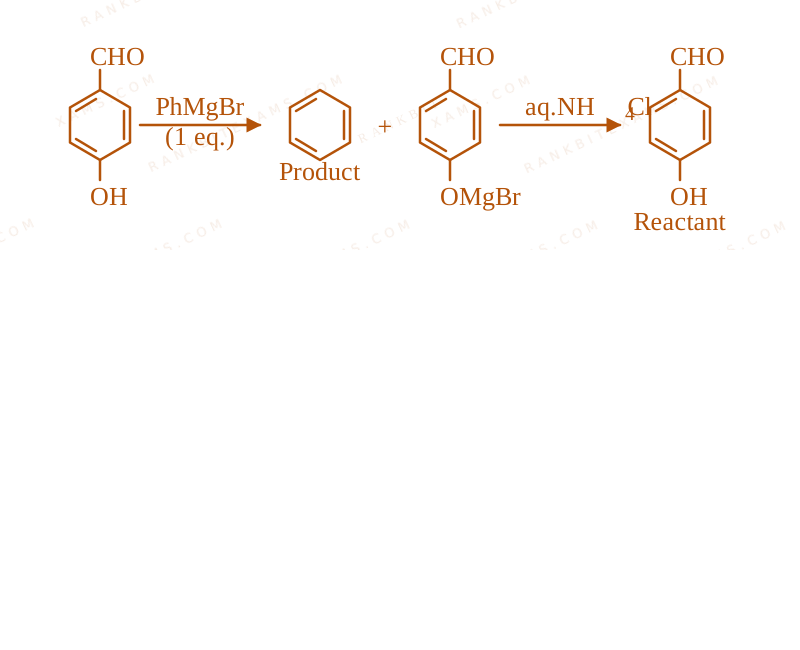
PhMgBr + HO-C₆H₄-CHO arrow Ph-H (Benzene) + BrMg-O-C₆H₄-CHO

Upon workup with aq. NH₄Cl, the phenoxide ion simply regenerates the starting p-hydroxybenzaldehyde. However, the question asks for the number of hydroxyl groups present in the formed product (Benzene).

Reactions with Grignard Reagent diagram for Q84 - JEE Main 2024 Morning
The image shows p-hydroxybenzaldehyde reacting with one equivalent of PhMgBr followed by aqueous ammonium chloride.

The distinct product formed in the reaction is Benzene. Benzene has 0 hydroxyl groups.

Pattern Recognition

Whenever a Grignard reagent encounters a molecule with an acidic hydrogen (alcohol, phenol, amine, alkyne), it will invariably act as a base first. If only 1 equivalent is used, nucleophilic addition to carbonyls will NOT happen.

Chapter Mix

Class 12 Chemistry: Aldehydes, Ketones and Carboxylic Acids Class 12 Chemistry: Alcohols, Phenols and Ethers

More Aldehydes, Ketones and Carboxylic Acids Questions — jee_main_2025_24_jan_morning

Practice all Aldehydes, Ketones and Carboxylic Acids previous-year questions →

Rankbit System
JEE Physics: Waves (+15.5%) | Electrostatics: Concentric Shells (-29.7%) | Modern Physics: Photoelectric Clones (+34.2%) | Mathematics: Definite Integrals (+18.1%) | Chemistry: Coordination Splitting (-11.4%) | JEE Physics: Waves (+15.5%) | Electrostatics: Concentric Shells (-29.7%) | Modern Physics: Photoelectric Clones (+34.2%) | Mathematics: Definite Integrals (+18.1%) | Chemistry: Coordination Splitting (-11.4%)