JEE Main · Chemistry → Steady

Aldehydes, Ketones and Carboxylic Acids appeared 46 times across 3 years — 5.4% of Chemistry. This question is from Chemical Reactions of Ketones.

Year 2026 2025 2024 Total
Questions 14 21 11 46

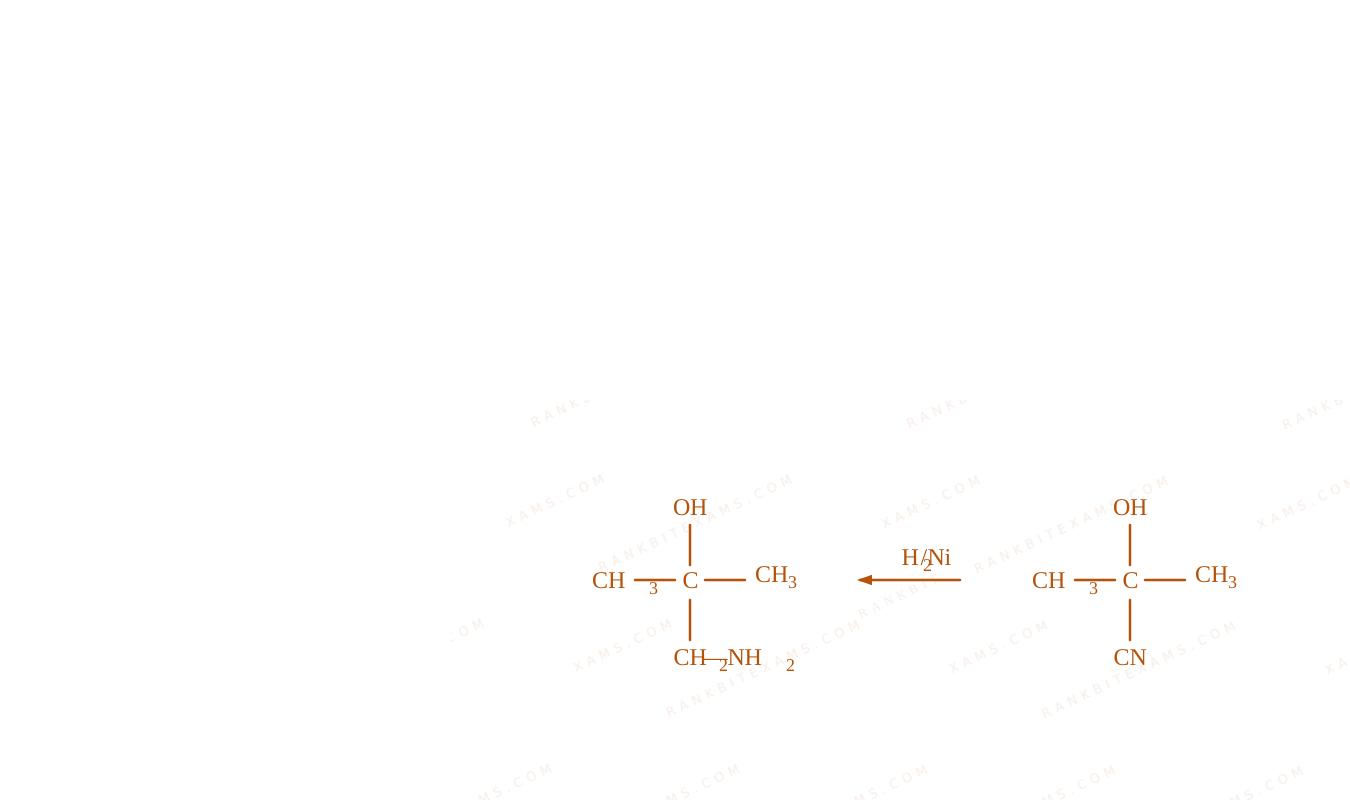
The product (A) formed in the following reaction sequence is : C H _ 3 - C ≡ C H [ (i i) H _ 2 / N i ](i) H g ^ 2 +, H _ 2 S O _ 4 (A)

Solution & Explanation

Core Logic

Breaking down the multi-step reaction path sequence:

  • Hydration of propyne using Kucherov's trigger condition (Hg²⁺, H₂SO₄) adds water across the triple bond via Markovnikov's rule. The intermediate enol undergoes tautomerization to yield acetone (CH₃-CO-CH₃).
  • Reacting acetone with HCN drives nucleophilic addition at the carbonyl carbon, forming a cyanohydrin intermediate: CH₃-C(OH)(CH₃)-CN.
  • Introducing a reducing agent (H₂/Ni) selectively converts the nitrile group (-CN) into a primary amine side chain (-CH₂-NH₂).
  • The final synthesized structure is: CH₃-C(OH)(CH₃)-CH₂-NH₂.

    Chemical Reactions of Ketones step sequence product chart for Q45
    Chemical Reactions of Ketones step sequence product chart for Q45

Pattern Recognition

Alkyne hydration produces a ketone carbonyl system. Cyanohydrin synthesis introduces a carbon coordinate, which subsequently reduces to a primary aliphatic amine functional group.

Chapter Mix

Class 12 Chemistry: Aldehydes, Ketones and Carboxylic Acids

Reference Study Guides

More Aldehydes, Ketones and Carboxylic Acids Previous-Year Questions — Page 8

Q jee_main_2024_01_february_morning Preparation of Aldehydes
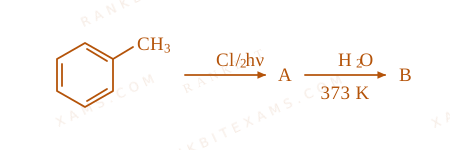
Identify A and B in the following sequence of reaction
Preparation of Aldehydes diagram for Q69 - JEE Main 2024 Morning
The image shows a reaction scheme starting with toluene reacting with Cl2/hv to give A, followed by H2O at 373 K to give B.
  • A.
  • B.
  • C.
  • D.

Solution

Core Logic

Step 1: Free radical side-chain halogenation of toluene. Toluene reacts with Cl₂ in the presence of light (hν) to undergo substitution on the methyl group. Under typical conditions intended to yield an aldehyde later, di-chlorination occurs forming benzal chloride (A).

Step 2: Hydrolysis. Benzal chloride upon hydrolysis with H₂O at 373 K yields a gem-diol intermediate which is unstable and loses water to form Benzaldehyde (B).

C₆H₅CH₃ Cl₂ / hν C₆H₅CHCl₂ H₂O, 373K C₆H₅CHO
Step 1: Identify Structures

(A) = Benzal chloride (C₆H₅CHCl₂) (B) = Benzaldehyde (C₆H₅CHO)
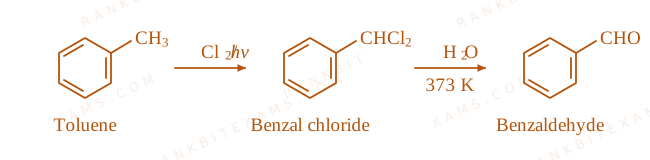
Preparation of Aldehydes diagram for Q69 - JEE Main 2024 Morning
The image shows a reaction scheme starting with toluene reacting with Cl2/hv to give A, followed by H2O at 373 K to give B.

Pattern Recognition

Toluene Cl₂, hν targets the side chain. If the next step is hydrolysis to an aldehyde, you must have stopped at the gem-dihalide stage (CHCl₂).

Chapter Mix

Class 12 Chemistry: Aldehydes, Ketones and Carboxylic Acids Class 11 Chemistry: Hydrocarbons
Q jee_main_2024_01_february_morning Reactions of Carbonyl Compounds
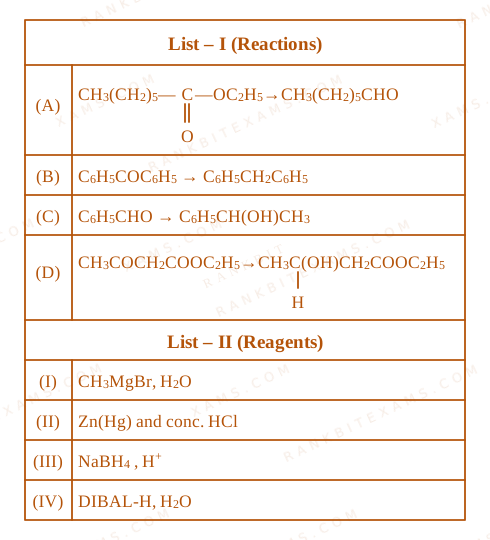
Match List - I with List - II.
List - I (Reactions)List - II (Reagents)
(A) CH₃(CH₂)₅-CO-OC₂H₅ arrow CH₃(CH₂)₅CHO(I) CH₃MgBr, H₂O
(B) C₆H₅COC₆H₅ arrow C₆H₅CH₂C₆H₅(II) Zn(Hg) and conc. HCl
(C) C₆H₅CHO arrow C₆H₅CH(OH)CH₃(III) NaBH₄, H^+
(D) CH₃COCH₂COOC₂H₅ arrow CH₃CH(OH)CH₂COOC₂H₅(IV) DIBAL-H, H₂O
Choose the correct answer from options given below:
Reactions of Carbonyl Compounds
  • A. A-(III), (B)-(IV), (C)-(I), (D)-(II)
  • B. A-(IV), (B)-(II), (C)-(I), (D)-(III)
  • C. A-(IV), (B)-(II), (C)-(III), (D)-(I)
  • D. A-(III), (B)-(IV), (C)-(II), (D)-(I)

Solution

Core Logic

Let's analyze the transformation happening in each reaction:

(A) CH₃(CH₂)₅COOC₂H₅ arrow CH₃(CH₂)₅CHO An ester is reduced to an aldehyde. This is a selective reduction achieved using DIBAL-H (Diisobutylaluminium hydride) followed by hydrolysis. Thus, (A) arrow (IV).

(B) C₆H₅COC₆H₅ arrow C₆H₅CH₂C₆H₅ A ketone (carbonyl group >C=O) is fully reduced to an alkane (>CH₂) methylene group. This is the Clemmensen reduction, which uses Zinc amalgam and concentrated HCl. Thus, (B) arrow (II).

(C) C₆H₅CHO arrow C₆H₅CH(OH)CH₃ Benzaldehyde (aldehyde) is converted into a secondary alcohol with an extra methyl group. This is a nucleophilic addition of a Grignard reagent (CH₃MgBr) followed by hydrolysis. Thus, (C) arrow (I).

(D) CH₃COCH₂COOC₂H₅ arrow CH₃CH(OH)CH₂COOC₂H₅ A ketone group is reduced to a secondary alcohol while the ester group remains intact. NaBH₄ is a mild reducing agent that reduces aldehydes and ketones but generally does not touch esters. Thus, (D) arrow (III).

Pattern Recognition

Ester arrow Aldehyde = DIBAL-H Ketone arrow Alkane = Clemmensen (Zn(Hg)/HCl) or Wolff-Kishner Carbonyl arrow Alcohol with carbon chain extension = Grignard Reagent Ketone arrow Alcohol (leaving ester intact) = NaBH₄

Chapter Mix

Class 12 Chemistry: Aldehydes, Ketones and Carboxylic Acids

Q jee_main_2024_29_jan_morning Reactions of Carbonyl Compounds
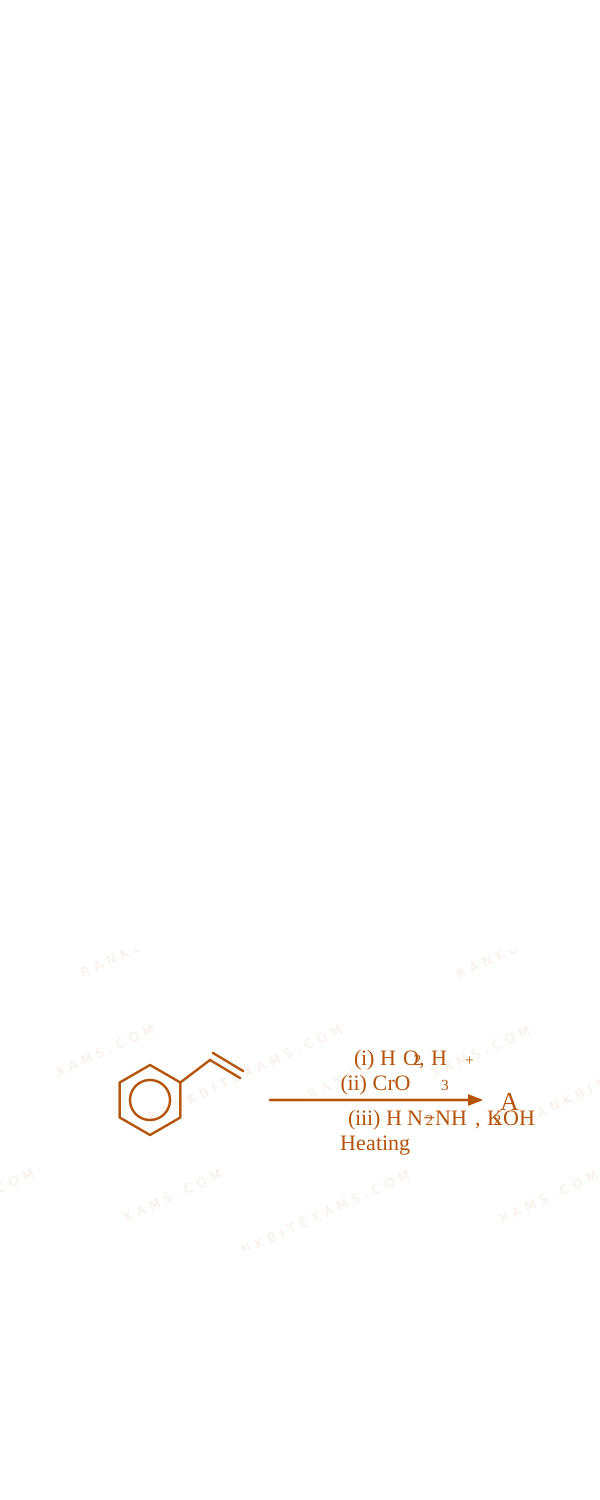
The final product A formed in the following multistep reaction sequence is
Reactions of Carbonyl Compounds diagram for Q77 - JEE Main 2024 Morning
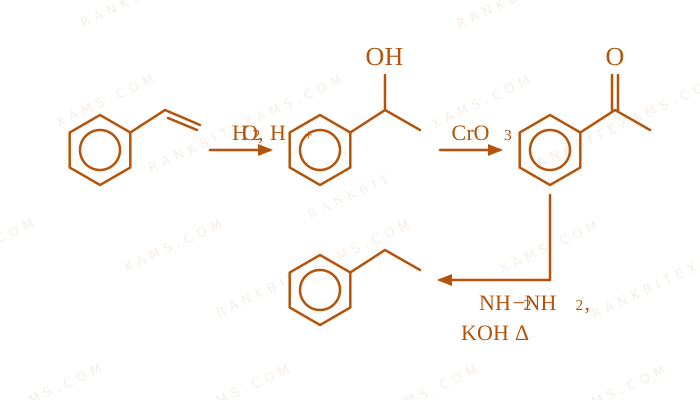
A reaction sequence starting with styrene undergoing Markovnikov hydration, followed by oxidation with CrO3, and finally reduction with hydrazine and KOH.
  • A.
  • B.
  • C.
  • D.

Solution

Core Logic

The reaction sequence proceeds in three distinct steps from the starting material, styrene (Ph-CH=CH₂).

Step 1: Acid-catalyzed Hydration Styrene reacts with H₂O, H^+ to undergo electrophilic addition. Protonation yields the more stable secondary benzylic carbocation. Attack by water followed by deprotonation gives 1-phenylethanol (Ph-CH(OH)-CH₃).

Step 2: Oxidation 1-phenylethanol is a secondary alcohol. Treatment with chromium trioxide (CrO₃, Jones reagent condition) oxidizes the secondary alcohol to a ketone. This yields acetophenone (Ph-CO-CH₃).

Step 3: Wolff-Kishner Reduction Acetophenone is treated with hydrazine (NH₂-NH₂) and a strong base (KOH) under heating. This is the classic Wolff-Kishner reduction, which completely reduces the carbonyl group (C=O) to a methylene group (-CH₂-). The final product is ethylbenzene (Ph-CH₂-CH₃).

Step 1: Overall Reaction Pathway

Reactions of Carbonyl Compounds diagram for Q77 - JEE Main 2024 Morning
A reaction sequence starting with styrene undergoing Markovnikov hydration, followed by oxidation with CrO3, and finally reduction with hydrazine and KOH.

The final product A is ethylbenzene.

Chapter Mix

Class 11 Chemistry: Hydrocarbons Class 12 Chemistry: Alcohols Phenols and Ethers Class 12 Chemistry: Aldehydes Ketones and Carboxylic Acids

Q jee_main_2024_29_jan_morning Chemical Reactions of Aldehydes and Ketones
From the compounds given below, number of compounds which give positive Fehling's test is _____. Benzaldehyde, Acetaldehyde, Acetone, Acetophenone, Methanal, 4-nitrobenzaldehyde, cyclohexane carbaldehyde.
Numerical Answer. Answer: 3 to 3

Solution

Core Logic

Fehling's test is a mild oxidizing test used primarily to distinguish aliphatic aldehydes from ketones and aromatic aldehydes.

  • Aliphatic aldehydes (like methanal, acetaldehyde, cyclohexane carbaldehyde) give a positive Fehling's test (formation of red-brown precipitate of Cu₂O).
  • Aromatic aldehydes (like benzaldehyde, 4-nitrobenzaldehyde) lack alpha-hydrogens in a purely aliphatic environment and are not sufficiently easily oxidized to give a positive Fehling's test.
  • Ketones (like acetone, acetophenone) generally do not give a positive Fehling's test (except α-hydroxy ketones).
Step 1: Evaluation of Given Compounds
  • Benzaldehyde: Aromatic aldehyde arrow Negative
  • Acetaldehyde (CH₃CHO): Aliphatic aldehyde arrow Positive
  • Acetone: Ketone arrow Negative
  • Acetophenone: Ketone arrow Negative
  • Methanal (HCHO): Aliphatic aldehyde arrow Positive
  • 4-nitrobenzaldehyde: Aromatic aldehyde arrow Negative
  • Cyclohexane carbaldehyde: Aliphatic aldehyde arrow Positive
  • The compounds giving a positive test are Acetaldehyde, Methanal, and Cyclohexane carbaldehyde.

Pattern Recognition

Tollens' reagent oxidizes ALL aldehydes (aliphatic + aromatic). Fehling's reagent is weaker and only oxidizes ALIPHATIC aldehydes.

Chapter Mix

Class 12 Chemistry: Aldehydes Ketones and Carboxylic Acids

Q jee_main_2024_30_january_evening Cannizzaro Reaction
m-chlorobenzaldehyde on treatment with 50% KOH solution yields
  • A.
  • B.
  • C.
  • D.

Solution

Core Logic

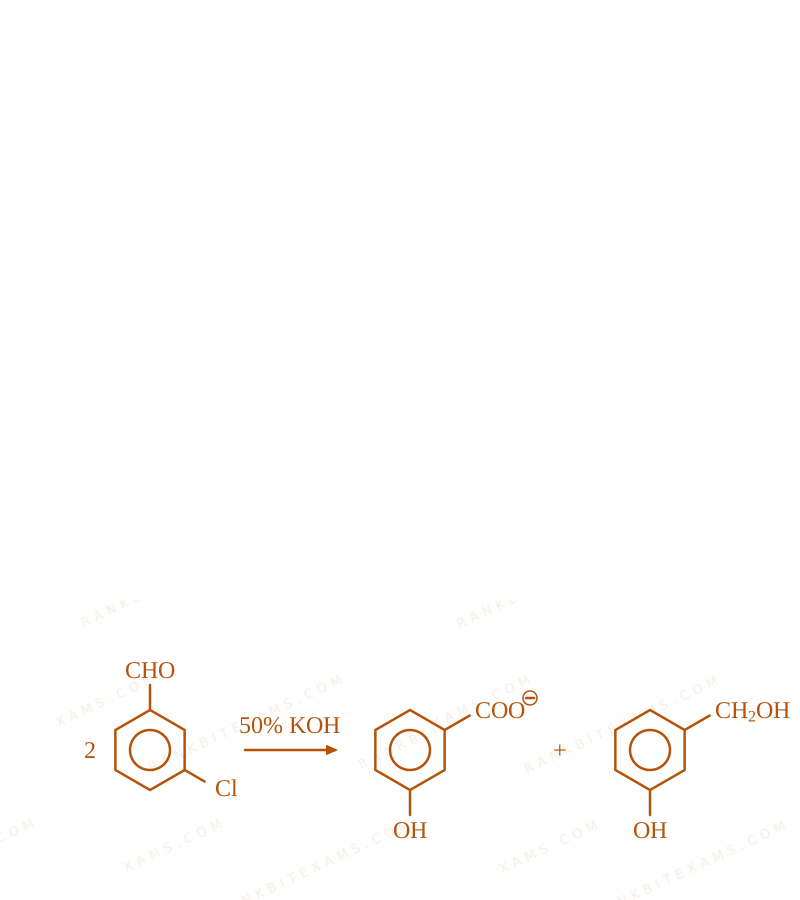
m-chlorobenzaldehyde lacks alpha-hydrogen atoms. Therefore, when treated with concentrated base like 50% KOH, it undergoes a disproportionation redox reaction known as the Cannizzaro reaction.

Two molecules of the aldehyde react: one gets oxidized to the corresponding carboxylate ion (m-chlorobenzoate ion), and the other gets reduced to the corresponding alcohol (m-chlorobenzyl alcohol).

Step 1: Reaction

The reaction proceeds as:

Cannizzaro reaction of m-chlorobenzaldehyde diagram for Q64 - JEE Main 2024 Evening

Pattern Recognition

No α-hydrogen + Conc. Alkali (50% KOH/NaOH) = Cannizzaro (Oxidation to salt of carboxylic acid + Reduction to primary alcohol).

Chapter Mix

Class 12 Chemistry: Aldehydes Ketones and Carboxylic Acids

More Aldehydes, Ketones and Carboxylic Acids Questions — jee_main_2025_24_jan_morning

Practice all Aldehydes, Ketones and Carboxylic Acids previous-year questions →

Rankbit System
JEE Physics: Waves (+15.5%) | Electrostatics: Concentric Shells (-29.7%) | Modern Physics: Photoelectric Clones (+34.2%) | Mathematics: Definite Integrals (+18.1%) | Chemistry: Coordination Splitting (-11.4%) | JEE Physics: Waves (+15.5%) | Electrostatics: Concentric Shells (-29.7%) | Modern Physics: Photoelectric Clones (+34.2%) | Mathematics: Definite Integrals (+18.1%) | Chemistry: Coordination Splitting (-11.4%)