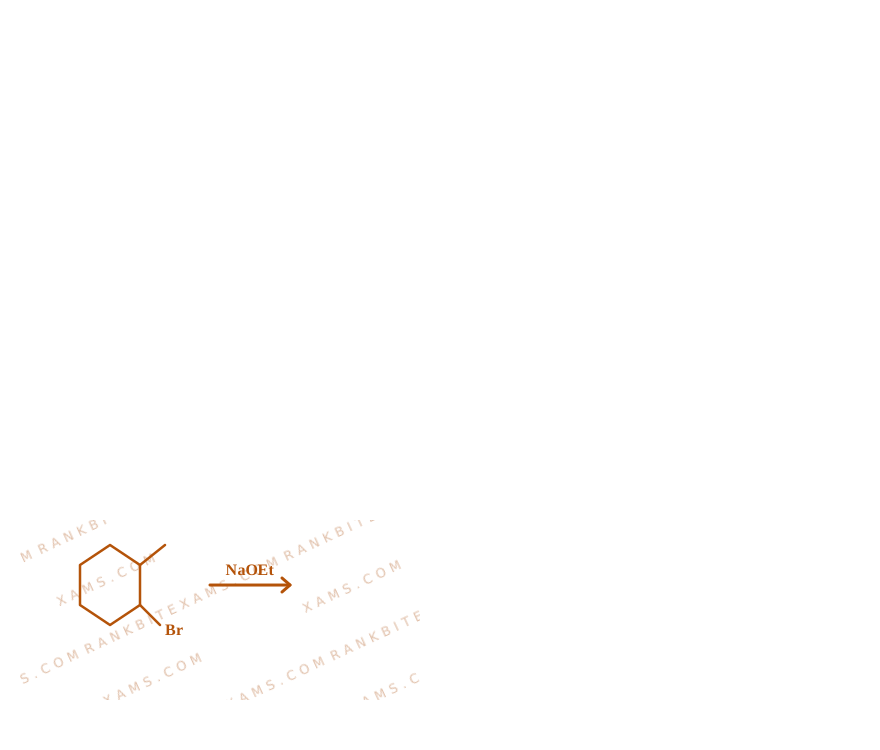
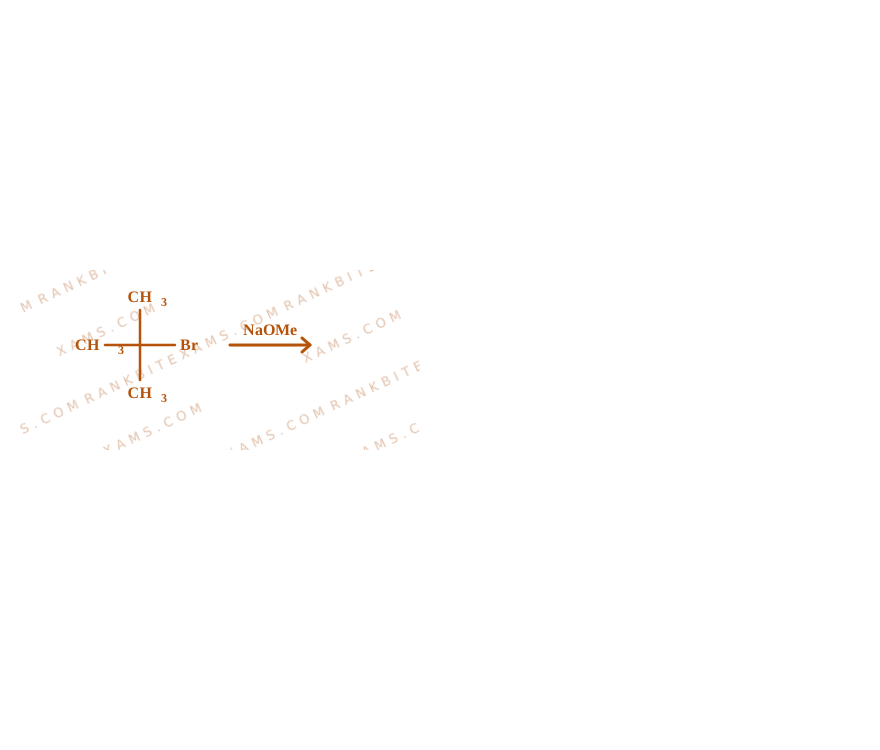
The reactions which cannot be applied to prepare an alkene by elimination, are: A.
Secondary alkyl halide reaction with aqueous KOH diagram for Q45
Four different reaction schemes illustrating elimination, substitution, oxidation, and dehydrogenation conditions.
B. mathrmCH_3 - CH_2 - undersetoverset|mathrmBrmathrmCH - CH_3 xrightarrowmathrmKOH\ (aq.) C.
Secondary alkyl halide reaction with aqueous KOH diagram for Q45
Four different reaction schemes illustrating elimination, substitution, oxidation, and dehydrogenation conditions.
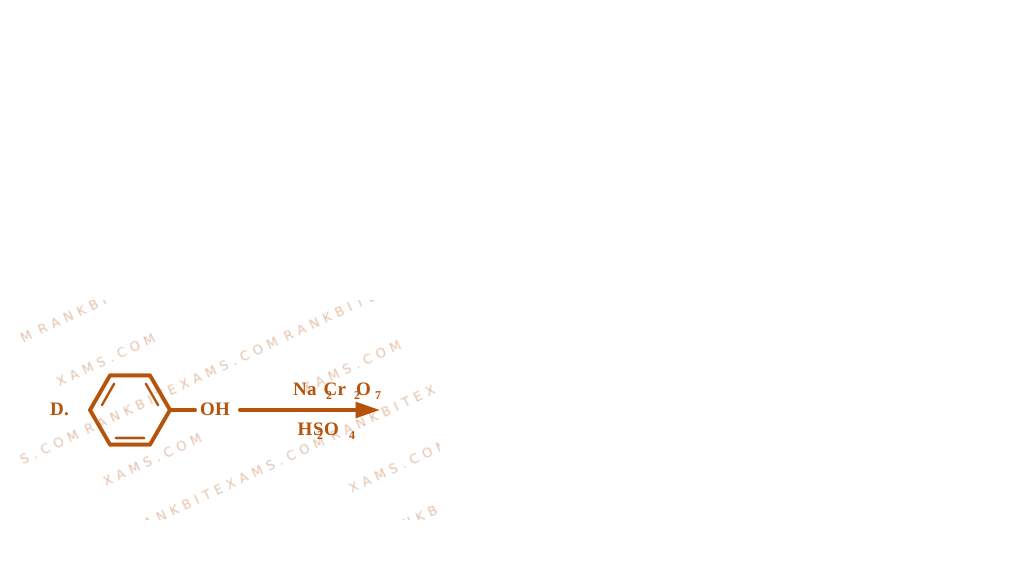
D.
Secondary alkyl halide reaction with aqueous KOH diagram for Q45
Four different reaction schemes illustrating elimination, substitution, oxidation, and dehydrogenation conditions.
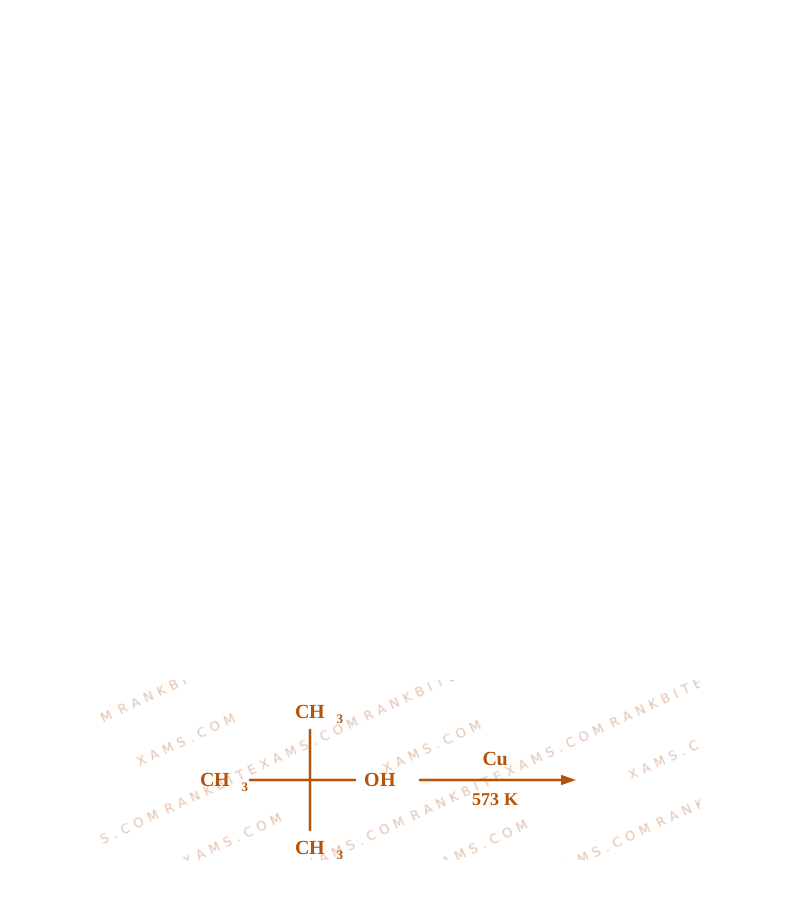
E.
Secondary alkyl halide reaction with aqueous KOH diagram for Q45
Four different reaction schemes illustrating elimination, substitution, oxidation, and dehydrogenation conditions.
Choose the correct answer from the options given below:

Solution & Explanation

### Core Logic
Elimination Reactions
Four different reaction schemes illustrating elimination, substitution, oxidation, and dehydrogenation conditions.
Option (B) and (D) reaction are not able to form alkene as a product. ### Pattern Recognition Aqueous textKOH on alkyl halides favors substitution (forming alcohols) over elimination. Strong oxidizing mixtures like sodium dichromate oxidize secondary alcohols to ketones instead of dehydrating them. ### Evaluation Rubric / Model Answer null ### Chapter Mix Class 12 Chemistry: Organic Compounds Containing Halogens Class 12 Chemistry: Alcohols, Phenols and Ethers

More Organic Compounds Containing Halogens Previous-Year Questions

Q77 jee_main_2024_29_january_evening Nucleophilic Substitution of Alkyl Halides
Alkyl halide is converted into alkyl isocyanide by reaction with
  • A. NaCN
  • B. mathrmNH_4mathrmCN
  • C. KCN
  • D. AgCN

Solution

### Related Formula textR-X + textAgCN rightarrow textR-NC + textAgX ### Core Logic Cyanide (CN^-) is an ambident nucleophile that can attack through either carbon or nitrogen: * textKCN and textNaCN are predominantly ionic compounds, leaving the carbon atom free and highly nucleophilic to yield alkyl cyanides (textR-CN) as the major product. * Silver cyanide (textAgCN) is predominantly covalent. Because the silver-carbon bond is strong, the lone pair on nitrogen acts as the primary nucleophilic site, leading to the formation of alkyl isocyanides (textR-NC). ### Step 1: Selection Therefore, reacting an alkyl halide with textAgCN selectively produces an alkyl isocyanide. ### Pattern Recognition Ionic cyanides like textKCN yield nitriles, whereas covalent cyanides like textAgCN yield isocyanides due to the availability of the nitrogen lone pair. ### Evaluation Rubric / Model Answer null ### Chapter Mix Class 12 Chemistry: Organic Compounds Containing Halogens
Rankbit System
JEE Physics: Waves (+15.5%) | Electrostatics: Concentric Shells (-29.7%) | Modern Physics: Photoelectric Clones (+34.2%) | Mathematics: Definite Integrals (+18.1%) | Chemistry: Coordination Splitting (-11.4%) | JEE Physics: Waves (+15.5%) | Electrostatics: Concentric Shells (-29.7%) | Modern Physics: Photoelectric Clones (+34.2%) | Mathematics: Definite Integrals (+18.1%) | Chemistry: Coordination Splitting (-11.4%)