
JEE Main · Chemistry ↓ Falling

Chemical Bonding and Molecular Structure appeared 42 times across 3 years — 4.9% of Chemistry. This question is from VSEPR Theory.

Year 2026 2025 2024 Total
Questions 12 14 16 42

Match the LIST-I with LIST-II.
LIST-I (Molecule/ion)LIST-II (Bond pair : lone pair on the central atom)
(A) ICl₂^-(I) 4 : 2
(B) H₂O(II) 4 : 1
(C) SO₂(III) 2 : 3
(D) XeF₄(IV) 2 : 2
Choose the correct answer from the options given below:

Solution & Explanation

Core Logic

Let's find the number of bond pairs (σ-bonds or regions) and lone pairs on the central atom of each species:

  • ICl₂^-:
  • Central atom Iodine has 7 valence electrons + 1 negative charge = 8 electrons.
  • Forms 2 single bonds (bond pairs = 2).
  • Remaining 6 electrons form 3 lone pairs.
  • Ratio is 2 : 3 (Matches LIST-II, III).
  • VSEPR linear shape of ICl2-
    VSEPR linear shape of ICl2-

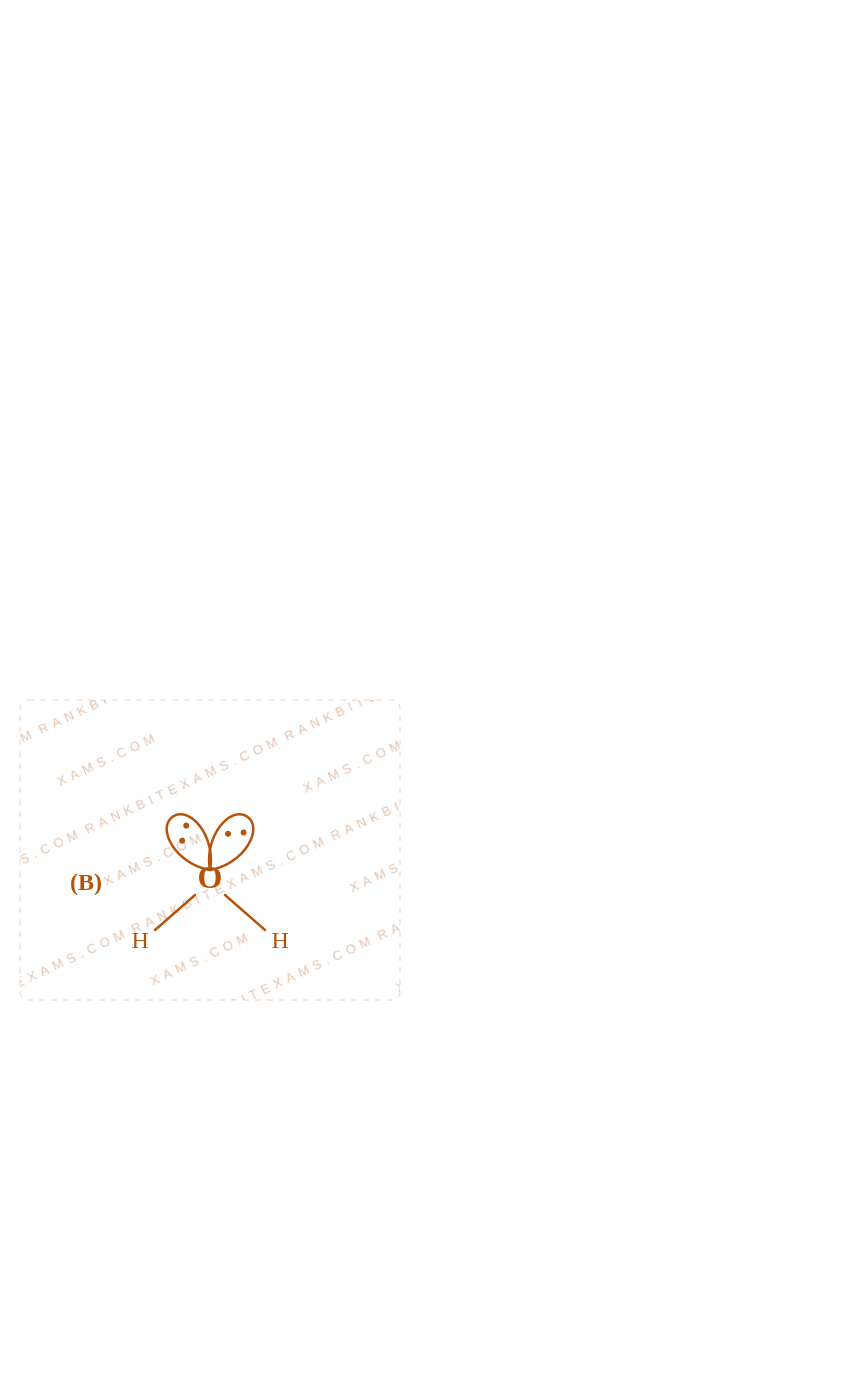
  • H₂O:
  • Oxygen has 6 valence electrons.
  • Forms 2 bond pairs with Hydrogens.
  • Remaining 4 electrons form 2 lone pairs.
  • Ratio is 2 : 2 (Matches LIST-II, IV).
  • VSEPR linear shape of ICl2-
    VSEPR linear shape of ICl2-

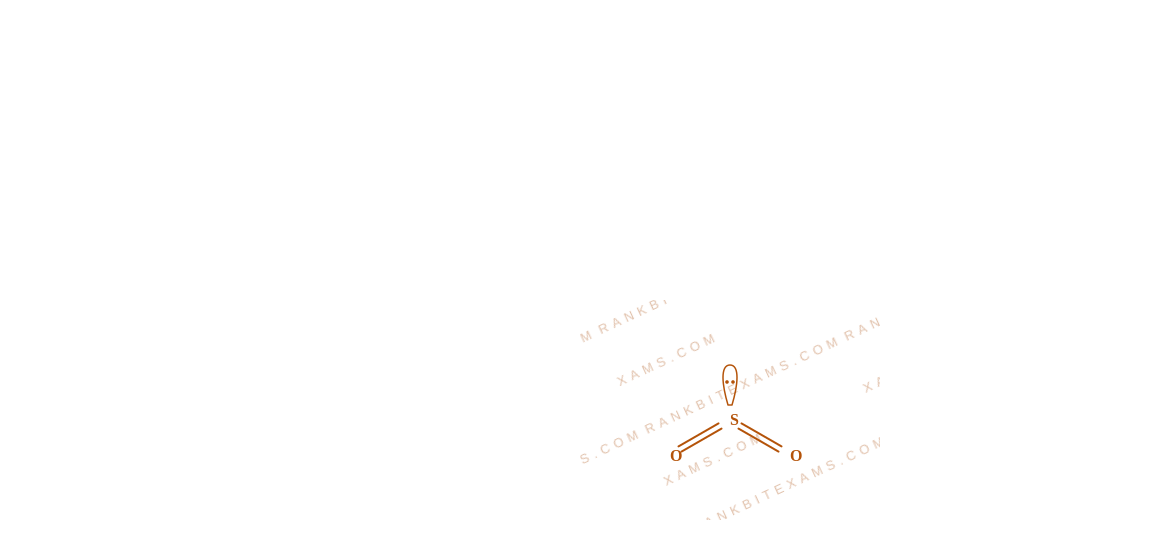
  • SO₂:
  • Sulfur has 6 valence electrons.
  • Forms 2 double bonds (which are counted as 4 bonding pairs of electrons/bond pairs in typical VSEPR representations here).
  • Remaining 2 electrons form 1 lone pair.
  • Ratio is 4 : 1 (Matches LIST-II, II).
  • VSEPR linear shape of ICl2-
    VSEPR linear shape of ICl2-

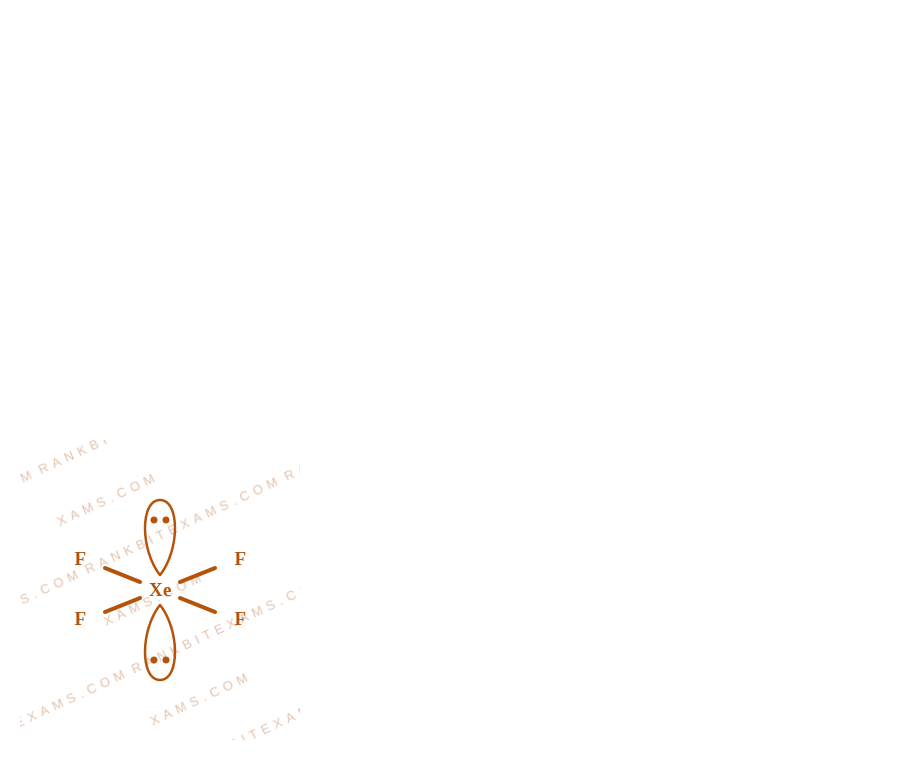
  • XeF₄:
  • Xenon has 8 valence electrons.
  • Forms 4 bond pairs with Fluorines.
  • Remaining 4 electrons form 2 lone pairs.
  • Ratio is 4 : 2 (Matches LIST-II, I).
  • VSEPR linear shape of ICl2-
    VSEPR linear shape of ICl2-

    Thus, the correct mapping is: A-III, B-IV, C-II, D-I.

Pattern Recognition

For match-the-column with VSEPR structures:

  • Always find steric number: Steric Number = (1)/(2)(V + M - C + A).
  • Water is 2 bond pairs, 2 lone pairs (sp³) arrow B-IV. This alone helps eliminate multiple incorrect options immediately.
Chapter Mix

Class 11 Chemistry: Chemical Bonding and Molecular Structure

More Chemical Bonding and Molecular Structure Previous-Year Questions — Page 9

Q77 jee_main_2024_31_jan_morning Molecular Orbital Theory
The linear combination of atomic orbitals to form molecular orbitals takes place only when the combining atomic orbitals A. have the same energy B. have the minimum overlap C. have same symmetry about the molecular axis D. have different symmetry about the molecular axis Choose the most appropriate from the options given below:
  • A. A, B, C only
  • B. A and C only
  • C. B, C, D only
  • D. B and D only

Solution

Core Logic

Conditions for the linear combination of atomic orbitals (LCAO) to form molecular orbitals:

  • The combining atomic orbitals must have the same or nearly the same energy.
  • The combining atomic orbitals must have the same symmetry about the molecular axis.
  • The combining atomic orbitals must overlap to the maximum extent (not minimum).
Chapter Mix

Class 11 Chemistry: Chemical Bonding and Molecular Structure

Q85 jee_main_2024_31_jan_morning Hybridization
The number of species from the following in which the central atom uses sp³ hybrid orbitals in its bonding is NH₃, SO₂, SiO₂, BeCl₂, CO₂, H₂O, CH₄, BF₃
Numerical Answer. Answer: 4 to 4

Solution

Core Logic

Analyzing the hybridization of the central atom in each species:

  • NH₃: 3 bp + 1 lp = 4 electron domains arrow sp³
  • SO₂: 2 bp + 1 lp = 3 electron domains arrow sp²
  • SiO₂: A giant covalent network where each Si is bonded to 4 oxygens tetrahedrally arrow sp³
  • BeCl₂: 2 bp + 0 lp = 2 electron domains arrow sp
  • CO₂: 2 bp + 0 lp = 2 electron domains arrow sp
  • H₂O: 2 bp + 2 lp = 4 electron domains arrow sp³
  • CH₄: 4 bp + 0 lp = 4 electron domains arrow sp³
  • BF₃: 3 bp + 0 lp = 3 electron domains arrow sp²
  • Total species with sp³ hybridization: NH₃, SiO₂, H₂O, CH₄. Total count = 4.

Chapter Mix

Class 11 Chemistry: Chemical Bonding and Molecular Structure

Rankbit System
JEE Physics: Waves (+15.5%) | Electrostatics: Concentric Shells (-29.7%) | Modern Physics: Photoelectric Clones (+34.2%) | Mathematics: Definite Integrals (+18.1%) | Chemistry: Coordination Splitting (-11.4%) | JEE Physics: Waves (+15.5%) | Electrostatics: Concentric Shells (-29.7%) | Modern Physics: Photoelectric Clones (+34.2%) | Mathematics: Definite Integrals (+18.1%) | Chemistry: Coordination Splitting (-11.4%)