Q
jee_main_2025_28_jan_morning
Probability Distribution and Variance
Three defective oranges are accidentally mixed with seven good ones and on looking at them, it is not possible to differentiate between them. Two oranges are drawn at random from the lot. If x denote the number of defective oranges, then the variance of x is :
Solution
Related Formula
Variance formula for discrete probability distributions:
σ² = Σ pᵢ xᵢ² - μ²Core Logic
Construct the discrete probability distribution matrix for drawing 2 items out of 10 total items (3 defective, 7 good): 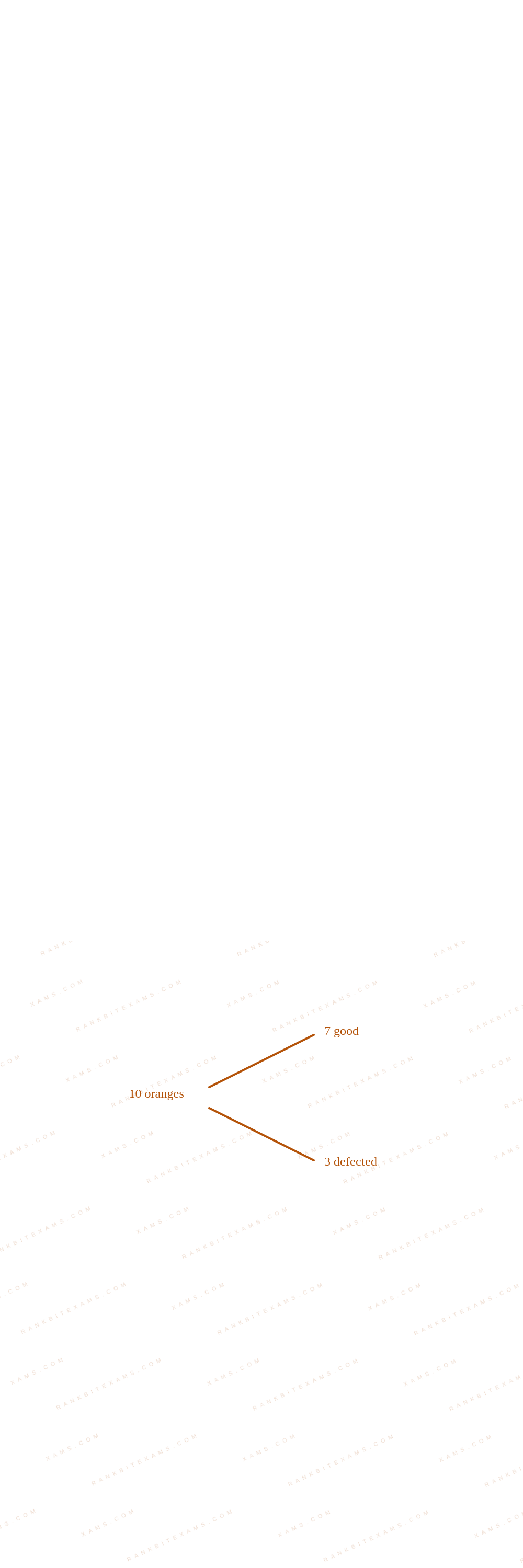
| xᵢ | pᵢ |
|---|---|
| x=0 | ⁷C₂¹⁰C₂ = (42)/(90) |
| x=1 | ⁷C₁ × ³C₁¹⁰C₂ = (42)/(90) |
| x=2 | ³C₂¹⁰C₂ = (6)/(90) |
Step 1: Calculating the Mean
μ = Σ xᵢ pᵢ = 0((42)/(90)) + 1((42)/(90)) + 2((6)/(90)) = (54)/(90) = (3)/(5)Step 2: Evaluating the Variance Metric
σ² = Σ pᵢ xᵢ² - μ² = [0 + 1²((42)/(90)) + 2²((6)/(90))] - ((3)/(5))² σ² = (66)/(90) - (9)/(25) = (11)/(15) - (9)/(25) = (28)/(75)Pattern Recognition
Discrete tables are best managed by computing component factor rows systematically before finalizing variance updates.
Chapter Mix
Class 12 Maths: Probability
