JEE Main · Mathematics ↓ Falling

Binomial Theorem appeared 37 times across 3 years — 4.3% of Mathematics. This question is from Properties of Binomial Coefficients.

Year 2026 2025 2024 Total
Questions 9 17 11 37

For an integer n ≥ 2, if the arithmetic mean of all coefficients in the binomial expansion of (x + y)2n - 3 is 16, then the distance of the point P(2n - 1, n² - 4n) from the line x + y = 8 is:

Solution & Explanation

Related Formula

Sum of binomial coefficients for (x+y)^m is 2^m. Total number of terms is m + 1. Perpendicular distance formula from (x₀, y₀) to ax + by + c = 0:

d = |ax₀ + by₀ + c|√(a² + b²)
Core Logic

The power is m = 2n - 3. Sum of coefficients = 22n - 3. Total terms = 2n - 2. Given Arithmetic Mean:

22n - 32n - 2 = 16 22n - 32(n - 1) = 16 22n - 4 = 16(n - 1)

Testing integer values, n = 5 satisfies the equation perfectly since 2⁶ = 64 and 16(5 - 1) = 64.

Step 1: Determine Coordinates of Point P

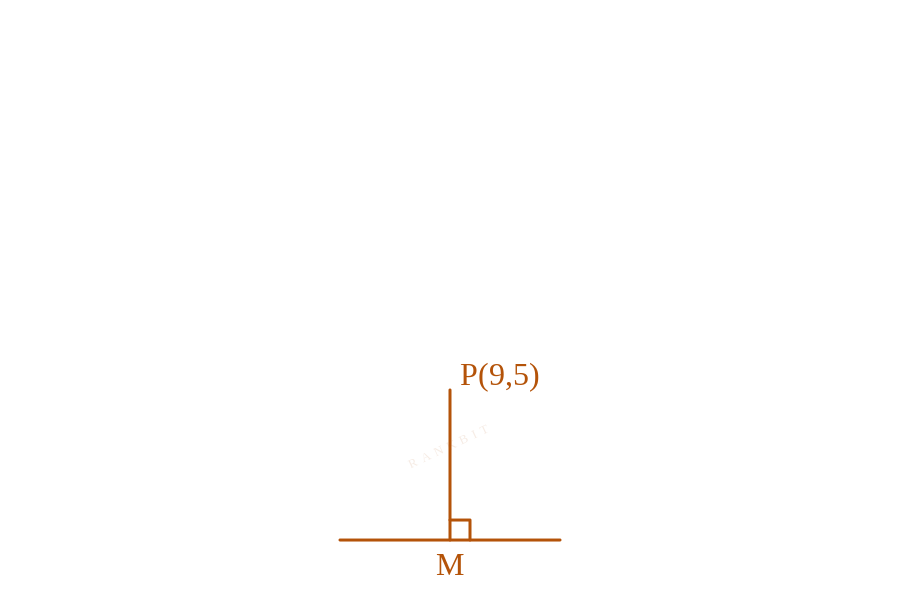
Substitute n = 5 into P(2n - 1, n² - 4n): x₀ = 2(5) - 1 = 9 y₀ = 5² - 4(5) = 5 Thus, P = (9, 5).

Properties of Binomial Coefficients diagram for Q54 - JEE Main 2025 Morning

Step 2: Calculate Perpendicular Distance

Find the distance from (9,5) to the line x + y - 8 = 0:

d = | 9 + 5 - 8√(1² + 1²)| = 6√(2) = 3√(2)
Pattern Recognition

Binomial coefficient logic tightly constrains n to small integers. Use inspection quickly when polynomial-exponential configurations arise.

Chapter Mix

Class 11 Mathematics: Binomial Theorem Class 11 Mathematics: Straight Lines

Reference Study Guides

More Binomial Theorem Previous-Year Questions — Page 8

Q2 jee_main_2024_31_jan_morning Sum of Coefficients and Limits
Let a be the sum of all coefficients in the expansion of (1 - 2x + 2x²)²⁰²³ (3 - 4x² + 2x³)²⁰²⁴ and b = x → 0 ( ∫₀x (1 + t)t²⁰²⁴ + 1 dtx² ). If the equations cx² + dx + e = 0 and 2bx² + ax + 4 = 0 have a common root, where c, d, e in R, then d : c : e equals
  • A. 2:1:4
  • B. 4:1:4
  • C. 1:2:4
  • D. 1:1:4

Solution

Core Logic

To find the sum of all coefficients in a polynomial expansion, substitute x = 1.

a = (1 - 2(1) + 2(1)²)²⁰²³ (3 - 4(1)² + 2(1)³)²⁰²⁴ a = (1)²⁰²³ (1)²⁰²⁴ = 1
Step 1: Evaluate Limit for b

Evaluate b = x → 0 ∫₀x ln(1 + t)1 + t²⁰²⁴ dtx² Using L'Hôpital's Rule (differentiating numerator via Newton-Leibniz):

b = x → 0 ln(1 + x)1 + x²⁰²⁴2x = x → 0 (ln(1 + x))/(x) × 12(1 + x²⁰²⁴) b = 1 × (1)/(2) = (1)/(2)
Step 2: Analyze Common Roots

The given second equation is 2bx² + ax + 4 = 0. Substitute a = 1 and b = (1)/(2):

2((1)/(2))x² + 1(x) + 4 = 0 x² + x + 4 = 0

The discriminant of x² + x + 4 = 0 is D = 1 - 16 < 0. Roots are non-real complex conjugates.

Step 3: Final Ratio

Since c, d, e in R and one root is common with a quadratic having non-real roots, both roots must be common. Thus, the coefficients must be proportional:

(c)/(1) = (d)/(1) = (e)/(4)

This implies d : c : e = 1 : 1 : 4.

Pattern Recognition

If a quadratic equation with real coefficients shares a common root with another quadratic having complex roots (D < 0), both roots must be shared, meaning their coefficients are directly proportional.

Chapter Mix

Class 11 Maths: Binomial Theorem Class 12 Maths: Limits and Derivatives Class 11 Maths: Quadratic Equations

Q25 jee_main_2024_31_jan_morning Coefficients in Expansion
In the expansion of (1 + x)(1 - x²)(1 + (3)/(x) + (3)/(x²) + (1)/(x³))⁵, x ≠ 0, the sum of the coefficient of x³ and x⁻¹³ is equal to
Numerical Answer. Answer: 118 to 118

Solution

Core Logic
(1+x)(1-x²) ( (1 + (1)/(x))³ )⁵ = (1+x)(1-x)(1+x) (x+1)¹⁵x¹⁵ = (1-x)(1+x)¹⁷x¹⁵ = (1+x)¹⁷ - x(1+x)¹⁷x¹⁵
Step 1: Find Coefficient of x^3

To find coeff of x³ in (1+x)¹⁷ - x(1+x)¹⁷x¹⁵, we need the coeff of x¹⁸ in the numerator (1+x)¹⁷ - x(1+x)¹⁷. The maximum power of x in (1+x)¹⁷ is 17, and in x(1+x)¹⁷ is 18. Coeff of x¹⁸ in (1+x)¹⁷ is 0. Coeff of x¹⁸ in x(1+x)¹⁷ is the coeff of x¹⁷ in (1+x)¹⁷, which is 1717 = 1. Thus, coeff of x¹⁸ in the numerator is 0 - 1 = -1.

Step 2: Find Coefficient of x^{-13}

To find coeff of x⁻¹³, we need the coeff of x² in the numerator (1+x)¹⁷ - x(1+x)¹⁷. Coeff of x² in (1+x)¹⁷ is 172. Coeff of x² in x(1+x)¹⁷ is coeff of x¹ in (1+x)¹⁷, which is 171. Value = 172 - 171 = (17 × 16)/(2) - 17 = 136 - 17 = 119.

Step 3: Final Sum

Sum of coefficients = -1 + 119 = 118.

Chapter Mix

Class 11 Maths: Binomial Theorem

More Binomial Theorem Questions — jee_main_2025_04_april_morning

Practice all Binomial Theorem previous-year questions →

Rankbit System
JEE Physics: Waves (+15.5%) | Electrostatics: Concentric Shells (-29.7%) | Modern Physics: Photoelectric Clones (+34.2%) | Mathematics: Definite Integrals (+18.1%) | Chemistry: Coordination Splitting (-11.4%) | JEE Physics: Waves (+15.5%) | Electrostatics: Concentric Shells (-29.7%) | Modern Physics: Photoelectric Clones (+34.2%) | Mathematics: Definite Integrals (+18.1%) | Chemistry: Coordination Splitting (-11.4%)