Which among the following compounds give yellow solid when reacted with NaOI/NaOH?
(A) CH₃ - CH(OH) - C₂H₅$CH_3 - CH(OH) - C_2H_5$
(B) CH₃ - CH₂ - CH₂ - OH$CH_3 - CH_2 - CH_2 - OH$
(C) CH₃ - CO - C₂H₅$CH_3 - CO - C_2H_5$
(D) CH₃-CO- OH$CH_3-CO- OH$
(E) CH₃ - CH₂ - CHO$CH_3 - CH_2 - CHO$
Choose the correct answer from the options given below:
A.(B), (C) and (E) Only
B.(A) and (C) Only
C.(C) and (D) Only
D.(A), (C) and (D) Only
Solution & Explanation
Related Formula
Compounds with CH₃-CH(OH)- or CH₃-CO- groups undergo the iodoform reaction to form CHI₃ (Yellow Solid)$$\text{Compounds with } CH_3-CH(OH)- \text{ or } CH_3-CO- \text{ groups undergo the iodoform reaction to form } CHI_3 \downarrow \text{ (Yellow Solid)}$$
Core Logic
Let's check the structural groups of each given option:
(A)CH₃ - CH(OH) - C₂H₅$CH_3 - CH(OH) - C_2H_5$: Contains the methylcarbinol group (CH₃-CH(OH)-$CH_3-CH(OH)-$). Gives a positive iodoform test.
(B)CH₃ - CH₂ - CH₂ - OH$CH_3 - CH_2 - CH_2 - OH$: Linear primary alcohol, does not contain the required group.
(C)CH₃ - CO - C₂H₅$CH_3 - CO - C_2H_5$: Contains the methyl ketone group (CH₃-CO-$CH_3-CO-$). Gives a positive iodoform test.
(D)CH₃ - OH$CH_3 - OH$: Methanol does not give the test.
(E)CH₃ - CH₂ - H$CH_3 - CH_2 - H$: Ethane does not give the test.
Thus, only (A) and (C) yield the yellow precipitate of iodoform (CHI₃$CHI_3$).
The iodoform test specifically isolates methyl ketones or secondary methyl alcohols. Scan dynamically for a terminal -CH₃$-CH_3$ affixed directly to a carbonyl oxygen index (C=O$C=O$) or a hydroxyl carbon (CH-OH$CH-OH$).
Chapter Mix
Class 12 Chemistry: Aldehydes, Ketones and Carboxylic Acids
Class 12 Chemistry: Alcohols, Phenols and Ethers
More Aldehydes, Ketones and Carboxylic Acids Previous-Year Questions — Page 9
Qjee_main_2024_30_jan_morningPreparation of Aldehydes
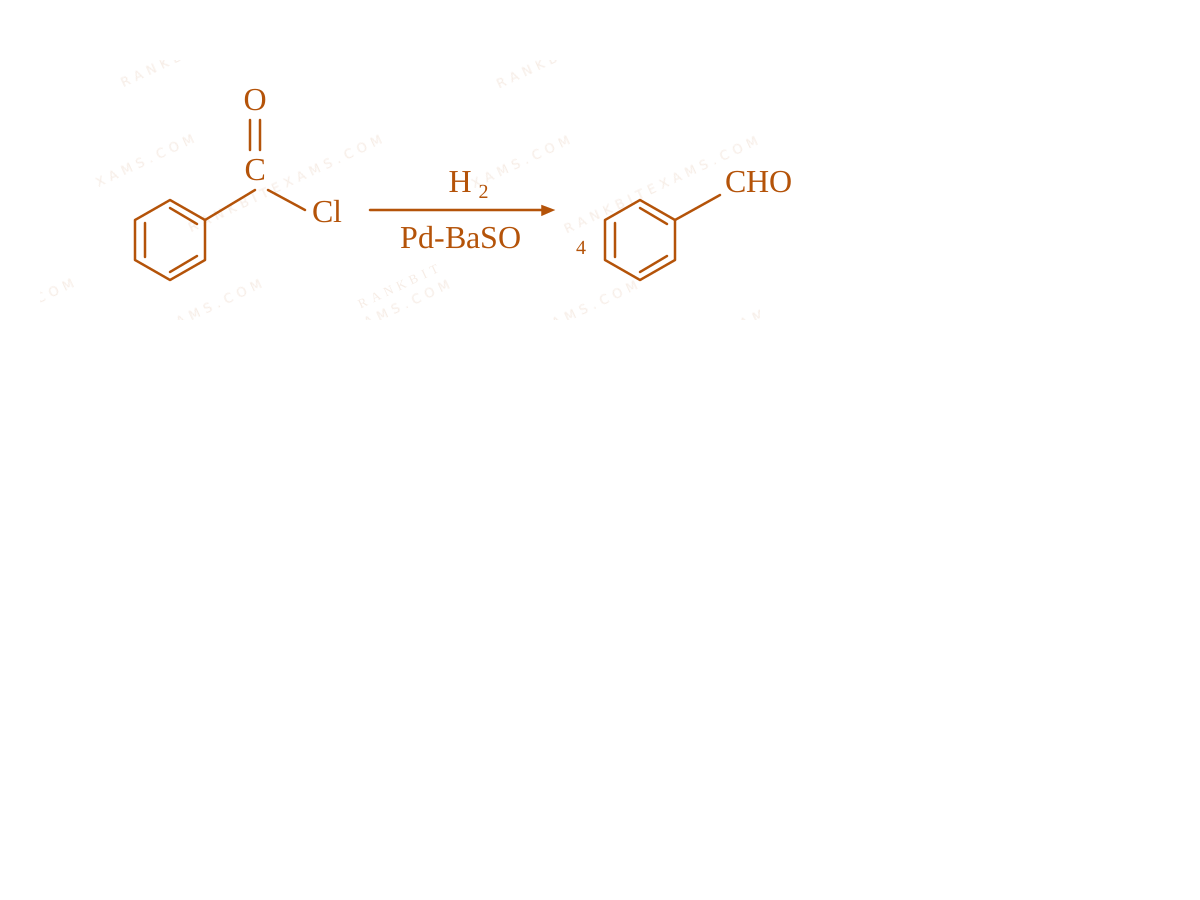
This reduction reaction is known as:
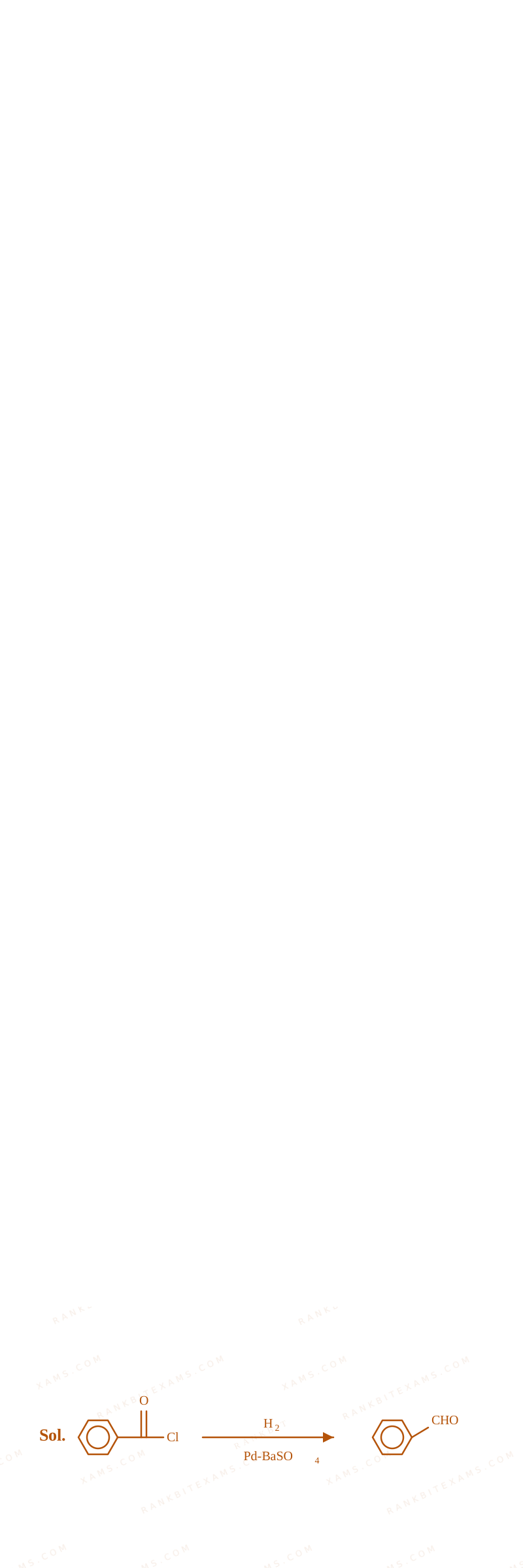
The image shows the catalytic hydrogenation of benzoyl chloride to benzaldehyde in the presence of Pd-BaSO4.
The reaction depicts the partial reduction of an acid chloride (benzoyl chloride) to an aldehyde (benzaldehyde) using hydrogen gas in the presence of a poisoned palladium catalyst (Pd supported on BaSO₄$BaSO_4$).
The image shows the catalytic hydrogenation of benzoyl chloride to benzaldehyde in the presence of Pd-BaSO4.
This specific reaction is known as the Rosenmund reduction.
Pattern Recognition
Acid Chloride + H₂, Pd/BaSO₄$H_2, Pd/BaSO_4$arrow$\rightarrow$ Aldehyde is strictly the Rosenmund reduction. The BaSO₄$BaSO_4$ poisons the catalyst to prevent over-reduction to an alcohol.
Chapter Mix
Class 12 Chemistry: Aldehydes, Ketones and Carboxylic Acids
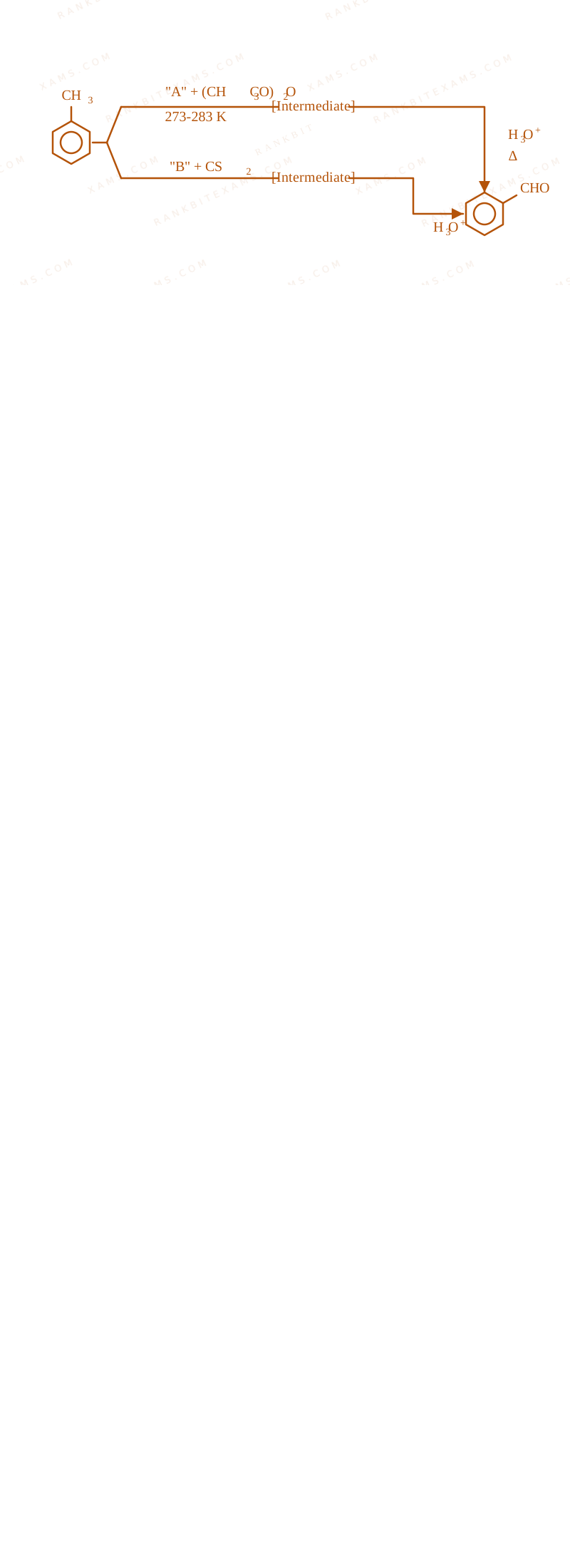
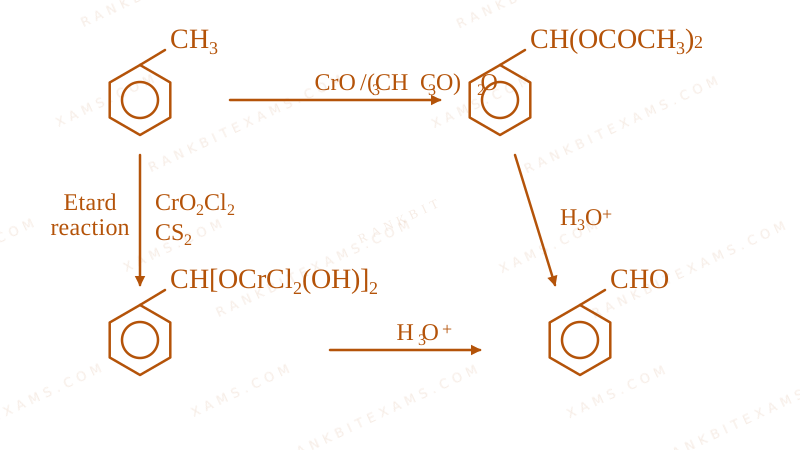
Pathway 1 (Upper): Toluene is treated with Reagent 'A' and acetic anhydride (CH₃CO)₂O$(CH_3CO)_2O$ to form an intermediate (benzylidene diacetate), which on hydrolysis gives benzaldehyde. The reagent used here is Chromic oxide (CrO₃$CrO_3$). Thus, A is CrO₃$CrO_3$.
Pathway 2 (Lower): Toluene is treated with Reagent 'B' in CS₂$CS_2$ to form a chromium complex intermediate, which on hydrolysis yields benzaldehyde. This is the Etard reaction, and the reagent used is Chromyl chloride (CrO₂Cl₂$CrO_2Cl_2$). Thus, B is CrO₂Cl₂$CrO_2Cl_2$.
The image shows the oxidation of toluene to benzaldehyde via two different pathways requiring reagents A and B.
Step 1: Selection
Therefore, A = CrO₃$CrO_3$ and B = CrO₂Cl₂$CrO_2Cl_2$.
Pattern Recognition
Etard reaction always uses Chromyl chloride (CrO₂Cl₂$CrO_2Cl_2$). Oxidation of toluene with acetic anhydride uses Chromic acid (CrO₃$CrO_3$). Both stop the oxidation at the aldehyde stage via intermediate formation.
Chapter Mix
Class 12 Chemistry: Aldehydes, Ketones and Carboxylic Acids
Ethanal (CH₃CHO$CH_3CHO$) reacts with semicarbazide (H₂N-NH-CO-NH₂$H_2N-NH-CO-NH_2$) via nucleophilic addition followed by elimination of water to form a semicarbazone.
Step 1: Product Analysis
The product is Ethanal semicarbazone: CH₃-CH=N-NH-CO-NH₂$CH_3-CH=N-NH-CO-NH_2$.
Counting the nitrogen atoms in this structure:
The imine nitrogen (=N-$=N-$)
The amine nitrogen (-NH-$-NH-$)
The amide nitrogen (-NH₂$-NH_2$)
Total = 3 Nitrogen atoms.
Chapter Mix
Class 12 Chemistry: Aldehydes, Ketones and Carboxylic Acids
Qjee_main_2024_31_jan_eveningPreparation of Aldehydes and Ketones
Identify the name reaction.
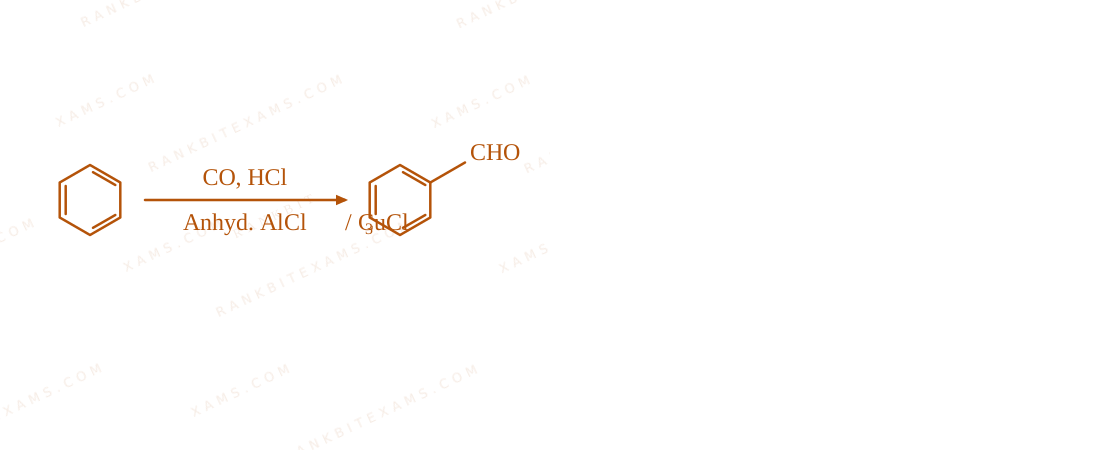
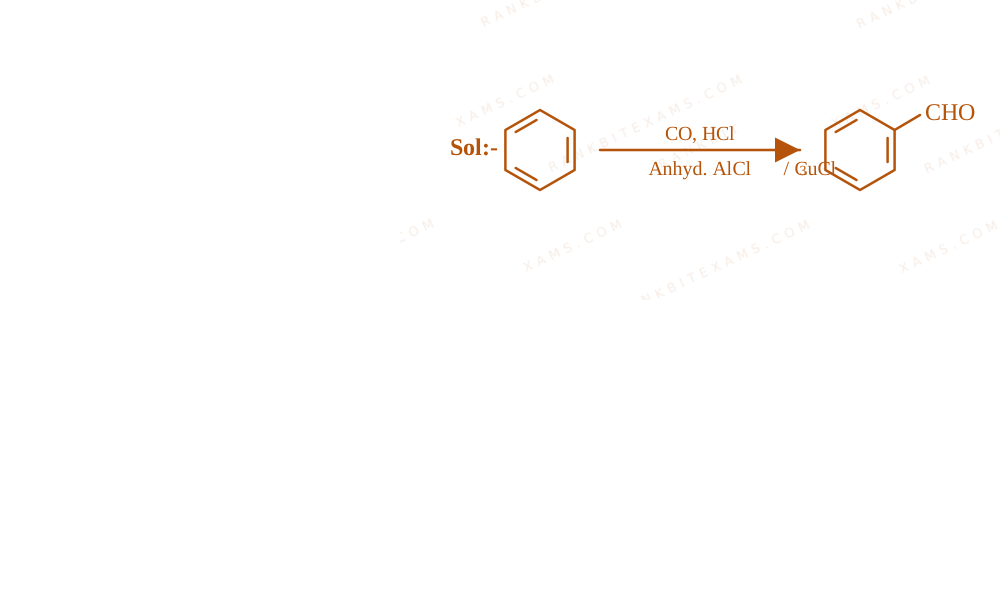
The image shows the conversion of benzene to benzaldehyde using CO, HCl, and Anhydrous AlCl3/CuCl.
The reaction of benzene with carbon monoxide (CO$CO$) and hydrogen chloride (HCl$HCl$) in the presence of anhydrous aluminium chloride (AlCl₃$AlCl_3$) and cuprous chloride (CuCl$CuCl$) to give benzaldehyde is known as the Gatterman-Koch reaction.
The image shows the conversion of benzene to benzaldehyde using CO, HCl, and Anhydrous AlCl3/CuCl.
Pattern Recognition
CO + HCl arrow$CO + HCl \rightarrow$ Formyl chloride intermediate (in situ) with Lewis acid arrow$\rightarrow$ formylation of benzene. This is definitively the Gatterman-Koch formylation.
Chapter Mix
Class 12 Chemistry: Aldehydes, Ketones and Carboxylic Acids
Practice past-year questions one chapter at a time. Pick an exam → subject → chapter and get every PYQ for that topic — pulled together from all past papers — with the chapter's key formulas alongside.