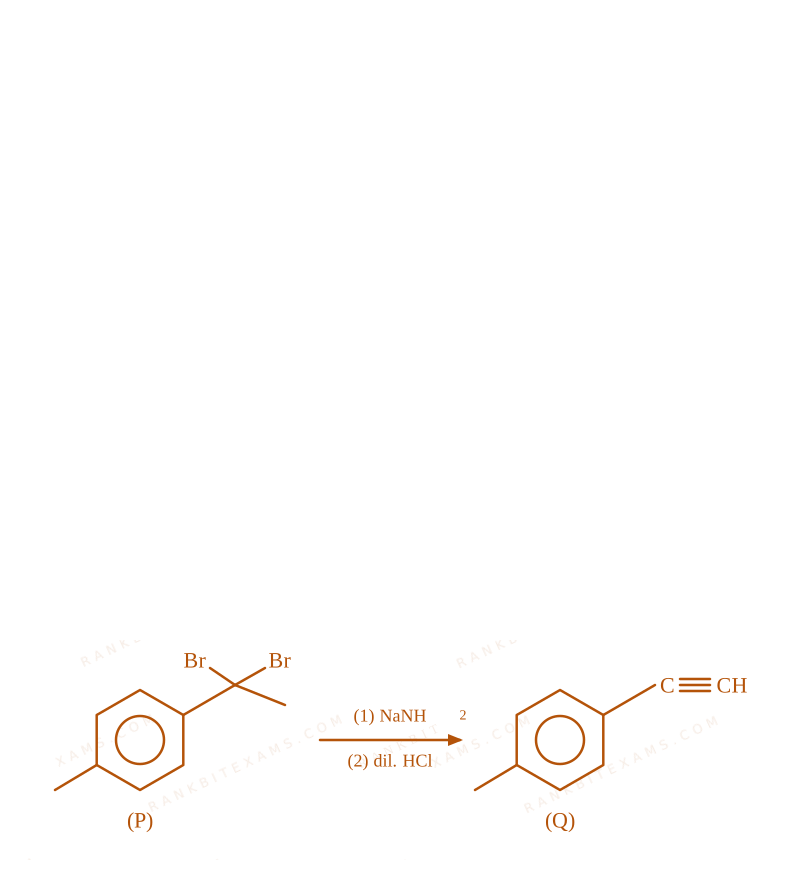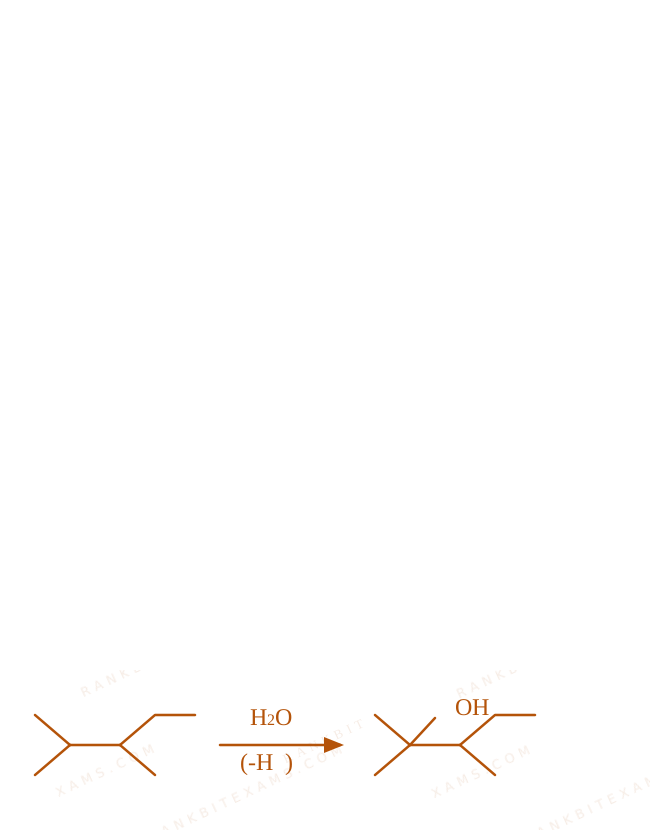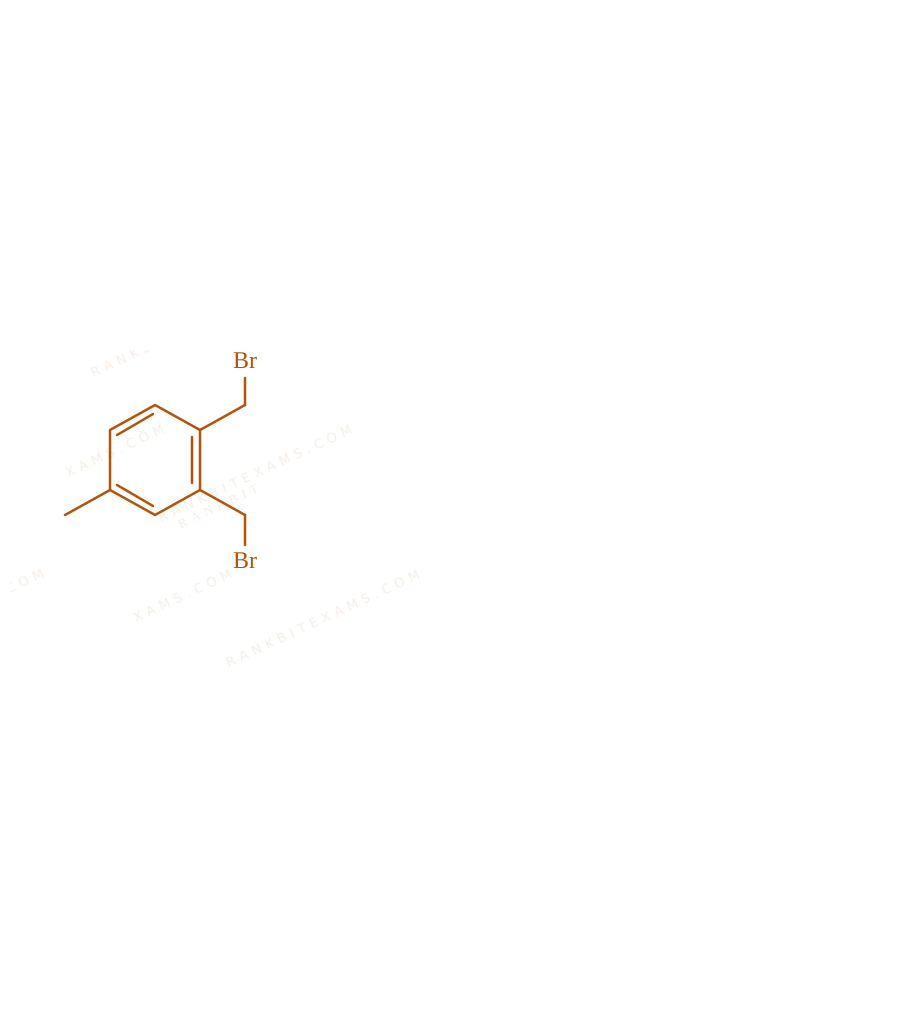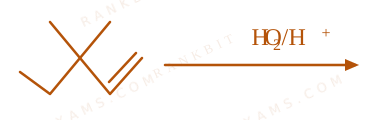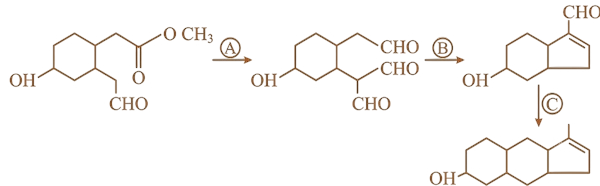
Identify the reagents used for the following conversion
Selective Reduction and Aldol Condensation diagram for Q72 - JEE Main 2024 Evening
The diagram displays a complex organic multi-step conversion starting from an ester-aldehyde block to a bicyclic system.

Solution & Explanation

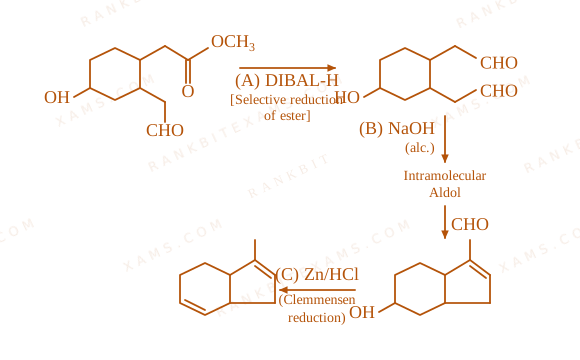
### Related Formula textEster xrightarrowtextDIBAL-H textAldehyde ### Core Logic Breaking down the multistep pathway: * **Step A**: The ester group is selectively reduced to an aldehyde using textDIBAL-H at low temperature without affecting other domains. * **Step B**: An intramolecular Aldol condensation occurs in the presence of base (textNaOH) to generate the bicyclic alpha,beta-unsaturated carbonyl framework. * **Step C**: Clemmensen reduction (using amalgamated zinc and hydrochloric acid, textZn(Hg)/HCl) reduces the ketone group to a hydrocarbon block. ### Step 1: Verification The step-by-step mechanism proceeds precisely as illustrated below:
Selective Reduction and Aldol Condensation solution diagram for Q72 - JEE Main 2024 Evening
The diagram displays a complex organic multi-step conversion starting from an ester-aldehyde block to a bicyclic system.
### Pattern Recognition DIBAL-H stops cleanly at the aldehyde phase from an ester precursor, preparing the molecule perfectly for subsequent aldol ring closures. ### Evaluation Rubric / Model Answer null ### Chapter Mix Class 12 Chemistry: Organic Compounds Containing Oxygen

Reference Study Guides

More Organic Compounds Containing Oxygen Previous-Year Questions

Q63 jee_main_2024_29_january_evening pKa of Phenols
Match List I with List II:
List-I (Compound)List-II (pK_a value)
A. EthanolI. 10.0
B. PhenolII. 15.9
C. m-NitrophenolIII. 7.1
D. p-NitrophenolIV. 8.3
Choose the correct answer from the options given below :
  • A. A-I, B-II, C-III, D-IV
  • B. A-IV, B-I, C-II, D-III
  • C. A-III, B-IV, C-I, D-II
  • D. A-II, B-I, C-IV, D-III

Solution

### Related Formula pK_a = -log_10 K_a textHigher acidity implies textHigher K_a implies textLower pK_a ### Core Logic Comparing the acidic strength among given compounds: 1. Ethanol is least acidic due to lack of resonance stabilization in ethoxide ion implies pK_a = 15.9 (II). 2. Phenol forms resonance-stabilized phenoxide implies pK_a = 10.0 (I). 3. m-Nitrophenol experiences -I effect of -NO_2 group implies pK_a = 8.3 (IV). 4. p-Nitrophenol experiences both strong -R and -I effects, maximizing structural stability implies pK_a = 7.1 (III). ### Step 1: Assembly This yields the complete matching pattern: A-II, B-I, C-IV, D-III. ### Pattern Recognition Para nitro substitued positions create maximal charge delocalization through resonance, giving it the lowest pK_a value out of the options. ### Evaluation Rubric / Model Answer null ### Chapter Mix Class 12 Chemistry: Organic Compounds Containing Oxygen
Q68 jee_main_2024_29_january_evening Reimer-Tiemann Reaction
Phenol treated with chloroform in presence of sodium hydroxide, which further hydrolysed in presence of an acid results
  • A. Salicylic acid
  • B. Benzene-1,2-diol
  • C. Benzene-1, 3-diol
  • D. 2-Hydroxybenzaldehyde

Solution

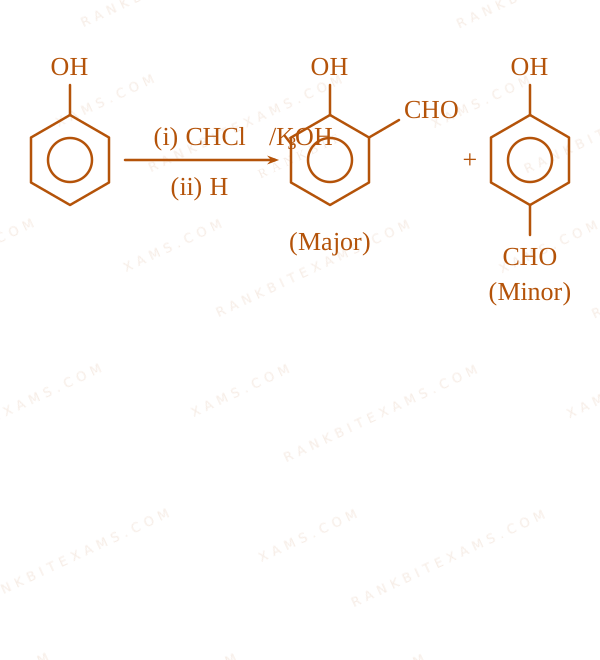
### Related Formula textPhenol + textCHCl_3 + textNaOH xrightarrowtextH^+ text2-Hydroxybenzaldehyde (Salicylaldehyde) ### Core Logic This chemical sequences details the well-known Reimer-Tiemann reaction mechanism. The treatment of phenol with alkaline chloroform generates a dichlorocarbene intermediate (:textCCl_2), which acts as an electrophile and specifically attacks the ortho position of the phenoxide ring system. Subsequent basic hydrolysis converts the functional intermediate to an aldehyde block, providing 2-hydroxybenzaldehyde as the major final product. ### Step 1: Visual Pathway Validation The step-by-step schematic transforms structural blocks through standard intermediates:
Reimer-Tiemann Reaction solution diagram for Q68 - JEE Main 2024 Evening
### Pattern Recognition Chloroform + Base + Phenol yields formylation at the ortho site, producing salicylaldehyde (2-hydroxybenzaldehyde). ### Evaluation Rubric / Model Answer null ### Chapter Mix Class 12 Chemistry: Organic Compounds Containing Oxygen

More Organic Compounds Containing Oxygen Questions — jee_main_2024_29_january_evening

Practice all Organic Compounds Containing Oxygen previous-year questions →

Rankbit System
JEE Physics: Waves (+15.5%) | Electrostatics: Concentric Shells (-29.7%) | Modern Physics: Photoelectric Clones (+34.2%) | Mathematics: Definite Integrals (+18.1%) | Chemistry: Coordination Splitting (-11.4%) | JEE Physics: Waves (+15.5%) | Electrostatics: Concentric Shells (-29.7%) | Modern Physics: Photoelectric Clones (+34.2%) | Mathematics: Definite Integrals (+18.1%) | Chemistry: Coordination Splitting (-11.4%)